
Simple Christmas crafts and decorating traditions children can proudly help create
Affiliate Disclaimer
This blog may contain affiliate links or banner advertisements. If you click one of these links or advertisements and make a purchase, The Shopping Plaza may earn a small commission at no additional cost to you. These commissions help support our work and allow us to continue creating free Christmas guides, family activities, seasonal inspiration, and holiday content. We only recommend products, services, or merchandise that we believe may be useful or interesting to our readers. Thank you for supporting The Shopping Plaza.
Introduction: Let Children Help Create the Christmas Magic
Children bring a special kind of energy to Christmas. Lights seem brighter, decorations feel more exciting, and familiar traditions can become adventures when seen through a child’s imagination. Inviting children to help decorate gives them something even more valuable than a beautifully finished room: it gives them a role in creating the family’s Christmas atmosphere.
Kid-made decorations do not need to look like something from a store. A paper star with uneven edges, a handprint reindeer, or an ornament covered with far too much glitter can become a family favorite precisely because a child made it. As the years pass, those imperfect creations become reminders of a particular age and Christmas season.
Decorating together can also be affordable. Construction paper, cardboard, ribbon, craft sticks, pinecones, washable paint, old gift wrap, and other simple materials can become ornaments, garlands, signs, centerpieces, and keepsakes. The following ideas build on the original guide with projects for different ages, budgets, and levels of adult involvement.
Creating Handmade Christmas Ornaments
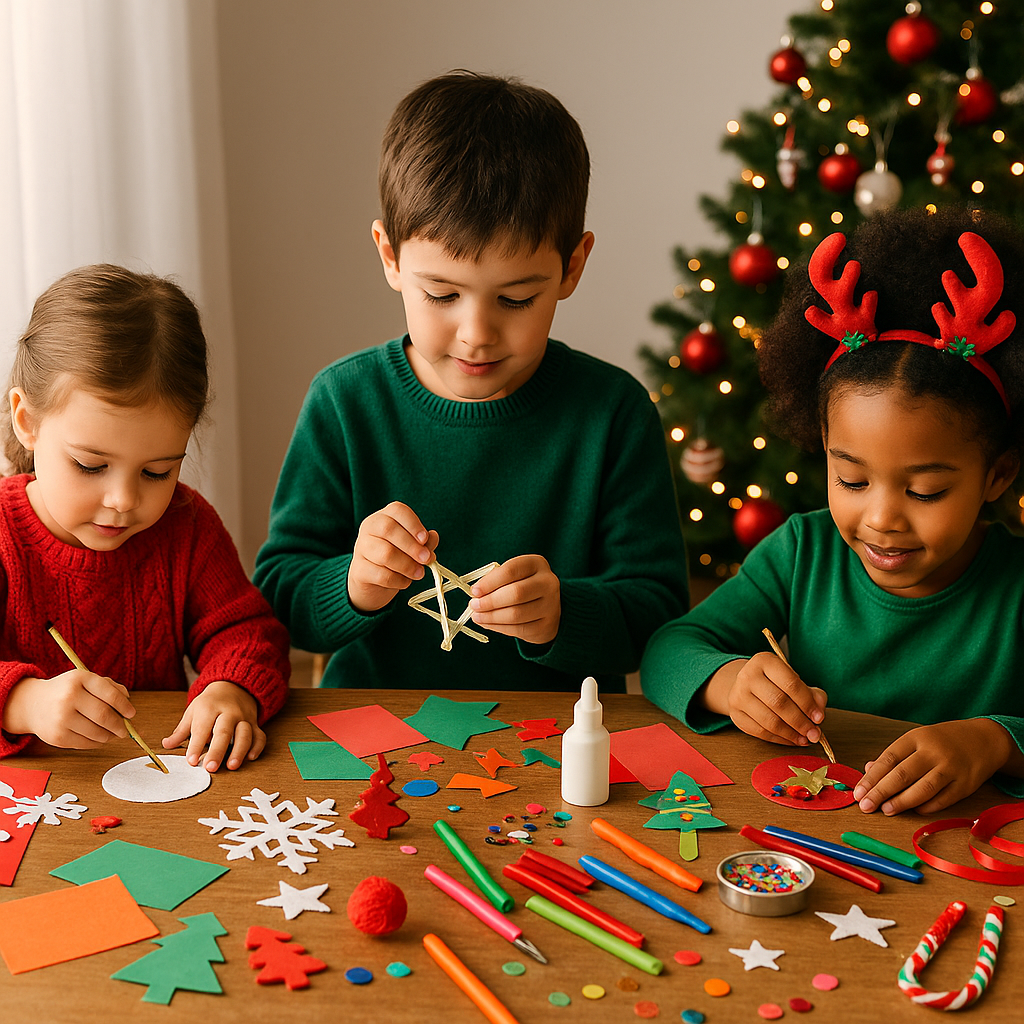
Because the Christmas tree is often the centerpiece of holiday decorating, homemade ornaments are a natural place to begin. Children can work with construction paper, cardstock, air-dry clay, craft sticks, pipe cleaners, ribbon, buttons, sequins, felt, and pre-cut wooden or cardboard shapes.
Younger children may enjoy coloring a prepared ornament shape or pressing a painted handprint onto a keepsake. Older children can design more detailed ornaments, combine materials, or create decorations that reflect their interests. A sports fan might make a team-inspired ornament, while a child who loves animals might create a reindeer, penguin, or pet ornament.
Write the child’s name and year on the back whenever possible. That small detail turns a craft into a dated family memory. Years later, decorating the tree becomes an opportunity to rediscover earlier creations and remember who made them.
Turn Family Photos Into Christmas Ornaments
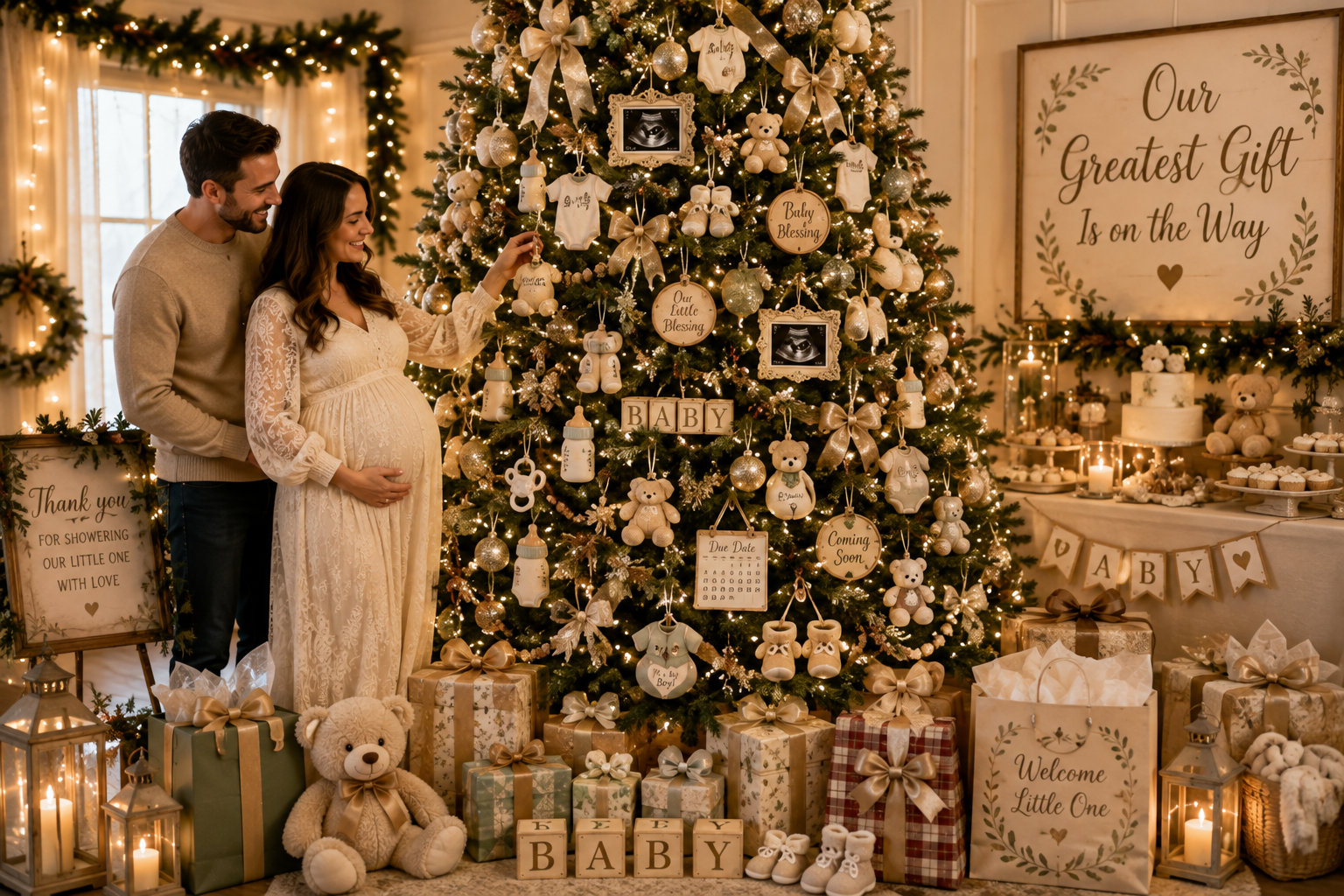
Photo ornaments combine Christmas decorating with family history. Print a favorite picture from the year and place it inside a simple cardboard, craft-stick, foam, or wooden frame. Children can decorate the border with paint, stickers, ribbon, snowflakes, or holiday messages.
Families might make one photo ornament for each child every year. Over time, the Christmas tree becomes a visual timeline showing children growing from toddlers into teenagers and adults. Photos of pets, grandparents, vacations, school milestones, or other meaningful moments can be included too.
For relatives who live far away, a handmade photo ornament can also become a thoughtful gift. It is inexpensive, personal, and easy for children to help create.
Make Paper Snowflakes for Windows and Walls
Paper snowflakes are one of the simplest winter crafts, yet every finished design can look different. Fold white or colored paper and carefully cut small shapes along the edges before unfolding it to reveal the pattern.
Younger children should use age-appropriate scissors and adult assistance. Older children can experiment with increasingly detailed designs or search for patterns they would like to imitate. Finished snowflakes can be taped to windows, hung from string, attached to walls, or combined into a winter garland.
This activity is especially useful for families trying to decorate a large space inexpensively. A stack of ordinary paper can become dozens of unique decorations, and children experience the fun of not knowing exactly what the snowflake will look like until it is unfolded.
Create Christmas Artwork and Holiday Signs
Christmas décor does not have to come from a store. Give children paper, washable paint, crayons, markers, stickers, stamps, or glitter glue and invite them to create artwork specifically for the family’s holiday display.
They can make signs reading Merry Christmas, Ho Ho Ho, Joy, Peace, Believe, or another family message. They might draw Santa, reindeer, snowmen, Christmas trees, angels, Nativity scenes, presents, or a favorite family tradition. Handprint and footprint art can be especially memorable with younger children because it preserves a sense of how small they were.
Display the artwork on a refrigerator, wall, bedroom door, bulletin board, or temporary Christmas gallery. A favorite piece can be framed or placed in a protective sleeve and brought out again in future years.
Build a Kid-Made Christmas Garland
Garlands are easy to customize and can decorate a mantel, staircase, doorway, wall, or children’s room. The classic paper chain requires only strips of colored paper and tape or glue. Children can alternate red and green links, use many colors, or write a Christmas memory or kind action on each strip.
Another option is a garland made from paper trees, stars, stockings, mittens, gingerbread people, or snowflakes attached to string. Older children can cut the shapes themselves, while younger children can decorate prepared pieces.
A family can also use a paper chain as a Christmas countdown. Remove one link each day as Christmas approaches. This turns a decoration into an activity children can interact with throughout December.
Paint Pinecones for Natural Christmas Decorations
Pinecones can become inexpensive rustic decorations when cleaned and used appropriately. Children can paint the tips white to resemble snow, add small amounts of child-safe craft glitter, tie ribbon around the top, or transform them into miniature Christmas trees.
Place finished pinecones in a decorative bowl, use them in a centerpiece, or hang lightweight versions from the tree. Artificial pinecones from craft stores work well for families who do not have safe access to natural ones.
If collecting pinecones outdoors, adults should inspect and prepare them before children begin crafting. The project offers a nice way to combine natural textures with handmade holiday décor.
Create a Christmas Table Centerpiece Together
A family centerpiece can give children a visible contribution to Christmas dinner. Use a bowl, basket, vase, tray, or other stable container as the base and let children help arrange artificial greenery, ornaments, ribbon, pinecones, paper snowflakes, or handmade decorations.
The original guide suggests artificial poinsettias, pine picks, berries, ornaments, and paper Christmas shapes. Those ideas can be mixed according to the family’s style. A bowl filled entirely with ornaments the children decorated can be especially meaningful.
If candles are part of the adult design, keep open flames completely outside children’s craft activities and away from paper, greenery, and other combustible decorations. Battery-operated flameless candles can provide a similar glow with fewer risks around children.
Make Homemade Christmas Stockings
A homemade stocking can be as simple or elaborate as the child’s age and crafting ability allow. Younger children can decorate a ready-made plain stocking with fabric-safe materials, while older children may enjoy creating one from felt with adult help.
Add names, felt shapes, snowflakes, stars, bells, trees, or other decorations. Children can create stockings for themselves, siblings, pets, or even a decorative Santa display.
A stocking made during childhood can become a long-term keepsake. Even if the family eventually uses a different set of stockings, the handmade version can be saved with other treasured Christmas decorations.
Create Paper-Plate Christmas Characters
Paper plates provide an inexpensive base for Santa, reindeer, snowmen, elves, angels, and other Christmas characters. Cotton balls can form Santa’s beard, construction paper can create antlers or hats, and washable paint or crayons can add faces and details.
These crafts are particularly good for younger children because the large surface is easier to decorate than a small ornament. Adults can prepare complicated pieces in advance and let children handle the coloring, gluing, and arranging.
Finished characters can decorate bedroom doors, classroom walls, refrigerators, or a family Christmas craft display. Making several different characters can create an entire homemade holiday scene.
Make a Safe DIY Snow Globe
A homemade snow globe can be a memorable project for older children with close adult supervision. Families can also create a simpler dry version that avoids liquid entirely: place a small Christmas figure inside a clear plastic container or jar, add artificial snow or lightweight white craft material, and secure the lid.
If using glass jars, liquids, glue, or small decorative pieces, adults should take responsibility for assembly and determine whether the project is appropriate for the child’s age. Small parts can be choking hazards, and glass can break.
A child’s miniature winter scene can include a tree, snowman, reindeer, tiny house, or other favorite Christmas image. Display the finished project where it will not be knocked over.
Decorate a Child’s Bedroom or Play Area
Children may enjoy having one area where they can make more decorating decisions themselves. Give them a small tabletop tree, paper garland, removable window decorations, Christmas artwork, or a collection of unbreakable ornaments and let them create their own holiday space.
This can be especially useful when adults want the main living areas decorated in a particular style. Children still get creative freedom without every family decoration needing to match their choices.
Set clear safety boundaries. Avoid overloaded outlets, unstable decorations, cords near beds or walkways, and anything that could fall onto a sleeping child. The goal is a festive personal space that remains comfortable and safe.
Turn Old Christmas Cards Into New Decorations
Instead of immediately discarding old Christmas cards, save colorful fronts and illustrations for children’s craft projects. They can be cut into gift tags, ornaments, paper mosaics, garland pieces, bookmarks, or collage art.
This project teaches children that decorating materials do not always need to be purchased new. Gift wrap scraps, ribbons, boxes, tissue paper, and cards can often be reused creatively.
A collage made from cards received by the family can also become a small record of the season. Add the year before storing it with Christmas decorations.
Create Decorations That Double as Gifts
Some of the best children’s crafts can become gifts for grandparents, teachers, relatives, neighbors, or family friends. A painted ornament, framed drawing, handprint keepsake, photo decoration, or homemade card carries a personal connection that a purchased item cannot duplicate.
Ask children to think about the person receiving the gift. What colors do they like? Would they enjoy an angel, snowman, tree, or family photo? Helping children design for someone else adds thoughtfulness to the activity.
The project also shifts some Christmas attention from receiving to giving. Children experience the excitement of making something, wrapping it, and watching someone else enjoy it.
Choose Crafts That Match Your Child’s Age
Not every Christmas craft is appropriate for every child. Toddlers may enjoy large crayons, washable finger paint, stickers, or placing soft decorations with adult help. Elementary-age children can usually handle more cutting, gluing, painting, and simple assembly. Older children and teenagers may enjoy detailed ornaments, sewing, painting, woodworking kits, or designing complete displays.
Age recommendations on craft supplies are useful starting points, but parents and caregivers know the individual child best. Consider attention span, motor skills, sensory preferences, and whether the child tends to place objects in their mouth.
Success matters more than complexity. A simple craft a child can complete proudly is often better than an ambitious project that requires an adult to do nearly everything.
Keep Christmas Crafting Safe and Manageable
Before beginning, prepare the workspace. Cover the table if paint or glue will be used, place supplies within easy reach, and separate anything children should not handle. Washable and non-toxic materials are usually the easiest choices for family crafting.
Supervise scissors, hot-glue guns, sharp tools, small pieces, glass containers, candles, electrical decorations, and other potentially hazardous materials. Craft glitter can also spread throughout a home and may not be appropriate for every project; paper confetti, sequins, washable glitter glue, or shiny stickers can sometimes provide an easier alternative.
Expect mess and imperfection. A craft session becomes stressful quickly if adults are constantly correcting children. Establish a few safety rules, then allow creativity to take over.
Make Christmas Decorating More Accessible for Every Child
Children participate in different ways. A child who has difficulty cutting may be excellent at choosing colors or placing stickers. Someone who does not enjoy messy textures may prefer arranging ornaments, selecting ribbon, dictating a holiday message, or working with digital photos.
Prepare materials so children can contribute at their own level. Pre-cut shapes, larger craft pieces, easy-grip tools, tactile materials, verbal descriptions, and clearly organized supplies can make activities easier to navigate.
The purpose is participation, not forcing every child to complete the same steps. When adults adapt the project to the child rather than expecting the child to adapt to the project, decorating becomes a more welcoming family tradition.
Why Handmade Christmas Decorations Matter
Handmade decorations do more than fill empty spaces. They document childhood. A decoration created at age four will look different from one made at age ten, and both become part of the family’s story.
Crafting can encourage creativity, confidence, decision-making, patience, and family bonding. Children see that their ideas have value when adults display their work rather than quietly replacing it with something more polished.
Most importantly, meaningful decorating does not require a large budget. A few inexpensive supplies and dedicated family time can produce decorations with more emotional value than expensive seasonal décor. The joy comes from knowing, ‘I made that, and my family wanted to display it.’
Start a Tradition of Saving One Decoration Every Year
Families who make many crafts may not be able to save everything forever. One practical tradition is to let each child choose one special decoration at the end of the season to keep permanently.
Write the year and child’s name on it, wrap it carefully, and store it with the family’s Christmas decorations. Over time, each child develops a small collection representing different stages of childhood.
When children eventually have homes or families of their own, those saved decorations can be passed along. A simple annual craft then becomes a collection spanning years of Christmas memories.
Final Thoughts: The Decorations Children Make Become the Memories Families Keep
A beautifully decorated home can make Christmas feel festive, but perfection is not what makes holiday décor meaningful. The decorations families remember most often have stories attached to them.
A handmade ornament recalls the year a child learned to write their name. A paper snowflake remembers an afternoon spent crafting during bad weather. A lopsided centerpiece reminds everyone how proud a child was to place it on the Christmas dinner table. Those stories grow more valuable as time passes.
Invite children to create, choose, experiment, and participate. Give them projects that match their abilities and enough freedom to make the finished decoration truly theirs. Photograph the process, date the keepsakes, and save the pieces that mean the most.
Years from now, the store-bought decorations may still look beautiful. But the handmade ones may be the decorations everyone reaches for first – because they do more than decorate the house. They decorate the family’s memories.