
Exploring Dancer’s origins, personality, creativity, symbolism, and enduring Christmas charm
Affiliate Disclaimer
This blog may contain affiliate links or banner advertisements. If you click one of these links or advertisements and make a purchase, The Shopping Plaza may earn a small commission at no additional cost to you. These commissions help support our work and allow us to continue creating free Christmas guides, holiday stories, seasonal features, and family-friendly content. We only recommend products, services, or merchandise that we believe may be useful or interesting to our readers. Thank you for supporting The Shopping Plaza.
Introduction: Meet the Reindeer Who Brings Rhythm to Christmas Eve
Among Santa’s original eight reindeer, Dancer has one of the most expressive names. It immediately suggests rhythm, movement, elegance, energy, and celebration. While Dasher’s name suggests speed and Comet’s suggests a brilliant journey through the sky, Dancer invites us to imagine a reindeer who turns flight itself into a performance.
The original 1823 poem that introduced Dancer does not describe an individual personality, appearance, special position, or talent beyond the memorable name. The graceful performer familiar from later Christmas storytelling is therefore a creative interpretation built over generations. Children’s books, illustrations, stage productions, decorations, animation, and family imagination have all helped transform a name in a poem into a character associated with artistic expression and holiday joy.
That freedom is part of Dancer’s appeal. Dancer can be imagined as a ballet-inspired athlete, an enthusiastic entertainer, a cheerful teammate, a choreographer for North Pole celebrations, or simply the reindeer whose smooth movement helps make Santa’s Christmas Eve flight look effortless. This expanded guide explores those possibilities while separating the original literary tradition from the imaginative personality that developed later.
The Origins of Dancer: A Name Born in Christmas Poetry
Dancer entered Christmas tradition in the 1823 poem “A Visit from St. Nicholas,” widely known as “‘Twas the Night Before Christmas.” The poem names eight reindeer as St. Nicholas urges his team into the sky: Dasher, Dancer, Prancer, Vixen, Comet, Cupid, and the two names that eventually became familiar as Donner and Blitzen.
The poem helped establish the now-iconic image of a Christmas gift-bringer traveling by flying sleigh. Yet the reindeer themselves receive very little individual characterization. Dancer is named but not described as a ballerina, choreographer, performer, or leader of the team’s rhythm.
That absence of detail left later storytellers with an irresistible opportunity. If a reindeer is named Dancer, what kind of personality might fit? The answer practically writes itself: graceful, expressive, lively, musical, creative, and comfortable moving through the spotlight.
Over time, the name became a foundation for personality. Dancer demonstrates how Christmas folklore grows. A few words in an influential poem can inspire generations of new stories without changing the original source.
Why the Name Dancer Is So Memorable
The word “dancer” describes someone who communicates through movement. Dance can be joyful, dramatic, elegant, playful, disciplined, energetic, or deeply expressive. That range gives storytellers many directions in which to develop the character.
The name also fits the rhythm of Santa’s famous reindeer lineup. Dasher and Dancer sound energetic when spoken together, and the sequence of names has a musical quality that helped the poem become memorable to generations of readers.
For a Christmas character, dance is especially appropriate. The holiday season is filled with music, parties, school performances, ballets, concerts, parades, and family celebrations. A reindeer whose identity is connected with movement feels naturally at home in that festive atmosphere.
Dancer’s name therefore does more than describe an imagined skill. It connects the character to one of the ways people have celebrated for centuries: moving together to music.
Dancer’s Personality: Grace in Motion
Modern interpretations often imagine Dancer as graceful, rhythmic, energetic, social, warm-hearted, and naturally expressive. Rather than simply traveling from one destination to another, Dancer seems like the kind of reindeer who would enjoy every turn, leap, and sweeping movement through the sky.
Grace does not mean Dancer has to be quiet or delicate. A powerful dancer can combine athletic strength with precision and control. That makes Dancer easy to imagine as both an artist and an athlete – a reindeer capable of difficult flight maneuvers while making them appear effortless.
Dancer’s cheerful side also complements the performance theme. Someone who loves music and movement can bring energy to a group. In imaginative North Pole stories, Dancer might be the teammate who starts a celebration after a successful practice flight or convinces the others to join an impromptu dance.
These personality traits are later creative interpretations rather than facts established by the original poem, so different adaptations can portray Dancer differently. The common thread is the joyful sense of movement inspired by the name.
The Athletic Side of Grace
Dance requires much more physical ability than graceful appearance alone might suggest. Dancers develop balance, endurance, coordination, flexibility, timing, spatial awareness, and strength. Those qualities make the name especially fitting for a member of Santa’s flying team.
An imaginative Dancer might be exceptionally skilled at maintaining balance during sudden turns or adjusting smoothly when the sleigh changes altitude. Rather than relying on raw speed, this reindeer could specialize in controlled movement and precision.
That interpretation gives Dancer a useful lesson for children: strength has many forms. The strongest person is not always the fastest or loudest. Control, practice, coordination, and patience can be powerful abilities too.
Whether imagined performing ballet-like leaps at the North Pole or gliding through a snowy sky, Dancer represents the combination of discipline and beauty that often lies behind an effortless-looking performance.
Dancer and the Importance of Practice
A polished performance can look spontaneous, but dancers know that graceful movement usually comes from repetition. The same step may be practiced dozens or hundreds of times before it feels natural.
That idea creates a wonderful fictional role for Dancer during the weeks before Christmas. While elves prepare toys and Santa reviews his route, Dancer might practice turns, formation changes, takeoffs, landings, and synchronized flight with the rest of the team.
Practice also makes a useful symbolic lesson. Talent can provide a beginning, but improvement comes from effort. Someone who loves an activity still needs patience when learning difficult skills.
Dancer can therefore represent more than artistic talent. The character can remind children and adults that confidence often grows from preparation and that beautiful results may be built from many imperfect attempts.
Dancer as a Natural Performer
The original blog emphasizes Dancer’s connection with performance, and that idea can be expanded far beyond the Christmas Eve flight. At an imaginary North Pole celebration, Dancer would be a natural choice for holiday shows, musical events, parades, and festive routines.
Some creative portrayals imagine Dancer practicing ballet-inspired moves or choreographing celebrations. Other versions might make the character a tap dancer, figure-skating enthusiast, ballroom performer, or simply someone who cannot hear Christmas music without moving.
A performer can also help other people feel joy. The purpose is not necessarily to receive applause. A funny dance can make a nervous friend laugh, while a beautiful performance can create a memorable moment for an entire audience.
Dancer’s strongest personality is therefore not someone who demands attention, but someone who uses creativity to make celebrations brighter.
Keeping Santa’s Team in Rhythm
One popular imaginative idea is that Dancer helps the reindeer stay coordinated during flight. The original poem does not assign Dancer a special position or responsibility, but the concept fits the character’s name beautifully.
A sleigh team would need to move together. If one reindeer suddenly accelerated while another slowed down, the formation could become difficult to manage. Rhythm, timing, and awareness of teammates would matter.
Dancer can be imagined as especially sensitive to that shared rhythm. Rather than controlling everyone, this reindeer might notice subtle changes in pace and naturally adjust movement to stay connected with the group.
That creates a larger lesson about teamwork. Harmony does not require everyone to be identical. It requires people with different abilities to pay attention to one another and coordinate their efforts toward the same goal.
Where Does Dancer Fly in Santa’s Sleigh Formation?
Some modern illustrations and fan traditions place Dancer near the front of Santa’s team, sometimes suggesting that the position allows this graceful reindeer to help establish rhythm or pace. It is a fun visual interpretation, but it should not be treated as an official detail from the 1823 poem.
The original Christmas poem does not provide permanent flight positions for the reindeer. Artists, movies, books, decorations, and stage productions are free to arrange them differently.
That flexibility can make family discussions more fun. Should Dancer fly near Dasher because their names are paired at the beginning of the famous lineup? Should Dancer stay in the middle where coordination matters? Could Santa rearrange the team depending on the weather?
There is no need for one universal answer. The imaginative possibilities are part of the tradition.
Dancer and Dasher: Speed Meets Rhythm
Because Dasher and Dancer appear together at the beginning of Santa’s famous reindeer lineup, storytellers can easily imagine them as an interesting pair. Dasher’s name suggests quick acceleration and speed, while Dancer’s suggests timing, control, and graceful movement.
In a fictional training session, Dasher might want to reach the finish line as quickly as possible while Dancer focuses on smooth turns and perfect coordination. Each could learn something from the other.
Dasher could remind Dancer that sometimes action requires boldness and urgency. Dancer could remind Dasher that speed becomes more effective when it is controlled. Together, they represent two different kinds of athletic ability.
This pairing is an imaginative extension of their names rather than an established relationship from the original poem, but it provides a useful way to show how contrasting strengths can complement one another.
Dancer as the Team’s Creative Spirit
Every successful team benefits from people who approach problems creatively. Dancer’s association with artistic expression makes this reindeer an appealing symbol of that kind of thinking.
If the sleigh team faced an unexpected obstacle, Dancer might notice a different route or movement pattern. If morale became low during training, Dancer might turn the practice into a playful routine. If the North Pole needed entertainment for a Christmas party, everyone would know who to ask.
Creativity is not limited to painting, music, or dance. It also involves finding new solutions, seeing possibilities, and being willing to experiment.
Dancer can remind children that creative abilities are valuable not only on a stage but also in everyday problem-solving, teamwork, learning, and communication.
Cultural Interpretations and Media Depictions
Unlike Rudolph, whose famous story created a widely recognized personality and narrative, Dancer has no single adaptation that defines the character for everyone. That allows portrayals to vary significantly.
Children’s books may emphasize graceful movement or sparkling hooves. Holiday stage productions may give Dancer elaborate choreography. Animated stories may portray the character as expressive, energetic, or responsible for training routines. Decorations may simply show a joyful reindeer surrounded by stars or snow.
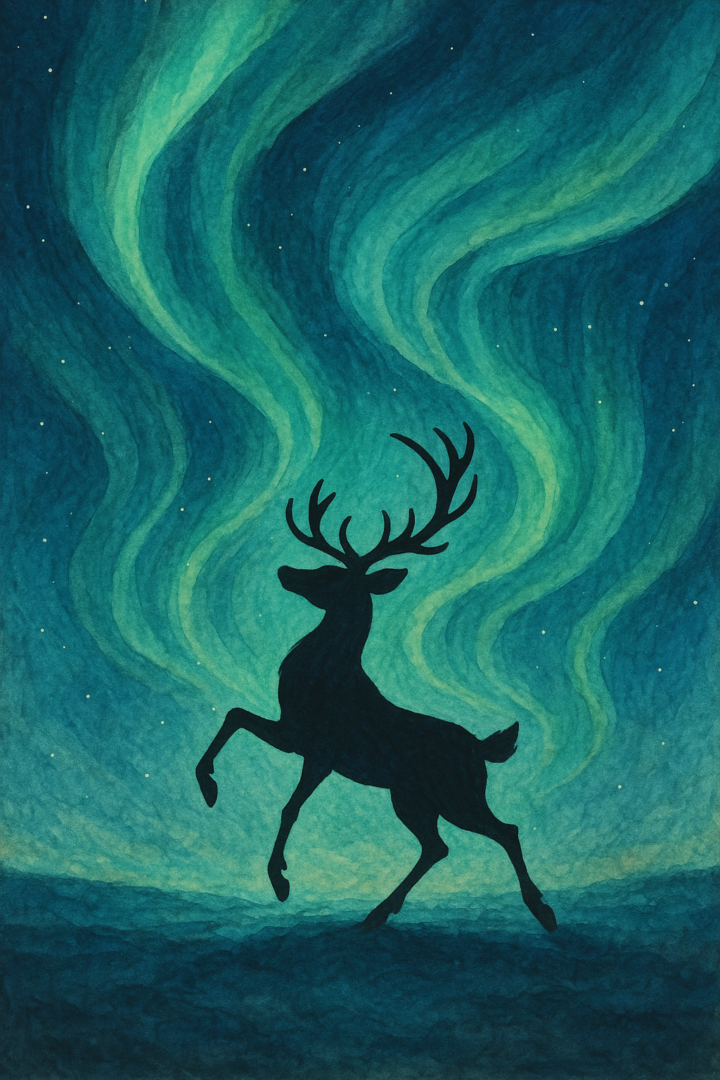
The original blog also mentions portrayals in which Dancer’s movement resembles the northern lights. That is a beautiful creative image rather than an established traditional detail. Flowing ribbons of color across a winter sky visually complement the idea of a graceful flying reindeer.
Because no one modern interpretation is definitive, Dancer remains a flexible Christmas character. Each artist or storyteller can decide what graceful movement means in their version of Santa’s world.
Dancer in Christmas Performances and Holiday Events
Dancer’s name makes the character especially appealing for dance schools, Christmas recitals, children’s performances, and holiday stage productions. A performer dressed as Dancer can immediately communicate the character through movement even without dialogue.
Choreographers can use flowing steps, leaps, spins, or synchronized group movement to distinguish Dancer from the rest of Santa’s team. Younger performers might simply skip or sway, while advanced dancers could incorporate ballet, jazz, contemporary, or other styles.
The character also offers an opportunity to celebrate many different forms of movement. Dancer does not have to represent one specific dance tradition. The joy of movement can belong to everyone.
That inclusiveness makes Dancer an especially adaptable character for school and community Christmas celebrations.
Designing Dancer: How Artists Can Capture Movement
The original poem does not describe Dancer’s appearance, so artists can be imaginative. A traditional illustration may show a brown reindeer with an alert posture, while a more whimsical design might include sparkling hooves, swirling snow, ribbons, bells, or decorative patterns suggesting motion.
An artist can communicate dance even in a still picture. A lifted hoof, curved body position, flowing scarf, airborne leap, or trail of snow can make the viewer feel that Dancer is moving.
Children making Dancer crafts can experiment with the same idea. They might use ribbon to represent flowing movement, sequins for stage sparkle, or paper snow swirls around a reindeer cutout.
The important element is not one official color or marking. It is the sense that this character could spring into motion at any moment.
Fun Facts About Dancer
Dancer is one of the eight reindeer named in the 1823 poem that helped establish Santa’s flying sleigh team in popular Christmas culture.
The character’s name naturally connects with performance, rhythm, and movement, which is why later portrayals frequently develop those qualities even though the original poem does not.
Claims that Dancer always flies near the front, leads warmups, choreographs North Pole celebrations, has sparkling hooves, or moves like the northern lights belong to particular adaptations, fan traditions, or imaginative retellings rather than the original literary source.
Dancer’s flexibility is part of the fun. The character can appear in ballet-inspired stories, cartoons, stage performances, ornaments, children’s crafts, or family storytelling while remaining recognizable through the simple idea of graceful movement.
The Symbolism of Dancer: Joy
Dance is closely connected with celebration, making joy one of Dancer’s strongest symbolic themes. People dance at weddings, festivals, parties, concerts, cultural celebrations, and family gatherings because movement can express excitement that words alone cannot capture.
Christmas is filled with similar moments of celebration. Children bounce with anticipation, families sing and move to favorite songs, and holiday performances bring audiences together.
Dancer represents permission to enjoy those moments fully. Joy does not always need to be quiet or carefully controlled. Sometimes it is expressed by moving, laughing, singing, and celebrating.
That makes Dancer a fitting reminder that happiness becomes more powerful when it is shared.
The Symbolism of Dancer: Expression and Creativity
Not every feeling is easy to explain. Art gives people additional ways to communicate, and dance is one of the oldest forms of human expression.
Dancer symbolizes the courage to express personality rather than hiding it. A creative person may communicate through movement, music, drawing, writing, fashion, storytelling, crafts, or countless other forms.
Christmas itself provides many opportunities for creativity, from decorating a tree to designing a handmade gift. Dancer fits naturally into that spirit.
The lesson is not that everyone must perform. It is that people should have room to discover the forms of expression that feel meaningful to them.
The Symbolism of Dancer: Harmony and Teamwork
A dance group succeeds when performers remain aware of one another. Timing matters. Spacing matters. One person may have a featured moment, but the overall performance depends on cooperation.
The same principle applies to Santa’s imaginary sleigh team. Each reindeer can have a different personality and strength while still contributing to one shared mission.
Dancer symbolizes harmony – not everyone doing the same thing, but different individuals learning how to work together smoothly.
Families, classrooms, workplaces, and communities depend on the same skill. Strong teamwork leaves room for individuality while keeping everyone connected to a common purpose.
The Symbolism of Dancer: Confidence
Performing requires a particular kind of courage. Stepping onto a stage, trying a new move, or expressing an idea where others can see it creates vulnerability. Confidence does not mean never feeling nervous; it means being willing to move forward despite that nervousness.
Dancer’s imagined ease in the spotlight makes the character a useful symbol of healthy confidence. The goal is not to believe that every performance will be perfect. It is to trust that mistakes do not erase ability or value.
Children learning a new skill often need that message. Falling during practice, forgetting a step, or feeling embarrassed is part of growth.
Dancer reminds us that grace includes recovery. Sometimes the most impressive move is simply getting back up and continuing.
What Dancer Can Teach Us About Finding Our Own Rhythm
People do not all learn, work, celebrate, or express themselves in the same way. One person may thrive in a busy group while another needs quiet preparation. One child may love performing in front of an audience while another expresses creativity privately.
Finding your own rhythm means understanding what helps you move forward effectively without assuming you must copy someone else’s style.
Dancer’s symbolic lesson is therefore larger than literal dancing. Pay attention to your strengths. Practice what matters to you. Learn to work with others without losing your individuality. And when circumstances change, be willing to adjust your steps.
Life rarely follows perfect choreography. Adaptability is part of the dance.
Final Thoughts: Christmas Magic Has Its Own Rhythm
Dancer may never have received the singular hero story that made Rudolph famous, but that does not make this original member of Santa’s team any less interesting. A single name from an 1823 poem has inspired generations to imagine a reindeer filled with grace, rhythm, creativity, confidence, and holiday joy.
The most important historical distinction is that those personality traits developed after the original poem. Dancer’s exact appearance, sleigh position, choreography, friendships, and special talents are open to interpretation. That flexibility has allowed the character to evolve across books, performances, animation, decorations, and family traditions.
Through those later interpretations, Dancer can symbolize several meaningful qualities: the discipline hidden behind graceful achievement, the courage required for creative expression, the joy of celebration, the confidence to recover from mistakes, and the harmony created when individuals learn to move together.
As Santa’s sleigh crosses the Christmas Eve sky in our imagination, Dancer adds something that cannot be measured simply by speed or strength. Dancer adds rhythm. And in a season filled with music, celebration, creativity, and shared traditions, that graceful contribution feels perfectly at home.