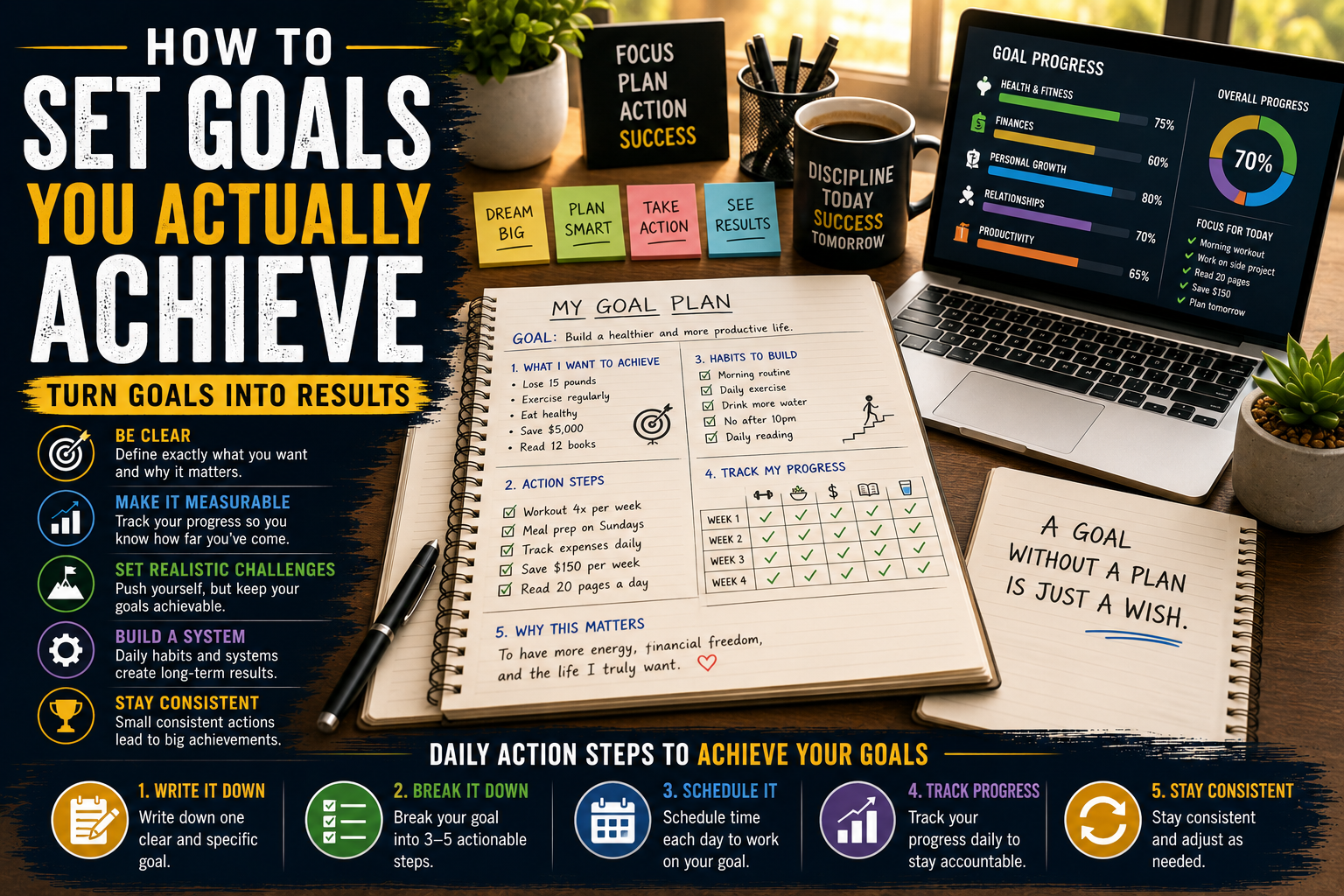

“A goal without a plan is just a wish.” – Antoine de Saint-Exupéry
Disclaimer: This blog may contain affiliate banner advertisements. If you click on these ads or make purchases through them, we may earn a small commission at no additional cost to you. These commissions help support our work and allow us to continue providing valuable content.
Introduction: Why Most Goals Fail
Introduction: Why Most Goals Fail
Setting goals is often the easy part, but following through on them requires commitment, planning, and consistent effort. Many people begin with enthusiasm and high expectations, only to lose momentum when the excitement fades or obstacles begin to appear. This doesn’t happen because they lack ambition or ability—it usually happens because their goals are too vague, unrealistic, or unsupported by a clear strategy for taking action. Without a well-defined plan, it’s easy to become distracted, discouraged, or overwhelmed when progress is slower than expected. Successful goal achievement comes from breaking large ambitions into manageable steps, creating consistent habits, and remaining flexible enough to adapt when challenges arise. The encouraging news is that goal setting is a skill that can be learned and improved with practice. When you establish meaningful goals, develop a realistic plan, and commit to taking steady action each day, you dramatically increase your chances of turning your vision into lasting success.
Clarity Is Everything
Clarity Is Everything
One of the biggest reasons goals go unfulfilled is that they are too vague to guide meaningful action. Statements like “I want to be successful” or “I want to get in shape” express good intentions, but they don’t provide a clear direction or measurable target. The more specific your goal becomes, the easier it is to create a plan, track your progress, and stay motivated along the way. Instead of saying, “I want to get fit,” define exactly what success looks like by setting a goal such as, “I will work out for 30 minutes, four times each week.” Specific goals eliminate uncertainty by giving you a clear destination and making it easier to identify the daily actions needed to achieve it. They also allow you to measure your progress, celebrate milestones, and make adjustments when necessary. When you replace vague intentions with clear, actionable goals, you create a roadmap that transforms wishful thinking into consistent action and greatly increases your chances of long-term success.
Make Goals Measurable
Make Goals Measurable
A goal becomes much more achievable when you can clearly measure your progress along the way. Without a way to track your efforts, it’s difficult to know whether you’re moving closer to your objective or if adjustments need to be made. Measurable goals provide clear milestones that help you monitor your growth, recognize accomplishments, and stay focused on the next step. Whether you track the number of workouts you complete, pages you read, dollars you save, or tasks you finish, having tangible evidence of your progress keeps your goal at the forefront of your mind. Measuring your results also creates accountability, making it easier to stay committed even when motivation begins to fade. As you see your progress accumulate over time, your confidence grows, your motivation increases, and you’re reminded that consistent effort is steadily moving you closer to achieving your goal.
Set Realistic but Challenging Goals
Set Realistic but Challenging Goals
The most effective goals are those that stretch your abilities without making success feel out of reach. If a goal seems impossible from the start, it can quickly lead to frustration, discouragement, and the temptation to give up before you’ve had a fair chance to succeed. On the other hand, if your goal is too easy, it may not inspire you to improve, develop new skills, or reach your full potential. Aim for goals that require consistent effort, learning, and perseverance while still remaining realistic based on your current circumstances and resources. As you achieve these goals, your confidence grows and you become better prepared to take on even greater challenges in the future. Remember that meaningful growth happens just outside your comfort zone, where you are challenged enough to improve but not so overwhelmed that progress feels impossible. By finding this balance, you create goals that keep you motivated, encourage continuous development, and build the confidence needed for long-term success.
Break Goals Into Action Steps
Break Goals Into Action Steps
Large goals often seem intimidating because they require so much time and effort that it’s difficult to know where to begin. Instead of focusing on the entire journey, divide your goal into smaller, actionable steps that are simple, specific, and achievable. Ideally, each step should be something you can complete in a single day or less, giving you frequent opportunities to experience progress and accomplishment. These smaller tasks make even ambitious goals feel more manageable by allowing you to concentrate on one action at a time rather than becoming overwhelmed by the bigger picture. As you complete each step, you build momentum, strengthen your confidence, and create a steady rhythm of progress that keeps you motivated. Over time, these consistent daily actions accumulate into significant results, proving that even the biggest goals are achieved by taking one purposeful step after another.
Create a System, Not Just a Goal
Create a System, Not Just a Goal
Setting a goal gives you a destination, but creating a system is what helps you reach it. Goals provide motivation and direction, while systems establish the daily habits and routines that produce consistent results over time. Instead of thinking only about the outcome you want to achieve, focus on the actions you need to repeat each day to make that outcome more likely. For example, rather than concentrating solely on losing weight, build a system that includes regular exercise, balanced meals, proper hydration, and consistent sleep habits. By focusing on the process instead of only the end result, you create a lifestyle that supports long-term success rather than relying on short bursts of motivation. As these positive habits become part of your daily routine, progress begins to happen naturally, making your goals feel more attainable and sustainable. Over time, you’ll discover that while goals provide the vision, it is your systems and daily habits that truly determine your success.
Schedule Your Goals
Schedule Your Goals
One of the most effective ways to ensure progress is to make your goals a planned part of your daily routine rather than something you hope to find time for. If a goal isn’t scheduled, it’s often pushed aside by urgent tasks, distractions, or unexpected responsibilities. Treat the time you dedicate to your goals with the same importance as you would a work meeting, doctor’s appointment, or commitment to someone else. Block out specific times in your calendar to work on your priorities, and do your best to protect those time slots from unnecessary interruptions. Scheduling your goals also removes the daily decision of when you’ll work on them, making it easier to build consistent habits and reduce procrastination. Even if you can only dedicate a short amount of time each day, those planned sessions accumulate into meaningful progress over weeks and months. By intentionally scheduling your goals, you transform good intentions into consistent action and create the discipline needed to turn your ambitions into lasting achievements.
Stay Flexible
Stay Flexible
No matter how carefully you plan your goals, life will occasionally present unexpected challenges, changes, and setbacks that disrupt your routine. Rather than viewing these moments as reasons to give up, see them as opportunities to adapt and continue moving forward in a different way. Flexibility is not about lowering your standards or abandoning your goals—it is about adjusting your approach while remaining committed to the outcome you want to achieve. If one strategy isn’t working or your circumstances change, be willing to revise your plan, modify your schedule, or take a different path toward the same destination. The most successful people are rarely those with perfect plans; they are the ones who can adapt without losing sight of their purpose. By remaining flexible and focusing on steady progress instead of rigid perfection, you build resilience, reduce frustration, and ensure that temporary obstacles never become permanent roadblocks to your success.
Track Progress and Adjust
### Track Progress and Adjust
Achieving your goals is not just about taking action—it’s also about regularly evaluating whether your actions are producing the results you want. Set aside time each week or month to review your progress and honestly assess what’s working well and what could be improved. Ask yourself questions such as, *”Am I moving closer to my goal?”*, *”Which habits are helping me succeed?”*, and *”What obstacles keep slowing me down?”* Use these insights to make thoughtful adjustments to your plan rather than becoming discouraged if something isn’t working as expected. Remember that changing your strategy is not the same as abandoning your goal; it is a sign of growth, adaptability, and commitment to continuous improvement. As you consistently measure your progress and refine your approach, you become more efficient, build greater confidence, and increase your chances of long-term success. The most successful people don’t simply work hard—they continually learn from their experiences and make small improvements that compound into remarkable results over time.
Stay Connected to Your Why
Stay Connected to Your Why
Every meaningful goal begins with a reason, and that reason becomes your greatest source of strength when challenges arise. While motivation naturally rises and falls, a strong sense of purpose provides the lasting commitment needed to keep moving forward even on difficult days. Take time to regularly remind yourself why your goal matters, how achieving it will improve your life, and who else may benefit from your success. Write your “why” in a journal, place it somewhere you’ll see it every day, or review it whenever you feel discouraged or tempted to give up. This emotional connection transforms your goal from a simple task into a meaningful mission, making it easier to stay disciplined even when progress feels slow. The clearer and more personal your purpose becomes, the stronger your determination will be to overcome obstacles and remain consistent. By staying connected to your “why,” you create a powerful source of resilience that fuels your daily actions and keeps you focused on the bigger picture until your goal becomes a reality.
Conclusion: Turn Goals Into Results
Setting goals is only the beginning. Achieving them requires clarity, consistency, and action.
When you set goals the right way—and back them up with systems—you turn ideas into results.
Start today. Set one clear goal, take one step, and build from there.
Daily Action Steps to Achieve Your Goals
- Write down one clear and specific goal.
2. Break it into 3–5 actionable steps.
3. Schedule time to work on it.
4. Track your progress daily.
5. Stay consistent and adjust as needed.







My past mistake was setting too many ambitious targets at once. I find that focusing on just one objective at a time makes progress much more certain.