
Affiliate Disclaimer: This post may contain affiliate links. If you make a purchase through one of these links, The Shopping Plaza may earn a commission at no additional cost to you.
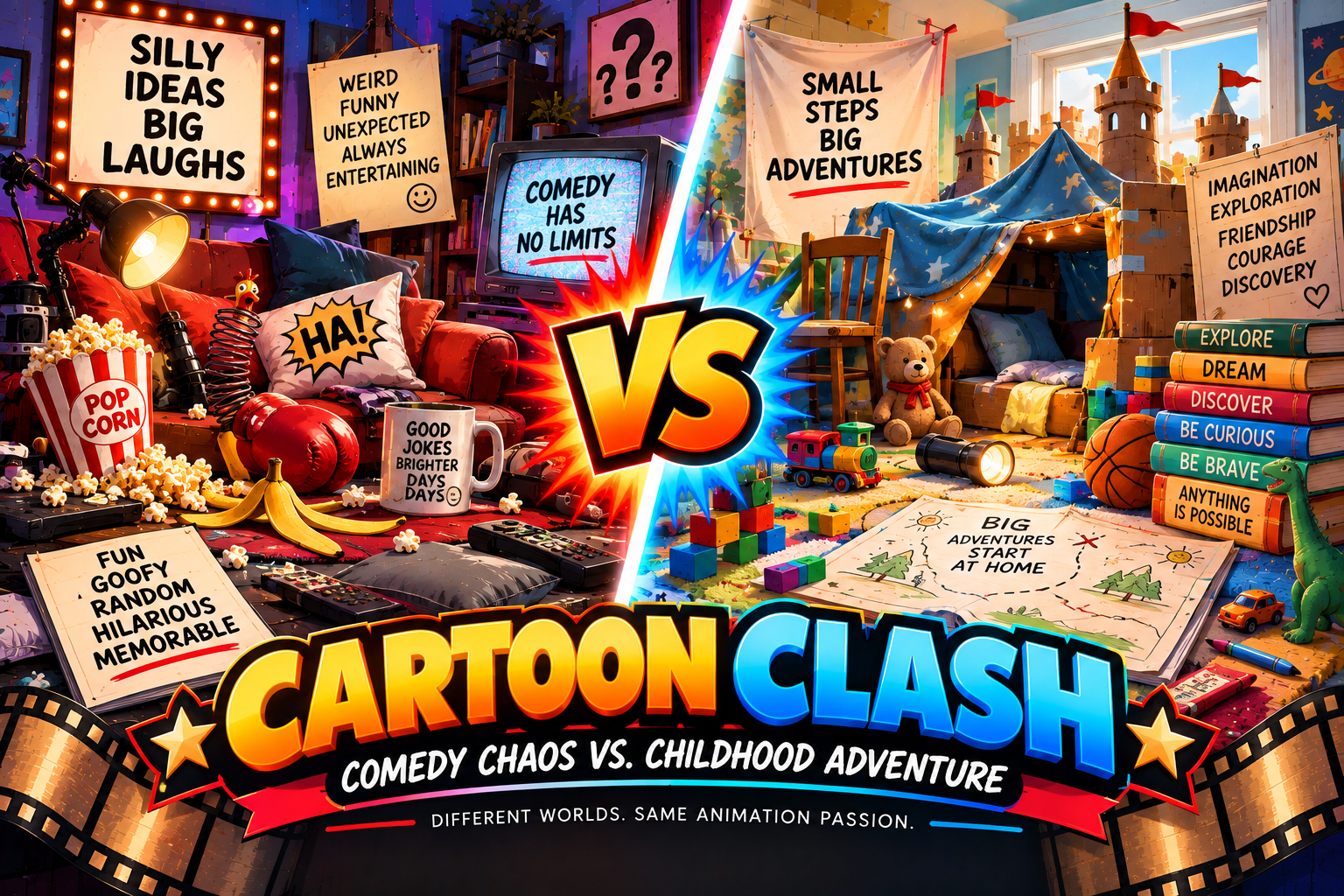
The next first-round matchup from Region A brings together two beloved Nickelodeon icons who represent very different kinds of animated success. The #4 seed Patrick Star enters as SpongeBob SquarePants’ lovable, unpredictable, and frequently clueless best friend, while the #13 seed Tommy Pickles arrives as the courageous baby leader who helped turn Rugrats into one of the defining cartoons of the 1990s. Patrick built his reputation through absurd logic, physical comedy, bizarre observations, and an ability to transform even the simplest conversation into an unforgettable joke. Tommy became memorable for almost the opposite reason: he is curious, determined, loyal, and willing to crawl into the unknown whenever his friends need help or an ordinary household situation becomes a grand adventure. Both characters benefited from extraordinary ensembles and both became important parts of Nickelodeon’s identity. Patrick has the advantage of belonging to a franchise that has remained continuously visible for decades, while Tommy carries the historical weight of helping establish Nickelodeon’s original-animation era. The seeding favors Patrick, but Cartoon Clash requires every category to be judged independently. Tommy’s leadership, imagination, and 1990s influence deserve the same consideration as Patrick’s comedy and modern cultural reach.
Round 1: Animation Quality
Rugrats possessed one of the most distinctive visual styles of 1990s television animation. Its uneven lines, exaggerated facial expressions, unusual perspectives, and deliberately childlike designs made the world feel as though it were being experienced from the babies’ point of view. Tommy’s simple design worked especially well because his movements, expressions, and physical scale emphasized how enormous ordinary environments could seem to a toddler. SpongeBob SquarePants began with a cleaner visual style but gradually expanded into increasingly expressive animation, elaborate reaction faces, surreal imagery, fast physical comedy, and highly flexible character movement. Patrick benefits enormously from that freedom. His soft starfish body can stretch, squash, distort, collapse, inflate, and transform to fit almost any joke. Later productions have pushed those expressions even further, making Patrick a natural vehicle for extreme visual comedy. Rugrats deserves major credit for having the more immediately unconventional original design language, but Patrick’s franchise demonstrates greater range in movement, expression, action, and visual experimentation across its long run. Winner: Patrick Star.
Round 2: Character Cast
Tommy Pickles is surrounded by one of Nickelodeon’s most memorable ensembles. Chuckie Finster provides the fearful counterweight to Tommy’s courage, Phil and Lil bring sibling chaos, Angelica functions as both antagonist and older-child authority figure, and Susie offers confidence and intelligence when the babies need another ally. Dil later changes Tommy’s role by making him an older brother, while the parents create a second layer of comedy because their understanding of events is often completely different from what the babies believe is happening. Patrick also belongs to an exceptional cast. SpongeBob is one of animation’s most recognizable protagonists, Squidward provides dry frustration, Mr. Krabs brings greed and workplace comedy, Sandy contributes intelligence and action, and Plankton supplies a recurring antagonist. Yet the key question is not simply which overall franchise has more famous characters; it is which supporting cast most directly enriches the competitor. Tommy is the leader of the Rugrats group, and his relationships with Chuckie, Angelica, Phil, Lil, Susie, and his family are central to his identity. Patrick is important to Bikini Bottom, but many major SpongeBob stories can function without him. Tommy’s ensemble is more structurally connected to his role as a protagonist. Winner: Tommy Pickles.
Round 3: Humor & Entertainment
Tommy can be funny, especially because the Rugrats interpret adult conversations and ordinary objects through incomplete childhood understanding. His adventures create comedy when the babies confidently misunderstand what adults mean, and Angelica’s manipulation often sends the group toward increasingly ridiculous conclusions. Tommy himself, however, is usually the brave and relatively sensible center of the group rather than the primary comic engine. Patrick Star is built for comedy. His bizarre reasoning, innocent confidence, sudden mood changes, strange questions, physical clumsiness, and ability to misunderstand even simple situations have produced an enormous collection of jokes. Patrick can make audiences laugh through dialogue, facial expressions, silence, physical movement, or simply the unexpected logic behind a decision. His friendship with SpongeBob amplifies that comedy because the two can encourage each other’s worst ideas with complete enthusiasm. Patrick’s humor also became highly reusable outside individual episodes through quotations, reaction images, clips, and memes. Tommy is an entertaining protagonist, but Patrick is one of Nickelodeon’s most naturally comedic characters. Winner: Patrick Star.
Round 4: Cultural Impact
Tommy Pickles played a major role in the rise of Rugrats, one of the programs that helped establish Nickelodeon’s original cartoon identity. As the babies’ leader, Tommy became a recognizable face of the network’s 1990s success, appearing in merchandise, movies, games, advertising, and countless promotional materials. Rugrats also helped prove that stories centered on babies could appeal to children well beyond the toddler age group and even entertain adults through the parents’ storylines. Patrick’s cultural footprint, however, has grown to an extraordinary level. SpongeBob SquarePants became a worldwide franchise, and Patrick emerged as one of its most recognizable characters rather than remaining merely a supporting sidekick. His expressions, quotes, mistakes, and strange observations circulate constantly through internet memes and social media. He appears on merchandise, in films, games, spin-off content, promotions, and imagery recognizable far beyond regular viewers of the series. Tommy represents a defining era of Nickelodeon, but Patrick has remained embedded in broader global pop culture for a longer period of continuous visibility. Winner: Patrick Star.
Round 5: Iconic Episodes & Moments
Tommy starred at the center of many memorable Rugrats adventures. His screwdriver became a symbol of his willingness to escape the playpen and explore, while stories involving Chuckie’s fears, Angelica’s schemes, family trips, holidays, new siblings, and the babies’ misunderstandings produced some of the franchise’s strongest moments. Rugrats also expanded into feature films, giving Tommy larger emotional stories involving family, responsibility, and friendship. Patrick’s iconic moments are often more immediately recognizable as individual comedy scenes. His exchanges with SpongeBob, arguments with Squidward, absurd attempts to help, strange lessons, and memorable one-liners have been replayed and quoted for years. Episodes centered on his friendship with SpongeBob or his uniquely ridiculous worldview generated images and dialogue that continue circulating online long after their original broadcasts. Tommy arguably has the stronger collection of complete adventure narratives, while Patrick has the stronger collection of instantly recognizable individual scenes and quotations. Under a category focused on memorable episodes, arcs, scenes, and defining moments, Patrick’s enormous catalog of widely repeated scenes gives him the narrow edge. Winner: Patrick Star.
Round 6: Creativity & Originality
Patrick is a wonderfully original comic personality. A dim but cheerful pink starfish living under a rock and confidently delivering completely illogical observations is a character concept that SpongeBob SquarePants used with remarkable flexibility. His simplicity allows writers to take him in almost any comedic direction without making him feel out of character. Tommy, however, stands at the center of a more fundamentally innovative storytelling concept. Rugrats transforms kitchens, backyards, supermarkets, airplanes, bedrooms, and family gatherings into enormous adventure landscapes because the audience experiences them from the babies’ limited perspective. Adult conversations are misheard or misunderstood, ordinary objects become mysterious tools, and routine family events become quests. Tommy’s courage gives the format momentum because he is usually the baby willing to leave the safe space and investigate. The concept does not depend on fantasy powers; it depends on imagination and perspective. Patrick is an original character within an imaginative underwater world, but Tommy’s central role in Rugrats’ baby-eye-view storytelling gives him the stronger claim to this category. Winner: Tommy Pickles.
Round 7: Era Difficulty
Patrick debuted at the end of the 1990s and quickly became part of a series competing in a strong animation environment that included established Nickelodeon hits as well as major programming from Cartoon Network, Disney, broadcast television, and later an explosion of digital entertainment. SpongeBob’s ability to grow rather than disappear deserves enormous credit, and Patrick’s continuing popularity reflects that success. Tommy, however, arrived much earlier in Nickelodeon’s original-animation development. Rugrats was part of the early Nicktoons era, when the network was still proving that its own original cartoons could compete with long-established animation brands. The 1990s soon became one of television animation’s most competitive periods, producing a flood of distinctive series with very different visual styles and comedic voices. Rugrats did not merely survive that environment; it became one of the properties that helped build Nickelodeon’s animation identity and demonstrated the commercial potential of the Nicktoons model. Tommy therefore faced the challenge of helping establish the platform on which later Nickelodeon stars could thrive. Patrick eventually competed in an even more crowded media landscape, but Tommy’s foundational role gives him the slight historical edge. Winner: Tommy Pickles.
Round 8: Legacy Endurance
Tommy Pickles has genuine multigenerational endurance. Rugrats remains strongly associated with 1990s animation, its characters continue appearing in merchandise and nostalgia culture, and the franchise has been revisited for newer audiences. Adults who grew up with Tommy can now introduce the characters to their own children, which is an important sign of lasting attachment. Patrick’s endurance, however, is stronger in terms of continuous mainstream visibility. SpongeBob SquarePants never needed to disappear for a long period before nostalgia revived it. Patrick has remained present through ongoing episodes, films, games, merchandise, internet culture, spin-off material, and constant reruns and streaming exposure. New generations encounter him alongside viewers who watched the earliest seasons. His comedy also adapts unusually well to short clips and memes, helping the character remain culturally active as viewing habits change. Tommy has successfully survived as a beloved legacy character, but Patrick continues functioning as both a nostalgia figure and a current entertainment personality. Winner: Patrick Star.
Final Verdict
The expanded matchup reveals a considerably stronger performance from Tommy Pickles than a simple comparison of current popularity might suggest. Tommy earns Character Cast because the Rugrats ensemble is directly connected to his role as the group’s leader, Creativity & Originality because the baby-perspective storytelling remains one of Nickelodeon’s most distinctive concepts, and Era Difficulty because he helped lead one of the original Nicktoons during the period when Nickelodeon was building its animation identity. Patrick answers with Animation Quality, Humor & Entertainment, Cultural Impact, Iconic Episodes & Moments, and Legacy Endurance. His extraordinary visual flexibility, status as a major comedy engine, worldwide meme and merchandise presence, enormous collection of recognizable scenes, and continuous exposure to new generations give him advantages that are difficult to overcome. Several rounds are close, especially Character Cast and Iconic Episodes & Moments, but the overall category balance still favors Patrick. Tommy’s leadership and historical importance make him a dangerous #13 seed, yet Patrick’s sustained cultural presence and comedy legacy ultimately produce the stronger tournament resume.
Final Result: Patrick Star advances to the second round with a 5-3 category victory. Tommy Pickles exits after winning three meaningful categories and demonstrating why he remains one of the defining protagonists of Nickelodeon’s original Nicktoons era.
Audience Challenge
Did Patrick Star deserve the 5-3 victory, or should Tommy Pickles’ leadership and role in building Nickelodeon’s 1990s animation legacy have produced the upset? Would you give Tommy Iconic Episodes & Moments because of the Rugrats’ larger adventure stories, or does Patrick’s massive collection of unforgettable scenes and quotations deserve the edge? Cast your vote, defend your choice, and continue following Legacy Showdown: Cartoon Clash as Region A moves forward.