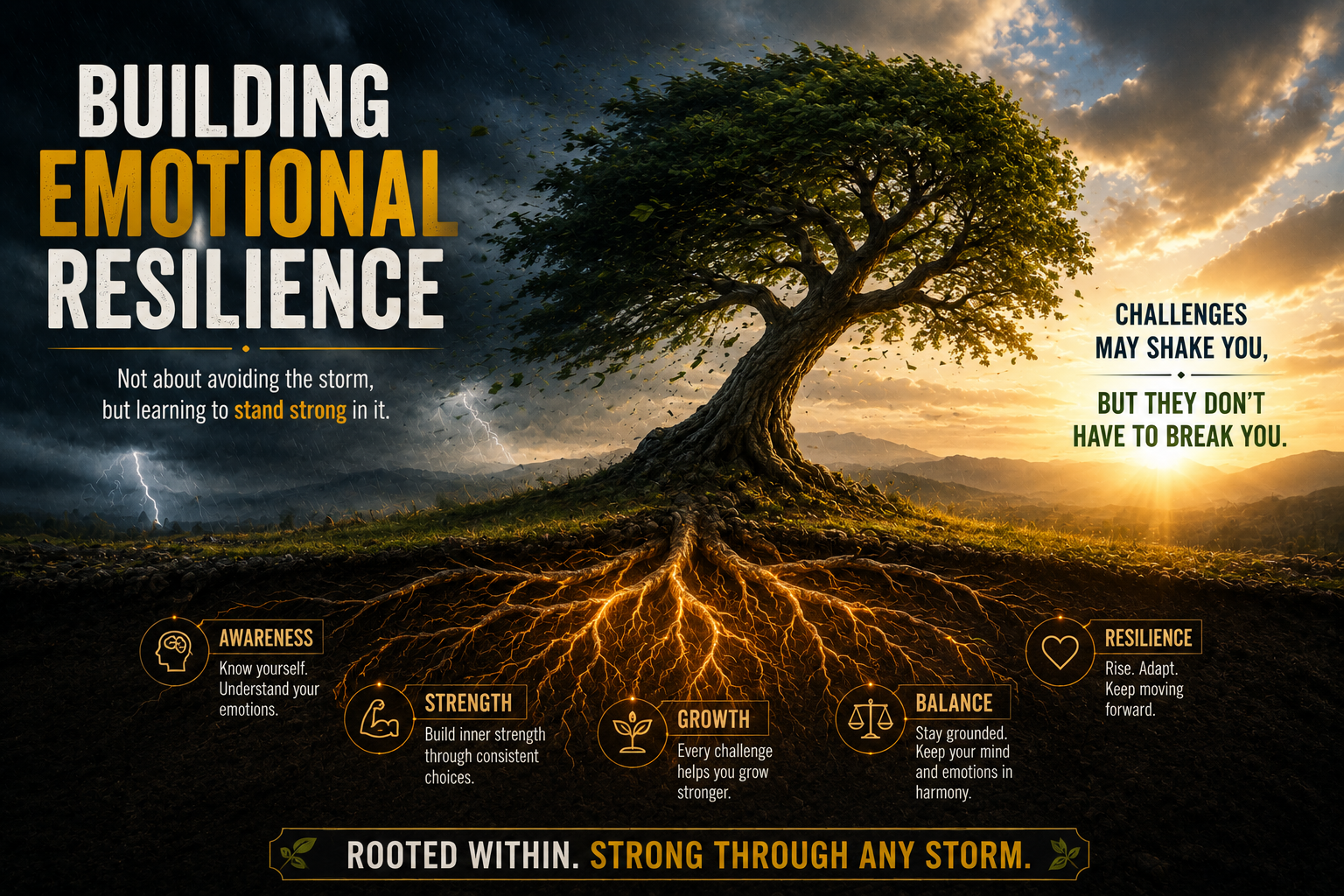

“Resilience is not about never falling, but rising every time you fall.” – Unknown
Disclaimer: This blog may contain affiliate banner advertisements. If you click on these ads or make purchases through them, we may earn a small commission at no additional cost to you. These commissions help support our work and allow us to continue providing valuable content.
Introduction: Strength Beneath the Surface
Introduction: Strength Beneath the Surface
Emotional resilience is the ability to adapt, recover, and keep moving forward in the face of life’s challenges. Everyone experiences stress, setbacks, disappointment, and unexpected changes, but resilience is what determines how you respond when those difficult moments arise. It doesn’t mean you never struggle or feel discouraged—it means you find healthy ways to process those emotions and continue moving forward despite them. Like a muscle, resilience grows stronger each time you face adversity with patience, perseverance, and a willingness to learn from the experience. Rather than trying to avoid hardship altogether, resilient people develop the mindset and habits needed to navigate it with courage and confidence. By building emotional resilience, you equip yourself to face life’s uncertainties with greater strength, knowing that while challenges are inevitable, they do not have to define your future.
What Is Emotional Resilience?
What Is Emotional Resilience?
Emotional resilience is your ability to manage stress, regulate your emotions, and maintain a balanced perspective when life becomes difficult. It doesn’t mean you ignore your feelings or pretend that challenges don’t affect you—instead, it means you respond to adversity in healthy and productive ways. Resilient people acknowledge their emotions, process them thoughtfully, and continue making decisions that align with their values and goals rather than reacting impulsively. This inner strength helps you stay grounded instead of overwhelmed, focused instead of scattered, and hopeful instead of defeated, even during uncertain times. As you develop emotional resilience, you become better equipped to recover from setbacks, adapt to change, and face future challenges with greater confidence and stability. Over time, this resilience becomes a powerful foundation that supports your mental well-being, strengthens your relationships, and enables you to thrive even when life doesn’t go according to plan.
Why Emotional Resilience Matters
Why Emotional Resilience Matters
Emotional resilience plays a vital role in how you navigate life’s inevitable challenges and uncertainties. Without resilience, setbacks can feel overwhelming, leaving you emotionally drained, discouraged, and uncertain about how to move forward. With resilience, however, those same challenges become opportunities to grow, learn valuable lessons, and develop greater confidence in your ability to handle adversity. Rather than allowing difficult circumstances to define you, resilience helps you adapt, maintain perspective, and continue making progress even when the path ahead is uncertain. This ability to recover from setbacks not only supports your mental and emotional well-being but also strengthens your relationships, decision-making, and overall quality of life. Over the long term, emotional resilience becomes one of the most important foundations for lasting success, helping you remain hopeful, focused, and determined no matter what obstacles you encounter.
Understanding Your Emotional Triggers
Understanding Your Emotional Triggers
Everyone has emotional triggers—specific situations, people, or experiences that can spark feelings of stress, frustration, fear, disappointment, or anxiety. These triggers often develop from past experiences, personal beliefs, or deeply held expectations, which is why they can produce such strong emotional responses. Identifying your emotional triggers is the first step toward managing them effectively because you can’t change what you don’t recognize. Take time to notice the situations that consistently affect your mood, your thoughts, or your behavior, and reflect on why they have such a powerful impact. As you become more aware of these patterns, you create space to respond thoughtfully rather than reacting automatically in the heat of the moment. Understanding your emotional triggers gives you greater self-awareness and self-control, allowing you to make healthier decisions, strengthen your resilience, and navigate life’s challenges with greater confidence and emotional balance.
Developing Emotional Awareness
Developing Emotional Awareness
Emotional awareness is the ability to recognize and understand what you’re feeling, identify the source of those emotions, and acknowledge how they influence your thoughts and actions. Rather than allowing emotions to control your behavior, emotional awareness helps you pause and honestly evaluate what is happening beneath the surface. This moment of reflection allows you to respond with intention instead of reacting impulsively out of frustration, fear, or stress. As you practice identifying your emotions more consistently, you become better equipped to manage difficult situations with clarity, patience, and self-control. Over time, this habit creates valuable space between a challenging situation and your response, giving you the opportunity to choose actions that align with your values and long-term goals. Developing emotional awareness is a foundational skill for building resilience because it empowers you to navigate life’s ups and downs with greater wisdom, confidence, and emotional balance.
Strengthening Your Response
Strengthening Your Response
While you can’t always control what happens to you, you always have the ability to choose how you respond. Developing this skill takes practice, but each time you pause before reacting, you strengthen your emotional resilience and self-control. Instead of responding impulsively out of anger, fear, or frustration, take a moment to breathe, assess the situation, and consider the response that best aligns with your values and long-term goals. Thoughtful reactions often lead to better decisions, healthier relationships, and fewer regrets than emotionally driven responses. As you consistently practice responding with patience, clarity, and intention, these habits become more natural, even during stressful situations. Over time, this deliberate approach builds emotional strength, increases your confidence in handling challenges, and helps you navigate life’s ups and downs with greater wisdom and composure.
Building Healthy Coping Strategies
Building Healthy Coping Strategies
Emotionally resilient people understand that stress is a part of life, so they intentionally develop healthy ways to manage it rather than allowing it to build up over time. Positive coping strategies such as regular exercise, journaling, talking with a trusted friend or family member, practicing mindfulness, spending time in nature, or simply taking a short break can help restore emotional balance during difficult moments. These healthy habits give you an opportunity to process your thoughts and emotions in a constructive way instead of ignoring them or reacting impulsively. While unhealthy coping mechanisms may provide temporary relief, they often fail to address the underlying issue and can create additional challenges over time. By consistently choosing healthy outlets, you strengthen your ability to navigate stress with greater clarity, patience, and self-awareness. Over time, these coping strategies become valuable tools that not only help you recover from setbacks but also support your overall mental well-being and emotional resilience.
Staying Consistent Through Challenges
Staying Consistent Through Challenges
Emotional resilience is not built through one extraordinary moment of courage but through the consistent choices you make every day. Showing up when life feels difficult, continuing to move forward after setbacks, and staying committed to your goals all contribute to a stronger, more resilient mindset. There will be days when progress feels slow or obstacles seem overwhelming, but choosing not to give up during those moments is what builds lasting emotional strength. Every small act of perseverance—whether it’s completing a simple task, maintaining a positive habit, or trying again after a disappointment—reinforces your belief that you can overcome challenges. Over time, these consistent efforts create confidence because they remind you that you are capable of handling adversity, even when circumstances are less than ideal. By remaining steady through life’s ups and downs, you develop the resilience to face future challenges with greater determination, patience, and trust in your ability to keep moving forward.
Reframing Negative Experiences
Reframing Negative Experiences
The way you interpret life’s challenges has a powerful influence on your emotions, mindset, and ability to move forward. When you automatically label difficult situations as failures, it’s easy to become discouraged and lose confidence in yourself. Instead, practice viewing setbacks as valuable learning experiences that reveal opportunities for growth, improvement, and greater self-awareness. Every challenge has the potential to teach you something—whether it’s a new skill, a different perspective, or a better approach for the future. By intentionally reframing negative experiences, you shift your focus from what went wrong to what can be gained, making obstacles feel less overwhelming and more manageable. Over time, this positive perspective strengthens your emotional resilience, helping you approach future difficulties with greater confidence, optimism, and the belief that every challenge can become a stepping stone toward personal growth.
Conclusion: Resilience Is Built, Not Born
Emotional resilience is not something you either have or don’t have—it’s something you build.
Through awareness, discipline, and consistent effort, you can strengthen your ability to handle life’s challenges.
Start small, stay consistent, and grow stronger every day.
Daily Action Steps to Build Emotional Resilience
- Identify one emotional trigger and reflect on it.
2. Pause before reacting to stressful situations.
3. Practice one healthy coping strategy.
4. Reframe one negative experience into a lesson.
5. Stay consistent with small positive actions.