
“Failure is simply the opportunity to begin again, this time more intelligently.” – Henry Ford
Disclaimer: This blog may contain affiliate banner advertisements. If you click on these ads or make purchases through them, we may earn a small commission at no additional cost to you. These commissions help support our work and allow us to continue providing valuable content.
Introduction: When Confidence Takes a Hit
### Introduction: When Confidence Takes a Hit
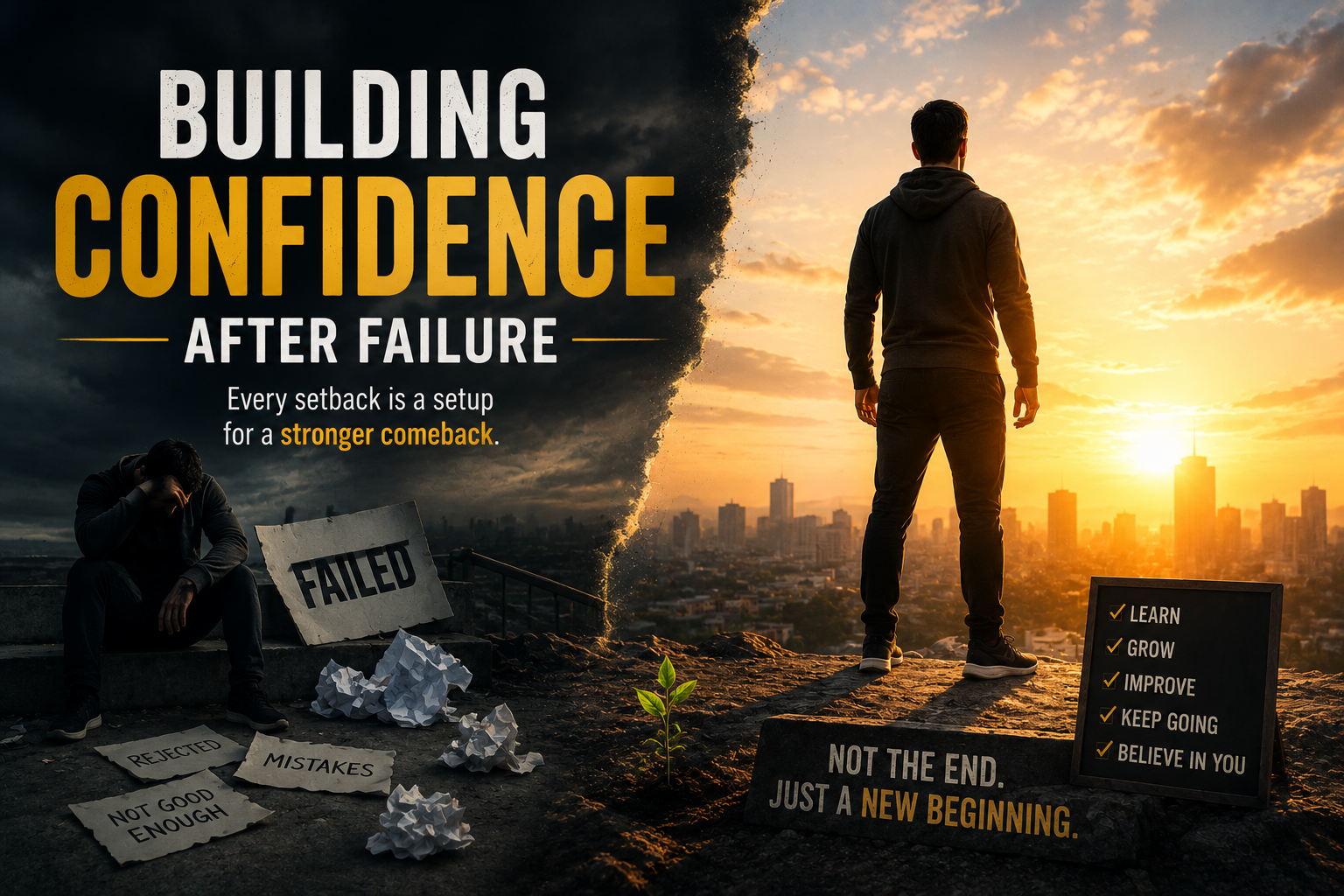
Failure has a way of shaking your confidence. Whether it’s a missed opportunity, a mistake, or something that simply didn’t go as planned, it can leave you questioning your abilities and wondering if you’re capable of succeeding. Those feelings are natural, but they don’t define your potential or determine what comes next. Every successful person has experienced setbacks that tested their confidence before ultimately leading to growth and greater resilience. The key is to view failure not as proof that you’re incapable, but as valuable feedback that helps you learn, adapt, and improve. Rather than marking the end of your confidence, failure can become the foundation for rebuilding it stronger, wiser, and more resilient than ever before.
Understanding What Failure Really Means
Understanding What Failure Really Means
Failure is not a reflection of your worth—it is feedback. Every setback provides valuable information about what worked, what didn’t, and what can be improved the next time you face a similar challenge. Instead of viewing failure as a personal defeat, see it as an opportunity to learn, adjust your approach, and develop new skills. Many of life’s greatest successes are built on lessons learned through repeated setbacks and perseverance. When you shift your perspective in this way, failure loses much of its power to discourage you and instead becomes a stepping stone toward growth. By embracing the lessons hidden within every disappointment, you build greater resilience, strengthen your confidence, and move one step closer to achieving your goals.
The Emotional Impact of Failure
The Emotional Impact of Failure
It’s completely normal to feel disappointed, frustrated, embarrassed, or even discouraged after experiencing failure. These emotions are a natural response to unmet expectations and remind us that we cared deeply about the outcome. Acknowledging how you feel is an important part of the healing process, but it’s equally important not to let those emotions define your future or keep you stuck in self-doubt. Give yourself the time and space to process the setback, reflect on what happened, and practice self-compassion instead of harsh self-criticism. As the initial emotions begin to settle, shift your focus toward what you’ve learned and the steps you can take moving forward. Every setback eventually loses its power when you choose to use it as motivation to grow, improve, and continue pursuing your goals with renewed determination.
Separating Identity From Outcome
Separating Identity From Outcome
One of the biggest mistakes people make after experiencing failure is allowing a single outcome to define who they are. A missed opportunity, poor decision, or unexpected setback does not determine your value, your character, or your potential for future success. You are not your failures—you are a person who encountered a challenge and now has the opportunity to learn, grow, and try again. Making this distinction is essential because it shifts your focus from self-judgment to self-improvement, allowing you to see setbacks as temporary events rather than permanent labels. When you separate your identity from your outcomes, you become more resilient, more willing to take healthy risks, and less afraid of future failure. This mindset is a powerful foundation for rebuilding confidence and moving forward with greater wisdom, determination, and belief in your ability to succeed.
Rebuilding Confidence Through Small Wins
Rebuilding Confidence Through Small Wins
Confidence rarely returns overnight—it is rebuilt through consistent action and a series of small victories. After experiencing a setback, focus on achievable goals that allow you to make steady progress without feeling overwhelmed. Each completed task, solved problem, or positive decision serves as evidence that you are capable of moving forward and making meaningful progress. While these wins may seem insignificant on their own, they gradually restore your belief in your abilities and create momentum for tackling larger challenges. Celebrate each success, no matter how small, because every step forward is proof that you are growing stronger and becoming more resilient. Over time, these small accomplishments combine to rebuild lasting confidence, reminding you that setbacks are temporary but the lessons and strength you gain from overcoming them can last a lifetime.
Learning From the Experience
Learning From the Experience
Take time to reflect honestly on what happened without turning the process into an exercise in self-blame. Ask yourself what worked, what did not, and which factors were within your control. Questions such as “What can I learn?” and “What can I do differently next time?” help transform disappointment into practical insight. You may discover that you need a better plan, additional knowledge, more preparation, or a different approach altogether. Use those lessons to identify one or two specific changes you can apply when your next opportunity arrives. When you treat failure as a source of useful information, it becomes a stepping stone toward improvement rather than a stopping point on your journey.
Taking Action Again
Taking Action Again
The fastest way to rebuild confidence is to take action, even if your first steps feel small or uncertain. After a setback, it’s tempting to avoid new challenges out of fear of failing again, but staying in your comfort zone only reinforces self-doubt and keeps you from growing. Every time you choose to face a challenge, you prove to yourself that failure has not taken away your ability to move forward. Start with manageable goals that stretch you just enough to rebuild trust in your own capabilities without becoming overwhelming. As you continue taking consistent action, each small success creates momentum, making the next step feel a little easier than the last. Over time, those small steps accumulate into significant progress, replacing fear with confidence and reminding you that resilience is built not by avoiding challenges, but by facing them with courage and determination.
Building Resilience Along the Way
Building Resilience Along the Way
Every time you recover from a failure, you strengthen your resilience and your ability to handle future challenges with greater confidence. Resilience isn’t about avoiding setbacks—it’s about learning how to adapt, persevere, and keep moving forward despite them. Each obstacle you overcome reminds you that difficult moments are temporary and that you possess the strength to work through them. Over time, you begin to trust yourself more because you’ve seen firsthand that you can recover, adjust your approach, and continue making progress. This growing confidence makes future setbacks feel less intimidating, knowing they are opportunities to learn rather than reasons to quit. By embracing each challenge as part of your personal growth, you develop a resilient mindset that allows you to face life’s uncertainties with courage, determination, and an unwavering belief in your ability to overcome whatever comes your way.
Creating a Growth-Focused Mindset
Creating a Growth-Focused Mindset
Adopting a growth-focused mindset changes the way you view both success and failure. Instead of seeing challenges as threats to your confidence, you begin to recognize them as opportunities to learn, improve, and develop new skills. A growth mindset reminds you that your abilities are not fixed—they can be strengthened through effort, persistence, and a willingness to keep learning. Rather than fearing failure or avoiding difficult situations, you begin to embrace setbacks as a natural and necessary part of the journey toward success. Each obstacle becomes a chance to gain experience, refine your approach, and build greater resilience for the future. By consistently choosing growth over fear, you develop the confidence to face new challenges with optimism, knowing that every experience—whether successful or not—is helping you become stronger, wiser, and better prepared for what lies ahead.
Conclusion: Confidence Is Rebuilt, Not Lost
Failure does not destroy confidence—it reshapes it.
By learning, taking action, and staying consistent, you can rebuild stronger confidence than before.
Keep going, keep growing, and trust the process.
Daily Action Steps to Rebuild Confidence After Failure
- Reflect on one lesson from a recent failure.
2. Take one small action toward your goal.
3. Celebrate small wins.
4. Separate your identity from outcomes.
5. Stay consistent and keep moving forward.