
“Calmness is the cradle of power.” – Josiah Gilbert Holland
Disclaimer: This blog may contain affiliate banner advertisements. If you click on these ads or make purchases through them, we may earn a small commission at no additional cost to you. These commissions help support our work and allow us to continue providing valuable content.
Introduction: Pressure Is Inevitable
Introduction: Pressure Is Inevitable
Pressure is an unavoidable part of life, and everyone experiences it at different times. Whether it comes from demanding deadlines, family responsibilities, financial concerns, major life decisions, or unexpected challenges, pressure has a way of testing both your mindset and your ability to adapt. While you cannot eliminate pressure entirely, you can develop the skills needed to manage it effectively and prevent it from controlling your thoughts and actions. The people who perform well under pressure are not those who live stress-free lives—they are the ones who have learned to remain calm, think clearly, and make thoughtful decisions even when circumstances become difficult. They understand that pressure is not always a sign that something is wrong; in many cases, it is simply part of pursuing meaningful goals and accepting greater responsibility. By strengthening your mindset, building healthy coping strategies, and focusing on what you can control, you can learn to face pressure with confidence instead of fear. Over time, these habits allow you to transform pressure from something that holds you back into something that helps you grow stronger, more resilient, and better prepared for future challenges.
Understanding Pressure
Understanding Pressure
Pressure often arises from the expectations we place on ourselves as well as those we believe others have for us. It may come from work deadlines, family responsibilities, financial obligations, personal goals, or the desire to meet high standards and avoid disappointment. Sometimes the greatest source of pressure isn’t the situation itself but the thoughts and assumptions we attach to it. Taking time to identify exactly what is creating your stress is the first step toward managing it effectively because you cannot address a problem you don’t fully understand. Ask yourself whether the pressure is coming from external circumstances, your own expectations, or a combination of both. Once you recognize the true source of your stress, you can begin focusing on practical solutions, adjusting unrealistic expectations, and directing your energy toward what you can actually control. This greater self-awareness allows you to respond with clarity and confidence instead of becoming overwhelmed by pressure, helping you navigate challenging situations with a calmer and more balanced mindset.
The Power of Staying Calm
The Power of Staying Calm
Remaining calm under pressure is one of the most valuable skills you can develop because it allows you to think clearly, make sound decisions, and respond thoughtfully instead of reacting impulsively. When stress causes panic, your focus narrows, emotions take over, and it becomes much harder to evaluate situations objectively or identify the best course of action. In contrast, a calm mindset helps you slow down, assess the facts, and approach challenges with greater confidence and clarity. Staying calm doesn’t mean ignoring your emotions or pretending the situation isn’t difficult—it means choosing not to let those emotions control your decisions. Simple practices such as taking a few deep breaths, pausing before responding, and focusing on the next practical step can help you regain a sense of control even in high-pressure situations. The more you practice remaining calm during life’s challenges, the more resilient and confident you become, allowing you to handle future obstacles with greater composure, wisdom, and effectiveness.
Control Your Breathing
Control Your Breathing
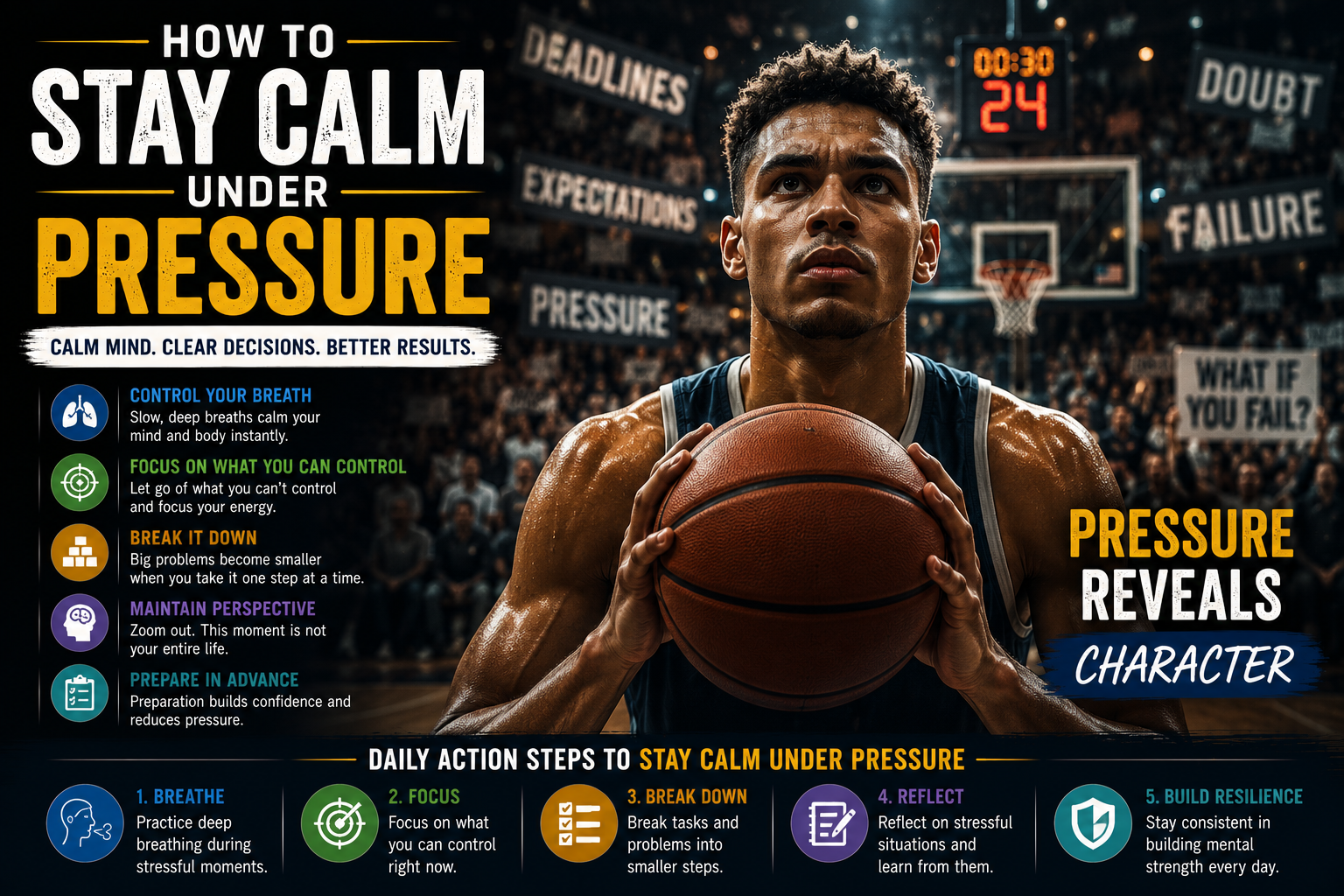
One of the simplest and most effective ways to regain control during stressful moments is to focus on your breathing. When pressure increases, your breathing often becomes quick and shallow, signaling your body to remain in a heightened state of alert. By intentionally slowing your breath and taking deep, controlled breaths, you activate your body’s natural relaxation response, helping to reduce tension and calm your nervous system. This simple practice lowers your heart rate, improves your ability to think clearly, and creates the mental space needed to make thoughtful decisions instead of reacting impulsively. Even taking a minute to focus on slow, steady breathing can make a noticeable difference when emotions begin to rise. As you practice this technique consistently, it becomes a reliable tool you can use anytime you feel overwhelmed, allowing you to remain composed, focused, and in control even during life’s most demanding moments.
Focus on What You Can Control
Focus on What You Can Control
When you’re under pressure, it’s easy to become consumed by everything that could go wrong or by circumstances that are completely outside of your influence. This often leads to unnecessary worry, making even manageable situations feel overwhelming. Instead of trying to solve every possible problem at once, direct your attention to the things you can actually control, such as your attitude, your preparation, your decisions, and the actions you take next. By concentrating on these controllable factors, you replace feelings of helplessness with a sense of purpose and direction. This shift in focus helps clear your mind, reduces anxiety, and allows you to make better decisions because your energy is being invested where it can have the greatest impact. As you consistently practice focusing on what is within your control, you’ll find it easier to remain calm under pressure, adapt to unexpected challenges, and move forward with greater confidence and resilience.
Break Problems Into Smaller Steps
Break Problems Into Smaller Steps
When you’re facing a large problem, it’s easy to become overwhelmed by everything that needs to be done. Looking at the challenge as a whole can make it seem so intimidating that you struggle to know where to begin. Instead of trying to solve everything at once, break the problem into smaller, more manageable steps that you can tackle one at a time. Focus on completing the next logical action before worrying about the entire journey ahead. Each small success builds momentum, increases your confidence, and makes the remaining tasks feel less overwhelming. As you continue making steady progress, what once seemed like an impossible challenge becomes a series of achievable actions. By approaching problems one step at a time, you reduce stress, improve your decision-making, and create a clear path toward finding effective solutions.
Train Your Mind
Train Your Mind
Staying calm under pressure is not something people are simply born with—it is a skill that can be developed through consistent practice and experience. Just as your muscles become stronger through regular exercise, your mind becomes more resilient each time you face a challenge and choose to respond with patience, focus, and self-control. Rather than avoiding difficult situations, view them as opportunities to strengthen your mental resilience and improve your ability to perform under pressure. Each challenge teaches you how to manage your emotions, think more clearly, and remain composed when circumstances become demanding. Over time, situations that once felt intimidating begin to feel more familiar because your confidence grows with every experience. By intentionally training your mind to remain calm and solution-focused, you build the resilience needed to navigate setbacks, make better decisions, and handle life’s pressures with greater confidence, composure, and emotional strength.
Maintain Perspective
Maintain Perspective
When you’re under pressure, it’s easy for a single challenge to feel much bigger than it actually is. Stress has a way of narrowing your focus, making today’s problem seem as though it will have lasting consequences when, in reality, many difficulties are temporary. Taking a step back and asking yourself, “Will this matter in a week, a month, or a year?” can help you separate truly important issues from momentary frustrations. This simple question encourages you to view the situation from a broader perspective, reducing emotional intensity and helping you respond more thoughtfully. While some challenges do deserve careful attention, many become far less significant with the passage of time. By maintaining perspective, you avoid making impulsive decisions based on temporary emotions and instead focus your energy on finding practical solutions. Over time, this habit helps you remain calmer under pressure, make wiser decisions, and approach life’s challenges with greater confidence, balance, and emotional resilience.
Prepare in Advance
Prepare in Advance
One of the most effective ways to handle pressure is to prepare before it arrives. When you invest time in planning, practicing, and organizing, you reduce uncertainty and give yourself the confidence to face challenges with a clear mind. Preparation might involve researching important information, creating a step-by-step plan, rehearsing a presentation, organizing your workspace, or anticipating potential obstacles before they occur. While you can’t predict every situation, thinking ahead allows you to develop backup plans and respond more calmly when unexpected problems arise. The better prepared you are, the less likely you are to panic because you’ll already have the knowledge, tools, and strategies needed to adapt. Preparation doesn’t eliminate pressure, but it transforms it from something intimidating into something you are equipped to handle. By making preparation a regular habit, you build confidence, improve your performance, and develop the resilience needed to remain calm and effective in even the most demanding situations.
Conclusion: Calm Is Strength
Pressure is unavoidable, but panic is optional.
By staying calm, focusing on solutions, and practicing control, you can handle even the most stressful situations with confidence.
Daily Action Steps to Stay Calm Under Pressure
- Practice deep breathing during stressful moments.
2. Focus on what you can control.
3. Break tasks into smaller steps.
4. Reflect on stressful situations and learn from them.
5. Stay consistent in building mental resilience.







My past mistake was trying to force a relaxation state during a high-stakes situation. I found that focusing on a specific, small physical action provided the necessary anchor.