Affiliate Disclosure: This article may contain affiliate links. If you purchase products or services through links mentioned in this article, we may earn a commission at no additional cost to you. Recommendations are provided for informational and educational purposes only.
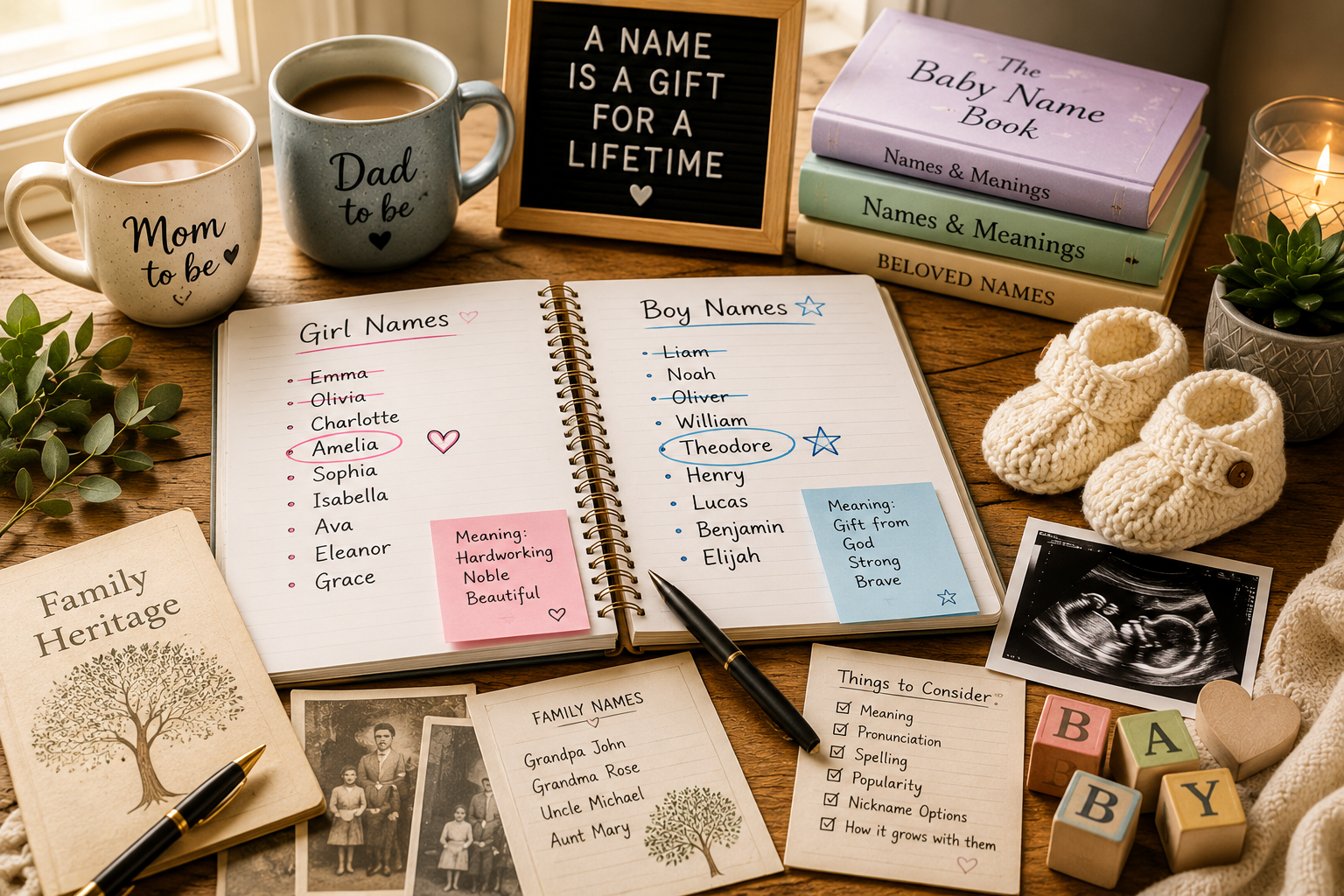
Choosing a name for your new baby can be one of the most exciting parts of preparing for parenthood. It can also feel surprisingly difficult. A name may reflect family history, cultural heritage, personal values, favorite memories, or simply a sound that both parents love.
Because your child may carry the name throughout life, the decision deserves thoughtful consideration. Fortunately, you do not need to find the perfect name in a single conversation. A simple process can help you gather ideas, compare choices, and confidently select a name that feels meaningful and practical.
Why Choosing a Baby Name Matters
A name is one of the first gifts parents give their child. It becomes part of the child’s identity and will appear in classrooms, friendships, family celebrations, job applications, and countless introductions.
A name does not determine a child’s future, but it can influence first impressions and shape how easily other people remember, pronounce, or spell it. The strongest choices usually balance personal meaning with long-term usability.
Start by Gathering Names You Already Love
Many people have favorite names long before they are expecting a baby. Begin by writing down every name that appeals to you, even if you are not yet certain it belongs on the final list.
Possible sources of inspiration include:
Family members and ancestors
Favorite books, movies, or historical figures
Cultural or religious traditions
Nature, places, seasons, or meaningful experiences
Names you have always liked but rarely hear
At this stage, avoid criticizing one another’s suggestions too quickly. The goal is to create a generous starting list before narrowing it down.
Decide Whether You Prefer a Classic or Distinctive Name
One of the most useful early decisions is whether you prefer a familiar name, an uncommon name, or something between the two.
Classic names are often easy to recognize, pronounce, and spell. Distinctive names may feel more personal and memorable. Neither approach is automatically better. The right choice depends on what matters most to your family.
Many parents find a comfortable middle ground by choosing a traditional name that is not currently at the top of popularity lists, using a family name as a middle name, or selecting a culturally meaningful name with an intuitive pronunciation.
Research Meaning, Origin, and Popularity
Once you have a working list, research each name. Baby-name books and reputable online databases can help you review meanings, language origins, pronunciation, spelling variations, and popularity trends.
Popularity information can prevent surprises. A name that feels rare may be rapidly rising, while a familiar classic may be less common among today’s newborns than expected. Regional and national rankings can provide helpful context, but popularity alone should not control your decision.
Use the Pronunciation and Spelling Test
Say each name aloud and imagine another person seeing it for the first time. Ask whether the spelling naturally suggests the intended pronunciation and whether the name is likely to require frequent correction.
A unique spelling can be meaningful, but repeated misspellings or mispronunciations may become frustrating for the child. Consider whether the originality is worth that possible inconvenience.
Try the Full-Name Test
Always evaluate the first, middle, and last names together. A name that sounds beautiful alone may feel awkward when paired with the family surname.
Check the following:
Does the complete name flow naturally when spoken aloud?
Do the initials create an unintended word or abbreviation?
Is the name easy to say during an introduction?
Does it still sound appropriate for a teenager and an adult?
It can also help to write the full name several times and imagine seeing it on a school roster, graduation announcement, business card, or wedding invitation.
Consider Family and Cultural Connections
A baby’s name can provide a meaningful connection to family history or cultural heritage. Some parents use the exact name of a grandparent or relative, while others choose a variation, related meaning, shared initial, or honorary middle name.
Cultural names can preserve language, traditions, and family identity. When selecting a name from a culture or language, learn the correct pronunciation and meaning so the choice is respectful and accurate.
Create Separate Lists and Compare Them
A simple method for couples is for each parent to make an independent list of favorite names. Compare the lists and circle any matches or names that both people would seriously consider.
Then place the remaining names into three groups:
Strong possibilities
Names that need more discussion
Names either parent cannot accept
This method keeps the conversation organized and reduces the chance that every discussion turns into an endless debate.
Use a Fair Decision-Making Method
When parents have different preferences, a clear decision-making method can help. You might take turns proposing names, allow each parent a limited number of vetoes, or rank a shared shortlist from favorite to least favorite.
Some couples agree that one parent will choose the first name while the other chooses the middle name. Others alternate naming priority between children. Whatever method you use, both parents should feel respected and comfortable with the final result.
Be Careful With Outside Opinions
Friends and relatives can offer helpful perspectives, but too many opinions may make the process more stressful. People often associate names with someone they once knew, a current trend, or their own personal preferences.
You may choose to share only a short list, conduct an informal family poll, or keep the name private until the baby arrives. Feedback can be useful, but the final decision belongs to the parents.
Live With the Name Before Finalizing It
After narrowing the list, spend several days using each finalist. Say the name during everyday conversations, write it down, and imagine introducing your child with it.
A name that initially felt exciting may lose its appeal, while another may become more natural and meaningful over time. Giving yourself space to test the name can lead to a more confident decision.
Remember the Child Who Will Carry the Name
A baby’s name should feel special to the parents, but it should also serve the child throughout life. Consider whether it will age well, whether it could invite unnecessary teasing, and whether it is practical in school, social, and professional settings.
This does not mean you must avoid creativity. It simply means balancing personal expression with the child’s future experience.
Common Naming Mistakes to Avoid
Thoughtful parents can still overlook small details. Before making the final choice, try to avoid these common mistakes:
Following a trend without considering whether you truly love the name
Ignoring difficult spelling or pronunciation
Forgetting to check initials and the complete name
Choosing a name only to satisfy relatives
Rushing the decision because you feel pressured
Failing to consider how the name will sound in adulthood
A Simple Step-by-Step Baby-Naming Method
The entire process can be reduced to six manageable steps:
Each parent creates a private list of favorite names.
Compare lists and identify shared possibilities.
Research meaning, origin, spelling, pronunciation, and popularity.
Test each choice with the full middle and last name.
Live with the strongest finalists for several days.
Choose the name that both parents can support with confidence.
Final Thoughts
Choosing the perfect name for your new baby does not have to become a source of conflict or pressure. The best approach combines creativity, research, honest discussion, and patience.
Gather names that feel meaningful, test how they sound and function, consider the child’s future, and use a fair process for reaching agreement. A name chosen with love and thoughtful care can become a lasting part of your family’s story.