Affiliate Disclosure: This article may contain affiliate links. If you purchase products or services through links mentioned in this article, we may earn a commission at no additional cost to you. Recommendations are provided for informational and educational purposes only.
Traditional baby showers focus on gifts, decorations, and celebrating the arrival of a new child. While those elements remain important, many families are discovering the value of combining celebration with practical education. A baby safety shower helps parents, grandparents, and caregivers learn how to create a safer environment for a child before the baby arrives. The goal is to provide useful information that can reduce preventable injuries while still creating a fun and memorable event. Safety-focused gatherings encourage conversations that may not happen during a traditional baby shower. They also give guests an opportunity to contribute meaningful gifts and resources that support child safety. By blending education with celebration, families can create an event that has lasting benefits long after the party ends.
Introduction
A baby safety shower transforms a traditional celebration into an opportunity for learning. New parents often spend countless hours researching feeding schedules, nursery themes, and baby gear, yet many are less familiar with household hazards and injury prevention strategies. A safety-focused event helps bridge that gap. Guests leave with practical knowledge while the parents gain confidence in preparing for their child’s arrival. The event also encourages open discussions about child safety, emergency preparedness, and best practices recommended by healthcare professionals. Because every family situation is different, these discussions can be customized to meet specific needs. The result is a celebration that combines joy, preparation, and long-term value.
What Is a Baby Safety Shower?
A baby safety shower is a gathering centered on child safety education. Like a traditional baby shower, friends and family come together to celebrate the upcoming arrival of a child. However, many activities focus on injury prevention, childproofing, safe sleep practices, and emergency preparedness. Demonstrations, educational games, and safety-themed gifts become key parts of the event. Parents may receive baby gates, outlet covers, first-aid kits, cabinet locks, and other practical products. Experts such as nurses, firefighters, or child passenger safety technicians may be invited to share advice. The event creates a supportive environment where questions are encouraged and practical knowledge is shared.
Why Safety Education Matters
Many childhood injuries are preventable. Unfortunately, new parents are often overwhelmed with information and may not realize how quickly household hazards become dangerous. Safety education helps families identify risks before accidents occur. Understanding common hazards allows caregivers to take proactive steps rather than reacting after an incident. Education also empowers parents to make informed decisions regarding sleep environments, car seats, home safety, and emergency planning. The earlier families learn these concepts, the easier it becomes to implement them. Knowledge can be just as valuable as any physical gift received during a shower.
Planning a Successful Safety Shower
Careful planning helps ensure a successful event. Choose a venue that provides enough space for demonstrations and group activities. Consider inviting professionals who can answer questions and provide expert guidance. Create an agenda that balances educational content with entertainment. Guests should feel engaged rather than overwhelmed. Providing printed materials, checklists, and resource guides allows attendees to continue learning after the event. Offering refreshments and interactive activities keeps the atmosphere relaxed and enjoyable. A well-planned safety shower should feel informative, welcoming, and memorable.
Interactive Learning Stations
Learning stations encourage hands-on participation. One station might focus on safe sleep practices, while another demonstrates proper childproofing techniques. Additional stations can cover poison prevention, water safety, emergency preparedness, and car seat installation. Guests rotate through each area, gaining valuable information along the way. Interactive learning is often more effective than lectures because participants actively engage with the material. Demonstrations allow attendees to practice skills and ask questions. These stations can be customized based on the interests and needs of the family. They also create natural opportunities for conversation and collaboration.
Safe Sleep Education
Safe sleep remains one of the most important topics for new parents. Babies should sleep on a firm, flat surface free of loose bedding, pillows, and stuffed animals. Consistent safe sleep practices can help reduce sleep-related risks. Parents should understand current recommendations and ensure that all caregivers follow the same guidelines. Grandparents and babysitters may be familiar with outdated advice, making education especially important. Demonstrations can show what a safe sleep environment looks like. Providing educational handouts reinforces key concepts. The goal is to create safe habits from the very beginning.
Bedroom Safety Checklist
A safe nursery requires more than a crib. Parents should inspect furniture, outlets, cords, windows, and storage areas. Cribs should meet current safety standards and be assembled properly. Furniture should be anchored to walls to prevent tip-over accidents. Window blind cords should be kept out of reach. Outlet covers provide protection against electrical hazards. Regular inspections help identify problems before they become dangerous. As babies grow and become more mobile, safety measures should be updated accordingly.
Bathroom Safety
Bathrooms contain several unique hazards. Water, medications, cleaning products, and hot surfaces all require attention. Parents should install cabinet locks and keep potentially dangerous items out of reach. Bathwater temperature should always be tested before use. Non-slip mats can help prevent falls. Most importantly, children should never be left unattended around water. Even a few inches of water can present a serious risk. Establishing safe bathroom habits early helps create a safer environment as children grow.
Kitchen Safety
The kitchen is often one of the busiest rooms in the home and one of the most hazardous for young children. Hot surfaces, sharp utensils, and cleaning supplies require careful management. Pot handles should face inward and hot drinks should be kept away from edges. Cabinet locks can restrict access to dangerous items. Highchairs should be used according to manufacturer instructions. Creating a child-free cooking zone helps reduce accidents. Teaching older children basic kitchen safety also supports long-term injury prevention.
Living Room and Family Area Safety
Family gathering spaces often contain hidden hazards. Small objects, unsecured furniture, cords, and electronics can create risks for curious children. Outlet covers and cord organizers provide valuable protection. Furniture should be anchored securely to walls. Decorative items should be evaluated from a child’s perspective. Smoke detectors and carbon monoxide detectors should be tested regularly. Safety gates may be needed to restrict access to certain areas. Creating a safer family room supports both play and supervision.
Modern Childproofing Technology
Technology has introduced new ways to improve child safety. Smart monitors, door sensors, video cameras, appliance locks, and mobile alerts provide additional layers of protection. While technology should never replace supervision, it can help parents stay informed about potential risks. Smart devices can notify caregivers when doors open, motion is detected, or environmental conditions change. These tools offer convenience and peace of mind. Families should choose products that fit their specific needs and budget.
Car Seat Demonstrations
Proper car seat use is one of the most important aspects of child safety. Demonstrations help parents understand installation techniques, harness adjustments, and seat selection guidelines. Many caregivers unknowingly make installation mistakes that reduce effectiveness. Hands-on practice helps build confidence. Parents should learn how to inspect car seats for recalls and expiration dates. Understanding rear-facing and forward-facing recommendations is equally important. A quality demonstration can have life-saving benefits.
Emergency Preparedness
Emergencies can happen unexpectedly. Every family should maintain a basic emergency plan and know how to respond during common crises. Emergency kits should include first-aid supplies, flashlights, batteries, and contact information. Parents should learn infant CPR and choking-response techniques whenever possible. Knowing what to do during an emergency reduces panic and improves response times. Preparedness provides confidence and peace of mind. Regular reviews ensure plans remain current and effective.
Community Partnerships
Community organizations can add tremendous value to a safety shower. Hospitals, pediatric offices, fire departments, and health organizations often provide educational materials and demonstrations. Local businesses may donate products or sponsor activities. These partnerships strengthen community connections while improving access to reliable information. Families benefit from expert guidance and trusted resources. Collaboration also helps spread safety awareness beyond a single event.
Safety-Themed Gifts
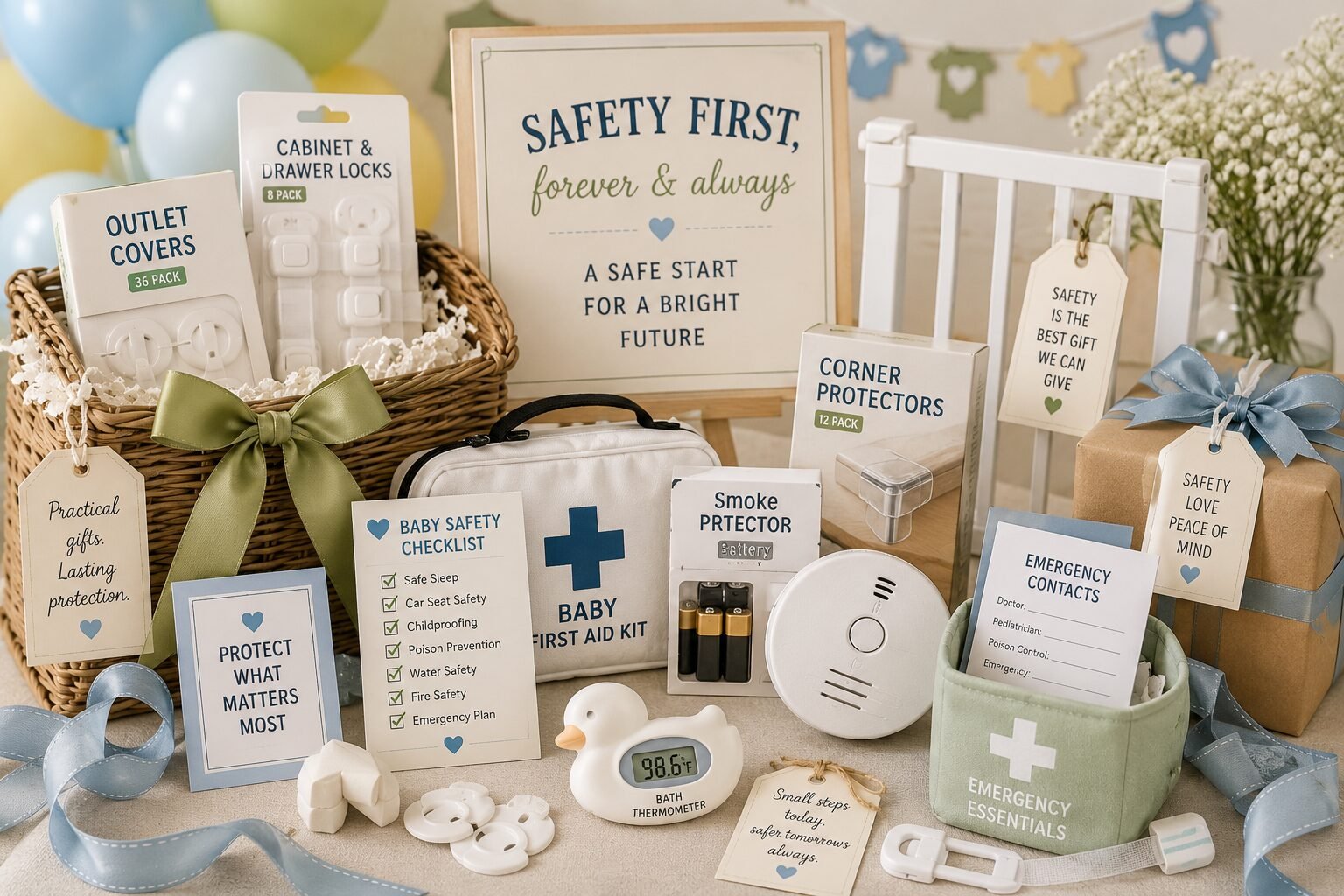
Practical gifts often provide the greatest long-term value. Outlet covers, cabinet locks, smoke detector batteries, first-aid kits, baby gates, furniture anchors, and bath thermometers are all useful items. These gifts support injury prevention while helping families prepare for parenthood. Guests appreciate knowing that their gifts will be used regularly. Safety-themed registries can make shopping easier and ensure families receive products that meet their needs.
Games That Teach
Educational games make learning enjoyable. Trivia contests, hazard identification challenges, and emergency planning activities encourage participation. Friendly competition helps guests stay engaged while reinforcing important safety concepts. Interactive games also improve information retention. They provide opportunities for discussion and teamwork. When learning is fun, participants are more likely to remember what they have learned and apply it later.
Creating a Home Safety Checklist
Checklists provide a systematic way to evaluate home safety. Parents can use room-by-room guides to identify hazards and track improvements. Checklists help ensure that important tasks are not overlooked. They are especially helpful for busy families managing multiple responsibilities. Reviewing the checklist periodically allows parents to adapt safety measures as children grow. Consistency is one of the biggest benefits of a structured approach.
Common Safety Mistakes
Many safety mistakes occur because parents underestimate how quickly children develop new abilities. Delaying furniture anchoring, leaving medications accessible, or assuming a child cannot reach a certain area can lead to accidents. Outdated equipment and improper product use also create risks. Regular safety reviews help identify problems before they result in injuries. Awareness and preparation are key to preventing common mistakes.
Final Thoughts
A baby safety shower combines celebration with practical education in a meaningful way. Families gain valuable knowledge, receive useful safety products, and build confidence before their child arrives. The event encourages proactive planning and helps reduce preventable risks. By bringing together loved ones, professionals, and community resources, parents create a strong foundation for child safety. The lessons learned during a safety shower can benefit families for years to come. More than a party, it is an investment in a child’s well-being and future.