
“We are what we repeatedly do. Excellence, then, is not an act, but a habit.” – Aristotle
Disclaimer: This blog may contain affiliate banner advertisements. If you click on these ads or make purchases through them, we may earn a small commission at no additional cost to you. These commissions help support our work and allow us to continue providing valuable content.
Introduction: Why Most Habits Don’t Last
Many people start strong with new habits but struggle to stay consistent. Motivation fades, life gets busy, and old patterns return.
Building habits that stick requires more than willpower—it requires structure, strategy, and consistency.
The Science of Habit Formation
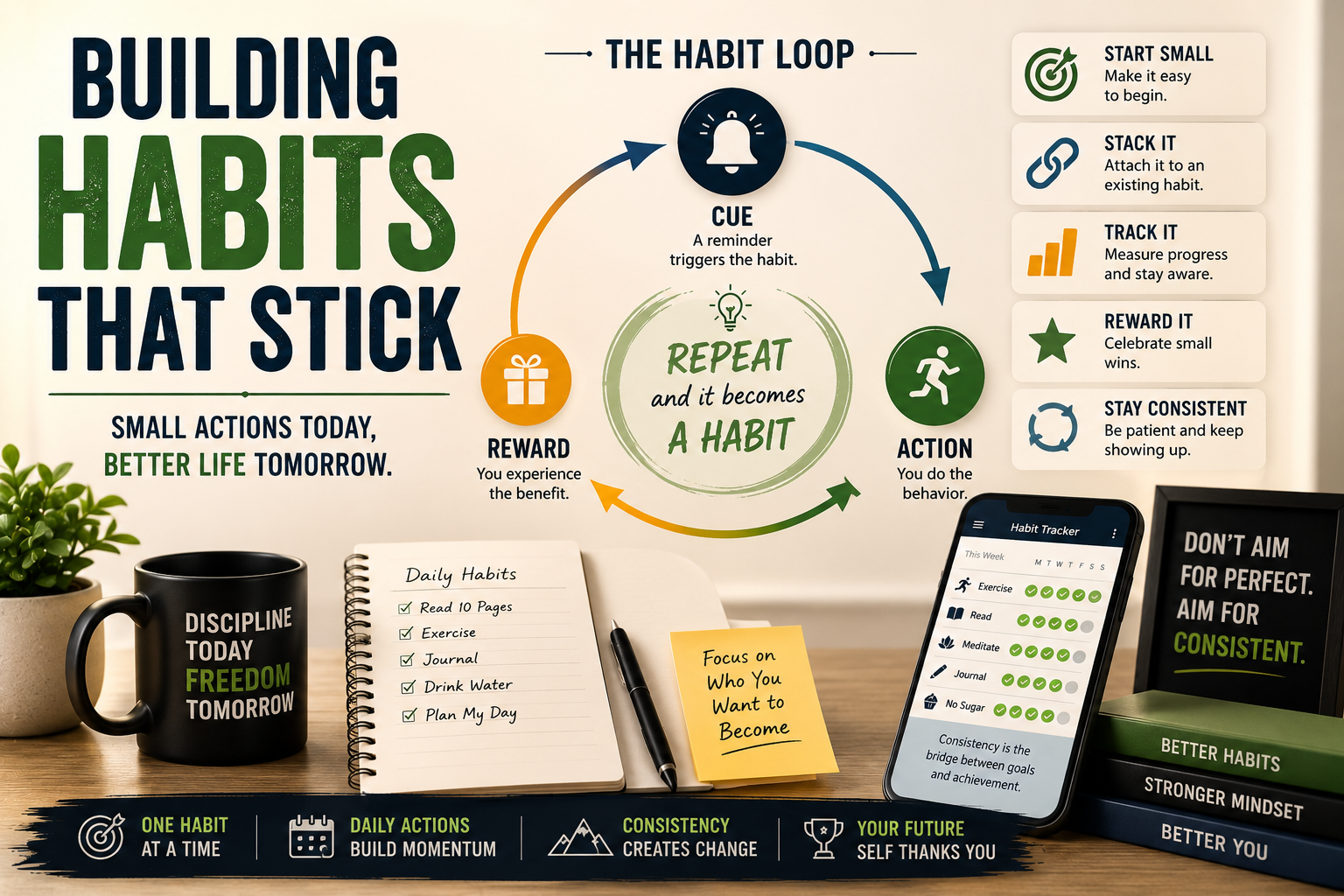
Habits are formed through repetition and cues, gradually turning intentional behaviors into actions that feel more automatic over time. Each habit typically follows a simple loop: cue, action, and reward. The cue triggers the behavior, the action is the habit itself, and the reward gives your brain a reason to remember and repeat that behavior in the future. The more consistently you complete this cycle, the stronger the connection between the cue and the action becomes. This is why creating clear triggers—such as exercising immediately after waking up or reading before going to bed—can make new habits easier to establish. Understanding this loop allows you to intentionally design habits that fit naturally into your daily routine, making them easier to maintain and repeat until they become a regular part of your life.
Start Small and Build Gradually
One of the biggest mistakes people make when trying to build better habits is attempting to change too much at once. Setting overly ambitious expectations can quickly become overwhelming, making it harder to stay consistent when motivation begins to fade. Instead, start with small, manageable habits that are easy to fit into your existing routine and realistic enough to complete even on busy days. Once that behavior becomes comfortable and consistent, gradually increase the difficulty, time, or effort required. Each small success builds momentum and strengthens your confidence in your ability to follow through. Remember that consistency matters more than intensity, because small actions repeated regularly can eventually produce much greater results than occasional bursts of effort.
Make It Easy to Start
The easier a habit is to begin, the more likely you are to follow through consistently. Reduce friction by removing unnecessary obstacles that make starting the behavior feel difficult, inconvenient, or time-consuming. Prepare your environment ahead of time so the things you need are already available when it is time to take action. For example, you might prepare your workout clothes the night before, keep a book beside your bed if you want to read more, or organize your workspace before beginning an important project. When starting requires very little effort, you give yourself fewer opportunities to procrastinate or make excuses. By designing your surroundings to support your goals, you make positive habits easier to begin and eventually easier to maintain.
Use Habit Stacking
Habit stacking is a simple strategy that makes it easier to introduce new behaviors into routines you already follow. Instead of trying to remember a new habit on its own, attach it to something you consistently do every day. For example, you might read for five minutes after brushing your teeth, practice gratitude after drinking your morning coffee, or review your goals after sitting down at your desk. The existing habit becomes a natural reminder that signals when it is time to complete the new behavior. Repeating the same sequence strengthens the association between the two activities, making the new habit easier to remember and eventually more automatic. By connecting new behaviors to established routines, habit stacking can help you build consistency without completely restructuring your day.
Focus on Identity, Not Just Results
Instead of focusing only on the results you want to achieve, think about the type of person you want to become. Goals can provide direction, but identity gives your daily habits a deeper sense of purpose and makes them easier to sustain over time. For example, rather than simply saying, “I want to read more books,” begin thinking of yourself as someone who values learning and reads every day. Each time you complete a positive habit, you reinforce that identity and provide yourself with evidence that you are becoming the person you want to be. This shift in perspective can strengthen your mindset because success is no longer measured only by reaching a distant outcome—it is also reflected in the choices you make each day. Over time, consistent actions shape your identity, allowing positive habits to become a natural part of who you are rather than something you constantly have to force yourself to do.
Track Your Progress
Tracking your habits creates greater awareness of your actions and gives you a simple way to hold yourself accountable. Whether you use a notebook, calendar, checklist, or habit-tracking app, recording each completed habit allows you to see how consistently you are following through. Watching those small accomplishments accumulate can provide a powerful sense of progress, especially when your larger goals still feel far away. Tracking also helps you recognize patterns, identify where you tend to struggle, and make adjustments when necessary. Each completed day can motivate you to continue your streak and build even greater momentum. Over time, seeing clear evidence of your consistency reinforces your confidence and reminds you that meaningful progress is being created one small action at a time.
Expect Setbacks and Stay Consistent
No habit-building journey is perfect, and there will inevitably be days when you fall short of what you planned. Missing a workout, skipping your reading time, or forgetting part of your routine does not erase the progress you have already made. The real danger comes from allowing one missed day to become an excuse to abandon the habit completely. Instead of criticizing yourself, acknowledge what happened, learn from it, and focus on returning to your routine as quickly as possible. Long-term consistency is not about being perfect every day—it is about continuing to show up despite occasional setbacks. The faster you get back on track, the easier it becomes to maintain your momentum and prove to yourself that one difficult day does not have to derail your progress.
Reward and Reinforce
Rewarding yourself for consistency can strengthen the habit loop by giving your brain a positive reason to repeat the behavior. The reward does not need to be large or expensive; even something simple, such as enjoying a favorite activity, taking a relaxing break, or acknowledging your accomplishment, can reinforce your progress. When a positive experience regularly follows a desired behavior, you begin to associate completing the habit with a sense of satisfaction. This positive reinforcement can be especially helpful during the early stages of habit formation, when the behavior has not yet become automatic. As your consistency grows, the progress itself may begin to feel rewarding because you can see yourself moving closer to your goals. By celebrating your effort and reinforcing positive behavior, you make it easier to stay motivated and continue building habits that support the life you want to create.
Conclusion: Build Habits, Build Your Life
Your habits shape your future.
By focusing on small actions, consistency, and identity, you can build habits that stick and create lasting change.
Daily Action Steps to Build Lasting Habits
- Start with one small habit.
2. Make it easy to begin.
3. Attach it to an existing routine.
4. Track your progress.
5. Stay consistent and patient.







My struggle with consistency is different. I find that environmental triggers sometimes make forming new routines impossible.