
“Consistency is what transforms average into excellence.” – Tony Robbins
Disclaimer: This blog may contain affiliate banner advertisements. If you click on these ads or make purchases through them, we may earn a small commission at no additional cost to you. These commissions help support our work and allow us to continue providing valuable content.
Introduction: Why Consistency Is the Real Key
Introduction: Why Consistency Is the Real Key
Starting a new goal is often exciting because motivation is high and the possibilities seem endless. However, as the days and weeks pass, that initial excitement naturally begins to fade, and distractions, setbacks, fatigue, and everyday responsibilities can make it difficult to stay on track. This is where many people lose momentum—not because they lack talent, intelligence, or ambition, but because they struggle to remain consistent when motivation is no longer enough. The people who achieve lasting success understand that meaningful results are rarely created through occasional bursts of effort. Instead, they are built through small, intentional actions repeated day after day, even when progress feels slow or the work becomes challenging. Consistency transforms simple habits into powerful routines, allowing steady progress to accumulate over time until remarkable results are achieved. When you commit to showing up consistently rather than waiting to feel motivated, you develop the discipline, resilience, and persistence that turn goals into accomplishments and dreams into reality.
Start Smaller Than You Think
Start Smaller Than You Think
One of the most common reasons people struggle to stay consistent is that they try to change too much too quickly. Setting ambitious goals is exciting, but when the daily actions required feel overwhelming, it’s easy to become discouraged and lose momentum. Instead, begin with small, manageable habits that are so simple they are difficult to skip. A short workout, reading a few pages, writing for ten minutes, or completing one important task each day may seem insignificant, but these small actions establish a routine that is easy to maintain. As your confidence grows and those habits become automatic, you can gradually increase the difficulty without feeling overwhelmed. Remember that consistency is built by repeating simple actions over time, not by occasional bursts of intense effort. By starting smaller than you think you need to, you create sustainable habits that generate momentum, and over time that momentum compounds into meaningful, long-lasting results.
Create a Routine
Create a Routine
One of the most effective ways to build consistency is to establish a daily routine that supports your goals. Routines reduce the number of decisions you have to make because your important tasks become part of your normal schedule rather than something you have to remember or find time for. Instead of relying on motivation each day, decide in advance exactly when and where you will work on your goals, and treat that time as a non-negotiable commitment. Whether it’s exercising before work, reading in the evening, or dedicating time to a personal project each morning, consistency grows when your actions become predictable habits. The more often you follow the same routine, the more automatic those behaviors become, requiring less mental effort to maintain. Even if life occasionally disrupts your schedule, returning to your routine as quickly as possible helps preserve your momentum. Over time, a well-established routine becomes the foundation for lasting success, making steady progress feel natural rather than something that depends on willpower alone.
Focus on Identity, Not Just Outcomes
Focus on Identity, Not Just Outcomes
While goals are important, lasting change happens when you begin to shape your identity around the habits that lead to those goals. Instead of focusing solely on what you hope to accomplish, ask yourself who you want to become and what kind of person consistently lives out those values. For example, rather than saying, “I want to write a book,” begin thinking, “I am a writer,” and let that identity guide your daily actions. When you see yourself as the kind of person who writes, exercises, learns, or leads, your behaviors naturally become more aligned with that identity. Every small action you take serves as evidence that reinforces who you are becoming, making consistency feel like an expression of your character rather than a chore. This shift in mindset also makes it easier to stay committed during difficult times because you’re no longer just pursuing an outcome—you’re living in a way that reflects the person you aspire to be. Over time, those consistent actions strengthen your identity, and your identity, in turn, makes it easier to maintain the habits that lead to long-term success.
Remove Friction
Remove Friction
One of the simplest ways to improve consistency is to remove as many obstacles as possible between you and the actions you want to take. Every extra step, distraction, or inconvenience creates friction that makes it easier to procrastinate or give up altogether. Instead, prepare your environment so that taking action becomes the easiest choice. Lay out your workout clothes the night before, keep healthy snacks within reach, organize your workspace, or have the tools you need readily available before you begin. By reducing the effort required to get started, you eliminate many of the excuses that can derail your progress. Remember that motivation is often strongest after you’ve begun, so making the first step easy is one of the most effective ways to build momentum. The easier it is to start, the more likely you are to follow through consistently, turning small daily actions into lasting habits that support your long-term goals.
Track Your Progress
Track Your Progress
Tracking your progress is one of the most effective ways to stay accountable and maintain long-term consistency. When you record your efforts, you create a visible reminder of how far you’ve come, making it easier to stay motivated even when progress feels slow. Whether you use a journal, calendar, habit tracker, checklist, or digital app, consistently monitoring your actions helps you identify patterns, celebrate achievements, and recognize areas where you can improve. Don’t underestimate the value of small victories—every completed workout, finished task, saved dollar, or productive day is evidence that you are honoring your commitment and moving closer to your goal. These small wins build confidence and reinforce the belief that your daily efforts are making a meaningful difference. Over time, tracking your progress not only keeps you focused and accountable but also provides the encouragement needed to stay consistent, proving that lasting success is built one small step at a time.
Plan for Difficult Days
Plan for Difficult Days
No matter how committed you are to your goals, there will be days when your motivation is low, your schedule is disrupted, or life simply feels overwhelming. Rather than allowing these moments to catch you off guard, prepare for them in advance by deciding how you will respond before they happen. Create a backup plan that allows you to complete a smaller version of your usual task, such as taking a short walk instead of a full workout, writing one paragraph instead of an entire chapter, or reading for five minutes instead of thirty. The objective on difficult days is not to perform at your best—it is to protect the habit and maintain your consistency. By continuing to show up, even in a limited way, you reinforce the identity of someone who follows through on their commitments regardless of the circumstances. These small efforts prevent temporary setbacks from becoming long breaks and make it much easier to return to your normal routine. Over time, planning for difficult days strengthens your discipline, builds resilience, and ensures that consistency becomes a lasting habit rather than something that depends on feeling motivated.
Stay Flexible, Not Perfect
Stay Flexible, Not Perfect
Striving for perfection often creates unnecessary pressure and can quickly lead to frustration, discouragement, or burnout when things don’t go exactly as planned. Consistency, on the other hand, recognizes that setbacks, busy schedules, and unexpected challenges are a normal part of life. Missing a day or falling behind does not erase the progress you’ve already made or mean that you’ve failed. What matters most is your willingness to return to your routine as soon as possible instead of allowing one missed day to become a missed week or month. Give yourself permission to adjust your plan when necessary while remaining committed to your overall goal. Flexibility allows you to adapt without losing momentum, helping you stay focused on long-term progress rather than short-term perfection. By embracing consistency over perfection, you build resilience, maintain healthy habits, and develop the mindset needed to keep moving forward through every season of your journey.
Celebrate Small Wins
Celebrate Small Wins
Celebrating small wins is an important part of staying motivated because it reminds you that progress is happening, even if you haven’t reached your final goal yet. Every completed task, positive habit, and milestone achieved is evidence that your consistent effort is paying off and moving you in the right direction. Taking time to acknowledge these accomplishments reinforces the behaviors that are helping you succeed and makes it more enjoyable to stay committed to your journey. Your celebration doesn’t have to be elaborate—it can be as simple as reflecting on your progress, checking off a completed task, sharing your success with someone you trust, or rewarding yourself with something meaningful. These moments of recognition build confidence by proving that you are capable of following through on your commitments and overcoming challenges. Over time, small wins accumulate into major achievements, demonstrating that lasting success is not created by one extraordinary moment but by countless consistent actions celebrated and repeated along the way.
Conclusion: Show Up Every Day
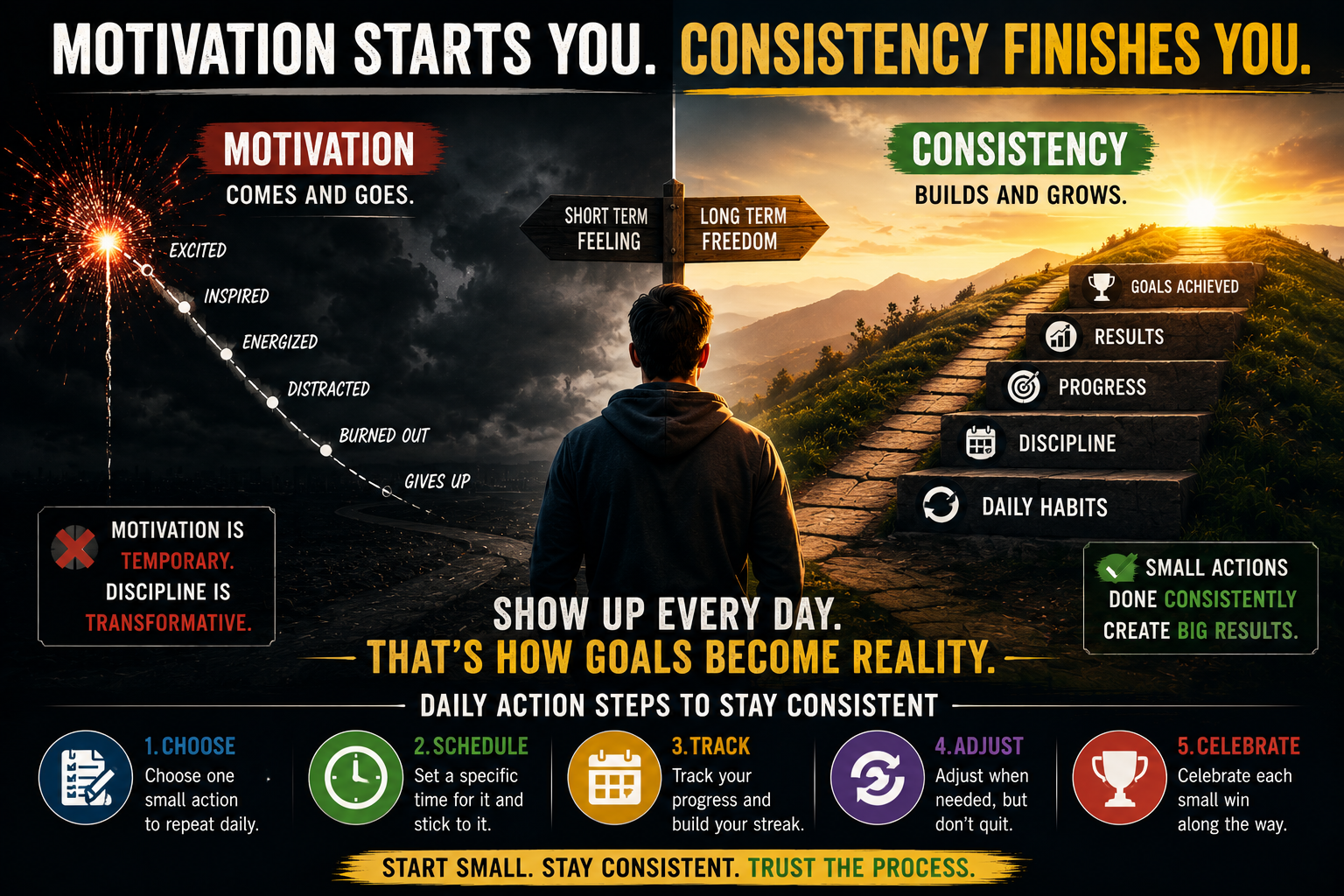
Consistency is not about being perfect—it’s about showing up.
When you commit to small, daily actions, your goals become achievable. Over time, those actions compound into meaningful results.
Start small. Stay consistent. And trust the process.
Daily Action Steps to Stay Consistent
- Choose one small action to repeat daily.
2. Set a specific time for it.
3. Track your progress.
4. Adjust when needed, but don’t quit.
5. Celebrate each small win.