
Affiliate Disclosure: This article may contain affiliate links. If you purchase products through links on our website, we may earn a small commission at no additional cost to you. Your support helps us continue creating helpful holiday resources, celebration ideas, and seasonal shopping guides.
Halloween is one of the world’s most beloved holidays, celebrated with costumes, candy, haunted houses, jack-o’-lanterns, and spooky decorations. Every October 31st, millions of children eagerly go trick-or-treating while adults attend costume parties, decorate their homes, and enjoy everything from horror movies to pumpkin spice treats. But Halloween wasn’t always the fun-filled holiday we know today.
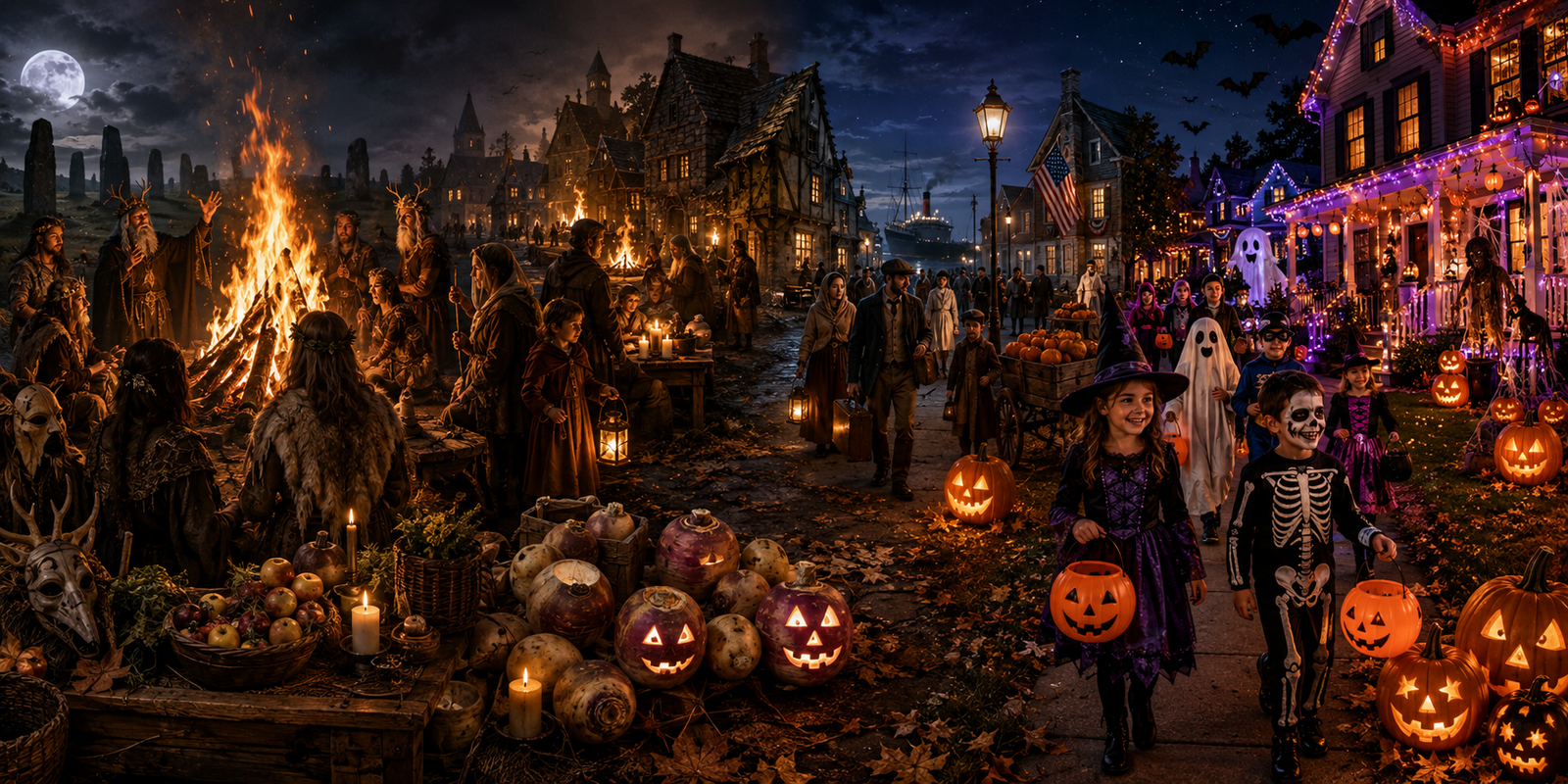
The history of Halloween stretches back more than 2,000 years to ancient Celtic traditions. Over the centuries, pagan festivals, Christian observances, European folklore, immigration, and American culture all combined to transform Halloween into the exciting celebration we enjoy today.
In this complete guide, we’ll explore the fascinating history of Halloween, how its traditions developed, and why this ancient festival continues to captivate people around the world.
The Ancient Celtic Festival of Samhain
The earliest origins of Halloween can be traced to the ancient Celtic festival known as Samhain (pronounced “SOW-in”).
More than 2,000 years ago, the Celts lived throughout:
- Ireland
- Scotland
- Wales
- Parts of northern France
For the Celts, November 1 marked the beginning of the new year.
This date also represented:
- The end of harvest
- The beginning of winter
- The arrival of colder weather
- A season often associated with death and hardship
The night before the new year—October 31—became one of the most important celebrations of the Celtic calendar.
The Belief That Spirits Walked the Earth
The Celts believed that on the night of Samhain, the boundary between the living and the dead became unusually thin.
According to tradition:
- Spirits returned to Earth.
- Ancestors visited their families.
- Supernatural beings wandered freely.
- Fairies and mythical creatures became more active.
People believed these spirits could either help or harm them, depending on how they were treated.
This belief became the foundation for many Halloween traditions that still exist today.
Bonfires Played a Central Role
During Samhain, communities gathered around enormous bonfires.
These fires served several purposes.
People believed they would:
- Protect villages
- Scare away evil spirits
- Honor the gods
- Provide warmth before winter
After the ceremonies ended, families often carried home flames from the community fire to relight their own hearths, symbolizing protection throughout the winter months.
Wearing Costumes Began as Protection
One of Halloween’s most recognizable traditions has surprisingly ancient roots.
The Celts sometimes wore:
- Animal skins
- Fur cloaks
- Masks
- Costumes made from natural materials
Rather than dressing for fun, they believed disguises would confuse wandering spirits and prevent them from recognizing humans.
Today’s elaborate Halloween costumes evolved from these ancient protective traditions.
Offerings for Spirits
Families often left food outside their homes.
Offerings included:
- Bread
- Fruit
- Harvest crops
- Meat
- Drinks
These gifts were intended to:
- Welcome friendly spirits.
- Appease wandering souls.
- Prevent supernatural mischief.
This custom would eventually influence modern trick-or-treating.
Christianity Influenced Halloween
As Christianity spread throughout Europe, church leaders incorporated existing traditions into Christian observances.
In the eighth century, Pope Gregory III established All Saints’ Day on November 1.
Its purpose was to honor:
- Saints
- Martyrs
- Holy men and women
The evening before became known as All Hallows’ Eve, which eventually evolved into the word Halloween.
All Souls’ Day Continued the Tradition
Another Christian observance soon followed.
November 2 became All Souls’ Day, a time to remember ordinary faithful believers who had passed away.
Many communities continued traditions such as:
- Lighting candles
- Ringing church bells
- Offering prayers
- Remembering loved ones
Older Celtic customs gradually blended with these Christian practices.
Medieval Halloween Traditions
During the Middle Ages, many familiar customs continued to develop.
Popular traditions included:
- Bonfires
- Costumes
- Storytelling
- Fortune telling
- Seasonal feasts
People also participated in “souling.”
Poor families would visit homes offering prayers for deceased relatives in exchange for small cakes called soul cakes.
Many historians believe this practice influenced modern trick-or-treating.
The Origin of Jack-o’-Lanterns
The famous jack-o’-lantern has an interesting history.
Originally, people carved:
- Turnips
- Potatoes
- Beets
These carved vegetables were believed to frighten away evil spirits.
When Irish immigrants arrived in North America, they discovered pumpkins were:
- Larger
- Softer
- Easier to carve
- More widely available
Pumpkins soon became the standard Halloween lantern.
Irish Immigration Changed Halloween
The Irish Potato Famine during the 1840s brought millions of Irish immigrants to North America.
They introduced many Halloween traditions, including:
- Ghost stories
- Jack-o’-lantern carving
- Costume traditions
- Community celebrations
These customs spread rapidly throughout the United States and Canada.
The Birth of Trick-or-Treating
Modern trick-or-treating developed gradually during the early twentieth century.
Communities encouraged children to:
- Dress in costumes.
- Visit neighborhood homes.
- Receive small treats.
- Celebrate safely.
Offering candy became a way to encourage positive community interaction while reducing Halloween mischief.
By the 1950s, trick-or-treating had become a nationwide tradition across America.
Halloween Became Family-Friendly
Earlier Halloween celebrations often included:
- Pranks
- Mischief
- Vandalism
Community organizations worked to transform Halloween into a safer holiday focused on children and families.
Schools, neighborhoods, and civic groups began organizing:
- Costume contests
- Community parties
- School celebrations
- Safe trick-or-treat events
These efforts helped shape the Halloween we know today.
Halloween Movies and Pop Culture
Television and movies dramatically expanded Halloween’s popularity.
Classic films, television specials, and seasonal programming introduced generations of families to Halloween traditions.
Popular entertainment inspired:
- Costume ideas
- Decorations
- Haunted attractions
- Horror movie marathons
Pop culture continues to influence Halloween every year.
Haunted Houses Became Popular Attractions
Haunted attractions evolved from community fundraisers and seasonal events.
Today they range from:
- Family-friendly walkthroughs
- Historic ghost tours
- Professional haunted houses
- Interactive horror experiences
They’ve become one of Halloween’s biggest attractions for teenagers and adults.
Halloween Around the World
Although Halloween is closely associated with North America, many countries celebrate similar traditions.
Examples include:
Ireland
Many ancient Samhain traditions continue through festivals and community events.
Mexico
Día de los Muertos (Day of the Dead) honors deceased loved ones with colorful altars, food, flowers, music, and family gatherings.
Scotland
Traditional celebrations include games, storytelling, and community festivities.
Japan
Halloween has become popular through costume parades, themed events, and large public celebrations.
Canada
Many customs closely resemble those celebrated throughout the United States.
Each country has developed its own unique way of celebrating the season.
Halloween Today
Modern Halloween combines centuries of traditions into one exciting holiday.
Popular activities include:
- Trick-or-treating
- Pumpkin carving
- Costume parties
- Haunted houses
- Corn mazes
- Hayrides
- Horror movies
- Apple bobbing
- Decorating homes
- Seasonal baking
It has become one of the most anticipated celebrations of the year for children and adults alike.
Why Halloween Remains So Popular
Halloween appeals to people of all ages because it combines creativity, imagination, and community.
People enjoy:
- Dressing as favorite characters.
- Decorating their homes.
- Sharing candy.
- Celebrating with neighbors.
- Experiencing playful scares.
- Creating family traditions.
Its flexibility allows everyone to celebrate in their own unique way.
Frequently Asked Questions
Where did Halloween originate?
Halloween originated from the ancient Celtic festival of Samhain, which was celebrated more than 2,000 years ago in Ireland, Scotland, and other Celtic regions. Over time, these traditions blended with Christian observances and evolved into the modern holiday.
Why do people wear costumes on Halloween?
The tradition dates back to Samhain, when people believed disguises and masks would confuse wandering spirits and protect them from supernatural beings. Today, costumes are worn primarily for fun, creativity, and celebration.
Why are pumpkins carved into jack-o’-lanterns?
Early Europeans carved turnips, potatoes, and beets to ward off evil spirits. Irish immigrants later adopted pumpkins in North America because they were larger, easier to carve, and widely available.
How did trick-or-treating begin?
Modern trick-or-treating evolved from older European traditions such as “souling,” where people visited homes in exchange for food and prayers. By the mid-twentieth century, American communities had transformed it into the child-friendly tradition of collecting candy from neighbors.
Is Halloween celebrated only in the United States?
No. Halloween and similar seasonal celebrations are observed in many countries around the world. While customs vary, nations such as Ireland, Canada, Scotland, Japan, and Mexico all celebrate the season in unique and meaningful ways.
Final Thoughts
Halloween’s journey from the ancient Celtic festival of Samhain to today’s colorful celebration is one of the most fascinating stories in holiday history. What began as a solemn observance marking the end of the harvest season gradually evolved through centuries of cultural traditions, religious influences, immigration, and community celebrations into the holiday millions of people enjoy each year. Along the way, customs such as wearing costumes, carving jack-o’-lanterns, lighting bonfires, and sharing treats developed new meanings while still reflecting their ancient origins.
Today, Halloween continues to bring families, friends, and communities together through creativity, imagination, and seasonal fun. Whether you enjoy decorating your home, attending haunted attractions, carving pumpkins, watching classic Halloween movies, or taking children trick-or-treating, you’re participating in traditions that have evolved over more than two millennia. Understanding the rich history behind Halloween adds even more appreciation to this beloved holiday and reminds us how traditions can grow, adapt, and continue bringing joy to generations around the world.