

Affiliate Disclaimer: This post may contain affiliate links. If you make a purchase through one of these links, The Shopping Plaza may earn a commission at no additional cost to you.
Halloween Fun Should Not Come With a Financial Hangover
Halloween is supposed to be playful. It is a season of costumes, candy, decorations, spooky movies, neighborhood traditions, pumpkin carving, parties, and imagination. Yet like many holidays, it can also become surprisingly expensive.
The pressure can arrive from every direction. Stores display elaborate decorations. Social media shows professionally styled parties and impressive costumes. Children may want the newest character outfit. Hosts may feel that every table, doorway, and snack needs a Halloween theme. Before long, a celebration that was meant to be fun begins creating financial stress.
That stress can steal the enjoyment before Halloween even arrives.
A meaningful celebration does not require proving how much you can spend. In fact, some of the most memorable Halloween traditions cost very little. Creativity, anticipation, family involvement, humor, and time together often matter far more than the price of the decorations.
A budget is not something that ruins Halloween. A good budget protects the rest of your life while giving you permission to enjoy what you intentionally chose to spend.
Decide What Halloween Is Worth Before Shopping Begins
One of the easiest ways to overspend is to shop before deciding what you can comfortably afford.
Choose a total Halloween budget first. It does not need to match anyone else’s. Your number should reflect your actual financial situation and your other responsibilities.
Then divide the amount among the categories that matter to you: costumes, candy, decorations, pumpkins, food, entertainment, school events, or a party.
This creates boundaries before marketing begins influencing your decisions.
If your costume category is already spent, you know that adding another accessory means reducing something elsewhere rather than pretending the money is unlimited.
A budget also reduces guilt. When you intentionally set aside an amount for Halloween, spending within that amount becomes part of the plan.
The goal is not to spend as little as humanly possible. The goal is to spend deliberately enough that November does not have to pay for October’s excitement.
Choose Your Priorities Instead of Trying to Do Everything
Not every Halloween activity has equal value to every family.
Maybe costumes are the highlight in your household. Perhaps decorating the front yard is the tradition everyone loves. Maybe your favorite part is handing out candy, watching classic Halloween movies, visiting a pumpkin patch, or hosting friends.
Identify the two or three things that create the most enjoyment and protect your budget for them.
Then give yourself permission to simplify everything else.
You do not need an elaborate costume, professionally decorated home, expensive party, premium candy, multiple seasonal outings, and a house full of new merchandise simply because all of those options exist.
Financial pressure often comes from trying to participate in every version of the holiday simultaneously.
A focused celebration can feel richer than an overloaded one because your time, money, and attention are going toward what you actually care about.
Shop Your Own Home Before You Shop the Stores
Before buying another Halloween item, look at what you already own.
Open the decoration bins. Check closets for costume pieces. Look through craft supplies, blankets, jars, cardboard boxes, old clothing, string lights, serving dishes, and other items that could be reused.
A black shirt, old hat, scarf, makeup, or pair of boots may become part of a costume. Glass jars can become spooky candle displays with safe battery-operated lights. Cardboard can become signs, tombstones, silhouettes, or party props.
The goal is not to make everything look homemade unless you enjoy that style. It is to recognize that buying is only one way to solve a Halloween need.
Reusing what you own saves money, reduces clutter, and can spark creativity.
Sometimes the best budget Halloween purchase is the one you realize you never needed to make.
Build Costumes Around One Strong Idea
Costumes can become expensive when we believe every detail must be purchased as part of a matching set.
Instead, begin with the character or concept and ask which pieces truly create the identity.
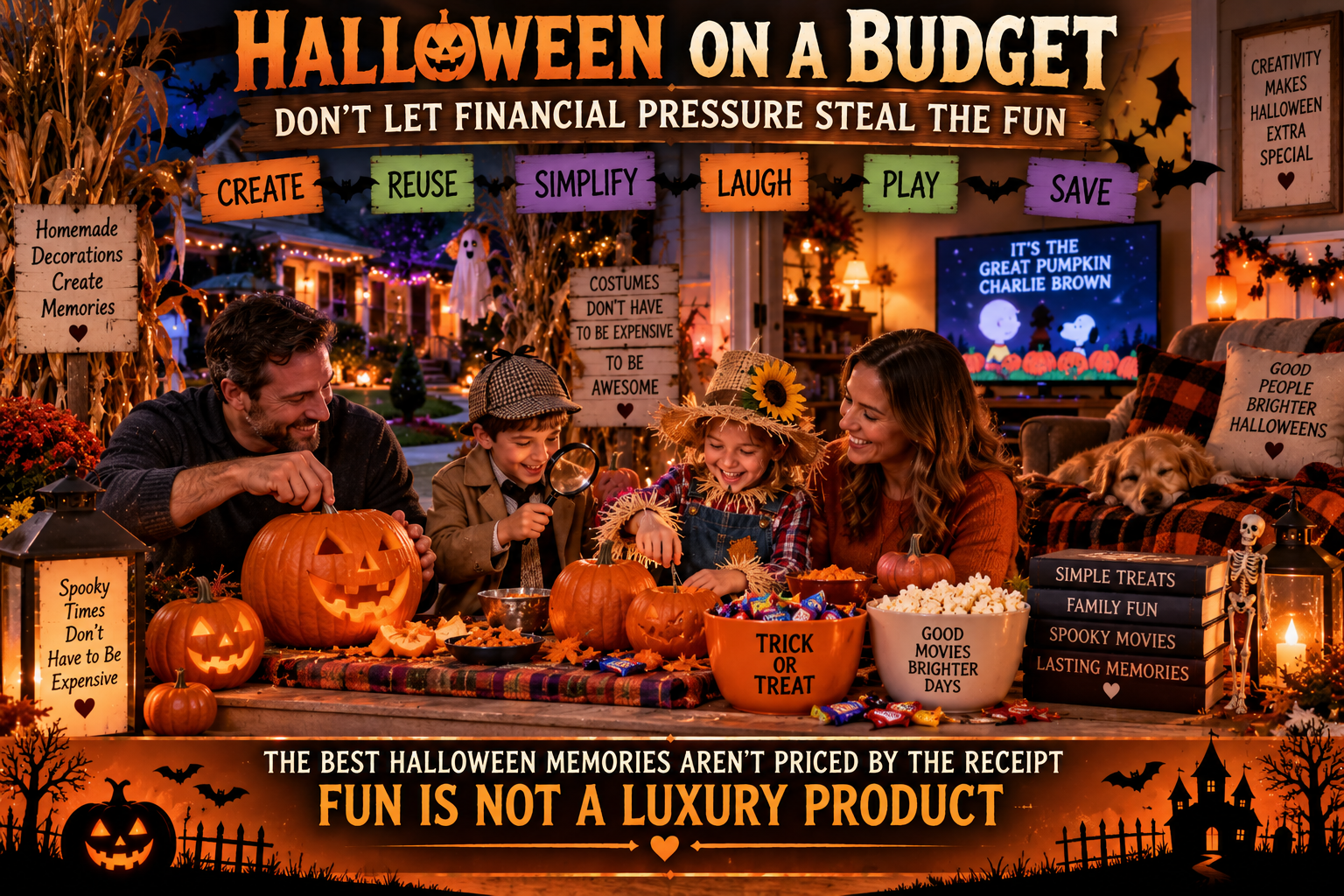
A detective may need a coat, hat, notebook, and magnifying glass. A scarecrow can be built around ordinary clothing with a few recognizable details. A ghost can be intentionally simple. A witch costume may rely on clothing already owned with one strong accessory.
For children’s costumes, involve them in the creative process when possible. Turning costume building into an activity can make the preparation part of the celebration.
Also consider costume swaps among friends or relatives, especially when children have outgrown outfits after wearing them only once.
The goal is not to create the cheapest costume at any cost. It is to avoid spending heavily on details that add little additional fun.
A memorable costume is usually remembered for the idea and personality behind it, not the receipt.
Decorate for Impact, Not Quantity
A house does not need Halloween decorations in every corner to feel festive.
Choose a few high-impact areas: the front door, porch, entryway, dining table, mantel, or one room where your family spends time.
Concentrating decorations makes a smaller collection feel intentional.
Lighting can also transform a space without requiring dozens of new objects. Existing lamps, battery candles, string lights, shadows, music, and a few carefully placed decorations can create atmosphere.
Natural seasonal elements can help too. Pumpkins, branches, autumn leaves, or other appropriate materials can support a fall look without filling storage bins for the rest of the year.
Before buying another decoration, ask where it will go, whether you genuinely like it, and whether you expect to use it again.
Decorating with intention is often more visually effective than covering every available surface.
Set a Candy Budget Before the Giant Bags Appear
Candy is one of Halloween’s classic expenses, particularly for households that receive many trick-or-treaters.
Estimate how many visitors you normally receive and buy accordingly. If you are new to the neighborhood, ask a neighbor what turnout is usually like.
Compare prices by unit rather than simply choosing the largest bag. Bigger packaging does not always guarantee the best value.
Decide whether you need premium assortments or whether a more economical mix will work perfectly well. If you want a few special treats, combine them with less expensive options rather than making every piece premium.
Most importantly, avoid turning candy distribution into a competition with the house next door.
Generosity is wonderful when it fits your budget. Financial strain is not required to prove that your home is welcoming.
Create Traditions That Cost Almost Nothing
The strongest defense against holiday spending pressure is a collection of traditions that do not depend on shopping.
Have a family Halloween movie night. Tell spooky stories with the lights low. Take an evening walk to see neighborhood decorations. Create a costume contest at home. Carve or decorate pumpkins together. Make a Halloween playlist. Hold a scavenger hunt. Read seasonal books with children.
These activities create anticipation and repetition, which are two of the ingredients that make traditions meaningful.
Children may eventually remember the ritual more clearly than the products surrounding it.
When you intentionally create low-cost traditions, you are not giving your family less. You are building a version of Halloween that can survive changing budgets.
That kind of tradition is financially resilient and emotionally valuable.
Host a Halloween Gathering Without Trying to Impress Everyone
A Halloween party can become expensive when hosting turns into performance.
Instead of asking how to impress every guest, ask how to make people comfortable and give them something enjoyable to do.
Choose a simple menu. Make a few seasonal foods rather than giving every dish an elaborate theme. Use decorations you already own. Ask guests to wear costumes if that adds to the fun. Create inexpensive activities such as trivia, a costume vote, spooky storytelling, games, or a movie.
A potluck can also distribute the food cost if it fits the style of the gathering.
People usually remember laughter, conversations, music, games, and the atmosphere more than whether every napkin matched.
Hospitality is about how people feel in your home, not how closely your party resembles a professional photo shoot.
Be Careful With the Comparison Trap
Social media can make an ordinary celebration look inadequate.
You may see enormous yard displays, custom costumes, themed food tables, professionally photographed parties, or expensive seasonal trips. What you usually do not see is the person’s budget, income, sponsorships, debt, priorities, or the hours required to create the presentation.
Comparison removes context.
If seeing other celebrations inspires an affordable idea, wonderful. If it makes you feel pressured to spend money you had not planned to spend, step away.
Your Halloween does not need to compete with someone else’s highlight reel.
A $10 tradition that your family genuinely loves can be more successful than a $500 display created primarily to impress strangers.
Measure the holiday by enjoyment, not comparison.
Use Sales Strategically Instead of Letting Sales Use You
A discount only saves money when you were already planning to buy the item.
Halloween promotions can create urgency: limited time, last chance, seasonal clearance, buy more to save more. These messages are designed to make delaying feel costly.
Return to your list and budget.
If an item you planned to purchase goes on sale, the discount is useful. If the sale convinces you to buy three decorations you never intended to own, the promotion increased your spending.
Post-Halloween clearance can be valuable for reusable basics, but the same rule applies. Buy only what you expect to use.
Cheap clutter is still clutter, and discounted overspending is still overspending.
Let your plan decide whether a sale is good, not the percentage printed on the sign.
Talk Openly About Limits Without Making the Holiday Feel Negative
If children or family members are involved, budget limits do not have to be presented as a crisis.
You can simply explain the choices.
“We have this amount for Halloween, so let’s decide what would be the most fun.” That turns the budget into a planning challenge rather than a punishment.
Children can choose between options, help create decorations, or brainstorm costumes from available materials. These conversations can quietly teach that money involves priorities and tradeoffs.
Adults benefit from the same honesty. If friends suggest an expensive event that does not fit your budget, declining or proposing a lower-cost alternative is reasonable.
Financial boundaries are easier to maintain when they are stated before pressure builds.
Remember That Financial Peace Is Part of the Celebration
It is difficult to enjoy a holiday purchase when you are already worried about how you will pay for it.
Financial peace has value.
Imagine reaching November knowing that Halloween was enjoyable and the bills are still manageable. That feeling is part of the success of the celebration.
Protecting your budget does not mean you are less festive, generous, creative, or loving. It means Halloween exists alongside rent or mortgage payments, groceries, utilities, savings goals, debt payments, upcoming holidays, and other responsibilities.
A celebration should fit inside your life rather than destabilize it.
Sometimes the most mature form of holiday freedom is being able to say, “That looks fun, but it is not worth financial stress for me.”
Start Planning Earlier Next Year
If Halloween repeatedly feels expensive, turn this year’s experience into information for next year.
After the holiday, write down what you spent, what was worth it, what went unused, and what you wish you had handled differently.
Store reusable decorations and costume pieces carefully so you can find them. If there are items you genuinely need for next year, watch for reasonable opportunities to buy them gradually rather than making every purchase in October.
You can also create a small seasonal savings category. Even a modest amount saved over several months can make holiday expenses easier to absorb.
Planning converts a predictable annual expense from a surprise into a choice.
The goal is not to spend all year thinking about Halloween. It is to make next October easier on yourself.
The Best Halloween Memories Are Not Priced by the Receipt
Halloween gives us permission to be imaginative. For one night, neighborhoods become theatrical, ordinary clothes become costumes, porches become spooky scenes, and adults and children can enjoy a little playful make-believe.
That spirit does not belong only to people with large budgets.
You can create a wonderful Halloween with homemade decorations, reused costumes, carefully chosen purchases, simple food, neighborhood walks, favorite movies, laughter, and traditions that cost almost nothing.
Spend where spending genuinely adds value. Save where it does not. Refuse to let comparison create needs you did not have yesterday.
Most importantly, remember what the money is supposed to support: enjoyment.
If financial pressure is making Halloween stressful, simplify. The holiday does not need to be perfect. Your decorations do not need to be the biggest. Your costume does not need to be the most expensive. Your party does not need to look professionally designed.
Fun is not a luxury product.
Create the version of Halloween that fits your life, protects your finances, and leaves you with memories instead of regret.
When November arrives, the decorations will come down and the costumes will be put away. The best outcome is not that everyone was impressed by what you spent. It is that you enjoyed the season and can move into the next month without Halloween’s bills haunting you.