

Some players lead with skill. Others lead with toughness. And then there are those who combine both to define an entire franchise.
Bobby Clarke was that kind of player.
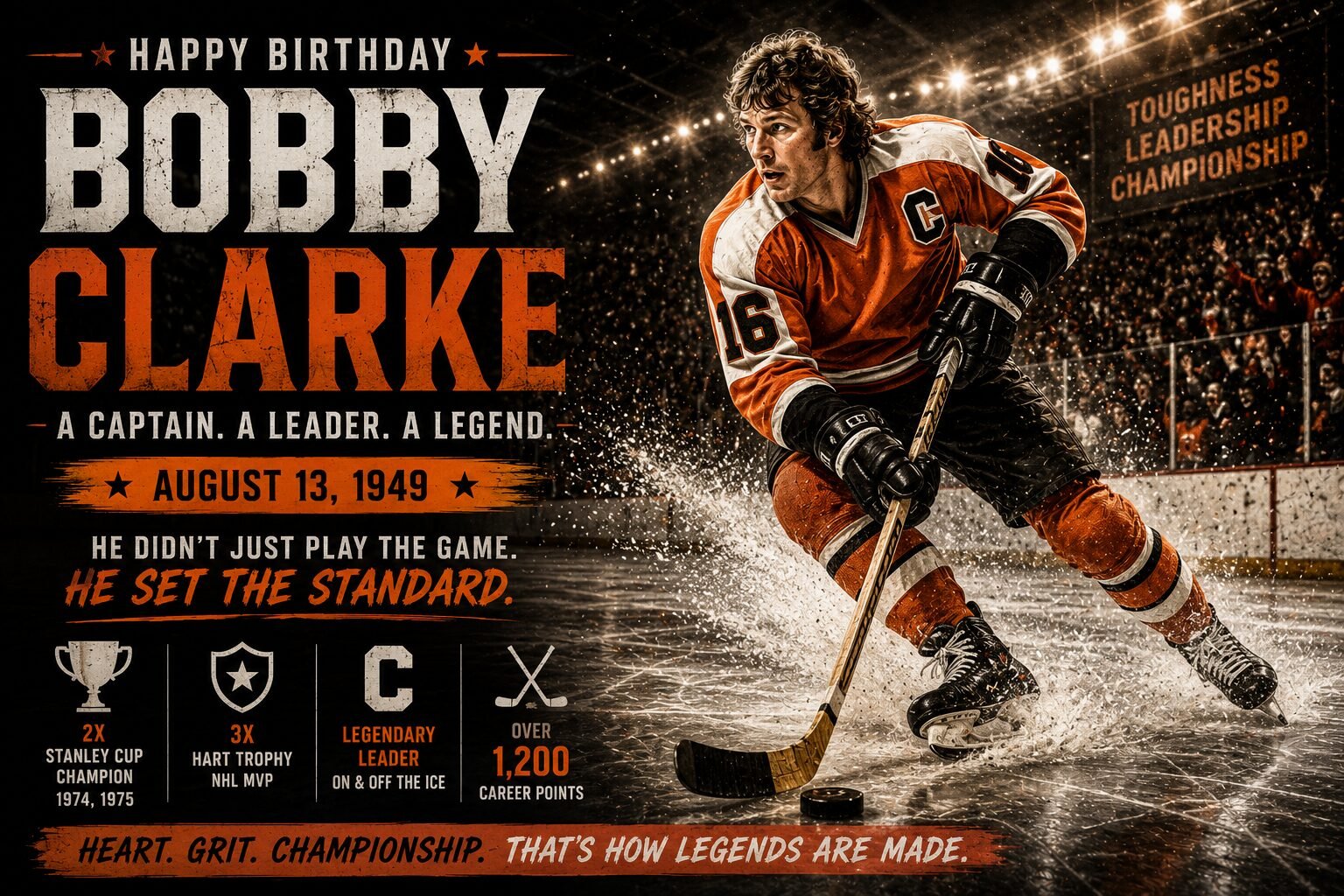
Born on August 13, 1949, Clarke didn’t just become a star — he became the identity of the Philadelphia Flyers. On his birthday, fans celebrate more than points. They celebrate leadership, grit, and one of the most iconic eras in hockey history.
Affiliate Disclosure: This article may contain affiliate links and banner advertisements. If you make a purchase through these links, we may earn a small commission at no additional cost to you. Thank you for supporting our platform.
From Manitoba to NHL Stardom
Bobby Clarke was born in Flin Flon, Manitoba, Canada, a small mining town known for producing tough, hardworking hockey players. Growing up in one of Canada’s most passionate hockey communities, Clarke developed a love for the game at an early age. He spent countless hours skating on outdoor rinks, refining his skills, and competing against older players who helped shape his relentless style of play. Even as a youngster, his determination, intelligence, and competitive spirit separated him from many of his peers.
Clarke’s journey to the National Hockey League was anything but conventional. At the age of 13, he was diagnosed with Type 1 diabetes, a condition that many people at the time believed would prevent him from playing professional sports. Medical knowledge and treatment options were far less advanced than they are today, causing many NHL scouts and executives to question whether Clarke could withstand the physical demands of an 80-game season and the grueling intensity of playoff hockey.
Rather than allowing his diagnosis to define his future, Clarke chose to confront the challenge head-on. He learned how to carefully manage his blood sugar through insulin treatments, proper nutrition, and disciplined daily routines. This commitment required constant attention, especially during practices, games, and travel. Every day demanded careful planning, making his eventual success even more remarkable.
Despite lingering concerns from NHL organizations, Clarke continued to dominate at every level of hockey. His exceptional vision, playmaking ability, faceoff skills, and relentless work ethic made him impossible to overlook. While some scouts focused on his medical condition, others recognized that his hockey intelligence and fierce competitiveness outweighed any perceived risk.
His junior hockey career with the Flin Flon Bombers showcased exactly what made him special. Clarke wasn’t the biggest or fastest player on the ice, but he consistently outworked opponents and seemed to anticipate plays before they developed. His ability to create scoring chances, win puck battles, and elevate the performance of his teammates established him as one of Canada’s premier young players.
His game was built on:
- Exceptional hockey intelligence, allowing him to read the ice, anticipate opponents’ decisions, and make smart plays in every situation.
- Outstanding leadership, earning the respect of teammates through his relentless effort, accountability, and determination to win.
- Elite playmaking ability, creating scoring opportunities with accurate passing, creativity, and an exceptional understanding of offensive positioning.
- Relentless competitiveness, refusing to be outworked regardless of the opponent or the circumstances.
When the Philadelphia Flyers selected Clarke with the 17th overall pick in the 1969 NHL Amateur Draft, they saw something many other teams had overlooked. They believed his talent, determination, and leadership far outweighed the concerns surrounding his diabetes. That decision would become one of the greatest draft selections in franchise history and forever change the direction of the Flyers organization.
Clarke quickly proved that the doubts surrounding his health had been misplaced. His discipline in managing diabetes became part of his daily routine, allowing him to compete at the highest level while inspiring countless others living with the same condition. He showed that a medical diagnosis did not have to limit someone’s dreams if they were willing to work harder than anyone else.
His story became about much more than hockey.
It became a story of perseverance, resilience, and refusing to allow obstacles to determine one’s future.
He didn’t just make it.
He proved everyone wrong.
From the frozen rinks of Flin Flon to the bright lights of the NHL, Bobby Clarke transformed skepticism into success. His determination, courage, and unwavering belief in himself laid the foundation for a Hall of Fame career that would make him one of the greatest captains and most respected leaders in hockey history.
Buy Yours: Bobby Clarke Signed Hockey Puck – 50th Anniversary
The Rise with the Flyers
When the Philadelphia Flyers selected Bobby Clarke in the second round of the 1969 NHL Amateur Draft, they gained far more than a talented young center. They found the player who would eventually become the identity of the franchise. Clarke arrived in Philadelphia with questions surrounding his diabetes, but once he stepped onto the ice, those concerns were quickly replaced by admiration for his intelligence, toughness, and relentless determination.
Clarke did not need long to establish himself as one of the most important players on the roster. His ability to control the puck, create scoring chances, and compete in every area of the ice made him valuable in nearly every situation. Whether the Flyers needed offense, defensive responsibility, a key faceoff, or an emotional lift, Clarke was usually at the center of the action.
His playing style matched the personality of Philadelphia. He was skilled, aggressive, fearless, and unwilling to surrender an inch of ice. Clarke battled larger opponents along the boards, chased loose pucks with total commitment, and played every shift as though the outcome of the game depended on it. That intensity quickly made him a favorite among Flyers fans who respected effort and toughness as much as goals and assists.
He brought:
- Playmaking ability, using outstanding vision, timing, and passing accuracy to create scoring opportunities for his teammates. Clarke could recognize openings before they developed and deliver the puck into difficult areas where few other players would attempt a pass.
- Tough, physical play, refusing to be intimidated by stronger or larger opponents. He competed aggressively in front of the net, along the boards, and in every high-traffic area of the ice.
- Leadership, setting the standard through his effort, preparation, and willingness to accept responsibility. Teammates followed him because they knew he would never ask them to do anything he was not prepared to do himself.
- Relentless competitiveness, treating every game, practice, and shift as an opportunity to win. Clarke’s refusal to accept defeat helped shape the mentality of the entire organization.
His impact extended beyond the scoresheet. Clarke became the emotional engine of the Flyers, pushing teammates to compete harder and remain focused during difficult moments. His work ethic created accountability throughout the locker room, while his confidence helped younger players believe they could stand against any opponent in the league.
As the Flyers developed into one of the NHL’s toughest and most feared teams, Clarke became the perfect leader for their identity. He combined elite skill with a willingness to play the physical style that defined the franchise during the 1970s. He could score, pass, defend, agitate opponents, and change the energy of a game through pure effort.
Clarke was eventually named captain, becoming one of the youngest players in NHL history at the time to receive that honor. The decision reflected how quickly he had earned the trust of coaches and teammates. His leadership was not based on speeches alone. It came from consistency, sacrifice, and the example he set every night.
Under Clarke’s direction, the Flyers transformed from an expansion franchise into a championship contender. He helped create a culture built on toughness, teamwork, and complete commitment to winning. That foundation would eventually carry Philadelphia to back-to-back Stanley Cup championships and establish the Flyers as one of hockey’s most recognizable organizations.
He didn’t just play center.
He controlled the pace, set the emotional tone, and led the team.
Bobby Clarke became the heart of the Philadelphia Flyers because he represented everything the franchise wanted to be: skilled, fearless, resilient, and impossible to outwork.
Career Highlights & Achievements
Bobby Clarke’s résumé is legendary:
- 2× Stanley Cup Champion (1974, 1975)
- 3× Hart Trophy (NHL MVP)
- 8× NHL All-Star
- Over 1,200 career points
- Hockey Hall of Fame (1987)
His leadership defined a championship era.
Buy Yours: Bobby Clarke HOF Autographed Philadelphia Flyers Hockey Puck JSA 157604
Leader of the Broad Street Bullies
Bobby Clarke became the unquestioned leader of one of the most legendary teams in NHL history—the Philadelphia Flyers of the 1970s, better known as the “Broad Street Bullies.” While the nickname reflected the team’s intimidating physical style of play, the Flyers were much more than a collection of tough players. They were disciplined, talented, relentless competitors who combined skill with unmatched determination, and Clarke was the driving force behind it all.
When Clarke was named captain, he embraced the responsibility of leading a franchise that was determined to prove it could compete with the NHL’s established powers. His leadership helped transform the Flyers from a young expansion team into one of the league’s most feared and respected organizations. Under his guidance, Philadelphia developed an identity built on toughness, accountability, teamwork, and an unwavering commitment to winning.
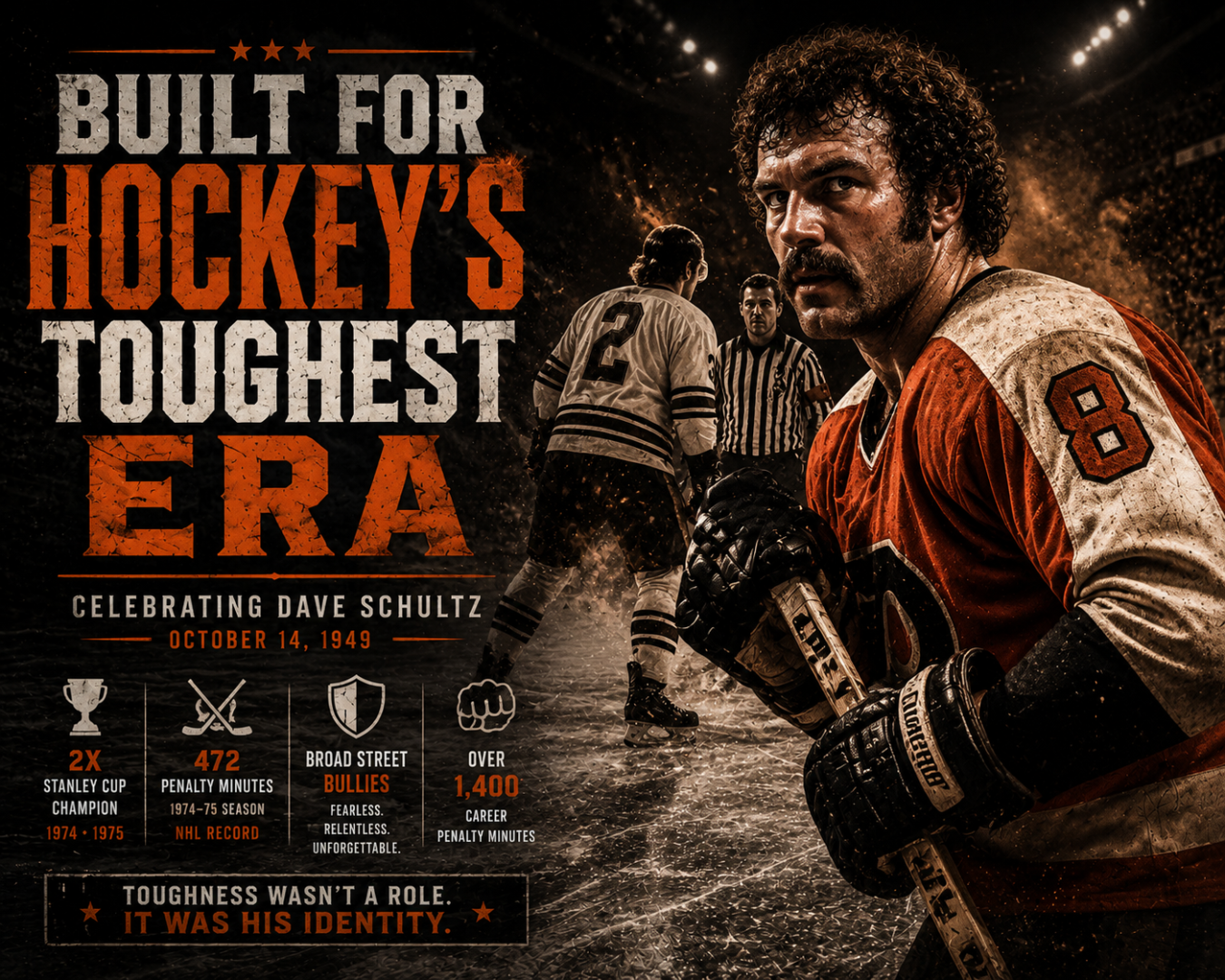
The Broad Street Bullies intimidated opponents with their physical play, but they also possessed exceptional hockey talent. Clarke’s outstanding playmaking ability, hockey intelligence, and two-way excellence allowed the Flyers to control games while teammates such as Bernie Parent, Bill Barber, Reggie Leach, Dave Schultz, Rick MacLeish, and Jimmy Watson provided the depth needed to compete for championships. Clarke’s leadership united those talented personalities into a championship-caliber team.
He set the tone with:
- Toughness, never asking teammates to play harder than he was willing to play himself. Clarke battled for loose pucks, absorbed punishment in front of the net, and competed fearlessly against larger opponents every single night.
- Accountability, accepting responsibility during both victories and defeats while holding himself to the same high standards he expected from everyone in the locker room. His consistency earned the respect of teammates, coaches, and opponents throughout the league.
- Competitive fire, approaching every practice, every shift, and every playoff game with the mindset that winning was the only acceptable outcome. His relentless determination inspired the Flyers to compete with maximum effort regardless of the opponent.
- A team-first mentality, always placing the success of the Flyers above personal statistics or individual recognition. Clarke celebrated teammates’ accomplishments, shared leadership responsibilities, and understood that championships could only be won through complete commitment to one another.
Clarke’s leadership became especially valuable during the Stanley Cup Playoffs, where the physical demands and emotional pressure reached their highest level. He remained calm in difficult moments, helped keep teammates focused, and consistently delivered when Philadelphia needed him most. Whether the Flyers were protecting a late lead or fighting to overcome adversity, Clarke’s steady presence gave the team confidence that they could prevail.
His influence extended beyond the locker room. Opposing teams understood that if they hoped to defeat Philadelphia, they first had to match the intensity and determination that Clarke brought every shift. He established a culture where effort was non-negotiable, preparation was expected, and every player accepted a role in pursuing the ultimate goal of winning the Stanley Cup.
That leadership helped produce one of the greatest stretches in franchise history. The Flyers captured back-to-back Stanley Cup championships in 1974 and 1975, becoming the first expansion team to win the Stanley Cup. Clarke played a central role in both championship runs, leading by example while proving that skill, toughness, and teamwork could coexist at the highest level.
Perhaps what made Clarke such an extraordinary captain was that he earned respect through his actions rather than his words. He rarely needed lengthy speeches because teammates saw his commitment every time he stepped onto the ice. His willingness to play through pain, sacrifice for the team, and compete until the final whistle established the standard that defined the Flyers for years to come.
He was the engine behind the team’s success.
The Broad Street Bullies became one of hockey’s most memorable dynasties not simply because they played a physical brand of hockey, but because Bobby Clarke gave them a leader whose intelligence, toughness, and relentless will to win united an entire franchise.
More than five decades later, Clarke remains the standard by which Flyers captains are measured. His leadership helped create an identity that still defines Philadelphia hockey—one built on grit, resilience, accountability, and an unwavering commitment to competing for championships.
Playing Through Adversity
Bobby Clarke’s Hall of Fame career is remarkable not only because of his accomplishments on the ice but also because of the obstacles he overcame away from it. Diagnosed with Type 1 diabetes at just 13 years old, Clarke entered a time when many people believed the condition would prevent him from ever becoming a professional athlete. Medical treatments and diabetes management were far less advanced than they are today, causing many NHL teams to question whether he could endure the physical demands of an entire season.
Those concerns followed Clarke throughout his junior hockey career and into the NHL Draft. Some organizations hesitated to select him because they feared his condition would limit his endurance or shorten his career. Instead of allowing those doubts to discourage him, Clarke viewed them as motivation. He became determined to prove that diabetes would never define what he could accomplish.
Managing diabetes required constant discipline. Every day involved carefully monitoring his health, taking insulin, maintaining proper nutrition, and balancing his body’s needs while competing in one of the world’s most physically demanding sports. During games, practices, road trips, and long playoff runs, Clarke had to pay close attention to his condition while still performing at the highest level against the NHL’s toughest competition.
What made his achievement even more extraordinary was that he never used his diagnosis as an excuse. Teammates rarely viewed him differently because Clarke refused to let his condition become the focus of his career. Instead, he earned respect through his relentless work ethic, toughness, and commitment to winning. Opponents knew him not as a player with diabetes, but as one of the fiercest competitors in hockey.
His resilience became one of the defining characteristics of his leadership. Every time Clarke stepped onto the ice, he demonstrated that determination and preparation could overcome obstacles that many believed were impossible to conquer. His success gave hope to countless people living with diabetes, proving that a medical condition did not have to prevent someone from pursuing ambitious goals or competing at the highest level.
Beyond inspiring hockey fans, Clarke became a role model for athletes around the world. His story showed that greatness is often measured not by the absence of adversity but by the courage to confront it every single day. Young athletes diagnosed with diabetes could look to Clarke’s career as living proof that dedication, discipline, and perseverance could overcome even the most difficult challenges.
He didn’t just compete.
He overcame.
Bobby Clarke’s legacy extends far beyond championships, awards, and statistics. He changed the way people viewed athletes living with diabetes, proving that resilience, determination, and an unwavering belief in oneself could overcome doubt and redefine what was possible.
His career remains one of the greatest examples in professional sports that true champions are not defined by the obstacles they face—but by the way they rise above them.
Buy Yours: Bobby Clarke Signed & Inscribed Philadelphia Flyers Stanley Cup 100 Puck JSA COAl
Why Flyers Fans Still Revere Him
In Philadelphia, Clarke represents:
- Toughness
- Leadership
- Championship pride
- The identity of Flyers hockey
He wasn’t just a player.
He was the standard.
A Lasting Impact on the Game
Bobby Clarke’s legacy extends far beyond his impressive statistics, Stanley Cup championships, and Hall of Fame career. He helped redefine what it meant to be a complete hockey player by demonstrating that elite centers could dominate every aspect of the game. Clarke proved that success was built not only on offensive production but also on defensive responsibility, relentless effort, exceptional leadership, and an unwavering commitment to the team.
Throughout his playing career, Clarke became the model of the modern two-way center. He could quarterback an offense, shut down an opponent’s top players, win crucial faceoffs, kill penalties, and elevate the performance of everyone around him. His hockey intelligence allowed him to anticipate plays before they developed, while his determination enabled him to compete against bigger and stronger opponents without ever backing down.
He showed that leadership, skill, and toughness could coexist at the highest level. Clarke never believed that a player had to choose between being skilled or being physical. Instead, he demonstrated that the greatest competitors embraced every part of the game. His willingness to battle for loose pucks, sacrifice his body defensively, create scoring opportunities, and inspire teammates made him one of the NHL’s most complete players.
Perhaps even more impressive was the culture he helped establish in Philadelphia. As captain of the Broad Street Bullies, Clarke became the emotional heartbeat of a team that transformed the Flyers from an expansion franchise into one of hockey’s premier organizations. Under his leadership, the Flyers captured back-to-back Stanley Cups in 1974 and 1975, proving that teamwork, accountability, and relentless competitiveness could overcome even the league’s most established powers.
Clarke’s influence on the Flyers did not end when his playing career concluded.
Following his retirement, he remained deeply involved with the organization in several leadership roles, including serving as general manager, president, and senior executive. His transition from franchise player to front-office leader demonstrated his deep understanding of the game and his unwavering commitment to the team that had defined his career.
As general manager, Clarke helped shape multiple generations of Flyers hockey. He played a key role in constructing competitive rosters, overseeing player development, and maintaining the hard-working identity that had become synonymous with the organization. Under his leadership, Philadelphia remained a perennial playoff contender throughout much of the 1980s, 1990s, and early 2000s.
One of Clarke’s greatest accomplishments as an executive came during the mid-1980s when he helped assemble a Flyers team that reached the Stanley Cup Final in both 1985 and 1987. Although those teams fell just short of winning another championship, they continued the tradition of excellence that Clarke had established as captain.
Throughout the 1990s, Clarke again reshaped the franchise by acquiring and developing elite talent. He played an instrumental role in bringing together the core that featured Eric Lindros, John LeClair, Mikael Renberg, Mark Recchi, Rod Brind’Amour, and other stars who helped make Philadelphia one of the NHL’s elite teams. His commitment to building competitive rosters kept the Flyers among the league’s most respected organizations for decades after his retirement.
Clarke also became known for demanding accountability from everyone within the organization. Just as he had expected maximum effort from teammates as a player, he expected the same dedication from coaches, executives, and players in the front office. His standards helped preserve the Flyers’ reputation as a franchise built on preparation, toughness, and an uncompromising desire to win.
His influence reached beyond personnel decisions. Clarke helped mentor younger executives, supported coaching staffs, and remained one of the organization’s most respected voices whenever important decisions needed to be made. Few players have remained as closely connected to a single franchise while shaping its success across multiple generations.
His impact can still be seen throughout today’s NHL.
Modern two-way centers such as Patrice Bergeron, Anže Kopitar, Jonathan Toews, Aleksander Barkov, and many others embody many of the same qualities that Clarke helped popularize—elite defensive responsibility, offensive creativity, faceoff excellence, leadership, and a commitment to playing in every situation. While hockey has evolved considerably since the 1970s, the importance of a complete center who can influence every area of the ice remains as valuable as ever.
Beyond the statistics and championships, Clarke’s greatest contribution may have been the example he set. He proved that true leadership is earned through consistency, sacrifice, and the willingness to place the team above personal recognition. He demonstrated that perseverance could overcome adversity, that intelligence could overcome physical limitations, and that determination could turn an overlooked draft pick into one of hockey’s greatest captains.
His influence is still felt in today’s game.
Every player who embraces the responsibility of leading both on and off the ice, every center who takes pride in playing all 200 feet of the rink, and every organization that values culture as much as talent carries a piece of Bobby Clarke’s legacy.
He didn’t simply help define an era of Flyers hockey.
He helped define what it means to be a leader in the National Hockey League.
A Birthday Worth Celebrating in Philadelphia
Bobby Clarke didn’t just play hockey.
He defined a team.
On August 13, we celebrate more than a Hall of Famer.
We celebrate grit.
Happy Birthday, Bobby Clarke — the captain who built a championship identity.