
Affiliate Disclaimer: This post may contain affiliate links. If you make a purchase through one of these links, The Shopping Plaza may earn a commission at no additional cost to you.
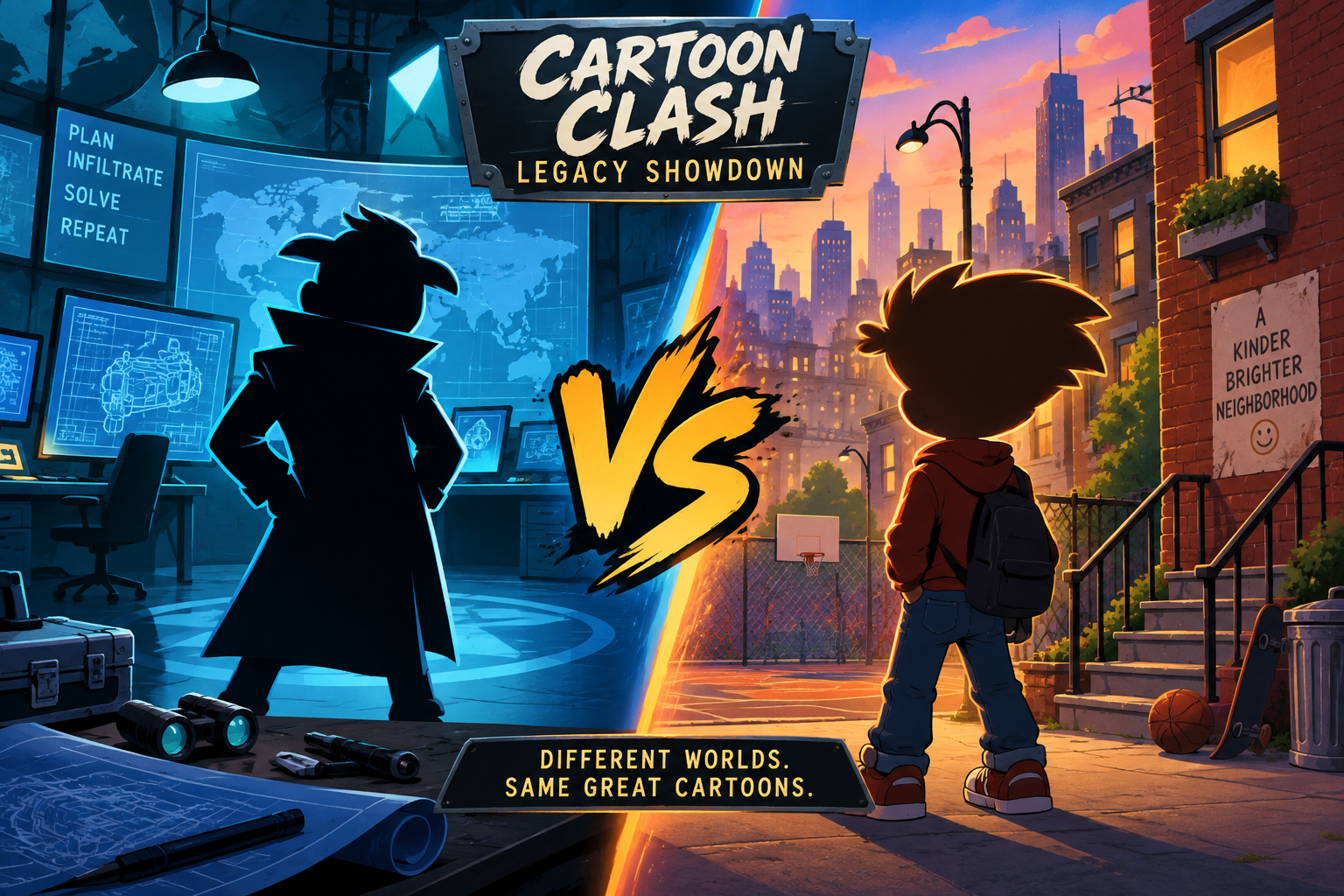
The second matchup of Region A may be one of the toughest first-round battles in the entire Cartoon Clash tournament. The #8 seed Perry the Platypus enters representing secret-agent action, clever visual storytelling, and one of the most unusual double lives in modern animation. Standing opposite him is the #9 seed Arnold from Hey Arnold!, one of the most relatable and emotionally grounded protagonists of Nickelodeon’s 1990s era. Unlike a typical action-versus-action matchup, these characters succeed for almost opposite reasons. Perry is famously quiet in his ordinary life, yet becomes a highly capable secret agent whose battles with Dr. Heinz Doofenshmirtz deliver elaborate gadgets, physical comedy, and running jokes. Arnold is a thoughtful city kid whose greatest strength is often empathy rather than force. His stories explore friendship, family, loneliness, neighborhood conflict, growing up, and the complicated lives of people around him. Both characters are essential to the identities of their series, but they represent very different philosophies of cartoon storytelling. Because the seeds are nearly even, every category matters, and neither modern popularity nor 1990s nostalgia should determine the result automatically.
Round 1: Animation Quality
Hey Arnold! developed one of the most recognizable visual environments in 1990s television animation. Its urban backgrounds, unusual character designs, nighttime streets, boarding house interiors, neighborhood landmarks, and changing city atmosphere gave the series a sense of place that many cartoons never achieve. Arnold’s football-shaped head is itself an instantly identifiable design. Perry benefits from a later production era and from a series built around rapid visual invention. His secret-agent sequences use gadgets, traps, vehicles, mechanical devices, dramatic entrances, physical comedy, and elaborate Doofenshmirtz inventions. The animation must also sell Perry’s transformation from apparently blank-faced household pet to remarkably competent operative, often with nothing more than a fedora and a change in posture. Phineas and Ferb frequently coordinates multiple storylines and visual payoffs in the same episode, giving Perry’s missions energetic pacing. Arnold’s world wins on atmosphere, but Perry’s segments demand a wider range of action, timing, mechanical spectacle, and visual comedy. Winner: Perry the Platypus.
Round 2: Character Cast
Perry belongs to a terrific ensemble. Phineas and Ferb provide the inventive A-story that often intersects with his missions, Candace supplies frantic comedy, Major Monogram and Carl shape Perry’s agency world, and Dr. Doofenshmirtz became one of modern animation’s most beloved comic villains. Perry’s strange but genuine relationship with Doofenshmirtz is especially important because their rivalry often feels almost like a friendship governed by an elaborate routine. Arnold, however, lives inside an extraordinarily deep community. Gerald is his closest friend and confidant, Helga is simultaneously antagonist, admirer, and one of the show’s most complicated characters, while Phoebe, Harold, Rhonda, Sid, Stinky, Eugene, Curly, and many classmates contribute distinct personalities. Grandpa Phil, Grandma Gertie, and the boarding-house residents create another layer of relationships at home. Even minor neighborhood characters can receive stories revealing fears, regrets, ambitions, or personal histories. Arnold’s role as the emotional center of this community allows the supporting cast to become part of his own characterization. Perry has excellent relationships, particularly with Doofenshmirtz, but Arnold’s ensemble is broader and more deeply developed. Winner: Arnold.
Round 3: Humor & Entertainment
Arnold’s series contains plenty of humor, but his own role is frequently to remain calm while stranger personalities create the comedy around him. The entertainment value of Hey Arnold! comes from a mixture of humor, mystery, school problems, neighborhood adventures, romance, and surprisingly serious emotional storytelling. That variety gives Arnold considerable strength, especially for viewers who appreciate character-driven stories. Perry’s segments are constructed around immediate entertainment. A routine day can suddenly become a secret briefing, an infiltration, a trap, an elaborate ‘-inator,’ an absurd Doofenshmirtz backstory, and a spectacular battle that accidentally affects Phineas and Ferb’s invention elsewhere in town. Perry rarely speaks, so much of his comedy depends on expressions, timing, action, and the audience’s understanding of his double identity. His rivalry with Doofenshmirtz is endlessly flexible because the villain’s plans can range from genuinely ambitious to hilariously petty. Arnold provides richer emotional variety, but Perry consistently combines action and comedy in a compact, highly entertaining formula. Winner: Perry the Platypus.
Round 4: Cultural Impact
Arnold is one of the defining protagonists of Nickelodeon’s 1990s golden era. His football-shaped head, tiny cap, plaid shirt, city neighborhood, friendship with Gerald, and complicated relationship with Helga remain instantly familiar to viewers who grew up with the network. Hey Arnold! also earned lasting respect for addressing childhood and community issues with unusual emotional maturity. Perry became a major icon of a later generation. His fedora transformation, secret-agent theme, distinctive chattering sound, and repeated confrontations with Doofenshmirtz became central pieces of Phineas and Ferb’s identity. The joke that characters fail to recognize Perry without his hat became one of the franchise’s most reusable ideas, while Agent P imagery spread through merchandise, games, online fandom, and Disney promotion. Yet cultural impact should measure more than memeability or current visibility. Arnold helped define the tone and ambition of an entire period of Nickelodeon storytelling, while Perry became one of the standout characters within an already powerful Disney television ecosystem. This is exceptionally close, but Arnold’s status as the face of a culturally distinctive series and era gives him the narrow edge. Winner: Arnold.
Round 5: Iconic Episodes & Moments
Perry has an enormous collection of memorable recurring moments. The transformation into Agent P, dramatic entrances into O.W.C.A., Major Monogram’s briefings, capture by Doofenshmirtz, the explanation of a new ‘-inator,’ the inevitable escape, and the destruction of Phineas and Ferb’s invention form a comedic ritual fans recognize immediately. His relationship with Doofenshmirtz also develops enough emotional depth that deviations from their routine can become surprisingly meaningful. Arnold’s strongest moments, however, often carry greater narrative and emotional weight. Hey Arnold! built memorable stories around Helga’s hidden feelings, Mr. Hyunh’s family history, Chocolate Boy’s struggles, bullying, neighborhood legends, friendship conflicts, Arnold’s missing parents, and the complicated lives of adults around him. Arnold frequently serves as the person willing to listen, investigate, or help when another character’s problem is ignored. Those episodes can remain memorable because they reveal something lasting about the characters rather than simply repeating a successful structure. Perry may have the more instantly recognizable recurring formula, but Arnold’s catalog contains more emotionally defining individual stories. Winner: Arnold.
Round 6: Creativity & Originality
A seemingly ordinary pet platypus who secretly works as a fedora-wearing government agent is an exceptionally inventive character premise. Perry’s double life creates two simultaneous identities without requiring him to change his personality through dialogue. To Phineas and Ferb, he is their quiet pet. To O.W.C.A., he is a skilled operative. To Doofenshmirtz, he is both nemesis and strangely dependable companion. The comedy becomes even more creative because his secret missions routinely intersect with the boys’ inventions without either storyline fully understanding the other. Arnold is also part of a highly original series. Hey Arnold! treats a dense urban neighborhood as a living ecosystem and gives children stories with unusual patience, melancholy, and social observation. Arnold’s understated personality is deliberately different from louder cartoon heroes. Still, this category focuses heavily on premise and uniqueness, and Perry’s combination of mundane household pet, silent physical comedian, and hypercompetent secret agent is difficult to match. Winner: Perry the Platypus.
Round 7: Era Difficulty
Perry emerged in a competitive 2000s television landscape in which Disney Channel and its related platforms were fighting for attention against Nickelodeon, Cartoon Network, established franchises, games, online entertainment, and increasingly fragmented viewing habits. Becoming a breakout character in that environment is a major achievement. Arnold entered an equally formidable environment during the 1990s animation boom. Nickelodeon was building a distinctive identity with original cartoons while competing against traditional broadcast animation and the rapidly expanding influence of cable competitors. Hey Arnold! had to stand beside other major Nicktoons without relying on fantasy powers, constant slapstick, or a merchandise-first premise. Its slower, emotionally grounded urban storytelling needed to distinguish itself in an era full of louder and more visually extreme cartoons. Arnold became one of the network’s defining protagonists despite that competition. Perry’s era was crowded, but Arnold’s success during the formative and fiercely competitive rise of original Nickelodeon animation gives him a slight advantage. Winner: Arnold.
Round 8: Legacy Endurance
Hey Arnold! has demonstrated impressive endurance. Decades after its original run, the series continues to be discussed for its emotional storytelling, distinctive city atmosphere, memorable characters, and willingness to treat children’s problems seriously. Arnold’s adventures retain value because subjects such as friendship, loneliness, family uncertainty, empathy, bullying, and growing up do not depend on one decade. Later franchise revivals also demonstrated that audiences still cared about unresolved parts of Arnold’s story. Perry’s legacy is younger, but it has remained remarkably active. Phineas and Ferb has continued to reach audiences through reruns, streaming, movies, merchandise, online clips, and renewed franchise activity, and Perry remains one of its most recognizable figures. His premise requires little cultural translation: a pet disappears, puts on a fedora, becomes a secret agent, and battles an eccentric villain. Arnold currently has the longer proven emotional afterlife, while Perry benefits from stronger ongoing franchise visibility. Because endurance rewards continued relevance as well as age, this round is extremely close. Arnold’s ability to remain beloved even through long periods without continuous new episodes gives him the narrow victory. Winner: Arnold.
Final Verdict
The original matchup favored Perry the Platypus 5-3, but a fuller category-by-category review makes this battle even closer and changes one crucial result. Perry earns Animation Quality, Humor & Entertainment, and Creativity & Originality. His action-heavy visual storytelling, nearly wordless comedic performance, secret-agent structure, and brilliantly unusual double identity give him three strong victories. Arnold earns Character Cast, Cultural Impact, Iconic Episodes & Moments, Era Difficulty, and Legacy Endurance. His exceptionally deep neighborhood ensemble, defining place in Nickelodeon’s 1990s identity, emotionally memorable stories, success during a formative competitive era, and enduring relevance give him five. Cultural Impact and Legacy Endurance are especially close, and Perry’s continuing visibility makes both categories debatable. The decisive change comes in Iconic Episodes & Moments: Perry owns one of animation’s best recurring comedic formulas, but Arnold’s strongest individual stories leave a deeper emotional and narrative imprint. When nostalgia and current franchise activity are both set aside, Arnold’s character-centered legacy proves slightly more complete across the eight official categories.
Final Result: Arnold pulls off the #9-over-#8 upset with a 5-3 category victory and advances to the second round of Cartoon Clash. Perry the Platypus exits after an extremely competitive performance that confirms why Agent P remains one of modern animation’s most creative and entertaining supporting icons.
Audience Challenge
Did Arnold deserve the 5-3 upset, or should Perry’s secret-agent popularity and unforgettable rivalry with Dr. Doofenshmirtz have carried him into Round Two? Would you award Cultural Impact, Iconic Episodes & Moments, or Legacy Endurance differently? Cast your vote, defend your choice, and continue following Legacy Showdown: Cartoon Clash as Region A moves forward.