
Affiliate Disclaimer: This post may contain affiliate links. If you make a purchase through one of these links, The Shopping Plaza may earn a commission at no additional cost to you.
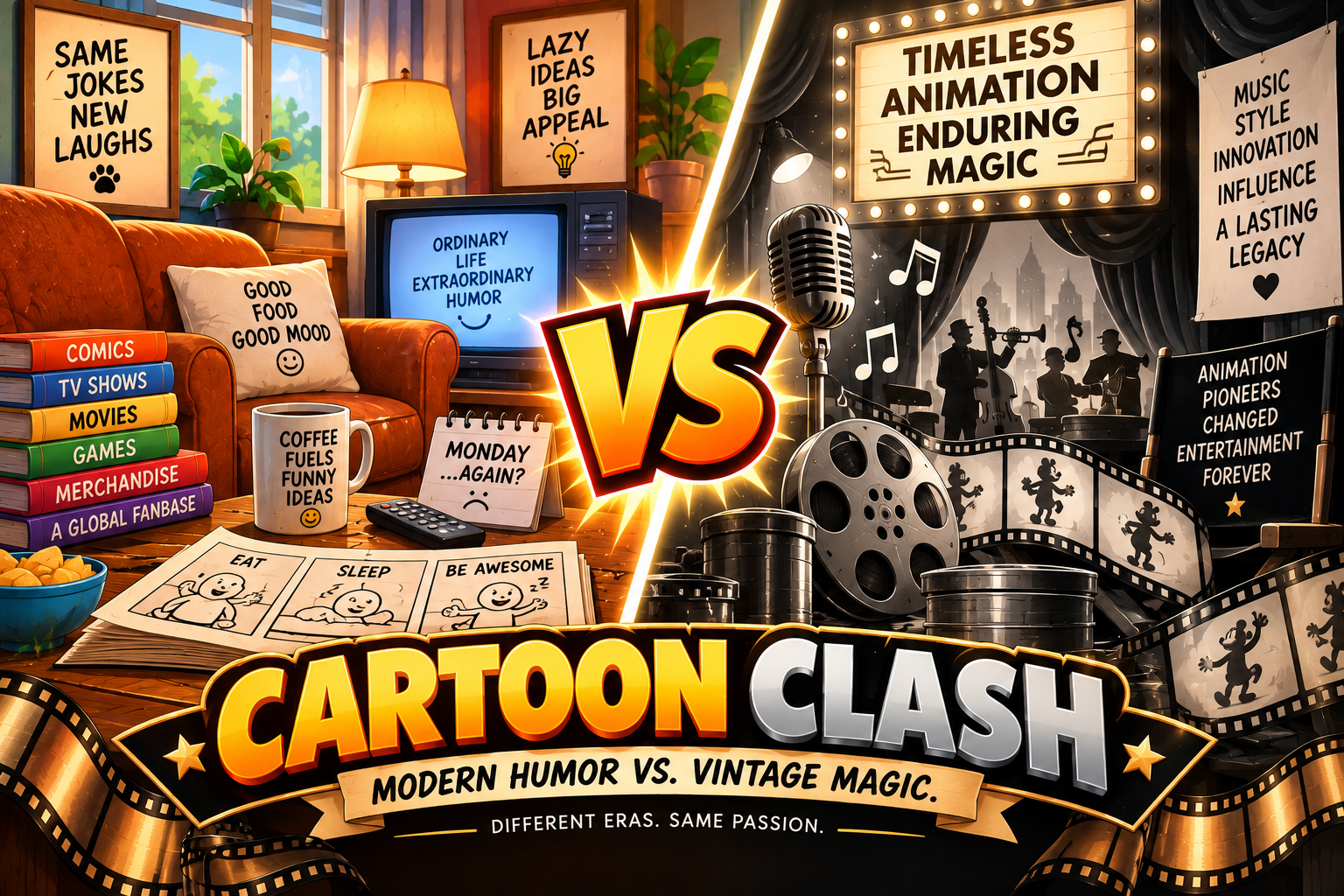
The next first-round matchup from Region A features a fascinating battle between two icons from very different eras of animation. The #6 seed Garfield enters the tournament as the world’s most famous lazy cat, while the #11 seed Betty Boop arrives as one of animation’s earliest superstars. This showdown pits sarcastic observational humor against vintage animation royalty. Garfield built a multimedia empire through comic strips, television specials, animated series, movies, books, games, and merchandise. Betty Boop emerged when sound animation was still young and became a distinctive screen personality whose image remains recognizable nearly a century later. Garfield’s case rests on extraordinary mainstream reach, an instantly understood personality, and continued exposure to new audiences. Betty’s case rests on pioneering influence, visual originality, musical energy, and survival from an era when the rules of animated stardom were still being written. Because Cartoon Clash judges characters fairly within their eras, newer production technology cannot automatically defeat pioneering artistry, and historical importance cannot automatically defeat sustained popularity. Each category has to be earned.
Round 1: Animation Quality
Garfield has benefited from decades of technological progress, moving from television specials into animated series, feature films, and newer productions with increasingly polished visual presentation. His simple orange design translates easily across media, and productions can emphasize his facial expressions and body language to sell sarcasm without requiring constant movement. The classic television specials also developed a warm, appealing visual identity that complemented Garfield’s humor. Betty Boop’s animation résumé is more historically ambitious. Her black-and-white theatrical shorts emerged during a period of rapid experimentation, and their fluid movement, musical synchronization, surreal transformations, and elastic visual gags frequently made animation itself part of the entertainment. Betty could move through dreamlike environments where objects changed shape and reality followed the rhythm of the cartoon rather than ordinary physics. Garfield has the technical advantage of later eras, but the category explicitly requires judging artistic achievement relative to its time. Betty’s best theatrical work pushed the visual language of early sound animation more aggressively than Garfield’s productions generally push their own eras. Winner: Betty Boop.
Round 2: Character Cast
Garfield’s supporting world is one of the strongest parts of his franchise. Jon Arbuckle gives Garfield a human owner whose awkwardness and romantic struggles provide endless material for sarcasm. Odie works as Garfield’s cheerful opposite, creating comedy through the contrast between Odie’s enthusiasm and Garfield’s irritation. Nermal gives Garfield a rival who can challenge his ego, while Arlene adds another recurring relationship and characters such as Pooky help reveal a softer side of the cat. These personalities allow Garfield stories to move beyond a single joke about laziness or food. Betty Boop interacted with memorable figures in her theatrical world and was surrounded by the wonderfully strange personalities typical of early Fleischer animation. Yet her franchise never developed a comparably stable, deep ensemble whose relationships became as famous as the central star. Betty is the more historically pioneering figure, but Garfield clearly has the richer long-term supporting cast. Winner: Garfield.
Round 3: Humor & Entertainment
Betty Boop’s shorts were energetic entertainment built from music, dancing, visual absurdity, celebrity caricature, innuendo, and the anything-can-happen logic of early cartoons. Her personality and the surreal worlds around her gave audiences a fast-moving style of entertainment that was unusually bold for its period. Garfield’s humor is far more restrained, but its simplicity became one of the character’s greatest strengths. His love of lasagna, hatred of Mondays, obsession with sleep, dislike of exercise, teasing of Odie, and sarcastic commentary turn ordinary frustrations into jokes that audiences can understand immediately. Garfield can work in a three-panel comic strip, a half-hour television special, a movie, or a single image because his attitude is the entertainment engine. The humor also crosses age groups without depending heavily on one specific historical setting. Betty’s entertainment is lively and innovative, but Garfield has sustained a broader, more repeatable comedic identity across generations and formats. Winner: Garfield.
Round 4: Cultural Impact
This is one of the hardest categories in the matchup. Betty Boop became one of the earliest widely recognized female cartoon stars and remains an enduring visual symbol of 1930s animation. Her distinctive hairstyle, large eyes, dress, voice, and jazz-age image have survived far beyond the period in which her original shorts were produced. Her continuing presence on merchandise and in popular imagery demonstrates how strongly the design entered cultural memory. Garfield, however, became one of the most recognizable comic-strip characters in the world and expanded far beyond newspapers. His image appears on merchandise across countless categories, while jokes about Mondays, lasagna, sleeping, and cynical laziness became inseparable from his identity. He has also remained visible through television, films, books, licensing, and internet culture. Betty’s historical importance is enormous, but Garfield’s cultural footprint has been both massive and continuously active across more areas of everyday popular culture. By a narrow margin, Garfield takes the category. Winner: Garfield.
Round 5: Iconic Episodes & Moments
Betty Boop’s theatrical shorts contain historically important musical performances, surreal sequences, and visual moments that animation enthusiasts continue to celebrate. Her association with jazz-era entertainment and the distinctive ‘Boop-Oop-a-Doop’ persona gave her a signature identity immediately recognizable to fans of classic animation. Garfield, though, has accumulated a much larger catalog of specific stories and recurring moments across multiple media. His holiday television specials became seasonal favorites, giving the character memorable Christmas, Halloween, and Thanksgiving material in addition to everyday comic-strip humor. The franchise also repeatedly returns to Garfield’s battles with diets, Mondays, alarm clocks, Odie, Jon’s dating problems, and his relentless pursuit of food and comfort. Those recurring situations are simple, but they are precisely why audiences can identify a Garfield moment almost instantly. Betty has several historically iconic images and performances, yet Garfield has the deeper collection of stories and recurring moments familiar to a broader modern audience. Winner: Garfield.
Round 6: Creativity & Originality
Betty Boop earns a major advantage when originality is judged within historical context. She emerged at a time when animated stars were still developing their identities, and she became a strikingly different kind of character: a glamorous, musical, mischievous female lead with a personality and visual design unlike the animal-based cartoon stars dominating much of the medium. Her shorts also existed within the Fleischer tradition of surreal animation, where backgrounds, objects, bodies, and music could transform without warning. That willingness to bend reality helped demonstrate the creative possibilities of sound cartoons. Garfield is also a superb character concept. A lazy, food-obsessed house cat who silently regards his owner and the world with cynical superiority proved flexible enough to generate decades of jokes from everyday life. Yet Garfield’s brilliance is largely in refinement and consistency rather than pioneering a new visual or narrative language for animation. Betty’s originality was more radical relative to the industry around her. Winner: Betty Boop.
Round 7: Era Difficulty
Garfield entered a crowded entertainment world and had to expand from newspaper comics into animation while preserving the personality that made the strip successful. Maintaining that popularity through changing media habits, new generations of characters, and an enormous growth in entertainment options is a meaningful accomplishment. Betty Boop, however, emerged while the animation industry itself was still establishing its technical standards, business models, audience expectations, and relationship with sound. Studios were experimenting rapidly, and a character could not rely on decades of established cartoon marketing or television exposure to build familiarity. Betty also had to remain distinctive in an era producing numerous new animated personalities while social standards and industry restrictions changed around her. Becoming one of the period’s enduring stars under those conditions required originality and immediate audience appeal. Her survival as a recognizable icon when so many contemporaries disappeared makes the achievement even more impressive. Winner: Betty Boop.
Round 8: Legacy Endurance
Betty Boop’s endurance is extraordinary. A character born in the early sound era remains recognizable nearly a century later, even among people who have never watched one of her original theatrical shorts. Her image continues appearing in merchandise, licensing, retrospectives, and discussions of animation history. That is genuine long-term survival. Garfield, however, combines longevity with a much stronger record of continuous mainstream activity. Since his debut, he has remained visible through an ongoing comic-strip presence, television productions, specials, movies, books, games, merchandise, and newer adaptations that repeatedly introduce him to children and families. His core personality requires almost no updating because disliking Mondays, loving food, preferring sleep, and mocking everyday inconvenience remain easy jokes for new generations to understand. Betty survives powerfully as both a historic star and visual icon, but Garfield remains an actively consumed entertainment character rather than primarily a legacy image. That continuing engagement gives Garfield the narrow advantage. Winner: Garfield.
Final Verdict
Once the matchup is expanded and each era is judged on its own terms, Betty Boop proves far more competitive than the original 6-2 score suggests. She earns Animation Quality because her theatrical shorts used fluid movement, musical synchronization, and surreal visual experimentation to push early sound animation. She also takes Creativity & Originality and Era Difficulty because she helped define what an animated star could be while working during a formative and uncertain period for the medium. Garfield answers with Character Cast, Humor & Entertainment, Cultural Impact, Iconic Episodes & Moments, and Legacy Endurance. His ensemble is deeper, his comic personality has remained remarkably adaptable, his cultural reach is enormous, and he continues functioning as an active entertainment franchise for new audiences. Cultural Impact and Legacy Endurance are particularly close, but Garfield’s sustained mainstream presence gives him the edge in both. The result is therefore not a runaway victory, but the #6 seed still builds the stronger category résumé.
Final Result: Garfield advances to the second round with a 5-3 category victory. Betty Boop exits after taking three important categories and demonstrating that her pioneering artistry and historical significance remain powerful enough to challenge one of the world’s most recognizable modern cartoon characters.
Audience Challenge
Did Garfield deserve the 5-3 victory, or should Betty Boop’s pioneering influence have carried even more weight? Would you give Betty Cultural Impact because of her historic status, or does Garfield’s enormous worldwide reach and continued mainstream activity deserve the edge? Cast your vote, defend your choice, and continue following Legacy Showdown: Cartoon Clash as Region A continues.