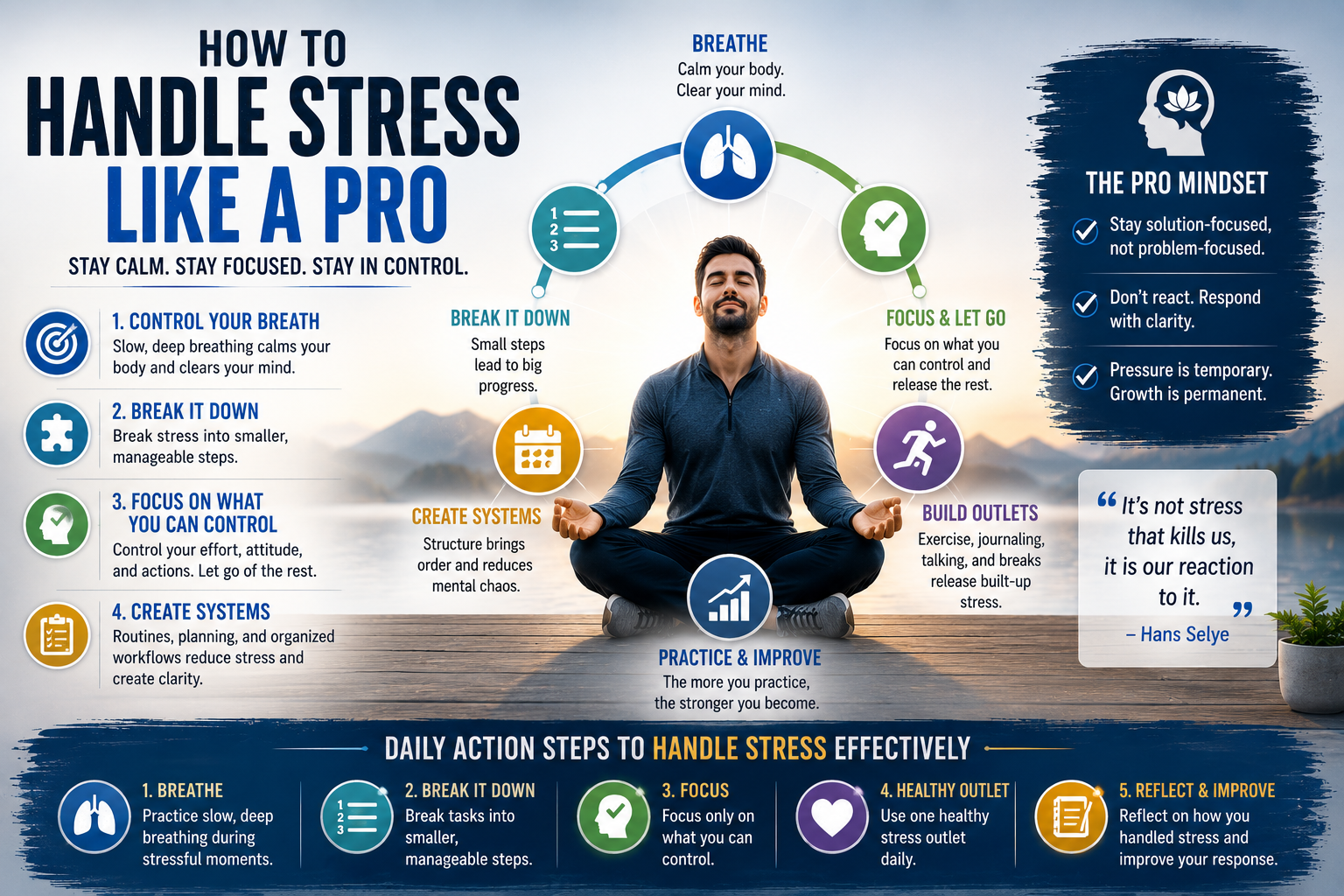

“It’s not stress that kills us, it is our reaction to it.” – Hans Selye
Disclaimer: This blog may contain affiliate banner advertisements. If you click on these ads or make purchases through them, we may earn a small commission at no additional cost to you. These commissions help support our work and allow us to continue providing valuable content.
Introduction: Stress Is Inevitable, But Suffering Isn’t
Introduction: Stress Is Inevitable, But Suffering Isn’t
Stress is a natural and unavoidable part of life. Whether it comes from work, family responsibilities, financial pressures, health concerns, or unexpected challenges, everyone experiences moments of tension and uncertainty. While you may not be able to eliminate stress completely, you can learn to manage it in a way that prevents it from taking control of your thoughts, emotions, and actions. The difference between feeling overwhelmed and remaining composed is not the amount of stress you face but the skills and mindset you develop to respond to it. By learning healthy coping strategies, maintaining perspective, and focusing on what you can control, you become better equipped to handle difficult situations with confidence and resilience. Handling stress like a professional means staying calm under pressure, thinking clearly before reacting, and taking purposeful action even when circumstances feel overwhelming. Over time, these habits not only reduce the negative impact of stress but also strengthen your emotional well-being, allowing you to face life’s challenges with greater confidence, balance, and inner peace.
Understanding What Stress Really Is
Understanding What Stress Really Is
Stress is your body’s natural response to situations that it perceives as challenging, demanding, or potentially threatening. In small, short-lived doses, stress can actually be beneficial by increasing your focus, sharpening your awareness, and providing the energy needed to respond quickly or perform at your best. This type of productive stress can motivate you to meet deadlines, solve problems, and overcome obstacles. However, when stress becomes constant or is left unmanaged, it begins to take a toll on both your mental and physical well-being, affecting your concentration, mood, sleep, relationships, and overall health. Over time, chronic stress can leave you feeling exhausted, anxious, and less capable of handling everyday responsibilities. Learning to recognize the difference between helpful, temporary stress and overwhelming, long-term stress is an essential step toward managing it effectively. Once you understand how stress affects you, you can take proactive steps to reduce its impact, strengthen your resilience, and respond to life’s challenges with greater clarity, balance, and confidence.
The Professional Mindset Under Stress
The Professional Mindset Under Stress
People who handle stress effectively are not immune to pressure—they have simply learned how to respond to it in a productive and intentional way. Rather than allowing difficult situations to consume their thoughts, they focus their energy on finding practical solutions and taking meaningful action. Instead of asking, “Why is this happening to me?” or dwelling on circumstances they cannot change, they shift their attention to questions like, “What can I control?” and “What’s the next best step I can take?” This solution-focused mindset helps them remain calm, think clearly, and make better decisions even when faced with uncertainty. By concentrating on progress instead of problems, they avoid becoming trapped in frustration, fear, or self-doubt and are better equipped to adapt when challenges arise. Over time, consistently responding to stress with purpose and clarity builds resilience, strengthens confidence, and enables them to navigate demanding situations with professionalism, composure, and a greater sense of control.
Control Your Breathing and Body
Control Your Breathing and Body
One of the quickest ways to manage stress is by paying attention to your body’s physical response. When stress levels rise, your heart rate increases, your breathing often becomes shallow and rapid, and your muscles naturally tighten as your body prepares to react. While this response can be helpful in true emergencies, it can become overwhelming when triggered by everyday pressures. By intentionally slowing your breathing, relaxing your shoulders, unclenching your jaw, and releasing muscle tension, you send a powerful signal to your brain that you are safe and no immediate danger is present. This simple practice helps calm your nervous system, allowing your heart rate to slow, your thoughts to become clearer, and your emotions to feel more manageable. Over time, making these techniques part of your regular routine can improve your ability to stay calm under pressure, think more clearly during stressful situations, and respond with confidence instead of reacting out of panic or frustration.
Break Stress Into Manageable Pieces
Break Stress Into Manageable Pieces
Stress often feels overwhelming because multiple responsibilities, deadlines, and worries seem to demand your attention all at once. When everything appears equally urgent, it’s easy to become mentally overloaded and unsure of where to begin. One of the most effective ways to regain control is to break the situation into smaller, manageable steps and focus on completing one task at a time. Rather than trying to solve every problem at once, identify the next most important action and give it your full attention before moving on to the next. As you complete each step, you’ll begin to replace feelings of overwhelm with a growing sense of accomplishment and control. This simple process creates clarity, reduces mental clutter, and reminds you that even the biggest challenges can be overcome by making steady progress one manageable step at a time.
Focus on What You Can Control
Focus on What You Can Control
One of the most effective ways to reduce stress is to shift your attention away from things you cannot control and concentrate on the areas where your choices truly make a difference. Worrying about other people’s decisions, unexpected events, or outcomes that haven’t happened yet often creates unnecessary mental and emotional pressure without solving the problem. Instead, focus on what is within your control—your effort, your attitude, your preparation, your decisions, and the actions you choose to take each day. By directing your energy toward these controllable factors, you regain a sense of purpose and influence, making stressful situations feel more manageable. Letting go of what you cannot change does not mean you stop caring; it means you choose to invest your time and energy where they will have the greatest impact. This simple but powerful shift in perspective reduces anxiety, improves your ability to think clearly, and allows you to approach challenges with greater confidence, resilience, and peace of mind.
Create Systems to Reduce Stress
Create Systems to Reduce Stress
One of the most effective ways to reduce stress is to create reliable systems that bring structure and consistency to your daily life. When you establish routines, maintain an organized schedule, and develop simple workflows for recurring tasks, you eliminate much of the chaos and uncertainty that often lead to unnecessary pressure. Instead of constantly reacting to problems as they arise, you become more proactive by planning ahead and preparing for what you can anticipate. This allows you to make decisions with greater clarity and spend less mental energy remembering every detail or worrying about what comes next. Well-designed systems also create stability during busy or challenging periods because they provide a dependable framework to rely on when life feels overwhelming. By investing time in preparation and organization, you strengthen your ability to handle pressure calmly, remain productive under stress, and approach each day with greater confidence and peace of mind.
Build Healthy Stress Outlets
Build Healthy Stress Outlets
Stress that goes unmanaged doesn’t simply disappear—it tends to build over time, making it more difficult to think clearly, regulate your emotions, and maintain your overall well-being. That’s why it’s important to develop healthy outlets that allow you to release tension before it becomes overwhelming. Activities such as regular exercise, journaling your thoughts, talking with a trusted friend or family member, spending time in nature, practicing mindfulness, or taking short breaks throughout the day can help restore emotional balance and mental clarity. These positive habits give your mind and body an opportunity to recover from daily pressures instead of carrying accumulated stress from one day to the next. Healthy stress outlets also improve your resilience by helping you process challenges in a constructive way rather than suppressing your emotions or relying on unhealthy coping mechanisms. By making these practices a consistent part of your routine, you strengthen your ability to manage pressure, maintain a calmer mindset, and approach life’s challenges with greater focus, confidence, and emotional stability.
Train Yourself Through Repetition
Train Yourself Through Repetition
Handling stress is a skill that becomes stronger with consistent practice, just like learning a new language, improving your fitness, or mastering any other ability. Every time you encounter a stressful situation and choose to respond with patience, clear thinking, and self-control, you reinforce healthy habits that make future challenges easier to manage. At first, staying calm under pressure may require a conscious effort, but with repetition those responses become more natural and automatic. Each experience gives you valuable confidence because it reminds you that you have successfully navigated difficult situations before and can do so again. Even when you don’t handle every stressful moment perfectly, each challenge provides an opportunity to reflect, learn, and improve your response the next time. Over time, these repeated experiences build emotional resilience, strengthen your confidence, and develop a steady mindset that allows you to face life’s pressures with greater composure, clarity, and determination.
Conclusion: Stay Calm, Stay in Control
Stress is unavoidable, but how you handle it is entirely up to you.
By managing your mindset, controlling your response, and building strong habits, you can handle stress like a pro and stay in control no matter the situation.
Daily Action Steps to Handle Stress Effectively
- Practice slow, deep breathing during stressful moments.
2. Break tasks into smaller steps.
3. Focus only on what you can control.
4. Use one healthy stress outlet daily.
5. Reflect on how you handled stress and improve your response.