
Affiliate Disclosure: This article may contain affiliate links. If you purchase products through links on our website, we may earn a small commission at no additional cost to you. Your support helps us continue creating helpful holiday resources, celebration ideas, and seasonal shopping guides.
Every Halloween, millions of people willingly seek out experiences designed to frighten them. They visit haunted houses, watch horror movies, explore ghost tours, tell scary stories around campfires, and decorate their homes with skeletons, zombies, and eerie decorations. It may seem strange that people actively pursue something that causes fear, yet Halloween continues to be one of the world’s most beloved holidays.
So why do we enjoy being scared? The answer lies deep within human psychology. Fear triggers powerful biological and emotional responses that can actually become enjoyable when experienced in a safe environment. The rush of adrenaline, the excitement of uncertainty, and the satisfaction of overcoming fear all contribute to Halloween’s enduring appeal.
In this complete guide, we’ll explore the fascinating psychology behind fear, why scary experiences can actually be fun, and what science reveals about our love of Halloween thrills.
Fear Is a Natural Survival Response
Fear is one of humanity’s oldest survival instincts.
Thousands of years ago, fear helped our ancestors avoid:
- Dangerous animals
- Natural disasters
- Hostile environments
- Physical threats
- Unknown dangers
When our brains detect potential danger, they automatically prepare our bodies to respond.
This built-in survival system continues to function today—even when the “danger” is simply a haunted house or scary movie.
The Fight-or-Flight Response
One of the body’s most powerful reactions to fear is the fight-or-flight response.
When triggered, your body quickly releases stress hormones, including adrenaline.
This causes:
- Faster heartbeat
- Increased breathing
- Sharper senses
- Faster reaction times
- Increased energy
- Greater alertness
Although these responses evolved to protect us from real threats, they also occur during controlled scary experiences.
Adrenaline Can Feel Exciting
Adrenaline is often called the body’s natural “energy boost.”
When released, it creates feelings of:
- Excitement
- Alertness
- Energy
- Anticipation
- Intensity
Because haunted attractions and horror movies are generally safe, our brains eventually recognize there is no real danger.
Once the fear passes, many people interpret the adrenaline rush as excitement rather than anxiety.
Dopamine Rewards the Experience
After surviving a frightening experience, the brain often releases dopamine, sometimes called the “feel-good” neurotransmitter.
Dopamine is associated with:
- Pleasure
- Motivation
- Reward
- Satisfaction
- Enjoyment
This reward helps explain why people often leave haunted houses laughing instead of crying.
Their brains are celebrating that they’ve safely overcome a challenge.
We Enjoy Fear in Safe Environments
One of the biggest reasons Halloween is enjoyable is because the fear feels controlled.
People know:
- The haunted house isn’t truly dangerous.
- The zombies are actors.
- The ghosts are fictional.
- The monster on screen can’t hurt them.
Because our brains recognize the situation is ultimately safe, we can enjoy the excitement without experiencing genuine panic.
Curiosity About the Unknown
Humans are naturally curious.
We’re fascinated by:
- Ghost stories
- Urban legends
- Haunted places
- Supernatural mysteries
- Ancient folklore
- Unexplained events
Halloween embraces these mysteries, allowing people to safely explore ideas that spark imagination and wonder.
Facing Fear Builds Confidence
Successfully completing a frightening experience often creates a sense of accomplishment.
People may think:
- “I survived that haunted house.”
- “That movie wasn’t as scary as I expected.”
- “I conquered my fear.”
Small victories over fear can increase confidence and provide a sense of personal achievement.
Fear Creates Lasting Memories
Emotionally intense experiences are often remembered more clearly than ordinary ones.
That’s because strong emotions help the brain store memories more effectively.
Halloween experiences often become unforgettable because they combine:
- Excitement
- Surprise
- Laughter
- Fear
- Celebration
These emotions work together to create lasting memories.
Sharing Fear Brings People Together
Many Halloween activities are social experiences.
People enjoy:
- Haunted houses
- Horror movie nights
- Pumpkin carving
- Ghost tours
- Halloween parties
- Campfire stories
Experiencing fear together often strengthens relationships.
Laughing after a shared scare creates positive emotional connections among friends and family.
Horror Gives Us a Safe Challenge
Many people enjoy testing their limits.
Halloween provides opportunities to ask:
- How brave am I?
- Can I finish this haunted maze?
- Can I watch this scary movie?
- Will I jump?
Because the risks are controlled, these challenges feel exciting rather than dangerous.
Halloween Encourages Imagination
Halloween allows people to temporarily step into imaginative worlds.
For one evening, it’s easy to believe in:
- Ghosts
- Witches
- Vampires
- Werewolves
- Zombies
- Haunted houses
Even adults enjoy suspending reality for a little while.
Imagination makes Halloween feel magical.
Costumes Help Reduce Fear
Interestingly, costumes don’t just make Halloween fun—they can also make frightening experiences feel safer.
When we recognize someone is wearing a costume, our brains understand:
- It’s pretend.
- It’s entertainment.
- It’s temporary.
This balance between realism and fantasy keeps Halloween enjoyable rather than overwhelming.
Why Children Love Halloween
Children experience Halloween differently than adults.
Many enjoy:
- Dressing up
- Collecting candy
- Pretending to be superheroes
- Meeting favorite characters
- Decorating pumpkins
Young children often prefer playful excitement over genuine fear.
As they grow older, many become more interested in spooky attractions and horror stories.
Why Adults Still Love Halloween
Adults often appreciate Halloween for different reasons.
They enjoy:
- Nostalgia
- Decorating
- Costume creativity
- Social gatherings
- Horror movies
- Haunted attractions
- Seasonal traditions
Halloween allows adults to reconnect with the imagination and excitement of childhood.
Everyone Has a Different Fear Threshold
Not everyone enjoys the same level of fear.
Some people love:
- Haunted houses
- Escape rooms
- Horror films
- Paranormal investigations
Others prefer:
- Family-friendly decorations
- Pumpkin patches
- Hayrides
- Costume contests
- Halloween baking
There’s no “right” way to celebrate Halloween.
Everyone can choose experiences that match their comfort level.
The Science of Jump Scares
Jump scares work because they trigger our brain’s automatic startle reflex.
Unexpected:
- Loud noises
- Sudden movement
- Surprising appearances
cause the brain to react before we consciously process what’s happening.
Once we realize we’re safe, the initial fear often turns into laughter.
Seasonal Atmosphere Enhances Emotion
Autumn naturally contributes to Halloween’s emotional appeal.
The season brings:
- Cooler temperatures
- Earlier sunsets
- Falling leaves
- Foggy mornings
- Bare trees
- Longer nights
These environmental changes create an atmosphere that feels mysterious and perfectly suited for spooky traditions.
Halloween Helps Us Explore Big Questions
Beyond entertainment, Halloween gives people an opportunity to explore universal themes.
Many traditions touch on ideas such as:
- Life
- Death
- Mystery
- Good versus evil
- Courage
- Imagination
Throughout history, stories and celebrations have helped people better understand these timeless human experiences.
Common Myths About Fear
Some misconceptions exist about enjoying scary experiences.
For example:
- Enjoying horror doesn’t necessarily mean someone enjoys real danger.
- Being frightened for fun isn’t the same as experiencing genuine trauma.
- People who dislike horror aren’t less brave than those who enjoy it.
- Everyone experiences fear differently based on personality, past experiences, and comfort levels.
Understanding these differences helps explain why Halloween appeals to some people more than others.
Frequently Asked Questions
Why do people enjoy haunted houses if they’re scary?
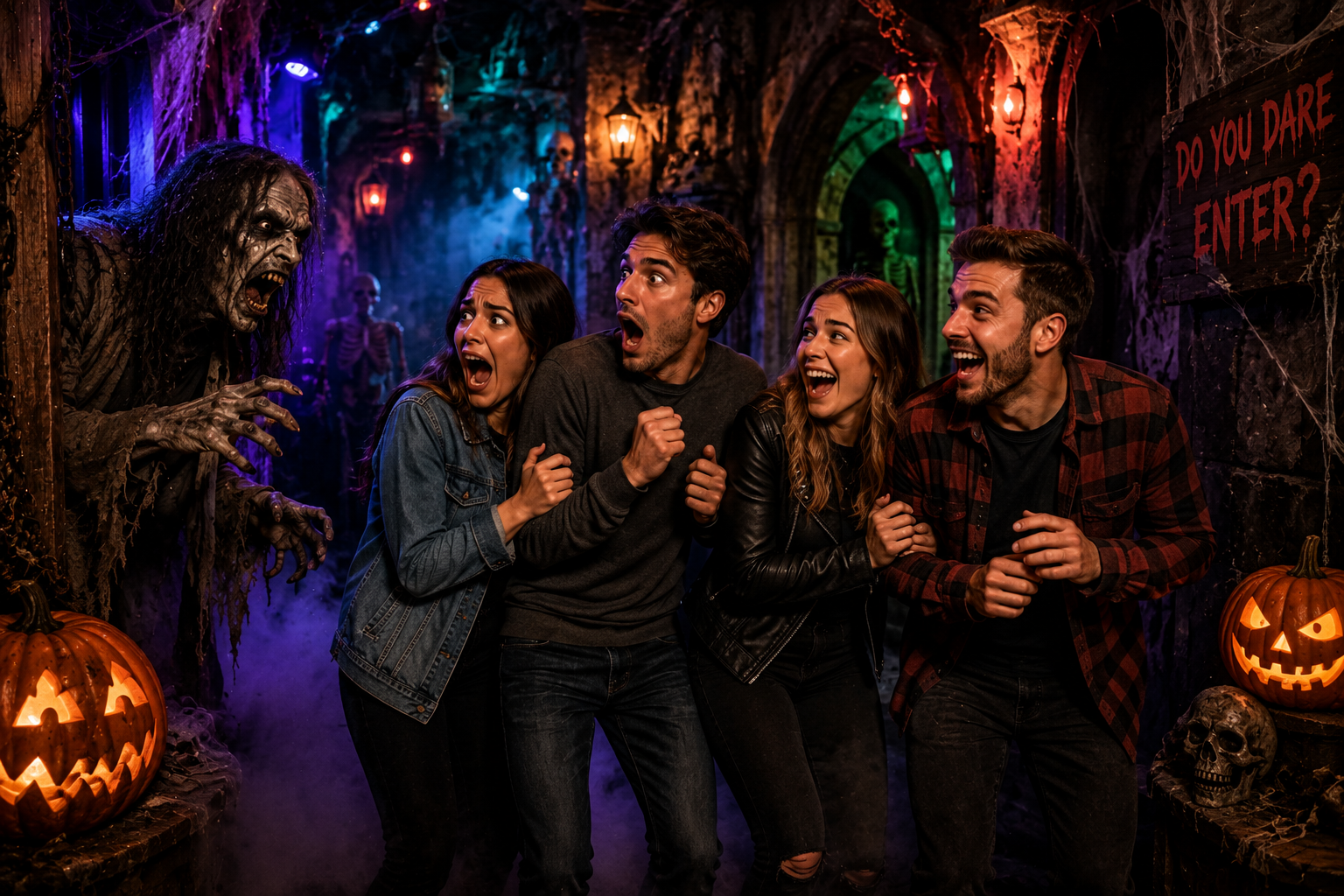
Haunted houses create a controlled environment where people experience excitement without real danger. The adrenaline rush, combined with the knowledge that the experience is safe, makes the fear enjoyable for many visitors.
Why do people laugh after being scared?
After a sudden scare, the brain quickly realizes there is no actual threat. The release of tension, combined with chemicals such as dopamine, often results in laughter and relief.
Why do some people dislike horror movies?
Everyone has a different tolerance for fear. Personal experiences, personality, age, and sensitivity all influence how someone responds to frightening entertainment.
Is it healthy to enjoy scary experiences?
For most people, yes. Enjoying haunted attractions, horror movies, or spooky stories in moderation can provide excitement, social bonding, and entertainment in a safe setting. However, individuals who find these experiences overwhelming should feel comfortable choosing less frightening Halloween activities.
Why is Halloween so popular?
Halloween combines creativity, imagination, seasonal traditions, social gatherings, costumes, candy, and controlled thrills into one celebration. It offers something enjoyable for nearly every age group and comfort level.
Final Thoughts
The psychology behind Halloween reveals that our love of being scared is deeply connected to the way our brains are designed. Fear activates powerful biological responses that once helped our ancestors survive real dangers, but in today’s world, those same responses can create excitement and enjoyment when experienced in safe, controlled environments. Whether it’s the rush of adrenaline in a haunted house, the suspense of a horror movie, or the thrill of hearing a ghost story around a campfire, Halloween allows us to experience fear without facing genuine danger.
Perhaps that’s why Halloween has remained so popular for generations. It encourages us to step outside our comfort zones, embrace our imaginations, share unforgettable experiences with family and friends, and even laugh at our own fears. Whether you love spine-tingling haunted attractions or simply enjoy carving pumpkins and handing out candy, Halloween reminds us that sometimes the safest way to appreciate courage is to experience just a little fear—and discover that we’re stronger, braver, and more resilient than we imagined.