
Affiliate Disclosure: This article may contain affiliate links. If you purchase products through links on our website, we may earn a small commission at no additional cost to you. Your support helps us continue creating helpful holiday resources, celebration ideas, and seasonal shopping guides.
A successful haunted house should leave guests screaming, laughing, and talking about the experience long after Halloween is over. What it should never leave behind is an avoidable injury, emergency, or dangerous situation.
Whether you are operating a small home attraction, a neighborhood haunted trail, a school fundraiser, or a large commercial event, safety must be part of every planning decision. Dark hallways, loud sounds, fog, moving actors, electrical equipment, crowded waiting areas, and temporary decorations can all create risks when they are not managed carefully.
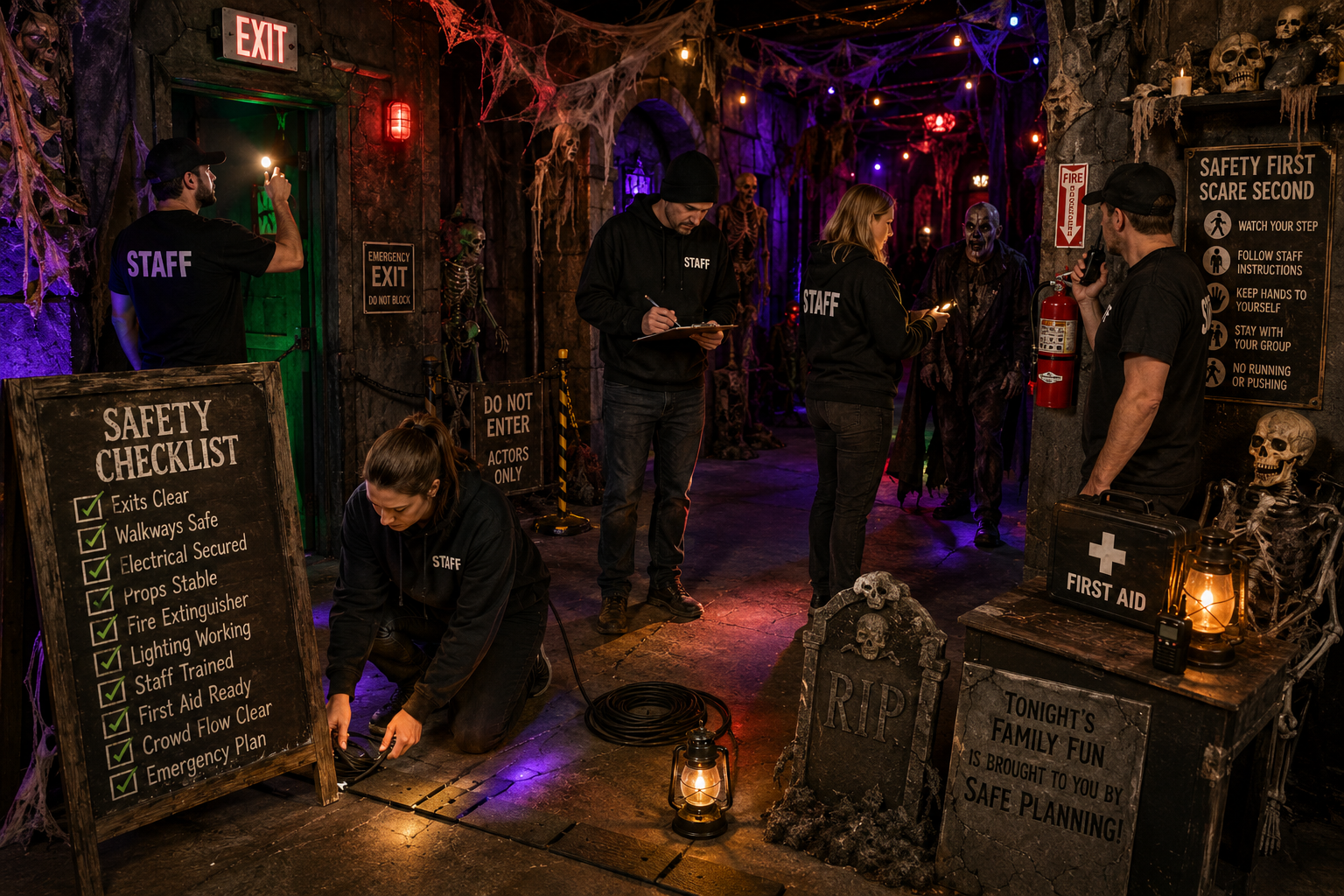
The most effective haunted house owners design safety into the attraction from the beginning rather than trying to fix problems at the last minute. Clear walkways, trained staff, accessible exits, reliable communication, and properly installed equipment allow guests to enjoy the fear without being placed in real danger.
This guide covers essential safety practices every haunted house owner should consider
before opening the doors.
Learn the Rules That Apply to Your Attraction
Safety requirements may differ depending on the size, location, and purpose of your haunted house.
A private home display may be treated differently from a ticketed commercial attraction, school fundraiser, community event, or temporary structure. Before opening, contact the appropriate local authorities and ask which rules apply.
You may need to consult:
- Local fire officials
- Building or code enforcement departments
- Zoning offices
- Health departments
- Insurance providers
- Property owners
- School or organizational administrators
- Police or emergency management personnel
Do not assume that a temporary Halloween attraction is exempt from permits, inspections, occupancy limits, or fire rules.
Requirements vary by location, so confirm everything directly with local officials.
Schedule a Safety Inspection
A professional inspection can identify risks that are easy to overlook.
Fire officials, building inspectors, electricians, insurance representatives, or qualified safety professionals may be able to review:
- Emergency exits
- Occupancy limits
- Electrical systems
- Temporary walls
- Fire extinguishers
- Exit lighting
- Decorations
- Fog effects
- Structural stability
- Accessibility
- Crowd flow
Address any concerns before guests enter the attraction.
An inspection may feel inconvenient during preparation, but it can prevent serious problems later.
Keep All Emergency Exits Clear
Every emergency exit must remain visible, accessible, and usable throughout the event.
Never place decorations, props, actors, equipment, storage containers, or temporary walls in front of an exit.
Make sure:
- Exit doors open properly.
- Doors are never locked while guests are inside.
- Exit routes are wide enough.
- Illuminated signs are visible.
- Staff members know every exit location.
- Backup lighting is available.
Guests should be able to leave quickly even if the attraction loses power or fills with smoke.
Establish a Safe Guest Capacity
Overcrowding increases the risk of falls, panic, blocked exits, and medical emergencies.
Determine how many people can safely be inside the attraction at one time. Follow any occupancy limit established by local authorities or inspectors.
Control entry by:
- Admitting small groups.
- Spacing groups apart.
- Using timed tickets.
- Assigning staff at entrances.
- Tracking the number of guests inside.
- Temporarily pausing admission when necessary.
Crowds should move steadily without guests pushing into the group ahead of them.
Keep Walkways Clear
Dark environments make even minor obstacles dangerous.
Inspect every guest pathway for:
- Loose cords
- Raised flooring
- Uneven ground
- Protruding nails
- Low-hanging objects
- Unstable props
- Torn carpets
- Wet surfaces
- Sharp edges
- Narrow turns
Secure all cords with appropriate covers or route them away from walking areas.
Never create a scare that requires guests to step over unsafe objects, crawl through unstable structures, or walk across slippery surfaces.
Provide Enough Light for Safe Movement
A haunted house should feel dark, but guests must still be able to see where they are walking.
Use low-level lighting to identify:
- Stairs
- Ramps
- Doorways
- Changes in floor height
- Sharp turns
- Emergency exits
- Narrow passages
Avoid bright lighting that ruins the atmosphere, but do not make guests depend entirely on touch or guesswork.
Temporary power loss should never leave the attraction in complete darkness. Install dependable emergency lighting where required.
Use Fire-Resistant Materials
Halloween decorations can create a serious fire hazard, especially when used in large quantities.
Whenever possible, choose materials that are labeled flame-resistant, flame-retardant, or approved for public event use.
Pay special attention to:
- Curtains
- Fabric walls
- Artificial cobwebs
- Hanging decorations
- Costumes
- Foam props
- Paper products
- Dried plants
- Temporary partitions
Keep decorations away from heat sources, electrical panels, lights, heaters, and equipment that becomes warm.
Never rely on homemade treatments unless they are permitted and properly applied.
Avoid Open Flames
Real candles, torches, lanterns, and fireplaces may look dramatic, but they create unnecessary risk in a crowded attraction.
Use battery-operated alternatives such as:
- LED candles
- Flickering lanterns
- Simulated fireplaces
- Electric torches
- Projected flame effects
Open flames should never be placed near costumes, curtains, artificial cobwebs, dried leaves, cardboard, foam, or other combustible materials.
Follow local fire rules without exception.
Install Electrical Equipment Properly
Haunted houses often use large numbers of lights, speakers, animatronics, fog machines, projectors, fans, and control systems.
Overloaded outlets and unsafe extension cords can lead to electrical fires or shocks.
Follow these precautions:
- Use equipment approved for its intended location.
- Use outdoor-rated cords outside.
- Avoid damaged cords and plugs.
- Do not overload circuits.
- Keep electrical connections away from water.
- Use qualified electricians when needed.
- Secure cables away from walkways.
- Avoid connecting multiple power strips together.
- Turn off and inspect malfunctioning equipment immediately.
Know where the electrical panel and shutoff controls are located.
Place Fire Extinguishers Strategically
Appropriate fire extinguishers should be easy for trained staff to reach.
Their number and placement may depend on local code, the attraction’s size, and the equipment being used.
Make sure:
- Extinguishers are visible.
- Access is never blocked.
- Inspection tags are current.
- Staff members know their locations.
- Selected staff understand how to use them.
- The correct extinguisher type is available for the risks present.
Fire extinguishers are part of emergency preparation, but staff should never delay calling emergency services when a fire occurs.
Create an Emergency Action Plan
Do not wait for an emergency to decide what everyone should do.
Prepare written procedures for situations such as:
- Fire
- Power failure
- Severe weather
- Medical emergencies
- Missing children
- Aggressive guests
- Structural problems
- Equipment failure
- Evacuation
- Suspicious activity
Assign responsibilities in advance.
Staff should know:
- Who calls emergency services.
- Who stops guest entry.
- Who guides visitors outside.
- Who checks attraction areas.
- Who meets responders.
- Where everyone gathers.
- How management communicates instructions.
Practice evacuation procedures before opening night.
Train Every Employee and Volunteer
Safety training should be mandatory for everyone working at the attraction.
Training should cover:
- Emergency exits
- Evacuation procedures
- Guest interaction rules
- Communication methods
- Incident reporting
- Fire extinguisher locations
- First-aid procedures
- Prohibited conduct
- Lost-child procedures
- When to stop a performance
Actors should know that staying in character is never more important than responding to an emergency.
Establish a No-Touching Policy
Physical contact can create injuries, conflict, and liability concerns.
Unless a professionally managed attraction has specifically designed, disclosed, and authorized contact experiences, actors should not:
- Grab guests.
- Push visitors.
- Block someone’s path.
- Pull clothing.
- Touch hair.
- Restrain anyone.
- Chase guests into unsafe areas.
Actors should also maintain enough distance to avoid accidental collisions.
Guests may react unpredictably when startled. Some may swing their arms, run, fall backward, or attempt to defend themselves.
Avoid Scares Near Stairs and Hazards
Never place a jump scare where a startled reaction could cause a serious fall.
Avoid intense scares:
- At the top or bottom of stairs
- On ramps
- Near uneven ground
- Beside sharp corners
- Around low ceilings
- Near glass
- Close to electrical equipment
- At emergency exits
- Near traffic areas
Give guests stable footing and enough space to react safely.
Control Noise Levels
Sound effects are important, but excessive volume can cause discomfort, communication problems, and hearing concerns.
Avoid placing speakers directly beside guests’ ears or allowing actors to scream at extremely close range.
Sound levels should never prevent staff from hearing:
- Emergency announcements
- Radio messages
- Calls for help
- Fire alarms
- Evacuation instructions
Provide quieter areas when practical, especially in family-friendly events.
Use Fog and Special Effects Carefully
Fog machines, haze, strobes, lasers, compressed air, scent effects, and other special effects require thoughtful planning.
Before using them:
- Confirm they are permitted.
- Follow manufacturer instructions.
- Maintain ventilation.
- Avoid blocking exit signs.
- Prevent residue from making floors slippery.
- Keep machines away from guests.
- Test effects before opening.
- Consider asthma and respiratory sensitivities.
- Provide warnings where appropriate.
Certain effects may trigger seizures, breathing problems, panic, or sensory distress. Clearly disclose intense lighting, fog, loud sounds, tight spaces, and other major attraction features before guests enter.
Maintain Safe Costumes and Masks
Costumes should be scary without limiting an actor’s ability to move safely.
Inspect costumes for:
- Poor visibility
- Restricted breathing
- Loose fabric
- Tripping hazards
- Sharp accessories
- Excessive heat
- Limited hearing
- Flammable materials
- Unstable footwear
Actors wearing masks should be able to see guests, walk safely, and communicate with staff.
Schedule breaks for performers wearing heavy, hot, or restrictive costumes.
Use Safe Props and Weapons
Fake weapons must be clearly theatrical and carefully controlled.
Avoid real knives, firearms, chainsaws with active cutting components, or any prop that could cause serious harm.
Props should be:
- Lightweight
- Free of sharp edges
- Securely constructed
- Used at a safe distance
- Stored safely when not in use
- Approved by attraction management
Actors should never swing props toward a guest’s face or body.
Prepare for Medical Emergencies
Guests may experience falls, panic attacks, asthma symptoms, allergic reactions, heart problems, or other medical emergencies.
Keep accessible:
- First-aid supplies
- Emergency contact information
- Incident forms
- Flashlights
- Communication devices
- Clearly marked meeting points
At least some staff members should have appropriate first-aid and CPR training.
Call emergency services immediately when a situation may be serious. Do not attempt treatment beyond the staff member’s level of training.
Provide Warnings Before Entry
Guests should know what to expect before entering.
Post warnings regarding features such as:
- Strobe lighting
- Fog
- Loud noises
- Sudden scares
- Tight spaces
- Darkness
- Uneven surfaces
- Crawling areas
- Intense imagery
- Physical activity
You may also need to warn guests with certain health conditions to consult a medical professional or avoid participating.
Make policies available when tickets are purchased, not only at the entrance.
Offer a Safe Way to Exit Early
Some guests may become overwhelmed after entering.
Create a clear procedure for anyone who wants to leave.
Staff should know how to escort guests safely without forcing them to continue through the attraction.
A safe exit procedure is particularly important for:
- Children
- Guests with anxiety
- People with sensory sensitivities
- Visitors experiencing medical symptoms
- Anyone who feels unsafe
Never mock or pressure someone who chooses to leave.
Make Accessibility Part of the Plan
Safety and accessibility should be considered together.
Evaluate whether guests with disabilities can safely enter, navigate, and exit the attraction.
Consider:
- Wheelchair-accessible routes
- Clear path widths
- Ramps
- Accessible restrooms
- Seating in waiting areas
- Alternative experiences
- Written warnings
- Communication options
- Service animal policies
- Reduced-sensory sessions
Consult applicable accessibility requirements and seek input from people with disabilities when planning the experience.
Manage Outdoor and Parking Areas
Safety responsibilities begin before guests reach the entrance.
Inspect parking lots, sidewalks, waiting lines, and outdoor paths for:
- Poor lighting
- Traffic conflicts
- Uneven pavement
- Mud
- Ice
- Debris
- Overcrowding
- Unsecured decorations
- Weather hazards
Use trained staff, barriers, signs, and lighting to separate pedestrians from vehicles.
Create a weather plan for rain, high winds, lightning, extreme cold, or other dangerous conditions.
Monitor Waiting Lines
Long lines can create their own risks.
Provide:
- Organized queue barriers
- Clear entrances and exits
- Adequate lighting
- Staff supervision
- Emergency access
- Accurate wait-time information
- Protection from traffic
- Weather considerations
Do not allow lines to block sidewalks, fire lanes, neighboring properties, or emergency routes.
Establish Rules for Guests
Post clear policies before guests enter.
Rules may include:
- No touching actors.
- No running.
- No smoking or vaping.
- No weapons.
- No open flames.
- No alcohol or illegal drugs.
- No unauthorized photography.
- No damaging props.
- No entering restricted areas.
- Follow staff instructions at all times.
Reserve the right to remove guests who endanger others or refuse to follow safety rules.
Document Incidents
Create a written record of injuries, medical events, property damage, aggressive behavior, evacuations, and equipment failures.
Record details such as:
- Date and time
- Location
- People involved
- Witnesses
- What occurred
- Staff response
- Emergency services contacted
- Follow-up actions
Incident reports help management identify patterns and improve future procedures.
Store records securely and protect personal information.
Review Insurance Coverage
Do not assume that an ordinary homeowner, business, school, or organizational policy automatically covers a haunted attraction.
Speak with a qualified insurance professional about:
- General liability
- Property damage
- Volunteer coverage
- Employee injuries
- Special events
- Equipment
- Weather cancellation
- Rented locations
- Food service
- Transportation
Explain the attraction honestly and provide accurate information about attendance, effects, structures, staffing, and activities.
Conduct Daily Safety Walkthroughs
A haunted house can change from one night to the next.
Props move, cords loosen, floors become wet, equipment fails, and decorations can shift.
Before opening each day, inspect:
- Walkways
- Exits
- Lighting
- Electrical cords
- Temporary walls
- Props
- Costumes
- Fire extinguishers
- Audio equipment
- Fog machines
- Outdoor areas
- Emergency communication devices
Repeat checks during the event when necessary.
Hold a Post-Event Review
After each operating night, ask staff about:
- Guest falls
- Near misses
- Equipment failures
- Blocked paths
- Aggressive behavior
- Confusing exits
- Overcrowded areas
- Communication problems
- Medical concerns
Fix problems before reopening.
Near misses should be treated seriously. They provide an opportunity to prevent a future injury.
Common Haunted House Safety Mistakes to Avoid
Avoid these common mistakes:
- Opening without checking local requirements.
- Blocking or disguising emergency exits.
- Making walkways completely dark.
- Overloading electrical outlets.
- Using open flames.
- Placing jump scares near stairs.
- Allowing actors to touch guests.
- Skipping staff training.
- Ignoring occupancy limits.
- Using unsafe props or real weapons.
- Failing to warn guests about intense effects.
- Operating without an emergency plan.
- Neglecting accessibility.
- Assuming insurance automatically provides coverage.
- Failing to inspect the attraction every day.
Safety cannot be treated as an optional final detail.
Frequently Asked Questions
Does a home haunted house need a permit?
It may, depending on the location, size, attendance, structures, admission fees, and local rules. Contact local fire, building, zoning, and municipal officials before opening the attraction.
Should haunted house actors be allowed to touch guests?
A no-touching policy is generally the safest approach for home, community, and volunteer-run attractions. Physical contact can cause injuries, panic, conflict, and liability concerns.
How dark should a haunted house be?
It should be dark enough to create atmosphere but bright enough for guests to identify walking surfaces, stairs, turns, doors, and exits. Emergency lighting should remain available if normal power fails.
Are fog machines safe to use?
Fog machines can be used safely when they are permitted, properly maintained, correctly ventilated, and operated according to manufacturer instructions. Owners should also consider respiratory sensitivities, slippery residue, and visibility of exits.
What is the most important haunted house safety rule?
The most important principle is that every scare must be designed around guest and staff safety. No decoration, effect, performance, or surprise is worth creating an avoidable injury or emergency.
Final Thoughts
A haunted house should create the illusion of danger without exposing anyone to real danger. That requires more than placing a few fire extinguishers near the entrance. Safety must influence the layout, lighting, electrical system, decorations, special effects, staffing, crowd management, and emergency procedures.
Begin by learning the rules that apply to your attraction and involving local officials, inspectors, and insurance professionals when appropriate. Keep exits clear, control capacity, provide safe lighting, secure every walkway, and train everyone working inside the event.
Most importantly, review safety continuously. Conditions can change during setup, between operating nights, and even while guests are moving through the attraction. Daily inspections, incident reporting, and staff feedback allow you to identify problems before they become serious.
When owners take safety seriously, guests can relax enough to enjoy every eerie sound, shadowy hallway, and carefully timed scare. The result is a haunted house that people remember for all the right reasons—and one they will feel confident visiting again next Halloween.