
Affiliate Disclosure: This article may contain affiliate links. If you purchase products through links on our website, we may earn a small commission at no additional cost to you. Your support helps us continue creating helpful holiday resources, celebration ideas, and seasonal shopping guides.
Halloween may be most closely associated with trick-or-treating in the United States, but the celebration of October 31st—and honoring the changing seasons, remembering loved ones, and embracing folklore—extends far beyond North America. Around the globe, different countries have developed unique customs that reflect their history, culture, and traditions. Some celebrations are spooky and mysterious, while others are joyful festivals honoring family members who have passed away.
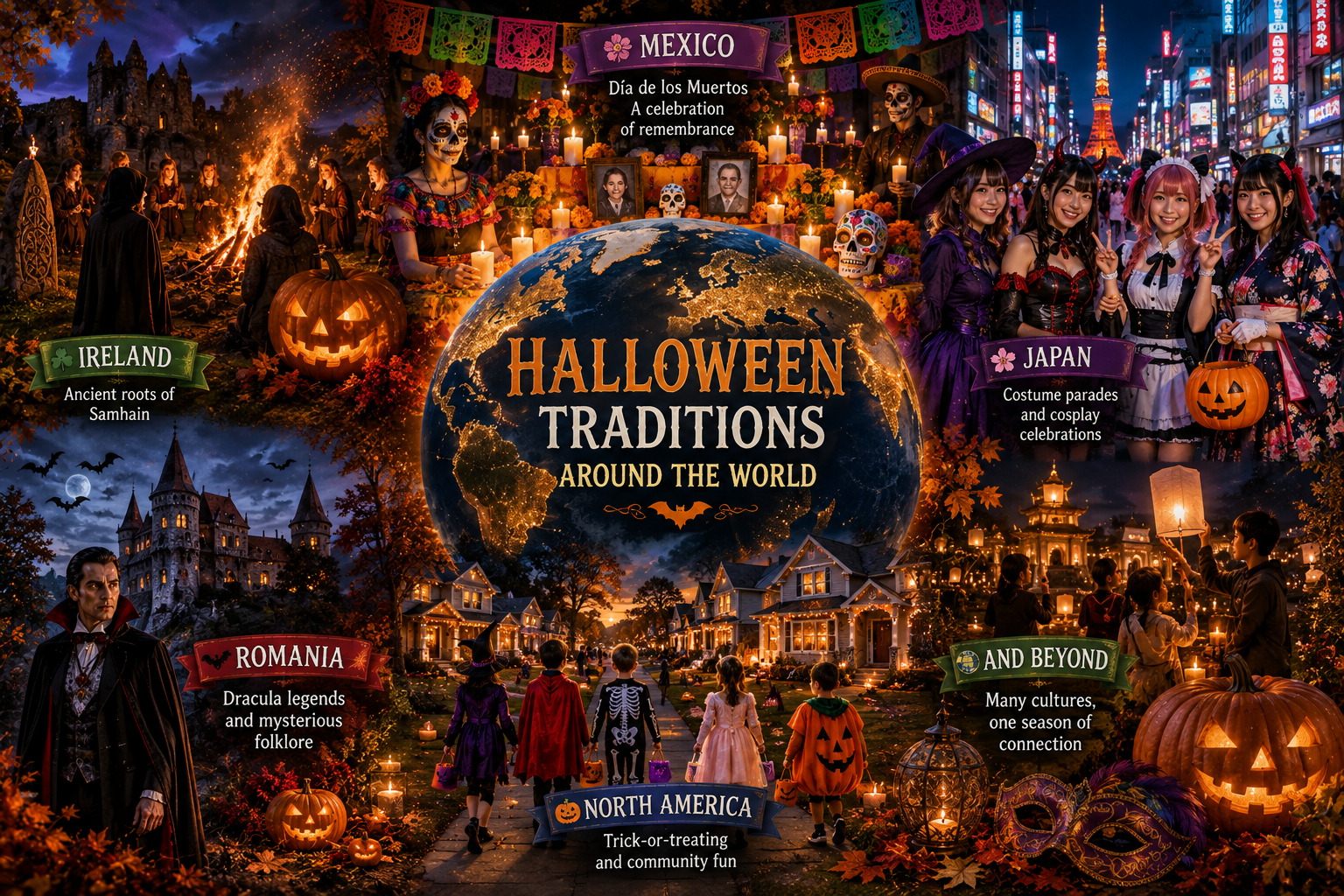
Learning about Halloween traditions around the world offers a fascinating glimpse into how different cultures celebrate life, remember the dead, and welcome the changing seasons. Whether it’s elaborate costume parades in Japan, ancient Celtic festivals in Ireland, or colorful family celebrations in Mexico, these traditions demonstrate that Halloween has become a truly global holiday.
In this complete guide, we’ll explore how Halloween and similar celebrations are observed in countries around the world and discover the fascinating customs that make each one unique.
Why Halloween Is Celebrated Differently Around the World
Although Halloween shares common themes, every culture has shaped the holiday in its own way.
Many traditions focus on:
- Honoring ancestors
- Celebrating the harvest
- Welcoming autumn
- Remembering loved ones
- Storytelling and folklore
- Community gatherings
These shared themes connect people across cultures while allowing each country to preserve its own unique identity.
Ireland – The Birthplace of Halloween
Halloween’s origins can be traced to Ireland and the ancient Celtic festival of Samhain.
Today, Ireland celebrates Halloween with a blend of ancient customs and modern fun.
Popular traditions include:
- Costume parties
- Bonfires
- Pumpkin carving
- Fireworks
- Haunted attractions
- Community festivals
Traditional foods often include:
- Barmbrack fruitcake
- Colcannon
- Apples
- Seasonal treats
Some Irish families still tell ghost stories and legends that have been passed down for generations.
Scotland – Ancient Traditions Live On
Scotland shares many of Ireland’s Celtic roots.
Halloween celebrations often feature:
- Bonfires
- Costumes
- Fortune-telling games
- Storytelling
- Community events
One traditional game involves peeling an apple in one continuous strip and tossing the peel over your shoulder. According to folklore, the shape it forms may reveal the first letter of a future spouse’s name.
England – Mischief and Merriment
In England, Halloween has grown significantly in popularity over recent decades.
Modern celebrations include:
- Trick-or-treating
- Fancy dress parties
- Pumpkin carving
- Haunted attractions
- Apple bobbing
Many families also recognize Guy Fawkes Night on November 5th, a separate holiday featuring bonfires and fireworks, making early November an especially festive time.
Mexico – Día de los Muertos
Although Día de los Muertos (Day of the Dead) is not Halloween itself, it takes place around the same time and shares the tradition of remembering loved ones who have passed away.
Families honor deceased relatives by creating beautiful altars called ofrendas featuring:
- Photographs
- Candles
- Marigold flowers
- Favorite foods
- Sugar skulls
- Decorative paper banners
Rather than being a sad occasion, Day of the Dead is a joyful celebration of remembrance, family, and enduring love.
Canada – A Familiar Celebration
Canadian Halloween traditions closely resemble those in the United States.
Families enjoy:
- Trick-or-treating
- Costume contests
- Pumpkin carving
- Haunted houses
- School celebrations
- Community festivals
Because of Canada’s colder climate, many costumes include warm clothing underneath—a practical Halloween tradition all its own.
Japan – Costumes Take Center Stage
Halloween has become increasingly popular throughout Japan.
Instead of traditional trick-or-treating, celebrations often focus on:
- Massive costume parades
- Anime-inspired costumes
- Cosplay events
- Theme park celebrations
- Shopping district festivals
Cities such as Tokyo have become famous for elaborate Halloween street celebrations featuring thousands of participants in creative costumes.
Germany – Decorating and Costume Parties
Halloween has grown rapidly in Germany over the past few decades.
Common activities include:
- Costume parties
- Pumpkin carving
- Haunted attractions
- Trick-or-treating in some communities
- Seasonal festivals
Some families also continue older autumn traditions alongside modern Halloween celebrations.
Italy – Remembering Loved Ones
Italy’s celebration focuses more heavily on All Saints’ Day and All Souls’ Day than on Halloween itself.
Many families:
- Visit cemeteries
- Bring flowers
- Attend church services
- Remember deceased relatives
- Spend time with family
In recent years, Halloween costume parties have become increasingly popular, particularly among younger generations.
Spain – Honoring Family Traditions
Spain celebrates All Saints’ Day on November 1st.
Traditional activities include:
- Visiting cemeteries
- Placing flowers on graves
- Family gatherings
- Religious services
- Seasonal meals
In larger cities, Halloween costume events have become more common alongside these longstanding traditions.
France – Halloween’s Growing Popularity
Although Halloween is relatively new in France, it has gained popularity over the past several decades.
Celebrations may include:
- Costume parties
- Pumpkin decorations
- Haunted attractions
- School activities
- Children’s events
Many French families also continue observing religious holidays during the same period.
Romania – Legends of Dracula
Romania is closely associated with vampire legends due to the famous tale of Dracula.
During Halloween, visitors often enjoy:
- Castle tours
- Halloween festivals
- Costume parties
- Ghost tours
- Historical reenactments
Bran Castle, often linked to the Dracula legend, attracts visitors from around the world during the Halloween season.
China – Honoring Ancestors
Some Chinese traditions during autumn focus on remembering deceased family members.
Families may:
- Burn incense
- Offer food
- Light lanterns
- Visit graves
- Honor ancestors
While these observances differ from Halloween, they reflect similar themes of remembrance and respect.
Philippines – Family Gatherings
The Philippines observes All Saints’ Day and All Souls’ Day with family-centered traditions.
Families often:
- Visit cemeteries
- Clean family graves
- Share meals
- Pray together
- Spend time remembering loved ones
Many cemeteries become gathering places filled with music, food, and family reunions.
Australia – Halloween’s Rising Popularity
Halloween continues to grow in Australia.
Today’s celebrations often include:
- Trick-or-treating
- Community festivals
- Costume parties
- Haunted attractions
- School celebrations
Although Halloween was once considered primarily an American tradition, it has become increasingly embraced by Australian families.
South Korea – Costume Celebrations
South Korea has seen a rise in Halloween-themed events in recent years.
Popular activities include:
- Costume parties
- Theme park events
- Café decorations
- Shopping festivals
- Entertainment districts
Many celebrations focus more on adults and young professionals than on neighborhood trick-or-treating.
Common Halloween Traditions Shared Worldwide
Despite cultural differences, many countries celebrate with similar activities.
Popular traditions include:
- Wearing costumes
- Carving pumpkins
- Decorating homes
- Sharing food
- Community gatherings
- Storytelling
- Remembering loved ones
- Seasonal festivals
These shared customs demonstrate Halloween’s remarkable ability to unite people through celebration.
How Halloween Continues to Evolve
Modern Halloween continues to change as cultures influence one another.
Today’s celebrations often combine:
- Ancient traditions
- Religious observances
- Popular culture
- Family activities
- Community festivals
- International influences
Social media, movies, travel, and global communication have helped Halloween become one of the world’s most recognizable seasonal celebrations.
Frequently Asked Questions
Is Halloween celebrated in every country?
No. While many countries celebrate Halloween or similar seasonal festivals, traditions vary widely depending on local culture, religion, and history. Some countries focus more on honoring ancestors or observing religious holidays during the same time of year.
Which country started Halloween?
Halloween traces its roots to the ancient Celtic festival of Samhain, which originated in what is now Ireland, Scotland, and other parts of the British Isles more than 2,000 years ago.
Is Día de los Muertos the same as Halloween?
No. While both occur around the same time of year, Día de los Muertos is a separate Mexican tradition focused on honoring and remembering deceased loved ones through joyful family celebrations and colorful altars.
Why has Halloween become so popular worldwide?
Movies, television, social media, travel, and global culture have helped introduce Halloween traditions to many countries. At the same time, communities often adapt the holiday to reflect their own customs and values.
What tradition is most common around the world?
Remembering loved ones, gathering with family, wearing costumes, storytelling, seasonal festivals, and celebrating the arrival of autumn are among the most widespread traditions associated with Halloween and similar observances.
Final Thoughts
Halloween is much more than costumes, candy, and carved pumpkins—it’s a celebration shaped by thousands of years of history and countless cultural traditions from around the world. From the ancient Celtic festival of Samhain in Ireland to the vibrant family celebrations of Día de los Muertos in Mexico, each country has developed unique customs that reflect its history, beliefs, and values. While the activities may differ, many of these celebrations share common themes of remembrance, community, storytelling, and marking the changing seasons.
Exploring Halloween traditions around the world reminds us that holidays are constantly evolving while preserving meaningful connections to the past. Whether you’re attending a costume party, carving pumpkins with your family, learning about Celtic folklore, or appreciating the beautiful traditions of other cultures, Halloween offers an opportunity to celebrate creativity, history, and togetherness. By understanding how people around the globe observe this special time of year, we gain a deeper appreciation for one of the world’s most fascinating and enduring seasonal celebrations.