
Affiliate Disclosure: This article may contain affiliate links. If you purchase products or services through links mentioned in this article, we may earn a commission at no additional cost to you. Recommendations are provided for informational and educational purposes only.
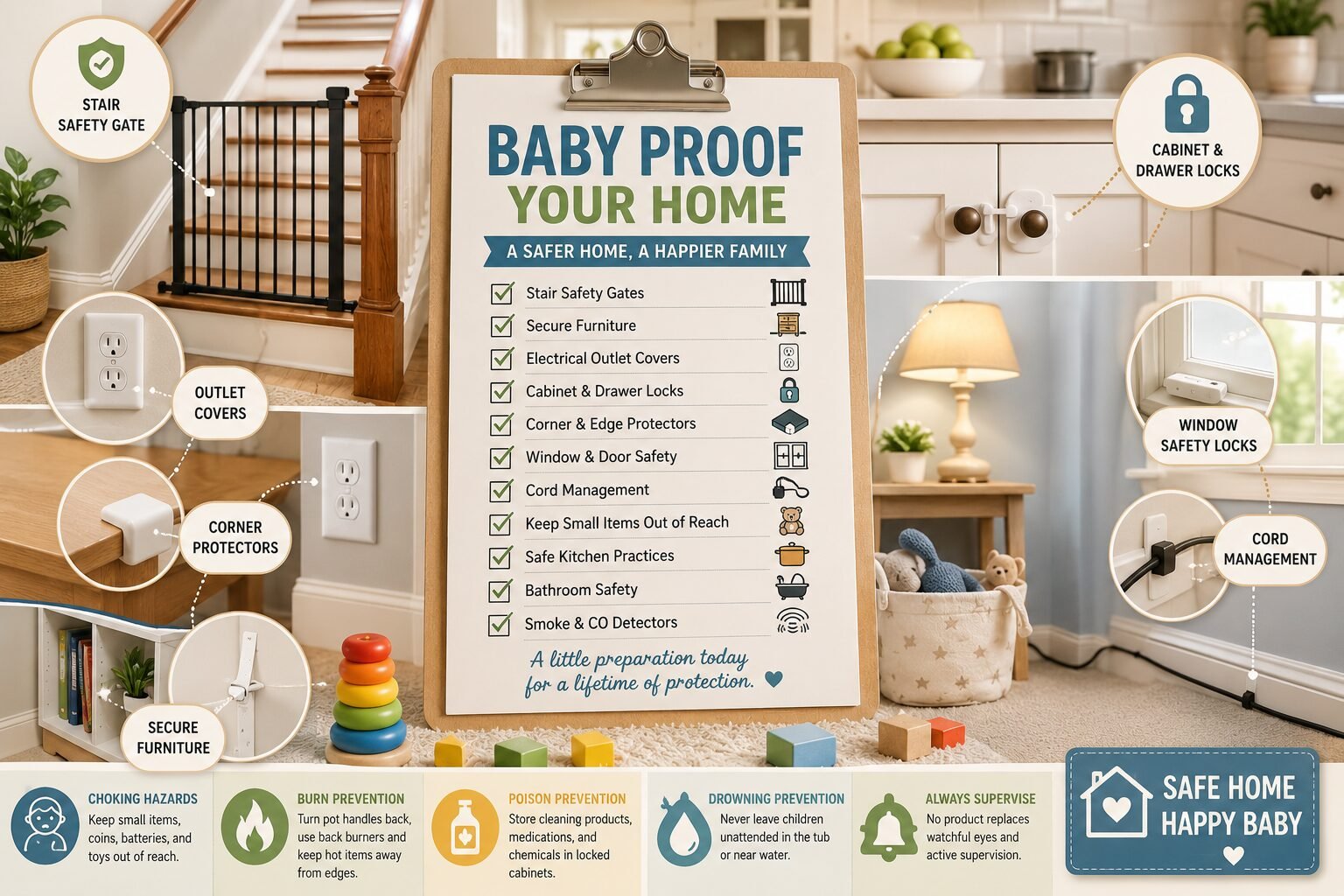
Keeping a baby safe is one of the most important responsibilities parents face. As children grow from newborns into curious crawlers and adventurous toddlers, everyday household items can suddenly become potential hazards. Baby-proofing is not about creating a perfect environment; it is about reducing preventable risks while allowing children to safely explore and learn. Modern parents have access to a wide variety of safety products, educational resources, and childproofing strategies that can dramatically improve home safety. This guide expands on the essential principles of childproofing and provides practical advice for every major area of the home.
Why Baby-Proofing Matters
Children learn through exploration. They touch, pull, climb, crawl, and place objects into their mouths as part of normal development. While these behaviors help them understand the world, they also increase the risk of injury. Many childhood accidents occur inside the home and involve hazards that adults overlook because they interact with them safely every day. Baby-proofing helps reduce these risks before an accident happens. Creating a safer environment gives parents greater peace of mind and allows children to explore more freely. It also helps establish healthy habits and routines centered around safety. While no home can be made completely risk-free, proactive planning can significantly reduce the likelihood of serious injuries. Childproofing should be viewed as an ongoing process that evolves as children reach new developmental milestones.
Start by Seeing the World Through Your Child’s Eyes
One of the most effective childproofing strategies is to examine the home from a child’s perspective. Crawling through rooms at floor level often reveals dangers adults rarely notice. Loose cords, exposed outlets, dangling tablecloths, sharp furniture corners, and small objects suddenly become obvious. This exercise helps parents identify hazards before a child discovers them first. Children are naturally curious and are often attracted to colorful, shiny, or easily accessible items. By seeing the environment through their eyes, parents can better anticipate risky situations. Repeat this process periodically because a child’s abilities change rapidly. What is safe for a six-month-old may not be safe for a one-year-old who can climb. Regular reassessment is one of the best ways to maintain a safe home.
Understanding Common Household Hazards
Every room contains potential dangers. Falls, choking incidents, poisoning, burns, drowning accidents, and electrical injuries are among the most common childhood hazards. Understanding these risks allows parents to prioritize safety improvements. Hazard identification should include both obvious dangers and less noticeable risks. Cleaning supplies, medications, batteries, cords, furniture, and even decorative items can become dangerous under certain circumstances. Parents should create a checklist and inspect each room carefully. Safety awareness helps prevent injuries before they occur. Educating all caregivers about household hazards is equally important. Consistent safety practices across all caregivers provide better protection for children.
Preventing Choking Hazards
Choking remains one of the leading safety concerns for infants and toddlers. Small objects such as coins, batteries, buttons, jewelry, toy parts, and food items can pose serious risks. Parents should routinely inspect floors and accessible surfaces for items that may have fallen unnoticed. Toys should always be age appropriate and free from detachable small parts. Food should be prepared according to age-specific recommendations. Learning infant and child CPR is highly recommended for all caregivers. Quick action during an emergency can save a child’s life. Prevention remains the most effective strategy, and maintaining a clutter-free environment significantly reduces choking risks.
Baby Safety Gates
Safety gates are among the most valuable childproofing tools available. They help restrict access to high-risk areas such as stairways, kitchens, utility rooms, and bathrooms. Hardware-mounted gates are generally recommended for the tops of stairs because they provide greater stability. Pressure-mounted gates may work well in lower-risk locations. Modern gates include features such as automatic closing mechanisms and one-handed operation. Parents should regularly inspect gates for wear and proper installation. A poorly installed gate may create a false sense of security. Gates should also be adjusted or replaced as children grow and become more capable climbers.
Stairway Safety
Stairs present a major fall hazard for young children. Installing gates at both the top and bottom of stairways provides important protection. Parents should keep stairs free of clutter and ensure adequate lighting throughout the area. Handrails should be secure and maintained in good condition. Children should be taught safe stair habits as they grow older. Even after a child learns to walk, supervision around stairs remains important. Falls can result in serious injuries, making stairway safety a top childproofing priority. Regular inspections help ensure protective measures remain effective.
Electrical Outlet Protection
Electrical outlets naturally attract curious children. Outlet covers, sliding outlet plates, and tamper-resistant outlets provide effective protection. Parents should inspect outlets regularly to ensure protective devices remain secure. Damaged outlets should be repaired promptly. Electrical safety extends beyond outlets to include extension cords, power strips, and appliances. Educating older children about electrical safety can reinforce protective measures. Small investments in outlet protection can significantly reduce injury risks. Modern safety devices are inexpensive, easy to install, and widely available.
Managing Electrical Cords
Loose cords can create tripping, strangulation, and electrical hazards. Children often pull on cords because they are easily accessible and visually interesting. Secure cords behind furniture whenever possible and use cord-management products to reduce risks. Avoid leaving charging cables within reach. Appliance cords should be kept away from counter edges where they can be pulled down. Regularly inspect cords for damage or wear. Replacing damaged cords promptly helps prevent electrical accidents. Good cord management improves both safety and household organization.
Furniture Safety
Furniture tip-over incidents can cause severe injuries. Dressers, bookcases, televisions, and entertainment centers should be anchored securely to walls. Children often use furniture as climbing structures, increasing the risk of tip-overs. Anchoring kits are inexpensive and highly effective. Parents should avoid placing attractive items on high surfaces that may encourage climbing. Regular inspections ensure anchors remain secure. Furniture safety becomes increasingly important as children become more mobile and adventurous. Taking preventive measures now can prevent serious accidents later.
Kitchen Childproofing
The kitchen contains numerous hazards, including sharp objects, hot surfaces, cleaning products, and choking risks. Cabinet locks and drawer latches help restrict access to dangerous items. Sharp utensils should be stored securely. Cleaning products and medications should be placed in locked cabinets. Cooking safety is equally important. Turn pot handles inward, use back burners when possible, and keep hot drinks away from edges. Maintaining a child-free zone around the stove during meal preparation can reduce burn risks. Consistent kitchen safety practices protect children while allowing families to enjoy time together.
Bathroom Safety
Bathrooms require special attention because they combine water, medications, and electrical devices in a confined space. Cabinet locks, toilet locks, and non-slip mats provide valuable protection. Water temperature should be monitored to prevent scalding injuries. Never leave children unattended near water, even briefly. Medications should always be stored securely out of reach. Hair dryers and other electrical devices should be unplugged when not in use. Bathroom safety depends heavily on supervision and consistent safety habits. Small precautions can prevent serious accidents.
Nursery Safety
A safe nursery provides a secure environment for sleep and play. Cribs should meet current safety standards and be positioned away from windows, curtains, and blind cords. Furniture should be anchored securely to walls. Decorative items should be selected carefully to avoid hazards. Outlet protection and cord management remain important in the nursery. Parents should regularly inspect the room as developmental milestones change. A safe nursery promotes healthy sleep and peace of mind for caregivers. Regular updates help maintain safety as children grow.
Safe Sleep Practices
Safe sleep recommendations emphasize a firm mattress, fitted sheet, and an otherwise empty sleep environment. Loose blankets, pillows, stuffed animals, and bumper pads may increase suffocation risks. Following safe sleep guidelines can help reduce preventable sleep-related incidents. Consistency is important, especially when multiple caregivers are involved. Parents should stay informed about current pediatric recommendations. Creating safe sleep habits early can benefit children throughout infancy. A simple sleep environment is often the safest environment.
Vehicle Childproofing
Child safety extends beyond the home. Proper car seat selection and installation are critical for protecting children during travel. Parents should follow manufacturer instructions and current safety guidelines. Harnesses should fit correctly and be adjusted as children grow. Loose objects inside vehicles should be secured because they can become projectiles during sudden stops. Regularly inspect car seats for wear, expiration dates, and proper installation. Vehicle safety checks provide additional reassurance. Safe travel habits contribute significantly to overall child safety.
The Importance of Supervision
No childproofing product can replace active supervision. Safety devices reduce risks, but attentive caregivers remain the most important safety measure. Children continuously develop new skills and abilities, creating new challenges. Supervision allows parents to respond quickly when unexpected situations arise. It also provides opportunities to teach safe behaviors. Combining supervision with environmental safety measures creates the strongest protection. Childproofing should support supervision, not replace it. A balanced approach encourages exploration while minimizing unnecessary risks.
Final Thoughts
Baby-proofing is an investment in a child’s safety and well-being. By identifying hazards, using appropriate safety products, and maintaining active supervision, parents can significantly reduce preventable injuries. Childproofing should be viewed as an ongoing process rather than a one-time task. As children grow, new risks emerge and safety measures must evolve. The goal is not to eliminate exploration but to create an environment where learning and discovery can occur more safely. With thoughtful planning and regular reassessment, families can create homes that support both safety and healthy development.








That’s a really helpful overview – it’s great to have this information in one place before tackling the changes.