
Affiliate Disclaimer: This post may contain affiliate links. If you make a purchase through one of these links, The Shopping Plaza may earn a commission at no additional cost to you.
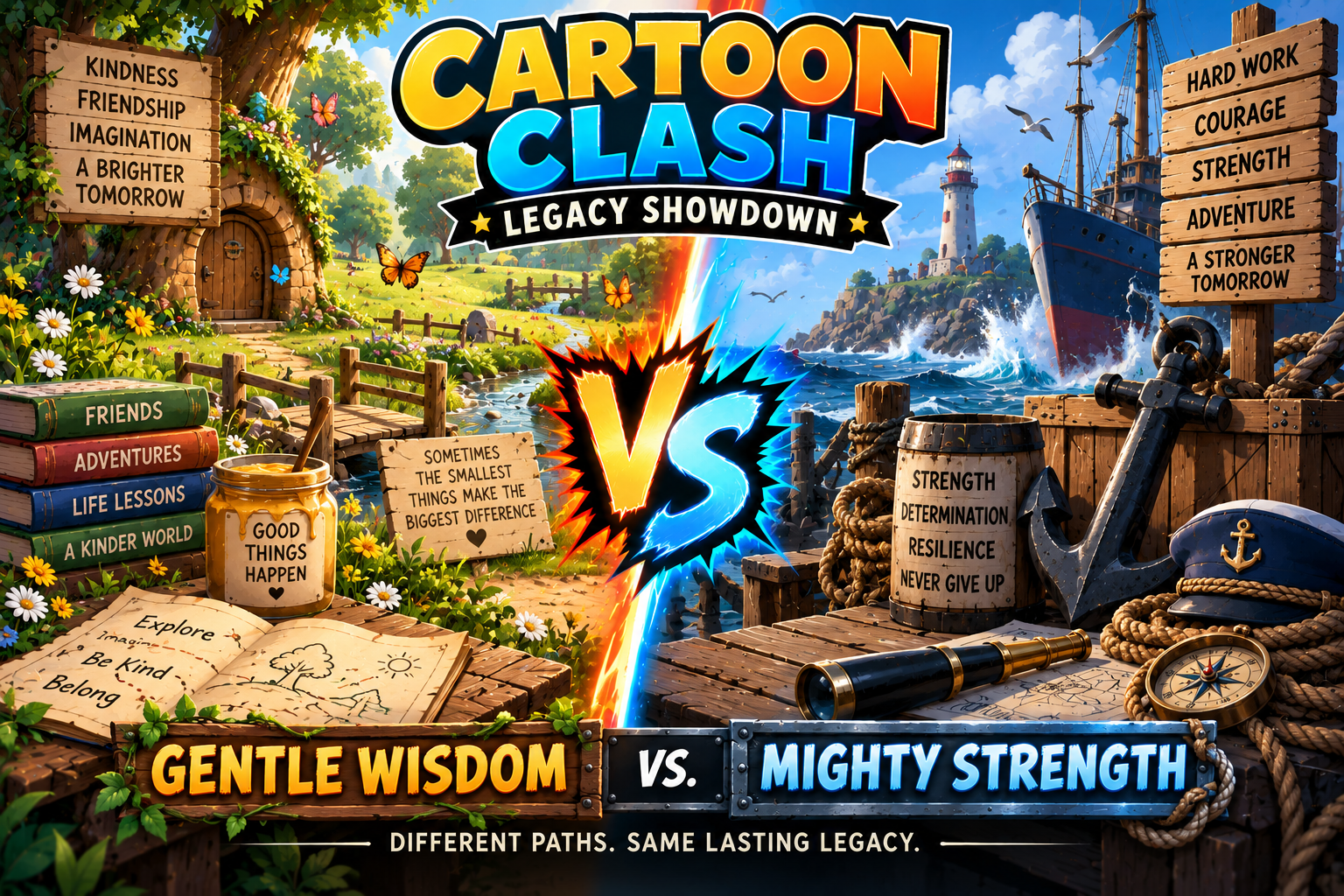
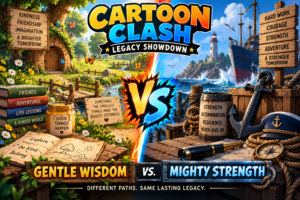
The next first-round matchup from Region B delivers a battle between two beloved legends whose careers span nearly a century of entertainment history. The #4 seed Winnie the Pooh enters as one of the most cherished characters in children’s literature and animation, while the #13 seed Popeye arrives as one of animation’s earliest action-comedy superstars. This showdown pits gentle wisdom and heartfelt storytelling against strength, humor, and classic adventure. Pooh built an enduring world around friendship, imagination, kindness, and the deceptively profound observations of a bear who describes himself as having very little brain. Popeye became famous through a completely different formula: a rough-edged sailor, a can of spinach, a powerful punch, and a stubborn determination to protect the people he cares about. Both characters have crossed generations, media formats, and international borders. Pooh has moved from books into theatrical animation, television, films, merchandise, and countless childhood memories, while Popeye traveled from comics into theatrical cartoons, television, advertising, and popular culture. The seeding favors Pooh, but Popeye’s historical résumé makes him far too important to dismiss as a typical #13 seed. This matchup has to be decided category by category, with neither warmth nor historical age receiving an automatic advantage.
Round 1: Animation Quality
Both characters have benefited from multiple animation styles across very different eras. Popeye’s classic theatrical shorts were built around movement, timing, exaggerated reactions, fights, and physical transformation. His battles with Bluto could become wonderfully chaotic, and the moment spinach entered the story often gave animators permission to push action far beyond normal physical limits. Those cartoons were energetic and technically impressive for their period. Winnie the Pooh, however, has also enjoyed an unusually rich animation history. Disney’s interpretations of the Hundred Acre Wood used expressive character animation, warm backgrounds, storybook imagery, musical sequences, and visual transitions that preserved the feeling of the original literary world while making it cinematic. Pooh, Piglet, Tigger, Eeyore, and the rest of the cast each move in ways that reinforce their personalities. Later films and television productions continued refining that visual identity without losing its softness and charm. Popeye’s best shorts are excellent examples of Golden Age action animation, but Pooh’s strongest productions combine technical polish, atmosphere, character acting, and visual storytelling with greater consistency across formats. Winner: Winnie the Pooh.
Round 2: Character Cast
Winnie the Pooh possesses one of the most recognizable and emotionally balanced supporting ensembles in family entertainment. Piglet brings anxiety and courage, Tigger supplies unstoppable enthusiasm, Eeyore contributes dry pessimism, Rabbit adds order and frustration, Owl offers confidence and long-winded advice, while Kanga and Roo bring a different family dynamic to the Hundred Acre Wood. Christopher Robin gives the group its human connection and often provides the emotional bridge between childhood imagination and the characters’ adventures. Most importantly, these personalities are not interchangeable. Their differences create conflicts, friendships, jokes, and lessons that allow even simple stories to explore surprisingly complex emotions. Popeye also has an important supporting cast. Olive Oyl is essential to his world, Bluto or Brutus provides a defining rival, and characters such as Wimpy and Swee’Pea add comedy and personality. Yet Popeye’s stories often revolve around a smaller core relationship structure, particularly Popeye, Olive, and his rival. The Hundred Acre Wood functions more completely as an ensemble community, giving Pooh the stronger cast. Winner: Winnie the Pooh.
Round 3: Humor & Entertainment
Pooh’s entertainment value comes from warmth, character chemistry, gentle wordplay, songs, misunderstandings, and the contrast between each resident of the Hundred Acre Wood. Tigger’s bouncing, Rabbit’s exasperation, Eeyore’s gloomy observations, and Pooh’s innocent logic can make the stories funny without requiring aggressive comedy. That approach works especially well for families and gives the franchise an inviting tone. Popeye, however, was designed around immediate entertainment. His adventures combine slapstick, action, verbal personality, escalating conflict, absurd feats of strength, and the anticipation of what will happen once he finally reaches for his spinach. His confrontations with Bluto turn simple disputes into enormous physical spectacles, and his muttered commentary gives the character humor even between action sequences. The formula is repetitive by design, but its simplicity is also part of why it traveled so well across generations and audiences. Pooh offers broader emotional comfort, but Popeye delivers more concentrated comedy and action-driven entertainment. Winner: Popeye.
Round 4: Cultural Impact
Winnie the Pooh is unquestionably a global cultural figure. The character’s imagery, sayings, friendships, books, films, merchandise, and association with childhood have made him recognizable far beyond animation audiences. Pooh has also become a symbol of gentleness, friendship, comfort, and nostalgia. Popeye’s cultural influence, however, is unusually deep because it reaches well beyond entertainment. He became one of the earliest major cartoon celebrities, helping demonstrate the commercial power of animated characters during the formative decades of the medium. His spinach-powered strength became so culturally embedded that generations of children associated eating spinach with becoming strong. His sailor image, distinctive voice, oversized forearms, pipe, and catchphrases became instantly identifiable pieces of popular culture. Popeye appeared in advertising, merchandise, comics, theatrical animation, television, and countless references and parodies. Pooh may now have the larger family-entertainment empire, but Popeye’s influence on cartoon celebrity, advertising, food culture, and early animation gives him the historical edge. Winner: Popeye.
Round 5: Iconic Episodes & Moments
Pooh has an enormous library of memorable stories. His adventures involving honey, blustery days, floods, Heffalumps and Woozles, Tigger’s bouncing, Piglet’s acts of bravery, Eeyore’s lost tail, and Christopher Robin’s friendship have become treasured childhood memories. Many of those moments are emotionally resonant and remain highly rewatchable. Popeye, however, possesses one of the clearest recurring iconic moments in cartoon history: the spinach transformation. The audience knows the pattern immediately. Popeye is overwhelmed, reaches a crisis point, consumes spinach, gains extraordinary strength, and reverses the entire conflict. That sequence became so famous that the can of spinach is almost inseparable from the character himself. His repeated clashes with Bluto and efforts to rescue or protect Olive Oyl also created a recognizable dramatic rhythm that could be understood within seconds. Pooh may have the deeper collection of heartfelt stories, but this category asks which competitor produced the most defining television and cartoon moments. Popeye’s spinach-powered comeback is one of animation’s most universally recognizable character routines, giving him the narrow victory. Winner: Popeye.
Round 6: Creativity & Originality
The Hundred Acre Wood stands apart because its imagination is not built around spectacular powers or constant danger. Instead, ordinary childhood emotions become adventures. A search for honey, a missing object, a windy day, a misunderstanding between friends, or fear of something unknown can become the center of an entire story. The personalities of the characters turn those simple events into explorations of anxiety, loyalty, sadness, confidence, patience, and friendship. The storybook quality of the world also allows characters to interact with narration, pages, letters, and the idea that their adventures exist inside a book. Popeye is highly original in his own right. The combination of sailor toughness, spinach-powered strength, muttered humor, romance, and exaggerated fighting created a character formula that became instantly identifiable. Yet much of Popeye’s storytelling eventually follows a recognizable cycle of conflict and physical resolution. Pooh’s world supports a wider emotional and imaginative range while remaining unmistakably itself. That unusual combination of simplicity and depth gives Pooh the category. Winner: Winnie the Pooh.
Round 7: Era Difficulty
Pooh has competed successfully in an entertainment landscape filled with countless children’s franchises, changing technology, evolving family tastes, and generations of new characters. Remaining relevant in that environment is impressive. Popeye, however, became a major star when theatrical animation was fiercely competitive and cartoon characters had to win over movie audiences in only a few minutes. He existed alongside an extraordinary collection of Golden Age personalities while animation studios were constantly trying to create the next memorable star. Popeye also had to make the transition from an established comic-strip character into motion, voice, music, and fast-paced theatrical storytelling without losing what made him recognizable. His cartoons competed in an era that produced some of the most enduring characters and studios in animation history. Becoming one of the defining action-comedy figures of that period, rather than disappearing among dozens of forgotten contemporaries, is a major achievement. Pooh’s longevity is impressive, but Popeye faced the more historically difficult path to animated stardom. Winner: Popeye.
Round 8: Legacy Endurance
Few matchups can offer two characters with endurance credentials this strong. Popeye has survived from his early comic-strip origins through theatrical cartoons, television, films, advertising, merchandise, games, and decades of reruns. His appearance and spinach-powered identity remain recognizable even to people who have never regularly watched his cartoons. That is remarkable longevity. Winnie the Pooh has demonstrated similarly extraordinary staying power while maintaining a stronger connection with successive generations of young children. New parents continually introduce Pooh, Piglet, Tigger, and Eeyore to children through books, animation, toys, nursery products, clothing, films, and educational material. The Hundred Acre Wood is not preserved only as nostalgia for older viewers; it continues functioning as an active childhood world for new audiences. Pooh’s characters also remain emotionally relevant because friendship, fear, sadness, patience, imagination, and reassurance do not depend on a particular historical era. Popeye has endured impressively, but Pooh’s ability to remain both a nostalgic favorite and an actively introduced children’s character gives him the slight advantage. Winner: Winnie the Pooh.
Final Verdict
This matchup becomes much closer once Popeye’s individual accomplishments are weighed against Winnie the Pooh’s broader franchise strength. Pooh wins Animation Quality, Character Cast, Creativity & Originality, and Legacy Endurance. His beautifully realized storybook world, exceptional ensemble, emotional range, and continued connection with new generations give him four legitimate victories. Popeye answers with Humor & Entertainment, Cultural Impact, Iconic Episodes & Moments, and Era Difficulty. His action-comedy formula, enormous early influence, famous spinach transformation, and success during the Golden Age make his four victories equally legitimate. That leaves the eight judging categories tied 4-4 rather than the 5-3 result in the original matchup. The overall-legacy tiebreaker is extremely difficult because both characters have influenced popular culture for generations. Popeye helped establish the power of the cartoon superstar and remains one of animation’s great pioneers. Pooh, however, combines nearly unmatched emotional attachment with an ensemble and fictional world that continue being actively introduced to children rather than surviving primarily through historical recognition and nostalgia. That continued role in childhood, combined with the depth of the Hundred Acre Wood’s stories and characters, gives Pooh the smallest possible overall edge.
Final Result: Winnie the Pooh survives a major challenge from the #13 seed after the eight categories finish tied 4-4. Pooh advances to the second round on the overall-legacy tiebreaker. Popeye exits the tournament after pushing the #4 seed to the limit and reinforcing his place as one of animation’s most influential early superstars.
Audience Challenge
Did Winnie the Pooh deserve to survive the 4-4 tie, or should Popeye’s pioneering influence, spinach-powered iconography, and Golden Age résumé have produced the upset? Which would you value more in the tiebreaker: Pooh’s continuing emotional connection with new generations or Popeye’s historic impact on animation and popular culture? Cast your vote, defend your choice, and continue following Legacy Showdown: Cartoon Clash as Region B continues.