
Affiliate Disclaimer: This post may contain affiliate links. If you make a purchase through one of these links, The Shopping Plaza may earn a commission at no additional cost to you.
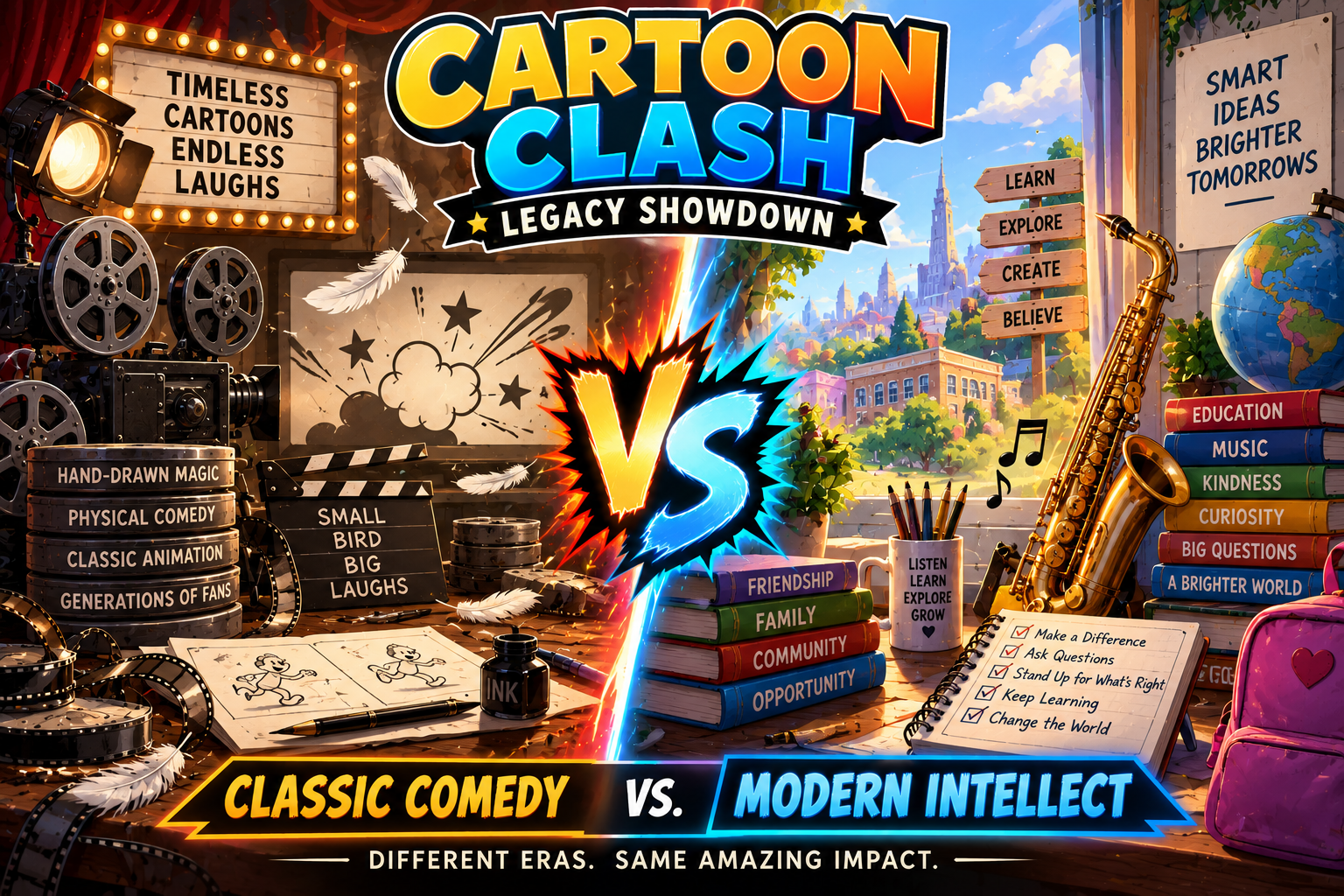
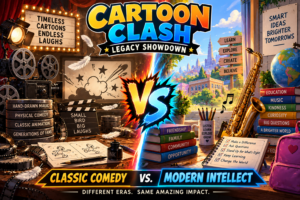
The next first-round battle in Region A presents one of the tournament’s most fascinating clashes of cartoon styles. The #7 seed Tweety Bird enters with more than eight decades of classic-animation history, an instantly recognizable design, and one of the most famous predator-versus-prey rivalries ever created. Across the bracket stands the #10 seed Lisa Simpson, the intelligent, idealistic, saxophone-playing middle child whose stories helped demonstrate how much complexity a television cartoon character could carry. Tweety’s greatest strengths come from visual comedy, timing, personality, and the endlessly renewable struggle with Sylvester. Lisa succeeds through dialogue, satire, emotional storytelling, moral conflict, music, family relationships, and her frequent struggle to remain thoughtful in a world that does not always reward thoughtfulness. This matchup therefore cannot be reduced to old animation versus modern television. Each character must be judged according to the official Cartoon Clash categories and relative to the creative possibilities of the era in which the work was produced. The result is a battle between extraordinary classic-cartoon craftsmanship and one of television animation’s deepest long-running characters.
Round 1: Animation Quality
Tweety Bird’s strongest cartoons were produced during the Golden Age of theatrical animation, when Warner Bros. shorts could rely on highly skilled animators, expressive poses, carefully timed movement, painted backgrounds, and fluid physical comedy. Tweety’s deceptively simple design is especially effective because small changes in his eyes, posture, wings, and expression can move him from innocent to mischievous in an instant. The chase sequences with Sylvester use speed, anticipation, impacts, visual misdirection, and exaggerated reactions in ways that remain impressive decades later. Lisa Simpson comes from a very different production model. The Simpsons developed a distinctive visual language built around instantly recognizable silhouettes, bright character designs, expressive staging, and a version of Springfield capable of supporting almost any kind of story. The series’ animation has become technically cleaner over time, and special sequences have allowed considerable experimentation. Yet Lisa’s greatest achievements usually come through writing and characterization rather than unusually demanding character animation. Judged fairly relative to era rather than simply by technical modernity, Tweety’s best theatrical work demonstrates the stronger pure animation craftsmanship. Winner: Tweety Bird.
Round 2: Character Cast
Tweety’s supporting world is anchored by an all-time-great cartoon relationship. Sylvester is not merely an antagonist; his hunger, frustration, determination, and spectacular failures give Tweety’s calm confidence something to play against. Granny often serves as protector and authority figure, while Hector and other recurring characters can complicate Sylvester’s plans. That compact cast is highly effective for the shorts’ purpose. Lisa, however, exists within one of the largest and deepest ensembles in television history. Homer, Marge, Bart, and Maggie create four very different family relationships around her, while Grandpa, Krusty, Mr. Burns, Smithers, Moe, Milhouse, Nelson, Ralph, Principal Skinner, Chief Wiggum, and countless Springfield residents create nearly unlimited storytelling combinations. Characters such as Marge and Bart can bring out Lisa’s vulnerability, while Homer can produce both frustration and unexpectedly tender father-daughter moments. Lisa’s friendship with characters such as Janey and her interactions with teachers, musicians, activists, and rivals expand her beyond the family. Tweety has a legendary central rivalry, but Lisa’s supporting universe offers far greater depth and character interaction. Winner: Lisa Simpson.
Round 3: Humor & Entertainment
Tweety has entertained generations through one of animation’s most reliable comedy formulas. Sylvester sees an apparently helpless little bird, devises a plan, and discovers that Tweety is far more resourceful than expected. The humor comes from timing, escalating traps, physical punishment, Tweety’s innocent delivery, and the contrast between his tiny appearance and his ability to survive almost anything. The best shorts can communicate their comedy across language and age barriers because so much of the entertainment is visual. Lisa’s entertainment value is broader but less consistently centered on comedy. She participates in family jokes and satire, but she also carries emotional stories about intelligence, loneliness, morality, school, music, politics, friendship, faith, environmentalism, and growing up. That range gives her episodes considerable substance. However, the category asks about humor and entertainment together, and Tweety is one of the most refined comic performers of the theatrical-cartoon tradition. Lisa offers more dramatic variety, but Tweety’s exceptional visual comedy and universal accessibility give him a narrow edge in this specific round. Winner: Tweety Bird.
Round 4: Cultural Impact
Tweety Bird became one of Warner Bros.’ most recognizable characters and grew far beyond the original theatrical shorts. His yellow silhouette, oversized head, large blue eyes, and apparently innocent personality became instantly identifiable on clothing, accessories, collectibles, advertisements, and licensed products around the world. His rivalry with Sylvester is familiar even to people who cannot name individual shorts. Lisa Simpson’s cultural impact is different and arguably deeper in terms of characterization. She became one of television’s most prominent depictions of a highly intelligent young girl who is academically gifted, musically talented, politically aware, morally serious, and frequently frustrated by the limitations of the adults and institutions around her. The Simpsons itself transformed prime-time animation and television comedy, and Lisa became an important part of that influence. She has been referenced in discussions of feminism, education, politics, environmentalism, popular culture, and representations of gifted children. Tweety may have the broader merchandising identity, but Lisa’s influence reaches into how animated television can portray intelligence, conscience, and female childhood. This category is extremely close, but Lisa’s broader thematic influence gives her the slight edge. Winner: Lisa Simpson.
Round 5: Iconic Episodes & Moments
Tweety owns an enormous collection of memorable chase sequences, narrow escapes, traps, and exchanges with Sylvester. His familiar observations about seeing a ‘puddy tat,’ Sylvester’s increasingly desperate plans, Granny’s interventions, and the repeated reversal of predator and prey became defining pieces of Looney Tunes comedy. Yet the shorts are often remembered collectively for their formula and character chemistry rather than for a large number of individually distinguished story arcs. Lisa has been central to many of The Simpsons’ most acclaimed and emotionally memorable episodes. Stories have explored her love of jazz, her relationship with family members, academic pressure, vegetarianism, beliefs, friendships, political ideals, social isolation, and attempts to reconcile intelligence with childhood. Episodes involving Bleeding Gums Murphy gave her musical life unusual emotional weight, while other stories allowed her to challenge family traditions or community assumptions. Her strongest moments reveal different sides of the same character rather than simply resetting after the joke. Tweety’s recurring moments are iconic, but Lisa possesses the stronger collection of individually memorable character-driven episodes and arcs. Winner: Lisa Simpson.
Round 6: Creativity & Originality
Tweety is a clever reversal of the expected predator-prey dynamic. His tiny size and sweet appearance encourage Sylvester, and sometimes the audience, to underestimate him, while his resourcefulness repeatedly turns the cat into the victim of the comedy. That contrast helped create a highly effective cartoon personality. Lisa’s originality lies less in a high-concept premise and more in the complexity of her characterization. Animated children had certainly been intelligent before her, but Lisa was allowed to be intellectual, idealistic, musically serious, socially awkward, politically aware, compassionate, stubborn, insecure, and occasionally hypocritical within the same long-running character. She can function as the moral center of an episode without always being correct. Her intelligence sometimes isolates her, and her principles can create genuine conflict rather than merely making her the sensible child. This level of contradiction helped push television animation toward richer character writing, especially within a prime-time family sitcom. Tweety’s character concept is brilliantly efficient, but Lisa’s multidimensional construction represents the more ambitious form of originality. Winner: Lisa Simpson.
Round 7: Era Difficulty
Tweety emerged during one of the most competitive periods in animation history. Warner Bros. theatrical shorts had to stand out not only against other studios but also against an extraordinary internal roster that included Bugs Bunny, Daffy Duck, Porky Pig, Elmer Fudd, Yosemite Sam, and many other characters fighting for audience attention. The standards for timing, personality animation, music, and visual comedy were exceptionally high. Lisa arrived during another transformative period. The Simpsons helped establish that prime-time animation could sustain sophisticated satire and attract large adult audiences, and Lisa had to remain relevant while television comedy, animation, and audience expectations changed dramatically. Her character has continued through decades of competition and cultural shifts. However, Era Difficulty focuses strongly on the competitive conditions surrounding a character’s emergence, and Tweety became a lasting star in an environment overflowing with some of the greatest theatrical cartoon characters ever created. That achievement deserves the edge. Winner: Tweety Bird.
Round 8: Legacy Endurance
Few characters can match Tweety’s sheer length of recognition. More than eighty years after his debut, he remains visually identifiable, continues appearing on merchandise and in Looney Tunes productions, and can still be introduced to children who were born generations after the original theatrical shorts. His simple design and largely visual comedy help him cross cultural and language barriers. Lisa Simpson presents an equally remarkable but different longevity case. She has remained an active character in new episodes for decades rather than surviving only through reruns, nostalgia, or occasional revivals. Her concerns about school, family, intelligence, social acceptance, music, and morality continue to give writers material, even as the surrounding culture changes. Tweety has the longer historical span, while Lisa has extraordinary continuity within one of television’s longest-running scripted series. Both pass the multigenerational test convincingly. Because Tweety has remained recognizable across a longer period and through major changes in animation distribution, merchandising, television, and digital media, he receives the narrowest possible advantage. Winner: Tweety Bird.
Final Verdict
The original short matchup gave Lisa Simpson a 5-3 victory, but a deeper category-by-category evaluation produces an even closer contest. Lisa wins Character Cast, Cultural Impact, Iconic Episodes & Moments, and Creativity & Originality. Her extraordinary Springfield ensemble, thematic influence, acclaimed character-centered stories, and multidimensional personality make her one of the strongest written characters in the tournament. Tweety Bird wins Animation Quality, Humor & Entertainment, Era Difficulty, and Legacy Endurance. His Golden Age craftsmanship, nearly universal visual comedy, survival among an extraordinary field of theatrical cartoon stars, and more than eight decades of recognition give the classic character four equally meaningful victories. That leaves the matchup tied 4-4. A tiebreaker therefore has to consider the competitors’ overall Cartoon Clash resumes rather than simply favoring the higher seed. Tweety’s historical longevity and animation pedigree are extraordinary, but Lisa’s victories demonstrate greater breadth across character development, supporting-world depth, culturally influential storytelling, and individually significant episodes. Her ability to function simultaneously as a comic character, emotional protagonist, intellectual outsider, moral challenger, musician, daughter, sister, and social commentator gives her the slightly more complete overall legacy.
Final Result: Lisa Simpson survives a 4-4 category tie and advances to the second round on the overall-legacy tiebreaker. Tweety Bird exits after pushing the #10 seed to the limit and demonstrating that classic theatrical animation remains fully competitive when judged fairly relative to its era.
Audience Challenge
Was Lisa Simpson the right choice in the 4-4 tiebreaker, or should Tweety Bird’s extraordinary longevity and Golden Age animation legacy have carried him into Round Two? Would you award Humor & Entertainment to Lisa because of her wider storytelling range, or Cultural Impact to Tweety because of his worldwide recognition and merchandising history? Cast your vote, defend your choice, and continue following Legacy Showdown: Cartoon Clash as Region A moves toward the next round.