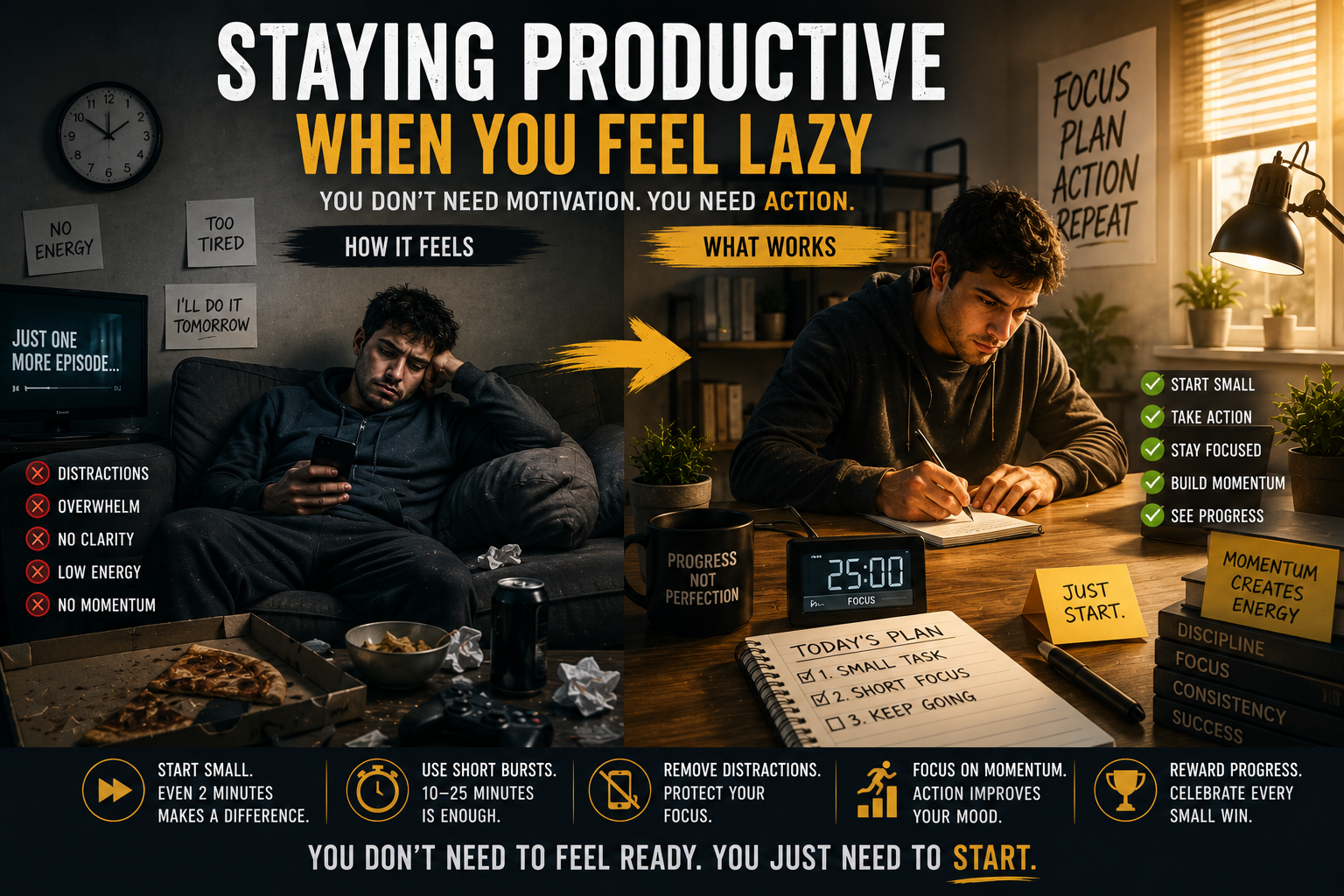


“Action is the foundational key to all success.” – Pablo Picasso
Disclaimer: This blog may contain affiliate banner advertisements. If you click on these ads or make purchases through them, we may earn a small commission at no additional cost to you. These commissions help support our work and allow us to continue providing valuable content.
Introduction: When Motivation Disappears
Introduction: When Motivation Disappears
Everyone experiences days when motivation seems to disappear. You may feel tired, distracted, overwhelmed, or simply not in the mood to tackle your responsibilities. It’s easy to believe that you need to wait until you feel inspired before taking action, but motivation is often unpredictable and temporary. The real problem isn’t laziness—it’s depending on motivation to determine whether you move forward. Highly productive people understand that progress comes from consistent habits and disciplined action, not from feeling energized every single day. They know that starting a task, even with little enthusiasm, often creates the momentum needed for motivation to follow. Instead of waiting for the perfect mindset, they focus on taking the next small step that moves them closer to their goal. By learning to act regardless of how you feel in the moment, you build resilience, strengthen self-discipline, and develop a reliable system for making progress even on your most unmotivated days.
Understand the Root of Laziness
Understand the Root of Laziness
What feels like laziness is often a symptom of a deeper issue rather than a character flaw. In many cases, the real cause may be physical fatigue, mental exhaustion, feeling overwhelmed by the size of a task, or simply not knowing where to begin. When you label yourself as lazy without looking deeper, you miss the opportunity to solve the actual problem that is holding you back. Take a moment to ask yourself what is truly preventing you from taking action. Are you lacking energy because you need rest? Are you avoiding a project because it feels too large or confusing? Or are you struggling because your priorities aren’t clear? Once you identify the real obstacle, you can choose a solution that addresses the root cause, whether that’s breaking a project into smaller steps, taking a short break to recharge, or creating a simple plan. By replacing self-criticism with curiosity and problem-solving, you become better equipped to overcome obstacles and build consistent habits that keep you moving forward.
Start With the Smallest Task
Start With the Smallest Task
When you don’t feel like working, the hardest part is often getting started, not completing the work itself. Instead of focusing on everything that needs to be done, choose the smallest possible task and commit to finishing just that one step. It might be opening a document, organizing your workspace, writing a single sentence, or spending just two minutes on a project. These tiny actions reduce the mental resistance that comes from viewing a task as too large or overwhelming. Once you’ve started, you’ll often find that continuing feels much easier because momentum begins to replace hesitation. Even if you stop after completing that small task, you’ve still made progress and reinforced the habit of taking action instead of procrastinating. Remember that success is built through consistent forward movement, not dramatic bursts of motivation. By making it easy to begin, you’ll discover that small actions performed consistently can lead to significant accomplishments over time.
Use the ‘Just Start’ Rule
Use the “Just Start” Rule
One of the most effective ways to overcome procrastination is to adopt the “Just Start” rule. Instead of worrying about completing an entire project, give yourself permission to simply begin. Commit to working for just a few minutes, writing one paragraph, making one phone call, or taking the first step toward your goal. This approach removes the pressure of having to finish everything at once and makes even difficult tasks feel more manageable. In many cases, you’ll discover that once you’ve started, your focus improves and your motivation begins to grow naturally. Momentum has a powerful effect, turning a small action into sustained progress that often carries you much further than you originally intended. Even on days when you only complete a small portion of the task, you’ve still strengthened the habit of taking action instead of waiting for the perfect moment. Over time, consistently applying the “Just Start” rule trains your mind to overcome resistance quickly, making productivity a matter of habit rather than motivation.
Lower the Bar
Lower the Bar
One of the biggest obstacles to productivity is believing that every task must be completed perfectly. This mindset often creates unnecessary pressure, making it easier to procrastinate than to risk producing work that feels less than ideal. Instead of aiming for perfection, give yourself permission to simply make progress. A rough first draft, a short workout, or fifteen minutes of focused work is far more valuable than waiting for the perfect time, perfect plan, or perfect result. Small, imperfect actions build momentum and move you closer to your goals, while inaction leaves you exactly where you started. Remember that almost every successful project begins as an unfinished idea that improves through consistent effort and refinement. By lowering the bar for getting started, you remove the fear of failure and make taking action much easier. Progress, no matter how small, compounds over time, proving that doing something consistently will always produce better results than doing nothing while waiting for perfection.
Change Your Environment
Change Your Environment
Sometimes the fastest way to regain focus isn’t changing your mindset—it’s changing your surroundings. Your environment has a powerful influence on your energy, concentration, and willingness to take action. A simple adjustment, such as cleaning your workspace, organizing your desk, opening a window, improving the lighting, or moving to a quieter location, can help refresh your mind and reduce distractions. These small changes signal to your brain that it’s time to shift into work mode, making it easier to concentrate on the task at hand. If you’ve been stuck on the same project for a while, even relocating to a different room, a library, or a coffee shop can provide a fresh perspective and renewed motivation. Pay attention to the environments where you naturally feel most productive, and try to recreate those conditions whenever possible. By intentionally designing a workspace that supports focus, you’ll make it easier to begin your work, maintain your momentum, and stay productive even when motivation is running low.
Use Timers and Short Bursts
Use Timers and Short Bursts
Working for hours without a break can make even simple tasks feel exhausting, especially when you’re already struggling with motivation. Instead, try using a timer to work in short, focused bursts of 10 to 25 minutes, followed by a brief break to recharge. Knowing that you only need to concentrate for a limited amount of time makes large projects feel far less intimidating and much easier to begin. During each work session, eliminate distractions and give your full attention to a single task rather than trying to multitask. When the timer ends, step away for a few minutes to stretch, get some water, or clear your mind before starting the next session. These short cycles of focused effort help maintain your energy, improve concentration, and reduce mental fatigue throughout the day. As you complete one session after another, you’ll build momentum and often accomplish far more than you expected. By breaking your work into manageable intervals, productivity becomes less about endurance and more about consistent, focused progress.
Remove Distractions
Remove Distractions
One of the quickest ways to improve your productivity is to eliminate the distractions that constantly compete for your attention. Every notification, unnecessary browser tab, social media alert, or background interruption pulls your focus away from the task at hand and makes it more difficult to regain your concentration. Before you begin working, take a few minutes to prepare your environment by silencing non-essential notifications, closing unrelated applications, and removing anything that might tempt you to procrastinate. If you know certain distractions are especially difficult to resist, create barriers that make them less accessible while you work, such as placing your phone out of reach or using website-blocking tools during focused sessions. Reducing distractions is particularly important on low-energy days because your willpower is already limited, making it easier to lose focus. The fewer decisions and interruptions you have to manage, the more mental energy you can devote to meaningful work. By creating an environment that supports concentration instead of competing for your attention, you’ll find it much easier to stay focused, maintain momentum, and make steady progress even when motivation is lacking.
Focus on Momentum, Not Mood
Focus on Momentum, Not Mood
Many people believe they need to feel motivated before they can be productive, but the opposite is often true. Your mood doesn’t have to be perfect for you to take meaningful action. In fact, waiting until you “feel like it” can keep you stuck in a cycle of procrastination and frustration. Instead, focus on creating momentum by taking one small step, regardless of how you’re feeling in the moment. Each completed action builds confidence, creates a sense of accomplishment, and makes the next step easier to take. As momentum grows, you’ll often notice that your energy, focus, and motivation begin to improve naturally because you’re making visible progress. While your mood may change from day to day, your commitment to taking action can remain consistent. By prioritizing momentum over emotion, you develop the discipline to keep moving forward, proving to yourself that progress is driven by consistent effort rather than temporary feelings.
Reward Small Progress
Reward Small Progress
Every step forward deserves recognition, no matter how small it may seem. Many people only celebrate major accomplishments, but lasting productivity is built through the consistent completion of small tasks that gradually lead to bigger results. Take a moment to acknowledge your progress after finishing a task, whether it’s checking an item off your to-do list, taking a short break, enjoying a favorite snack, or simply recognizing that you’ve honored your commitment to yourself. These small moments of positive reinforcement help create a more enjoyable relationship with productive work instead of making it feel like a constant obligation. Over time, your brain begins to associate completing tasks with a sense of achievement, making it easier to stay motivated and repeat those positive behaviors. Remember that success is rarely the result of one extraordinary effort—it’s the accumulation of many small victories over days, weeks, and months. By celebrating consistent progress rather than waiting for perfect outcomes, you’ll build stronger habits, greater confidence, and a sustainable routine that keeps you moving toward your goals.
Conclusion: Action Creates Energy
You don’t need to feel motivated to be productive.
By starting small, lowering expectations, and taking action, you can build momentum—even on your lowest-energy days.
Daily Action Steps to Stay Productive
- Start with one very small task.
2. Use a timer for short work sessions.
3. Remove one distraction.
4. Focus on action, not mood.
5. Reward yourself for progress.