Bethlehem • Germany • England
How Traditions Began and How They’re Celebrated Today
Affiliate Disclaimer
This blog may contain affiliate links or banner advertisements. If you click one of these links or advertisements and make a purchase, The Shopping Plaza may earn a small commission at no additional cost to you. These commissions help support our work and allow us to continue creating free Christmas guides, holiday history features, family activities, and seasonal content. We only recommend products, services, or merchandise that we believe may be useful or interesting to our readers. Thank you for supporting The Shopping Plaza.
Introduction: One Holiday, Many Christmas Traditions
Christmas is celebrated across the world, but it does not look exactly the same everywhere. Religious observances, local history, family customs, food, music, decorations, public celebrations, and secular traditions all shape the way communities experience the season. Some customs are centuries old, while others developed more recently and became so familiar that many people no longer think about where they began.
For Americans, Christmas can feel like a collection of traditions gathered from many places. Decorated evergreen trees, Christmas cards, carols, stockings, festive meals, St. Nicholas traditions, Nativity scenes, and public celebrations all have histories that reach beyond the United States. Over generations, these customs crossed borders, changed form, and blended with new traditions.
This guide focuses on three places with especially strong connections to the Christmas story and the development of familiar holiday customs: Bethlehem, Germany, and England. Bethlehem holds extraordinary importance in Christian tradition as the setting of the Nativity. Germany is closely associated with influential Christmas tree, Advent, market, and St. Nicholas traditions. England contributed customs ranging from the commercial Christmas card to crackers, caroling traditions, festive foods, and the modern family-centered Christmas shaped during the Victorian era.
Individual families and communities celebrate differently, so no short guide can describe every practice. Instead, this tour highlights some of the traditions that have made each place distinctive and shows how Christmas customs can travel far beyond the communities where they began.
Christmas in Bethlehem: The Birthplace of the Nativity Story
For Christians around the world, Bethlehem occupies a unique place in the meaning of Christmas. The New Testament Nativity tradition identifies Bethlehem as the birthplace of Jesus, making the city a major destination for Christian pilgrims and placing it at the spiritual center of many Christmas observances.
That connection gives Christmas in Bethlehem a character unlike that of a location known primarily for seasonal customs. Visitors are not simply traveling to see decorations. Many come because they want to worship, pray, or stand near places connected by tradition with the birth of Christ.
The city is also home to different Christian communities whose calendars and liturgical traditions do not always place Christmas observances on the same date. As a result, the Christmas season in Bethlehem can reflect several Christian traditions rather than one single celebration. This religious diversity is an important reminder that even within Christianity, Christmas customs and calendars can vary.
The Church of the Nativity and Manger Square
The Church of the Nativity is the landmark most closely associated with Christmas in Bethlehem. Built over the site traditionally identified with the birth of Jesus, the church has attracted pilgrims for centuries. Within the complex, the Grotto of the Nativity is traditionally regarded as the place of Christ’s birth, and a silver star marks the revered location.
During the Christmas season, the area around the church and nearby Manger Square becomes a focal point for religious observances and public gatherings. Decorations, lights, processions, worship services, clergy, local residents, pilgrims, and visitors can all become part of the atmosphere.
The original blog describes Christmas Eve processional traditions involving clergy, officials, mounted participants, a cross, and ceremonial movement toward the church. Such public religious ceremonies help connect the modern city with the Nativity story remembered there.
For many visitors, the emotional power comes from the contrast between an ancient sacred site and a living modern community. Bethlehem is not merely a scene in a Christmas story; it is a real city where residents continue to live, worship, work, and observe traditions amid changing contemporary circumstances.
Nativity Scenes, Stars, and Christian Symbols in Bethlehem
Because Bethlehem is so closely connected with the Nativity, visual symbols of Christ’s birth naturally hold special significance during the Christmas season. Nativity scenes recreate the familiar figures of Mary, Joseph, the infant Jesus, shepherds, angels, and animals. Stars recall the Star of Bethlehem and the journey of the Magi in Christian tradition.
The original blog also notes crosses displayed by Christian households and a star raised in the town square. These symbols place the religious story at the center of the season and distinguish Bethlehem’s Christmas identity from celebrations that focus primarily on Santa Claus, shopping, or winter imagery.
For children learning about Christmas around the world, Bethlehem provides an important starting point because it connects modern customs with the religious narrative from which the Christian holiday takes its name. Even families whose celebrations are largely secular are likely to recognize Nativity scenes, stars, angels, and Christmas carols that developed from that story.
Christmas in Germany: A Powerful Influence on Holiday Traditions
Germany has had an enormous influence on the way Christmas is imagined and celebrated in many parts of the world. German-speaking regions developed or popularized customs involving decorated evergreen trees, Advent observances, seasonal markets, St. Nicholas traditions, baked specialties, handmade ornaments, and Christmas music.
It is important to remember that Germany is not culturally uniform. Traditions can vary by region, family, religious background, and generation. A custom practiced in Bavaria may not be identical to one in northern Germany, and modern families may combine older traditions with contemporary celebrations.
Still, several German customs became internationally influential. When those customs traveled to Britain, the United States, and elsewhere, they were adapted to local tastes. The result is that many people now participate in traditions with German connections without necessarily realizing their history.
The German Christmas Tree Tradition
The decorated Christmas tree is one of the strongest symbols of the modern holiday, and German-speaking lands are deeply connected with its development. Early modern traditions involving decorated evergreen trees emerged in German regions and gradually evolved into the familiar household Christmas tree.
The original blog describes a tradition in which the tree was kept hidden, decorated by adults, and revealed to children on Christmas Eve. Decorations could include candles, ornaments, tinsel, nuts, cookies, and angels. The dramatic reveal would have made the tree itself feel almost like a Christmas gift.
Modern practices are more varied. Many families decorate earlier in December, electric lights have replaced dangerous open candles in most homes, and ornaments now range from traditional handmade decorations to personalized family keepsakes. Yet the central idea remains recognizable: bringing an evergreen indoors and transforming it into a glowing centerpiece for Christmas.
The tree also demonstrates how traditions change when they travel. What began as regional customs eventually became so widespread that the Christmas tree now appears in homes, schools, businesses, public squares, hotels, and government buildings around the world.
Advent: Preparing for Christmas in Germany
The weeks before Christmas are important in German holiday culture, and Advent traditions help build anticipation gradually. Advent calendars give children and adults a small door, image, chocolate, or gift to discover each day as Christmas approaches. Advent wreaths traditionally use four candles, with another candle lit on each Sunday of Advent.
These customs turn waiting into part of the celebration. Rather than treating Christmas as a single day, Advent creates a season of preparation. Families may decorate, bake, attend religious services, visit markets, listen to Christmas music, or gather around the Advent wreath.
Advent calendars have become especially international. They now appear in countless forms, including versions filled with candy, toys, beauty products, coffee, books, and other themed surprises. Their popularity is another example of a European Christmas tradition that has been reinvented for modern audiences.
St. Nicholas Day: December 6
St. Nicholas traditions provide German children with an important celebration before Christmas itself. The original blog describes children placing a shoe or boot outside and receiving candy or small toys if they have behaved well, while older folklore sometimes includes symbolic twigs or rods associated with misbehavior.
The custom is connected with St. Nicholas, the Christian bishop whose reputation for generosity influenced gift-giving traditions throughout Europe. In German-speaking regions, Nikolaus traditions remain distinct from the later Christmas gift-bringer in many families.
For children, the excitement comes partly from preparation. A boot may be cleaned and placed where St. Nicholas can find it. By morning, it may contain nuts, fruit, sweets, or small gifts. The scale is usually much smaller than Christmas morning, which gives the tradition its own identity.
The custom also illustrates how the historical St. Nicholas and the modern American Santa Claus are related but not identical. European traditions developed in different directions, and several of them eventually contributed to the Santa figure familiar in the United States.
German Christmas Markets
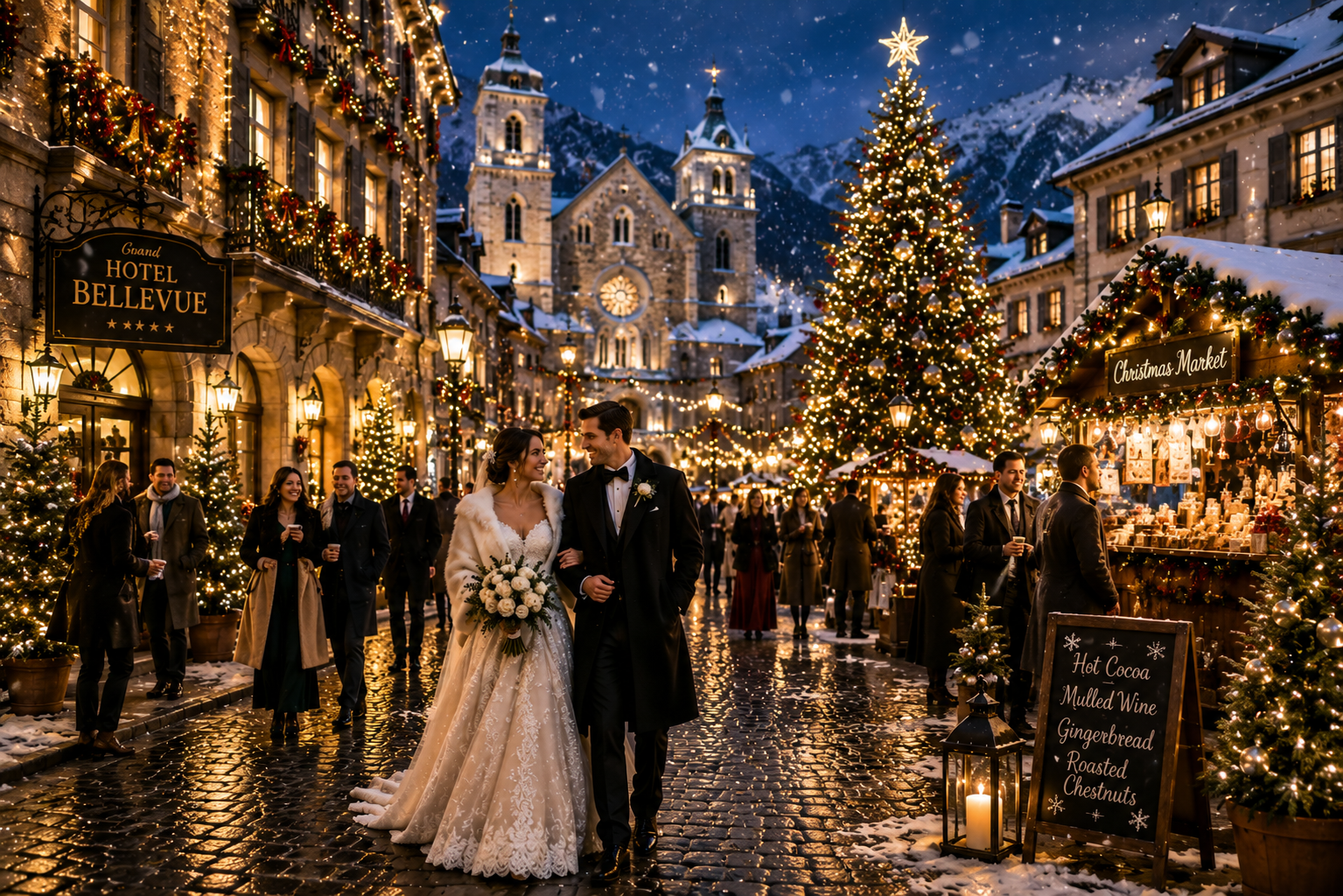
Few holiday experiences are as strongly associated with Germany as the Christmas market, or Weihnachtsmarkt. During Advent, town squares and city centers can fill with decorated stalls selling ornaments, crafts, food, sweets, and seasonal drinks. Lights, music, evergreen decorations, and historic architecture often create an atmosphere that visitors associate with an old-fashioned Christmas.
Markets are both commercial and social. People may shop for gifts, but they also come to meet friends, eat seasonal foods, and enjoy the atmosphere. Children may be drawn to sweets, decorations, rides, or festive displays, while adults browse handmade goods and regional specialties.
The Christmas market tradition has spread internationally. Cities far beyond Germany now host German-inspired holiday markets. Even when those newer markets differ from their European counterparts, they reflect the global appeal of gathering outdoors during Advent around lights, food, crafts, and shared celebration.
German Christmas Foods and Sweet Traditions
Food is an important part of German Christmas celebrations. The original blog highlights roast goose, Stollen, sweets, and baked treats. Stollen is especially recognizable: a rich yeast bread traditionally containing dried fruit and often dusted generously with powdered sugar.
Christmas baking may also include a wide range of cookies and regional specialties. Families can spend days preparing recipes that appear only during Advent and Christmas. The smell of spices, butter, nuts, fruit, and baking can become as closely tied to childhood memories as decorations or gifts.
Festive meals vary, and not every German household serves the same dishes. That variation is worth emphasizing because national Christmas traditions are often simplified when described abroad. What remains consistent is the role food plays in gathering people together and connecting present celebrations with family recipes and regional history.
Christmas in England: Tradition, Family, and Victorian Influence
England has contributed many customs that Americans readily recognize as part of Christmas. Holiday cards, caroling, stockings, greenery, Christmas pudding, crackers, family dinners, and public Christmas messages all form part of the country’s seasonal culture.
The nineteenth century was particularly important in shaping the image of an English family Christmas. Victorian-era changes in publishing, transportation, commerce, and popular culture helped spread traditions to a broad audience. Queen Victoria and Prince Albert became associated in the public imagination with family Christmas celebrations, while writers such as Charles Dickens helped reinforce themes of generosity, family, memory, and social responsibility.
Many customs later crossed the Atlantic or developed alongside related American practices. As a result, an American family celebrating Christmas may participate in several traditions with strong English connections without consciously thinking of them as imported customs.
The Christmas Card: An English Holiday Innovation
The first commercial Christmas card is associated with England in the 1840s. The idea provided people with a convenient way to send seasonal greetings at a time when postal communication was becoming increasingly accessible.
The custom expanded dramatically. Cards could feature religious scenes, winter landscapes, flowers, humorous illustrations, family messages, or sentimental greetings. Eventually, exchanging Christmas cards became an annual ritual in Britain, the United States, and many other countries.
Technology has changed the tradition, but it has not eliminated it. Families now send printed photo cards, personalized designs, emails, digital greetings, and social-media messages. Yet a physical Christmas card arriving in the mail can still feel special precisely because it requires someone to select, address, and send it.
Caroling and the Sound of an English Christmas
Christmas carols have a long and complicated history, but England played a major role in collecting, publishing, performing, and popularizing many songs associated with the season. Caroling can take place in churches, schools, concert halls, neighborhoods, and community gatherings.
The act of singing together changes the experience of Christmas music. A familiar carol heard in a store becomes something different when a group of people performs it together. Children learn melodies their parents and grandparents may also know, creating continuity between generations.
Neighborhood caroling is less universal today than nostalgic Christmas imagery sometimes suggests, but community and church singing remain important parts of the season for many people. The tradition demonstrates how music can carry Christmas customs across centuries and national borders.
Father Christmas and the Tradition of Stockings
English children have long known the Christmas gift-bringer as Father Christmas, although modern British portrayals overlap substantially with the internationally familiar Santa Claus. The older English Father Christmas developed through a different historical path, but over time the figures blended in popular culture.
The original blog describes children hanging stockings on Christmas Eve to be filled. Stockings may contain sweets, fruit, small toys, toiletries, novelty gifts, or other little surprises. The tradition works partly because it stretches the excitement of Christmas morning: before the larger presents are opened, there is an entire stocking to explore.
Stockings are another tradition that traveled easily. American households often hang them from mantels, staircases, walls, or special holders, and personalized stockings have become popular Christmas decorations in their own right.
Holly, Ivy, and Mistletoe
Evergreen plants have long been associated with winter celebrations, and English Christmas decorating traditionally makes use of holly, ivy, and mistletoe. Their ability to remain green during winter made them natural symbols of life and continuity during the darkest part of the year.
Holly, with its glossy green leaves and red berries, became one of the most recognizable Christmas plants. Ivy appears in traditional decoration and song. Mistletoe became associated with the familiar custom of kissing beneath it.
Today, these plants appear in wreaths, garlands, table decorations, cards, wrapping paper, and artificial holiday greenery. Families with children or pets should remember that real decorative plants can present ingestion risks, so placement and plant choice should be handled carefully.
The English Christmas Dinner
Christmas dinner is one of the major family events of the holiday. The original blog lists roast turkey, goose, or chicken with stuffing, vegetables, roasted potatoes, Christmas pudding with brandy sauce, and fruit-filled Christmas cake.
Turkey became strongly associated with the modern British Christmas meal, although families vary and alternative main dishes are common. Side dishes can be just as important as the centerpiece, and the meal often reflects household traditions passed from one generation to another.
Christmas pudding is particularly distinctive. Rich with dried fruit and traditionally prepared well in advance, it carries a sense of ceremony when brought to the table. Christmas cake, also filled with fruit and often decorated, extends the tradition of dense celebratory baked goods.
The meal is not simply about food. It creates a scheduled moment when people stop other activities and gather at the same table. That communal function is one reason Christmas dinner traditions remain powerful even as menus change.
Christmas Crackers: A Small Tradition With a Big Pop
Christmas crackers are one of the most immediately recognizable British holiday traditions. These decorated paper tubes are placed at the table and pulled apart by two people. A small snapping mechanism creates the characteristic pop.
Inside is usually a paper crown or hat, a joke or riddle, and a small novelty item. The contents are intentionally simple. The fun comes from the ritual: everyone pulls crackers, reads terrible jokes aloud, wears paper crowns, and temporarily accepts a level of silliness that might seem strange at another meal.
Crackers have spread beyond Britain, but they remain especially associated with a British Christmas dinner. They demonstrate an important truth about holiday traditions: something does not need to be expensive or serious to become deeply memorable.
The Christmas Broadcast
A Christmas Day broadcast from the monarch has become another familiar British tradition. The message is typically broadcast on Christmas Day and reflects on themes, events, service, community, or experiences from the year.
For many households, the broadcast is part of the rhythm of Christmas afternoon, although not everyone watches it. Its significance lies partly in continuity. The tradition connects a modern media event with decades of previous Christmas broadcasts.
As television and digital media have changed, the message has become available through more channels, allowing people to watch or listen in different ways. It remains an example of a national Christmas custom experienced simultaneously by people in many locations.
Boxing Day: Christmas Continues on December 26
In England and across the United Kingdom, December 26 is Boxing Day, extending the Christmas holiday beyond Christmas Day itself. The historical origins of the name are debated and associated with traditions of giving boxes, gifts, or gratuities to servants, workers, tradespeople, or people in need.
Modern Boxing Day can include family visits, relaxation, sporting events, shopping, leftovers, walks, and other leisure activities. Football fixtures and other sports have become a prominent part of the day for many fans, while retailers also promote major post-Christmas sales.
For visitors from countries where December 26 is an ordinary workday, Boxing Day can be one of the most noticeable differences in the holiday calendar. It shows how the Christmas season can extend beyond the single date of December 25.
What Bethlehem, Germany, and England Teach Us About Christmas
These three places reveal different dimensions of the holiday. Bethlehem connects Christmas directly to the Christian Nativity story and to sacred places that have attracted pilgrims for centuries. Germany demonstrates how household traditions, Advent customs, St. Nicholas observances, Christmas markets, foods, and evergreen decorations can influence celebrations far beyond national borders. England shows how family customs, Victorian culture, cards, carols, festive foods, crackers, stockings, and public traditions helped shape the Christmas familiar to many English-speaking families.
They also demonstrate that traditions are rarely frozen in time. Customs move, combine, and change. A German-influenced Christmas tree can stand in an American living room beside stockings associated with English-speaking Christmas traditions and a Nativity scene recalling Bethlehem. A family may eat recipes from several cultures while listening to music written in different centuries and countries.
That blending does not make Christmas traditions less meaningful. In many ways, it makes them richer. Every custom carries a story, and learning those stories can turn familiar decorations or activities into connections with people and places across the world.
Final Thoughts: A Holiday Connected Across Borders
Christmas is both deeply local and remarkably international. Families may celebrate in their own homes with customs that feel completely personal, yet many of those customs have traveled enormous distances through migration, literature, religion, trade, music, popular culture, and family history.
Bethlehem reminds us of the religious story at the foundation of the Christian holiday. Germany shows the power of Advent traditions, St. Nicholas customs, Christmas trees, markets, and seasonal foods. England contributed practices that continue to shape the modern English-speaking Christmas, from cards and crackers to stockings and festive meals.
Learning where traditions come from can add another layer of appreciation to the season. The ornament on a tree, the card in the mailbox, the carol being sung, the Nativity on a mantel, or the stocking waiting for Christmas morning may be part of a much larger story than it first appears.
Christmas around the world is not one identical celebration. It is a collection of beliefs, customs, foods, songs, symbols, and family memories. That variety is part of its enduring fascination – a holiday celebrated in countless ways while continuing to bring people together around themes of faith, generosity, family, hope, and joy.