
“You do not rise to the level of your goals. You fall to the level of your systems.” – James Clear
Disclaimer: This blog may contain affiliate banner advertisements. If you click on these ads or make purchases through them, we may earn a small commission at no additional cost to you. These commissions help support our work and allow us to continue providing valuable content.
Introduction: Why Systems Matter
Introduction: Why Systems Matter
Many people focus on setting goals because goals provide direction and a clear picture of what they want to achieve. However, goals alone are not enough to create lasting results because they do not explain the daily actions needed to get there. Systems are the repeatable processes, routines, and habits that turn goals into consistent progress. They remove the need to constantly make decisions about what to do next and create a structure that keeps you moving forward. When you build effective systems, success becomes less dependent on motivation and more dependent on consistent action. Over time, these systems make productivity feel more natural, reduce wasted effort, and create the foundation needed for long-term achievement.
Goals vs Systems
### Goals vs Systems
Goals and systems work together, but they serve different purposes. Goals provide direction by defining what you want to achieve, while systems create the daily actions that move you closer to that outcome. A goal might be to get fit, improve your finances, write a book, or grow a business, but the system is the routine and process you follow consistently to make that goal possible. For example, becoming healthier may be the goal, but exercising each morning, planning meals, and creating healthy habits are the systems that produce results. Without systems, goals often remain ideas because there is no consistent action behind them. When you focus on building strong systems, progress becomes part of your daily routine and success becomes something you create through repeated effort.
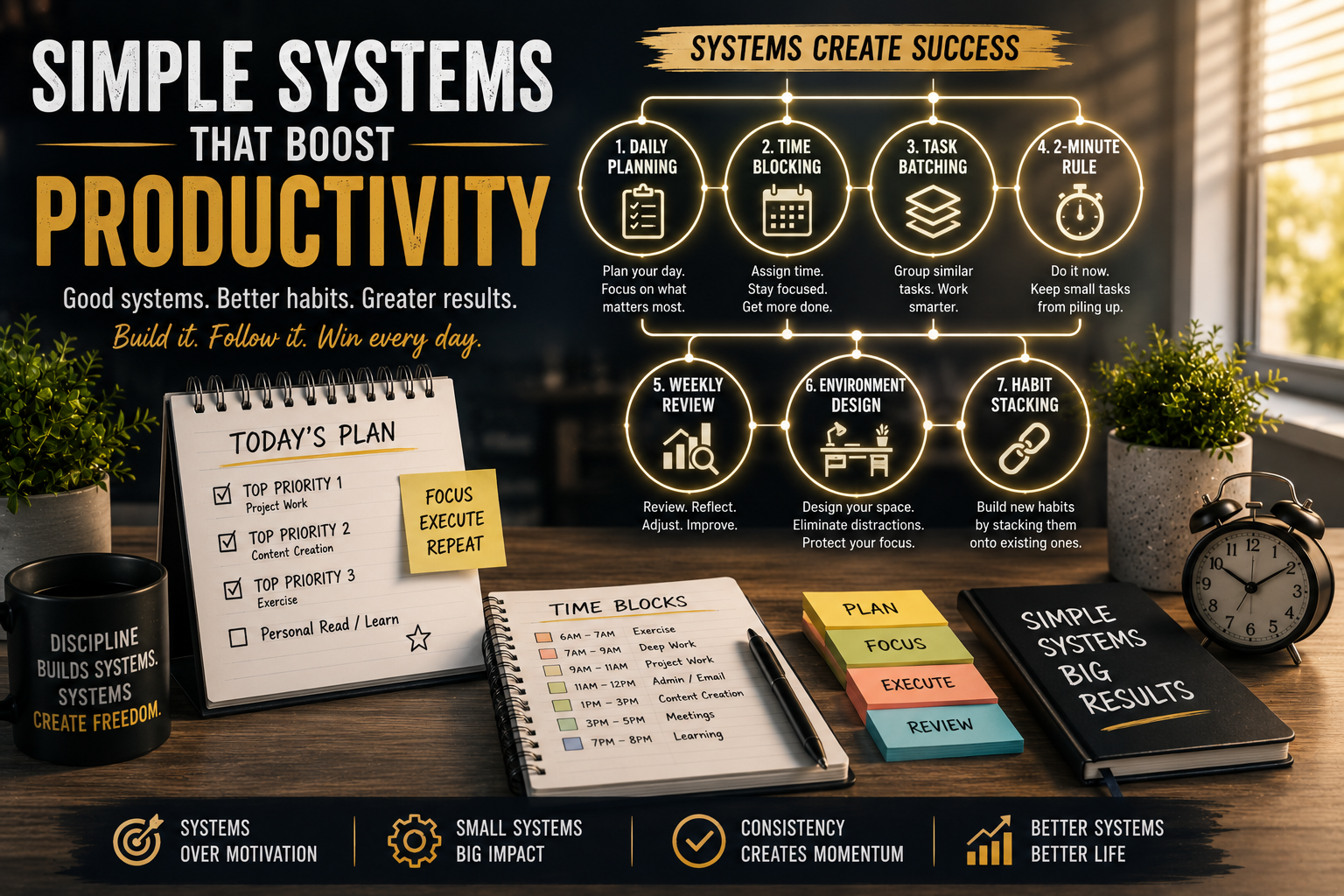
System 1: Daily Planning
System 1: Daily Planning
Starting each day with a clear plan creates structure and helps you focus your energy on what matters most. Without a plan, it is easy to become distracted by less important tasks and spend the day reacting instead of making progress. A simple daily planning system allows you to identify your top priorities, organize your responsibilities, and create a realistic path forward. This does not require an overly complicated schedule—just a clear understanding of the most important actions you need to complete. By planning your day intentionally, you reduce decision fatigue and make it easier to stay focused when challenges arise. Over time, daily planning becomes a habit that creates consistency, improves productivity, and helps you make steady progress toward your larger goals.
System 2: Time Blocking
System 2: Time Blocking
Time blocking is a powerful system for creating structure and protecting your most important work. Instead of approaching your day with a general list of tasks, you assign specific blocks of time to specific activities. This helps eliminate distractions because you know exactly what you should be focusing on during each part of your day. By dedicating uninterrupted time to important tasks, you reduce multitasking and give yourself the opportunity to work with greater concentration and efficiency. Time blocking also helps you create balance by ensuring that important areas of your life receive attention, including work, personal goals, relationships, and rest. When practiced consistently, time blocking turns your schedule into a tool that supports productivity and helps you make steady progress toward your goals.
System 3: Task Batching
System 3: Task Batching
Task batching is the practice of grouping similar activities together so you can complete them in one focused session rather than constantly switching between different types of work. Every time you jump from writing to answering emails, then to making phone calls, and back to writing again, your brain has to readjust, which wastes valuable time and mental energy. By batching related tasks, you create a smoother workflow that allows you to build momentum and stay focused for longer periods. For example, instead of checking your email throughout the day, designate one or two specific times to respond to messages. Likewise, schedule all your content creation, administrative work, or planning sessions into dedicated blocks of time whenever possible. This approach not only improves efficiency but also reduces stress because you’re no longer trying to juggle multiple responsibilities at once. Over time, task batching becomes a habit that helps you accomplish more while feeling less mentally drained at the end of each day.
System 4: The 2-Minute Rule
System 4: The 2-Minute Rule
The 2-Minute Rule is a simple but highly effective strategy for preventing small tasks from becoming overwhelming. If a task can be completed in two minutes or less, handle it immediately instead of adding it to your to-do list. Quick actions such as replying to a short email, filing a document, putting away supplies, or scheduling an appointment take very little time individually, but when ignored, they accumulate into a long list of unfinished work. Completing these small tasks as they arise keeps your workspace, schedule, and mind clearer, allowing you to focus on larger, more meaningful projects. It also creates a sense of momentum, as each completed task reinforces the habit of taking action rather than procrastinating. While it’s important not to let tiny tasks interrupt periods of deep, focused work, the 2-Minute Rule is incredibly useful during transition times or when processing your daily inbox and administrative responsibilities. By consistently applying this simple principle, you’ll spend less time dealing with clutter and more time making progress on your biggest goals.
System 5: Weekly Review
System 5: Weekly Review
A weekly review gives you the opportunity to step back from your daily routine and evaluate your overall progress. Set aside a dedicated time each week—perhaps Friday afternoon or Sunday evening—to reflect on what you accomplished and where you encountered challenges. Celebrate the tasks and habits that helped you move closer to your goals, and be honest about the strategies that didn’t produce the results you expected. Look for patterns, such as recurring distractions, unrealistic schedules, or priorities that consistently get pushed aside. Use these insights to make small adjustments rather than completely overhauling your system, because continuous improvement is more sustainable than constant reinvention. A weekly review also allows you to organize the upcoming week by setting priorities, clearing unfinished tasks, and preparing for important deadlines. When you make this review a consistent habit, your productivity system becomes more effective over time because it evolves based on real experience rather than guesswork.
System 6: Environment Design
System 6: Environment Design
Your environment has a powerful influence on your ability to stay focused and productive, often more than motivation alone. By intentionally designing your workspace, you can make it easier to concentrate and harder to become distracted. Start by keeping your work area clean, organized, and stocked with the tools you need so you can begin working without unnecessary delays. Reduce interruptions by silencing non-essential notifications, closing unrelated browser tabs, and keeping distracting devices out of reach when tackling important tasks. If possible, create a dedicated workspace that your brain naturally associates with focus and productivity, even if it’s just a specific desk or corner of a room. Small improvements, such as comfortable seating, good lighting, and a clutter-free surface, can also increase your energy and make long work sessions more enjoyable. The goal is to build an environment where productive behavior becomes the easiest choice, allowing you to spend less time fighting distractions and more time making meaningful progress.
System 7: Habit Stacking
System 7: Habit Stacking
Habit stacking is a simple technique that makes it easier to build new routines by connecting them to habits you already perform consistently. Instead of relying on memory or motivation, you use an established habit as a trigger for a new one. For example, after pouring your morning coffee, you might spend five minutes reviewing your goals, planning your day, or reading something that inspires you. Because the first habit already happens automatically, the new habit is more likely to become part of your daily routine as well. Start with small, manageable actions rather than trying to add several new habits at once, as consistency is more important than intensity. As each new habit becomes automatic, you can continue stacking additional positive behaviors to create a productive daily rhythm. Over time, these connected habits form a powerful system that helps you make steady progress toward your goals with less effort and fewer reminders.
Keeping Systems Simple
Keeping Systems Simple
The most effective productivity systems are often the simplest because they are easy to remember, easy to follow, and easy to maintain over the long term. While it can be tempting to create detailed schedules, elaborate tracking methods, or complicated workflows, these systems often become overwhelming and are eventually abandoned. A simple system removes unnecessary steps and allows you to focus your energy on completing meaningful work rather than managing the system itself. Ask yourself whether each part of your routine genuinely helps you make progress or simply adds more complexity to your day. If a process feels difficult to maintain, don’t be afraid to simplify it by eliminating unnecessary tasks or combining steps where possible. Remember that consistency will always outperform perfection, and a basic system you follow every day is far more valuable than an advanced system you only use occasionally. By keeping your systems straightforward and sustainable, you create habits that can support your goals for months and even years without leading to frustration or burnout.
Conclusion: Systems Create Success
When you build strong systems, productivity becomes automatic.
Instead of relying on motivation, you rely on structure.
Start small, build simple systems, and let them guide your progress.
Daily Action Steps to Build Productive Systems
- Create a simple daily plan.
2. Use time blocking for key tasks.
3. Batch similar tasks.
4. Review your progress weekly.
5. Keep your systems simple and consistent.