

“Rock bottom became the solid foundation on which I rebuilt my life.” – J.K. Rowling
Disclaimer: This blog may contain affiliate banner advertisements. If you click on these ads or make purchases through them, we may earn a small commission at no additional cost to you. These commissions help support our work and allow us to continue providing valuable content.
Introduction: When You Hit Rock Bottom
Introduction: When You Hit Rock Bottom
Hitting rock bottom can be one of the most painful and challenging experiences a person can face. It is a moment when life feels as though everything has been taken away—when the plans you had, the security you relied on, or the identity you built seem to collapse all at once. Rock bottom can look different for everyone. For some, it may come through financial hardship, the loss of a relationship, a major career setback, a personal crisis, or a season of deep uncertainty. For others, it may be an internal struggle where they feel disconnected from their purpose, confidence, or hope for the future.
During these moments, it is common to feel overwhelmed, exhausted, and unsure of what comes next. When you are in the middle of a difficult situation, it can be hard to imagine that anything positive could come from the experience. The pain feels immediate, and the path forward may appear unclear. However, one of the most important truths to remember is that reaching your lowest point does not mean your story is over. In many cases, it can become the turning point where transformation begins.
Rock bottom has a way of removing the distractions that often keep us from facing what truly matters. When everything familiar is stripped away, you are forced to look honestly at your life, your choices, your priorities, and the person you want to become. While this process can be uncomfortable, it can also create incredible clarity. It reveals what is important, what needs to change, and what strengths you may have overlooked.
Many people discover parts of themselves during difficult seasons that they never knew existed. They discover resilience they didn’t know they possessed, courage they didn’t know they could access, and determination they didn’t know they had. The struggles that once felt like they were breaking them often become the experiences that shape them into stronger, wiser, and more capable individuals.
Rebuilding after rock bottom does not happen overnight. It requires patience, honesty, consistent effort, and the willingness to take small steps forward even when progress feels slow. The process begins with accepting where you are, identifying what you can change, and believing that your current circumstances do not define your future. Every small action you take becomes part of rebuilding your confidence, stability, and sense of purpose.
It is also important to understand that rock bottom is not a reflection of your worth. A difficult season does not mean you are a failure, and a setback does not erase your potential. Many successful and resilient people have experienced moments when they felt lost, defeated, or uncertain. What often separates those who rebuild from those who remain stuck is not the absence of hardship—it is the decision to keep moving forward despite it.
Rock bottom can become a foundation. When you rebuild from a place of honesty and self-awareness, you create something stronger because it is built on lessons learned rather than assumptions. You begin making decisions based on what truly matters instead of what simply looks successful from the outside.
While no one chooses to experience their lowest moments, those moments can become powerful opportunities for growth and transformation. Rock bottom can force you to pause, reflect, rebuild, and rediscover your strength. It can become the starting point of a new chapter—one built with greater wisdom, stronger character, and a clearer understanding of who you are and what you are capable of becoming.
Rock Bottom Creates Clarity
Rock Bottom Creates Clarity
One of the unexpected lessons that can come from hitting rock bottom is the clarity it creates. When life is going well, it is easy to become distracted by comfort, routines, expectations, and things that may not truly align with what matters most. We often move through life focused on what is urgent rather than what is important. However, when everything changes and the things we once depended on are removed, we are often forced to pause and take an honest look at our lives.
Rock bottom has a way of stripping away distractions and revealing what truly matters. It can show you which relationships are meaningful, which goals are worth pursuing, and which priorities may have been misplaced. Things that once seemed incredibly important may suddenly lose their significance, while simple things—health, purpose, meaningful connections, personal growth, and inner peace—become much more valuable.
This clarity can be uncomfortable because it often requires honesty. You may have to acknowledge habits that are holding you back, decisions that need to change, or situations that are no longer serving you. While facing these realities can be difficult, it is also where transformation begins. You cannot change what you are unwilling to recognize, and clarity gives you the awareness needed to make better choices moving forward.
When distractions lose their power, your focus becomes stronger. Instead of spending energy trying to impress others, meet unrealistic expectations, or chase things that do not bring fulfillment, you can begin investing that energy into what truly supports your growth. You start asking better questions: What kind of life do I want to build? Who do I want to become? What changes do I need to make to move forward?
Rock bottom can also reveal strengths and abilities that were hidden during easier times. When familiar sources of security disappear, you are forced to rely on your own resilience, creativity, and determination. Through that process, you often discover that you are capable of handling more than you once believed. The challenges that tested you can become the experiences that strengthen you.
This new clarity becomes the foundation for meaningful change because it allows you to rebuild with intention. Instead of simply returning to the way things were, you have the opportunity to create something better—something aligned with your values, your goals, and the person you want to become. You can make decisions based on wisdom gained from experience rather than assumptions based on comfort.
While rock bottom is painful, it can also become a turning point. It removes the unnecessary and highlights what deserves your attention. It gives you the opportunity to let go of what no longer serves you and focus on what truly matters. Through that clarity, you gain the ability to rebuild your life with greater purpose, stronger direction, and a deeper understanding of yourself.
You Learn What You’re Made Of
You Learn What You’re Made Of
Rock bottom has a way of revealing parts of yourself that may have remained hidden during easier times. When life is comfortable, you may never have a reason to discover the full extent of your strength, determination, or resilience. But when you face circumstances that challenge everything you thought you could handle, you are forced to dig deeper and find the courage to keep going. These moments test your limits, but they also reveal your true capacity to overcome.
Difficult seasons often push you into unfamiliar territory. You may have to make decisions you never expected to make, solve problems you never imagined facing, or continue moving forward when you feel like you have very little energy left. These experiences are uncomfortable, but they are also opportunities to discover abilities within yourself that you may not have recognized before.
Many people underestimate their own resilience until they are forced to use it. You may discover that you are stronger, more adaptable, and more capable than you ever believed. You learn that you can survive difficult moments, adjust when plans change, and continue taking steps forward even when the path is uncertain. The very challenges that once seemed impossible become proof of what you are capable of handling.
Rock bottom also teaches you important lessons about yourself. It reveals your priorities, your values, and the qualities that help you persevere. You may discover patience you didn’t know you had, courage you didn’t know you could access, or determination that appeared only because giving up was not an option. These discoveries become part of your identity and strengthen the way you approach future challenges.
It’s important to recognize that resilience does not mean never struggling. Strong people still experience fear, frustration, sadness, and uncertainty. The difference is that they learn how to move through those emotions rather than allowing them to stop them. Strength is not measured by how easy life feels—it is measured by your willingness to continue despite difficulty.
The lessons you learn at your lowest points can become some of your greatest sources of confidence. Every obstacle you overcome becomes evidence that you are capable of facing challenges. Every difficult moment you survive becomes a reminder that you have more strength than you realized. Over time, these experiences create a deeper belief in yourself because you have personally witnessed your ability to endure.
While no one wants to experience rock bottom, those moments often reveal the strongest parts of who you are. They show you that you are not defined by your circumstances, your setbacks, or your struggles. You are defined by your ability to respond, rebuild, and rise again. Through hardship, you discover not only what you can survive—but what you are truly made of.
Letting Go of What Doesn’t Serve You
Letting Go of What Doesn’t Serve You
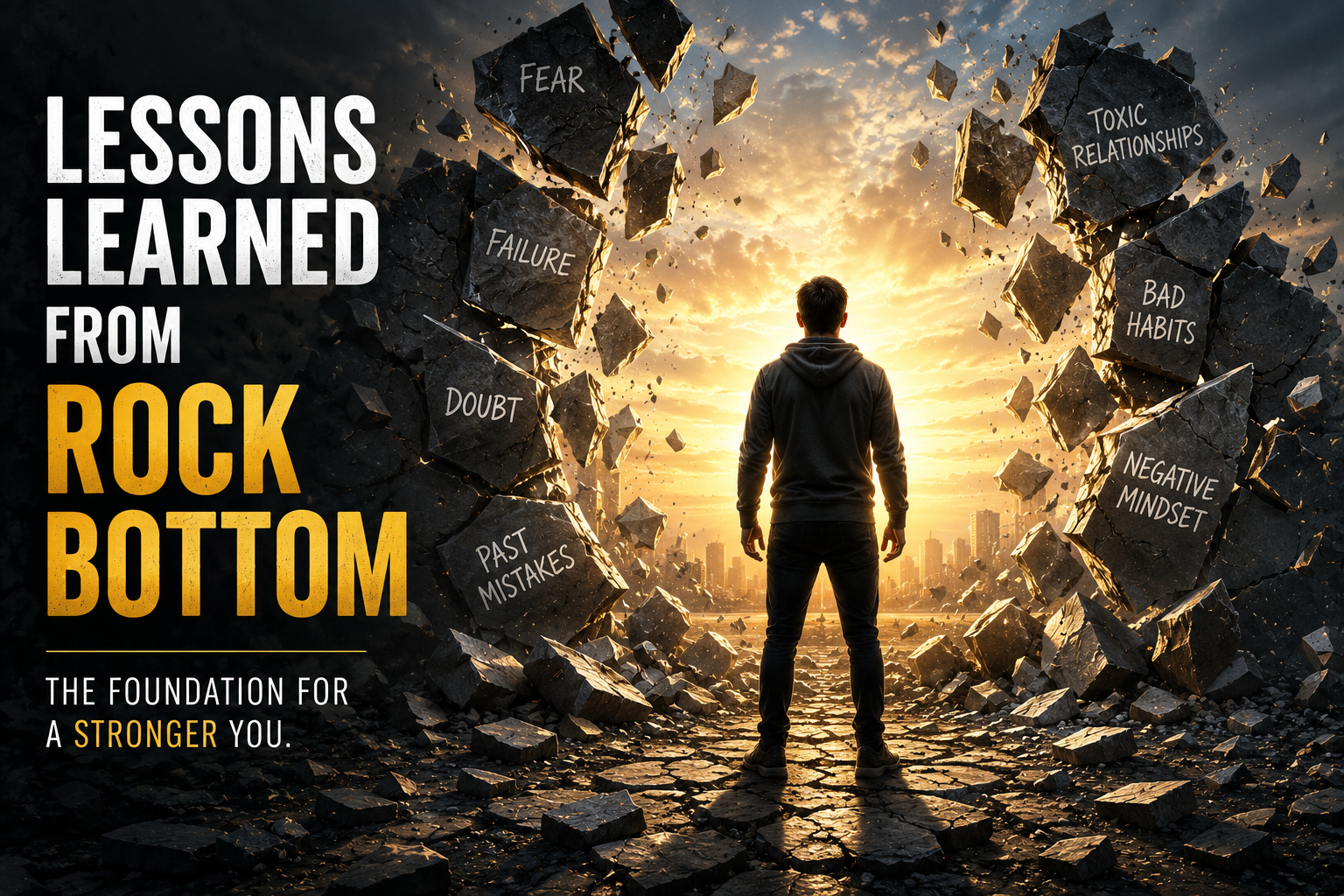
One of the most difficult but transformative lessons that can come from hitting rock bottom is learning what you need to release. When life forces you to slow down and reevaluate your situation, you often begin to recognize the things that have been weighing you down—habits that limit your growth, relationships that drain your energy, beliefs that hold you back, or patterns of thinking that no longer support the person you want to become.
Letting go is rarely easy because even unhealthy things can become familiar. A habit, relationship, or mindset may have been part of your life for a long time, making the idea of change feel uncomfortable or even frightening. Sometimes we hold onto things simply because they are familiar, not because they are beneficial. However, growth often requires creating space for something new by releasing what is preventing us from moving forward.
Rock bottom can bring clarity by showing you what truly belongs in your life and what does not. You may begin to recognize that certain behaviors are keeping you stuck, certain relationships are preventing your growth, or certain beliefs about yourself are no longer accurate. This awareness can be painful because it requires honesty, but it is also the first step toward meaningful transformation.
Letting go of unhealthy habits can create freedom. This may involve changing the way you spend your time, improving how you care for yourself, developing better routines, or replacing negative patterns with choices that support your goals. Small changes may seem insignificant at first, but over time they create a stronger foundation for personal growth and success.
Letting go of certain relationships can also be challenging. Not every person who enters your life is meant to remain there forever. Some relationships are valuable for a season, while others may become unhealthy or prevent you from becoming your best self. Creating distance from people who consistently bring negativity, discourage your growth, or disrespect your boundaries can be difficult, but it can also be an important act of self-respect.
Perhaps one of the most powerful things to release is an outdated mindset. Many people carry beliefs shaped by past experiences, failures, or criticism that no longer reflect who they are today. Thoughts like “I’m not capable,” “It’s too late,” or “This is just who I am” can keep you trapped in a version of yourself that you have already outgrown. Letting go of these limiting beliefs allows you to see new possibilities and recognize your potential.
While the process of letting go can feel like losing something, it often creates room for something better. Removing what no longer serves you allows you to invest more energy into relationships, habits, and opportunities that align with your values and goals. It creates space for growth, healing, and a stronger sense of purpose.
The hardest moments in life often reveal what needs to change. While releasing familiar things can be painful, it can also be the beginning of a healthier and more intentional chapter. By letting go of what holds you back, you give yourself the freedom to rebuild, grow stronger, and create a future that reflects the person you are becoming rather than the person you once were.
Rebuilding From Scratch
Rebuilding From Scratch
Starting over can be one of the most intimidating experiences a person can face. After experiencing a major setback, loss, or difficult season, the idea of rebuilding your life may feel overwhelming. You may wonder where to begin, whether you have the strength to do it, or if things will ever become better again. However, while starting from the beginning can feel like a loss, it can also become one of the greatest opportunities for growth and transformation.
Rebuilding gives you something incredibly valuable—a clean slate. Instead of simply returning to the way things were before, you have the opportunity to create a new foundation based on the lessons you have learned. You can make different choices, establish healthier habits, redefine your priorities, and build a life that is more aligned with who you truly want to become. The challenges you experienced provide wisdom that can guide you as you move forward.
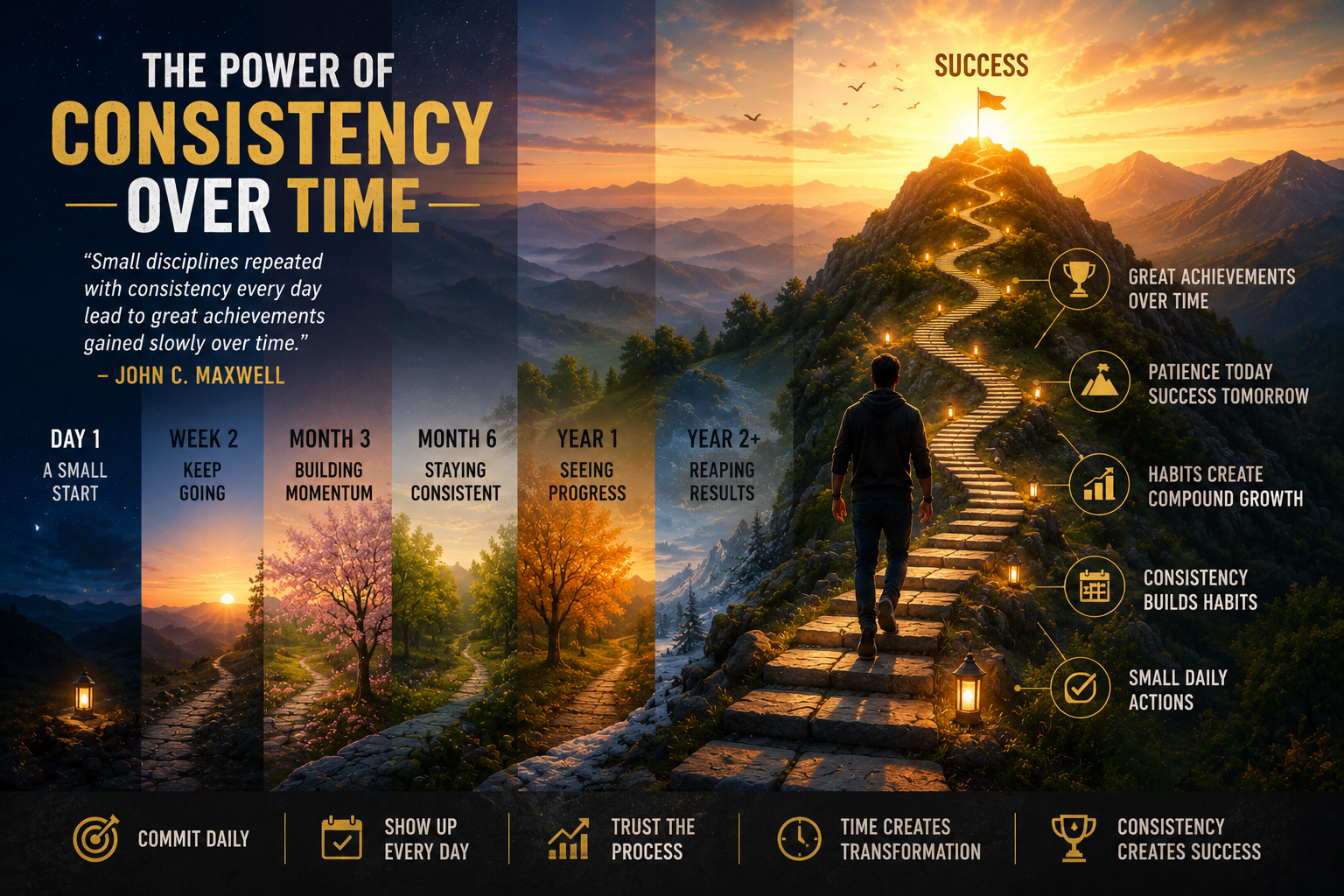
One of the most important parts of rebuilding is understanding that progress does not happen all at once. When everything feels like it needs to be fixed immediately, it can create frustration and discouragement. Instead, focus on taking one intentional step at a time. Rebuilding your confidence, finances, relationships, career, health, or personal goals happens through consistent daily actions. Small steps may seem insignificant in the moment, but they create momentum and eventually lead to meaningful change.
Starting over also allows you to be more intentional about what you build. Before, you may have been operating from habit, expectation, or simply trying to maintain what already existed. Now, you have the opportunity to ask deeper questions: What truly matters to me? What kind of person do I want to become? What kind of life do I want to create? These questions help you build a future that reflects your values rather than simply repeating old patterns.
Rebuilding requires patience and self-compassion. There may be moments when you compare your current situation to where you once were or where you believe you should be. During these times, remember that rebuilding is not about proving something to others—it is about creating something stronger for yourself. Every step forward is evidence of growth, even when progress feels slow.
The process of starting over also reveals your resilience. Each challenge you overcome, each goal you accomplish, and each habit you establish becomes proof that you are capable of change. You begin to trust yourself again because you see that you can create progress through your own effort and determination.
A stronger foundation is often built from the lessons learned during difficult times. The mistakes, setbacks, and struggles that once felt like they were holding you back can become valuable tools for making wiser decisions moving forward. You are no longer rebuilding with the same knowledge and perspective you had before—you are rebuilding with greater awareness, experience, and strength.
Starting from scratch is not the same as starting with nothing. You carry everything you have learned, every lesson you have gained, every challenge you have survived, and every strength you have developed. Those experiences become the foundation upon which you build your next chapter.
Rebuilding may take time, but each small step matters. Every positive choice, every effort, and every moment of perseverance moves you closer to the life you want to create. When you rebuild intentionally, you do more than recover—you create the opportunity to build something stronger, more meaningful, and more aligned with the person you are becoming.
The Power of Perspective
The Power of Perspective
One of the most profound changes that can come from experiencing rock bottom is the way it transforms your perspective. When life is comfortable, it is easy to overlook the things that quietly bring meaning and stability to your everyday existence. You may take certain relationships, opportunities, abilities, or simple moments for granted because they feel like they will always be there. However, difficult seasons often have a way of slowing you down and helping you recognize the true value of what matters most.
Rock bottom can change the way you see both challenges and blessings. Experiences that once seemed overwhelming may begin to look different when viewed through the lens of growth and resilience. You start to realize that difficulties are not only obstacles—they can also be teachers. They reveal your strength, clarify your priorities, and show you what deserves your attention and energy.
Many people discover a deeper appreciation for the simple things after facing hardship. A meaningful conversation, a supportive relationship, a peaceful moment, good health, personal progress, or a new opportunity can take on a greater significance. Things that once seemed ordinary become reminders of what truly matters. This renewed appreciation can create a stronger sense of gratitude and help you find joy in moments you may have previously overlooked.
A changed perspective also allows you to view yourself differently. Instead of seeing yourself only through the lens of what went wrong, you begin recognizing what you overcame. You see the courage it took to continue, the strength required to rebuild, and the growth that came from the experience. Your challenges become part of your story, but they no longer define you. Instead, they become evidence of your ability to adapt, learn, and persevere.
This shift in perspective can also bring greater clarity about your purpose. When distractions are removed and priorities become clearer, you may begin asking deeper questions about the life you want to create. What truly matters? What kind of impact do you want to make? What values do you want to live by? These questions can guide you toward decisions that are more meaningful and aligned with who you are.
Perspective does not change the reality of what happened, but it changes the way you carry it. Two people can experience the same hardship and walk away with completely different outcomes depending on how they interpret the experience. One person may remain focused on what was lost, while another may focus on what can be learned and built moving forward.
Developing a stronger perspective does not mean ignoring pain or pretending difficult moments are easy. It means recognizing that hardship can contain valuable lessons and opportunities for growth. It allows you to move forward with greater wisdom, gratitude, and purpose.
Ultimately, rock bottom can become a turning point because it changes not only your circumstances but also your understanding of life. It teaches you to appreciate what you have, recognize your own strength, and focus on what truly matters. Through this new perspective, you can emerge from difficult seasons with a deeper sense of gratitude, a clearer purpose, and a stronger foundation for the future you are building.
Growth Through Adversity
Growth Through Adversity
Adversity is one of life’s most challenging experiences, but it is also one of its greatest teachers. Difficult moments have a unique way of revealing lessons that may never be learned during times of comfort and ease. When you face obstacles, setbacks, and uncertainty, you are given the opportunity to develop qualities that strengthen your character and shape the person you become. While no one seeks out hardship, the experiences gained through adversity often become some of the most valuable lessons in life.
During difficult seasons, you learn more about yourself than you may have realized. Challenges reveal your patience, your determination, your problem-solving abilities, and your capacity to continue moving forward when circumstances are not in your favor. They show you what you are capable of handling and often uncover strengths that were hidden beneath the surface. The person who emerges after overcoming adversity is often stronger, wiser, and more prepared than the person who entered the challenge.
Adversity also teaches valuable lessons about perspective and priorities. When everything is going smoothly, it can be easy to focus on temporary concerns or become distracted by things that are not truly important. Difficult experiences often force you to reevaluate what matters most. They help you recognize the importance of relationships, personal growth, health, purpose, and the choices that shape your future.
The lessons learned through hardship often stay with you because they are connected to real experiences. Reading about resilience or hearing advice from others can be helpful, but there is a different level of understanding that comes from personally navigating challenges. When you overcome something difficult, you carry that knowledge with you. You remember what worked, what you learned, and what you discovered about yourself along the way.
Adversity also builds emotional strength. Each time you face a challenge and find a way through it, you become more confident in your ability to handle future difficulties. You develop the belief that even when life becomes uncertain, you have the skills, experience, and resilience needed to adapt. This confidence does not come from having a perfect life—it comes from knowing that you can overcome imperfect situations.
It’s important to remember that growth through adversity does not mean every struggle has an immediate purpose or that difficult experiences are easy to accept. Some challenges are painful and require time to process. Growth often happens gradually, as you reflect on what happened, recognize what you learned, and decide how you will move forward.
The character built through adversity becomes part of your foundation for the future. The patience developed during waiting periods, the courage developed during uncertain moments, and the resilience developed through setbacks all prepare you for future opportunities and challenges. The strength you gain is not just useful for surviving difficult times—it helps you approach life with greater confidence and wisdom.
Ultimately, adversity can transform you in ways that comfort never could. It teaches you perseverance, deepens your understanding of yourself, and prepares you for whatever comes next. The challenges you overcome become reminders that you are capable of more than you once believed. Through adversity, you don’t just learn how to endure—you learn how to grow, adapt, and become stronger.
Finding Strength in Small Wins
Finding Strength in Small Wins
When you are rebuilding your life after a difficult season, progress can often feel slower than you expected. You may have a clear vision of where you want to be, but the distance between your current situation and your desired future can sometimes feel overwhelming. During these moments, it is important to remember that meaningful change rarely happens through one dramatic breakthrough. More often, it is created through small, consistent steps taken over time.
Small wins matter because they provide evidence that progress is happening, even when the results are not immediately obvious. Completing a simple task, creating a healthier habit, making a positive decision, reaching out for support, or taking one step toward a goal may seem insignificant at first, but each action represents forward movement. These moments remind you that you are not stuck—you are rebuilding.
When you focus only on the final destination, it can be easy to become discouraged by how far you still have to go. However, when you learn to recognize and celebrate small victories, you shift your attention toward what you are accomplishing rather than what remains unfinished. This creates a healthier mindset that encourages continued effort and persistence.
Small wins also help rebuild confidence. After experiencing a major setback, it is common to question your abilities or wonder whether you can create positive change. Each small accomplishment becomes proof that you are capable of taking control of your life again. One completed task becomes a reminder that you can follow through. One positive choice becomes evidence that you can create new patterns. One step forward becomes proof that change is possible.
The power of small wins comes from their ability to create momentum. Progress builds upon itself. A single positive action may seem small, but repeated consistently, those actions can transform your circumstances over time. Just as a strong foundation is built one piece at a time, a stronger future is created through the accumulation of small decisions and daily efforts.
Small wins also help you stay focused on the present moment. During difficult seasons, it is easy to become overwhelmed by trying to solve every problem at once. Breaking the journey into smaller steps allows you to focus on what you can do today rather than becoming consumed by everything that needs to happen in the future.
It’s important to give yourself credit for the progress you make, especially when rebuilding requires courage and patience. You may not always see dramatic changes from day to day, but growth is still happening beneath the surface. Every effort matters, and every step forward contributes to the person and life you are creating.
Remember that small wins are not insignificant—they are the building blocks of major transformation. The strongest comebacks are rarely created through one perfect moment. They are built through countless small choices to keep going, keep learning, and keep moving forward.
When you recognize the value of small wins, you begin to see your journey differently. Instead of focusing only on how much work remains, you begin appreciating how far you have already come. Each small step becomes a reminder that you are rebuilding, growing stronger, and moving in the right direction.
Turning Pain Into Purpose
Turning Pain Into Purpose
One of the most powerful transformations that can come from experiencing rock bottom is the ability to turn pain into purpose. Difficult experiences can leave lasting marks, but they can also provide valuable lessons, deeper understanding, and a perspective that can positively impact not only your own life but the lives of others. The struggles you endure can become part of a meaningful story—one that reflects growth, resilience, and the ability to overcome.
Pain often gives you insight that cannot be gained any other way. When you have personally experienced hardship, disappointment, uncertainty, or loss, you develop a deeper understanding of what others may be going through. You become more aware of the emotions people experience during difficult times because you have felt them yourself. This creates empathy, compassion, and the ability to connect with others on a deeper level.
Your challenges can also reveal strengths and passions that may have remained undiscovered. Sometimes the very experiences that hurt us the most reveal what we care about most. A difficult journey may inspire you to support others facing similar struggles, create solutions to problems you understand personally, or use your experiences to encourage people who feel lost or discouraged.
Turning pain into purpose does not mean pretending that difficult experiences were easy or that the hurt never happened. It means choosing to find meaning in what you went through. The goal is not to erase the past but to use what you learned from it as a source of strength. Your experiences become valuable because they shape your understanding and give you the ability to contribute something meaningful to the world.
Sharing your story can be one of the most powerful ways to transform hardship into impact. When you openly share lessons from your journey, you give others hope and remind them that they are not alone. Your story may encourage someone who is currently facing a challenge, help someone see a new possibility, or provide the motivation they need to continue moving forward.
Purpose can also come from using your experiences to create something meaningful. This could involve mentoring others, supporting a cause, building a business, creating content, serving your community, or simply being a source of encouragement to the people around you. You do not need to have a perfect story or have everything figured out to make a difference. Often, the most powerful impact comes from people who are willing to share their authentic experiences and the lessons they have learned.
It is also important to remember that finding purpose after hardship takes time. Not every difficult experience immediately reveals its meaning. Sometimes understanding comes later, after healing has taken place and you have had time to reflect. Give yourself permission to process your journey while remaining open to the possibilities that can emerge from it.
The pain you experienced does not have to be the final chapter of your story. It can become the foundation for something greater. The challenges that tested you can become the experiences that strengthen you, the lessons that guide you, and the wisdom that allows you to help others.
When you transform pain into purpose, you reclaim power over your story. You move from asking, “Why did this happen to me?” to asking, “How can I use what I have learned to create something meaningful?” Through this shift, your struggles become more than obstacles—they become opportunities to inspire, serve, and make a lasting difference.
Hope Is Always There
Hope Is Always There
When you are experiencing one of the most difficult seasons of your life, hope can sometimes feel far away. When problems seem overwhelming and the future feels uncertain, it can be hard to imagine that things will ever improve. In those moments, it is important to remember that the absence of hope you feel does not mean hope is gone. Sometimes hope becomes quieter during challenging times, but it is still present, waiting to be rediscovered through small actions, new perspectives, and the decision to keep moving forward.
Hope is not always a sudden feeling of excitement or confidence that everything will immediately get better. Often, hope is much simpler and more powerful than that. Hope can be the decision to get out of bed and try again. It can be reaching out for help, taking one small step toward a goal, or believing that tomorrow can be different from today. Even when you cannot see the entire path ahead, hope allows you to take the next step.
One of the most important things to understand about difficult seasons is that your current circumstances do not determine your future. A painful chapter does not mean the entire story will be painful. A setback does not mean you cannot recover. A failure does not mean you cannot succeed. Life is constantly changing, and the situation you are facing today may look completely different with time, effort, support, and perseverance.
Sometimes hope begins with the smallest possible action. When everything feels overwhelming, you do not need to solve every problem at once. Focus on what you can do right now. Make one positive choice. Complete one important task. Take one step toward improvement. Small actions may seem insignificant, but they create movement, and movement creates possibility.
Hope also grows when you remember your own history. Think about challenges you have already overcome, moments when you thought things would not improve but eventually did, and times when you discovered strength you did not know you had. Your past victories serve as reminders that difficult moments can change and that you are capable of making it through challenging seasons.
It is also important to allow others to help you maintain hope. Sometimes, when you are struggling, you may not be able to see possibilities clearly on your own. Supportive friends, family members, mentors, or communities can provide encouragement and perspective when your own confidence is low. Allowing others to support you is not a sign of weakness—it is part of the process of healing and rebuilding.
Hope is powerful because it creates the belief that your actions matter. When you believe improvement is possible, you are more likely to take steps toward creating it. Hope fuels persistence, encourages growth, and gives you the strength to continue even when the journey is difficult.
Remember that darkness is temporary. Difficult seasons may last longer than you would like, but they do not last forever. Every sunrise is a reminder that change is possible and that new opportunities can appear even after the hardest moments.
No matter how low you feel, there is always a path forward. You may not see the entire road ahead, and you may not know exactly how everything will unfold, but you can always take the next step. That next step may be small, but it matters. Each step moves you closer to healing, growth, and a future that is stronger than the challenges you have faced. Hope is always there—it begins with the belief that your story is not finished yet.
Conclusion: Your Comeback Begins Here
Rock bottom is not the end of your story—it’s the beginning of your comeback.
The lessons you learn in your lowest moments can become the foundation for your greatest successes.
Take it one step at a time. Keep moving forward. And remember—you have the power to rebuild.
Daily Action Steps to Rise From Rock Bottom
- Identify one lesson from your current situation.
2. Take one small step forward today.
3. Let go of one thing that no longer serves you.
4. Focus on progress, not perfection.
5. Remind yourself that your story is not over.