Affiliate Disclosure: This article may contain affiliate links. If you purchase folding furniture, serving supplies, cookware, storage products, Thanksgiving decorations, or other holiday essentials through links on our website, we may earn a small commission at no additional cost to you. Your support helps us continue creating helpful Thanksgiving resources, hosting guides, and seasonal inspiration.
Hosting Thanksgiving in a small home can feel intimidating. You may worry about fitting everyone around the table, finding enough chairs, storing groceries, preparing several dishes in a compact kitchen, and keeping guests comfortable without making the space feel crowded.
Fortunately, a memorable Thanksgiving does not require a large dining room, oversized kitchen, or separate entertaining area. Small homes can create some of the warmest and most inviting holiday gatherings because guests naturally spend more time together.
The key is thoughtful planning. By limiting unnecessary clutter, choosing the right serving style, using furniture creatively, preparing food in advance, and organizing traffic through the home, you can host a comfortable celebration without feeling overwhelmed by the size of your space.
This guide will help you make the most of every room, surface, seat, and storage area so your small-home Thanksgiving feels welcoming rather than cramped.
Begin With a Realistic Guest Count
The first step is deciding how many people your home can comfortably accommodate.
Consider:
Available seating
Table space
Kitchen size
Number of bathrooms
Parking
Coat storage
Walking paths
Mobility needs
Number of children
Length of the gathering
Do not base the guest list only on how many people could technically stand inside the home.
Think about whether everyone can:
Sit comfortably
Eat safely
Move through the room
Access the bathroom
Reach beverages
Enter and leave without difficulty
A slightly smaller guest list often creates a much more enjoyable celebration.
Accept That Everyone May Not Sit at One Table
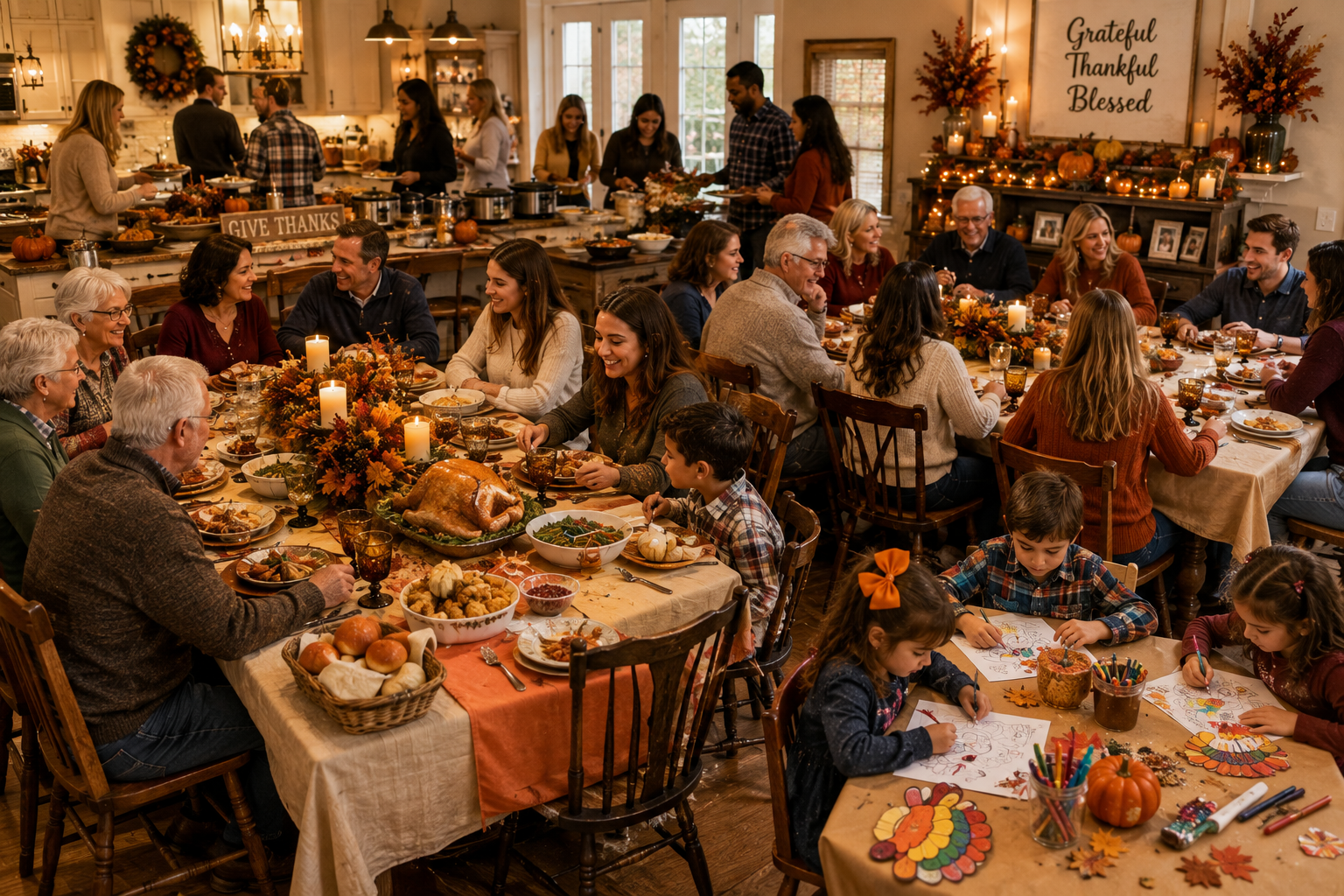
Many small-home hosts believe Thanksgiving is only successful if every guest sits around one formal dining table.
That is not necessary.
You can create several comfortable eating areas using:
Dining table
Kitchen table
Folding table
Coffee table
Breakfast bar
Counter seating
Card table
Small children’s table
The goal is to give everyone a stable place to eat.
Conversation can continue across nearby seating areas, especially in an open or connected space.
Choose a Buffet Instead of Full Table Service
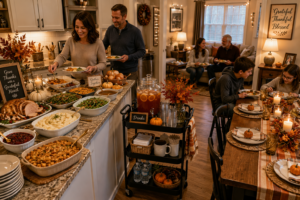
A buffet is often easier in a small home because the dining table does not need to hold every serving dish.
Benefits include:
More room for place settings
Less passing of heavy dishes
Guests choose their own portions
Serving containers remain in one location
Easier movement around the table
Set up the buffet on:
Kitchen counter
Sideboard
Folding table
Island
Sturdy shelving unit cleared for the event
Keep beverages and desserts at separate stations so the main buffet does not become congested.
Consider a Casual Thanksgiving Format
A small home may be better suited to a relaxed celebration than a formal seated dinner.
Possible formats include:
Buffet meal
Family-style gathering
Thanksgiving brunch
Friendsgiving
Appetizer and dessert open house
Soup and sandwich Thanksgiving
Potluck dinner
Small plates served in stages
A casual format reduces pressure on seating and table space while still allowing everyone to enjoy the holiday.
Create a Floor Plan Before Thanksgiving
Walk through the home and decide how guests will move.
Identify:
Entrance
Coat area
Main seating
Food station
Beverage station
Dessert area
Bathroom route
Children’s space
Trash location
Exit path
Remove furniture that blocks movement.
Make sure guests do not need to pass directly through the busiest cooking area every time they want a drink or use the restroom.
Move Unnecessary Furniture Out of the Way
A room can feel larger when it contains fewer items.
Temporarily relocate:
Extra side tables
Floor lamps
Decorative chairs
Plant stands
Large baskets
Toys
Magazine racks
Unnecessary decorations
Store them in:
Bedroom
Closet
Basement
Garage
Locked office
Another safe room
Do not overcrowd private rooms to the point that doors cannot close or emergency access becomes difficult.
Use Folding Furniture
Folding tables and chairs are extremely useful for small-home hosting.
They can be:
Set up only when needed
Arranged in different configurations
Stored after the meal
Borrowed rather than purchased
Used for food, seating, or desserts
Before Thanksgiving, test every borrowed table and chair for stability.
Place folding furniture on level flooring and keep it away from narrow doorways.
Borrow Instead of Buying
Ask friends or relatives whether they can lend:
Folding chairs
Card tables
Slow cookers
Serving platters
Beverage dispensers
Coolers
Extra stools
TV trays
Borrowing is especially practical for items you use only once or twice each year.
Return everything clean and in good condition.
Use Benches for Flexible Seating
A bench may seat more people than individual dining chairs.
Possible options include:
Entryway bench
Storage bench
Picnic bench
Upholstered bench
Sturdy window seat
Make sure the bench is stable and supports the expected weight.
Add cushions when necessary for comfort.
Use TV Trays and Small Tables
TV trays can provide individual eating surfaces for guests seated on couches or armchairs.
They are useful for:
Older guests
Children
Guests who need more personal space
Overflow seating
Dessert and coffee
Place trays where they do not block walking paths.
Avoid using unstable decorative tables for hot or heavy plates.
Create a Children’s Table
A small children’s table can free adult seating.
Include:
Child-sized chairs
Paper table covering
Crayons
Simple place cards
Spill-resistant cups
Age-appropriate utensils
Place the children’s table where adults can supervise.
Keep it away from the oven, hot serving dishes, candles, and crowded walkways.
Check Accessibility
Small spaces can become especially difficult for guests using:
Wheelchairs
Walkers
Canes
Crutches
Service animals
Ask guests about their needs before rearranging furniture.
Provide:
Clear paths
Sturdy chairs
Easy bathroom access
Space beside seating
Food within comfortable reach
Help carrying plates when requested
Avoid placing temporary furniture where it narrows accessible routes.
Simplify the Menu
A small kitchen becomes difficult to manage when the menu includes too many dishes.
Choose a practical meal with:
One main entrée
Three or four side dishes
Bread
One or two desserts
A limited beverage selection
Every recipe requires:
Ingredients
Preparation space
Cookware
Oven or stovetop space
Serving dish
Refrigerator storage
Cleanup
A smaller menu protects both your space and your energy.
Choose a Smaller Main Entrée
A very large turkey may overwhelm a compact refrigerator, sink, roasting pan, and oven.
Consider serving:
Turkey breast
Small whole turkey
Two turkey breasts
Ham
Roast chicken
Pork loin
Vegetarian entrée
A smaller main dish may cook more evenly and leave valuable oven space for sides.
Use a Potluck Format
Potluck hosting is especially useful in a small kitchen.
You might prepare:
Main entrée
Gravy
One side
Guests can bring:
Additional sides
Desserts
Bread
Appetizers
Beverages
Ask guests to bring dishes fully cooked whenever possible.
If everyone arrives needing oven or refrigerator space, the small kitchen may quickly become unmanageable.
Ask Guests to Bring Ready-to-Serve Dishes
When assigning contributions, clarify whether the dish should arrive:
Hot
Cold
In a slow cooker
In a serving container
With its own utensil
Ready to place on the buffet
Ask guests to avoid bringing recipes that require lengthy baking or assembly after arrival.
Limit Appetizers
A crowded kitchen does not need a complicated appetizer menu.
Offer one or two simple choices such as:
Cheese and crackers
Vegetable tray
Dip
Nuts
Deviled eggs
Snack mix
Place appetizers outside the kitchen so guests are not gathering near the oven.
Use Make-Ahead Recipes
Select dishes that can be prepared before Thanksgiving.
Good options may include:
Cranberry sauce
Desserts
Casseroles
Cold salads
Dips
Chopped vegetables
Gravy base
Stuffing components
Prepare as much as possible one or two days early.
This reduces the number of bowls, utensils, and ingredients covering the counters on Thanksgiving Day.
Use Slow Cookers to Free Oven Space
Slow cookers can hold or prepare:
Mashed potatoes
Stuffing
Macaroni and cheese
Glazed vegetables
Warm dips
Hot cider
Place slow cookers on a stable surface where cords cannot create a tripping hazard.
Avoid overloading one electrical outlet with several high-powered appliances.
Use Other Small Appliances Strategically
Depending on what you own, helpful appliances may include:
Toaster oven
Air fryer
Electric pressure cooker
Electric skillet
Microwave
Warming tray
Assign each dish to an appliance before Thanksgiving.
Do not discover during cooking that several recipes depend on the same small appliance.
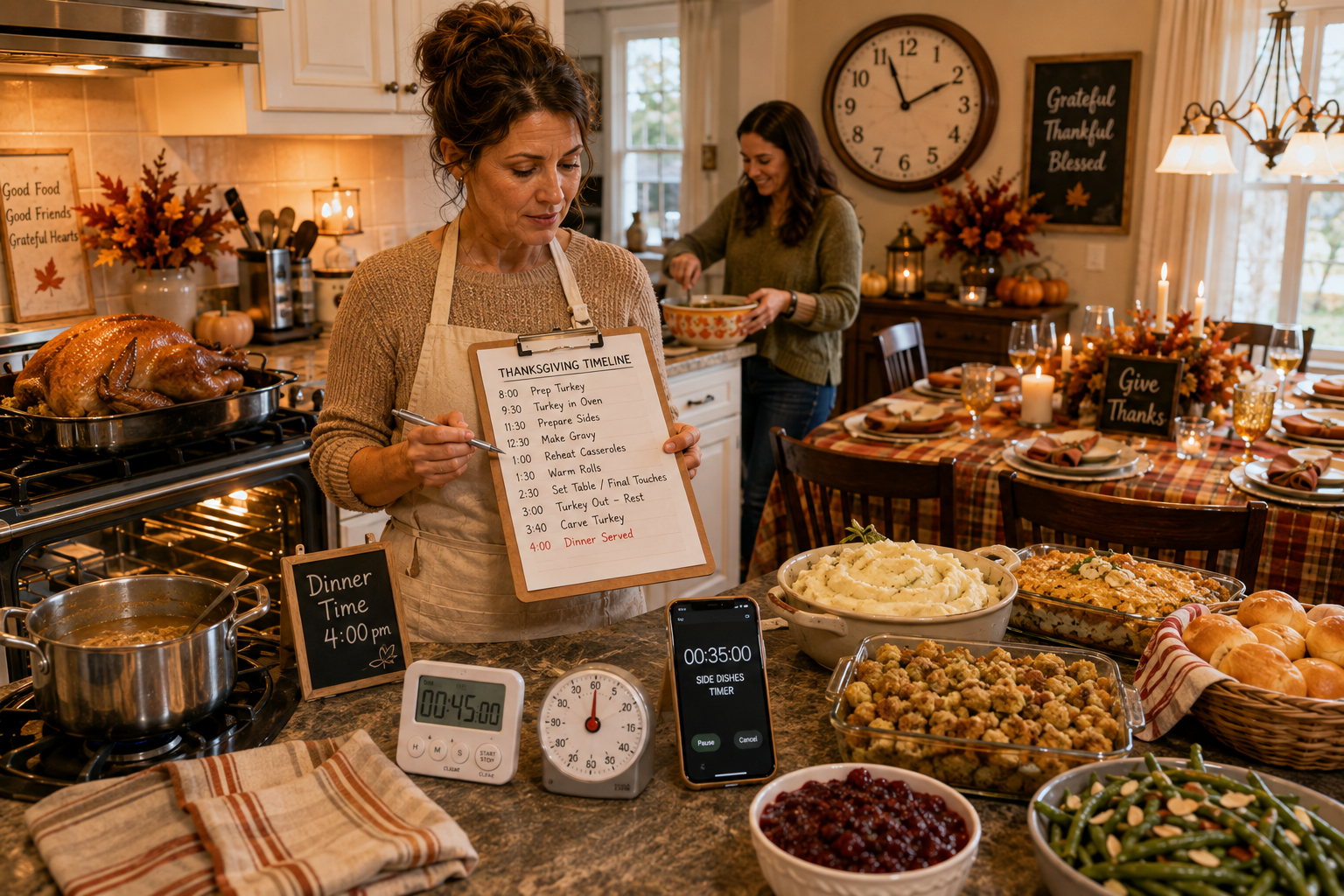
Organize Oven Use Carefully
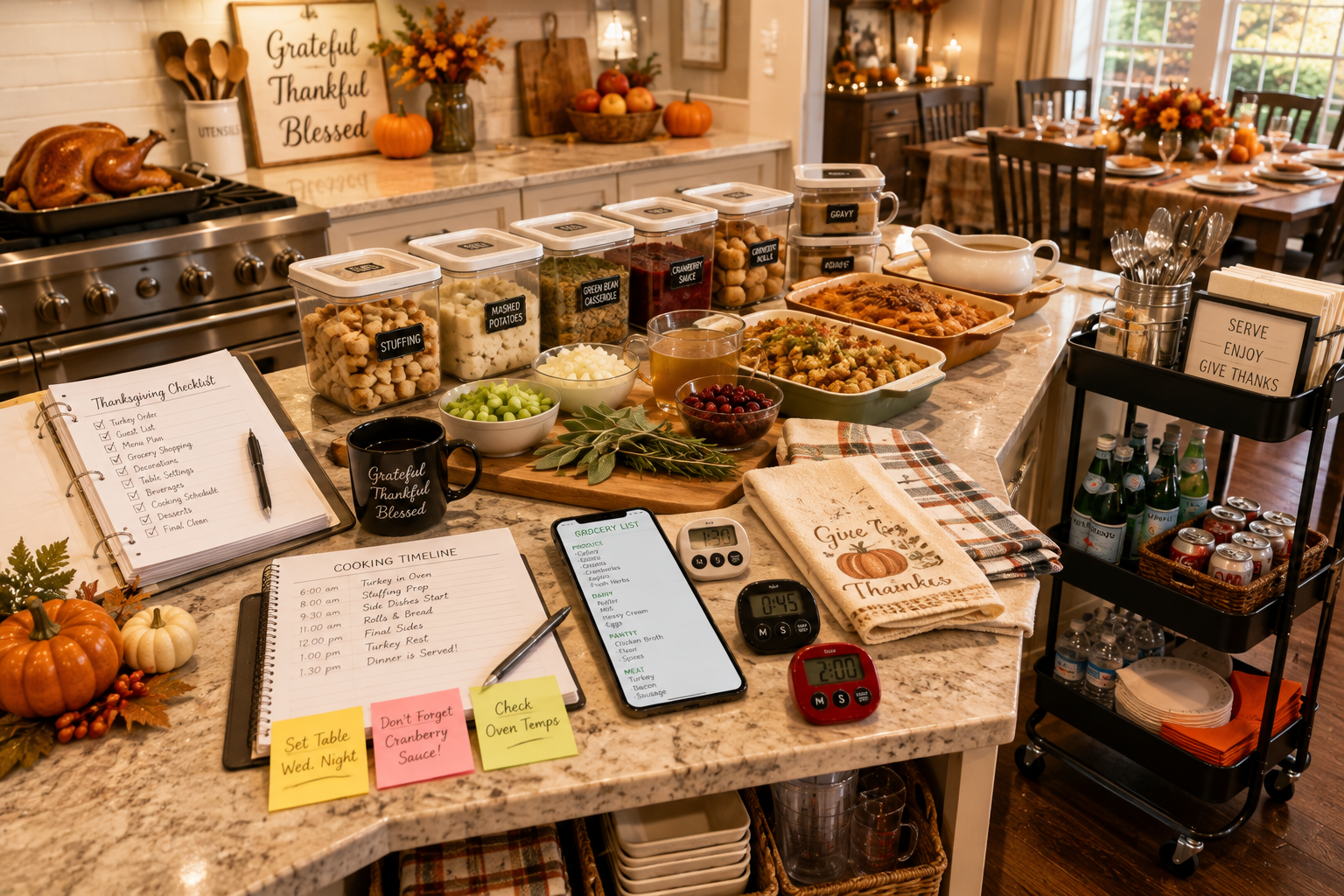
Write down the temperature and cooking time for every baked dish.
Group recipes that use similar temperatures.
Plan which foods can be:
Baked early
Reheated
Served warm
Finished while the turkey rests
Cooked in another appliance
Oven scheduling is one of the most important parts of hosting in a small kitchen.
Clean the Refrigerator Early
A compact refrigerator fills quickly.
Several days before Thanksgiving:
Discard expired food.
Use older leftovers.
Consolidate containers.
Freeze appropriate items.
Remove unnecessary beverages.
Adjust shelves.
Create a section for guest dishes.
Keep raw turkey on a tray on the lowest practical shelf to reduce the risk of drips contaminating other food.
Use Coolers for Additional Storage
Clean coolers can provide temporary cold storage for:
Sealed beverages
Ice
Certain packaged foods
Butter
Condiments
Use enough ice or frozen packs to maintain a safe temperature.
Do not assume a closed cooler will keep perishable food safe indefinitely.
Follow current food-safety guidance and use a thermometer when necessary.
Remove Beverages From the Refrigerator
Bottles and cans can occupy significant space.
Before guests arrive, transfer sealed drinks to:
Cooler
Ice tub
Beverage dispenser
Insulated bag
This creates more refrigerator room for food and leftovers.
Keep alcohol separate from children’s beverages and label it clearly.
Clear the Counters
Counter space is extremely valuable in a small kitchen.
Remove:
Decorative appliances
Mail
Fruit bowls
Spice racks
Paperwork
Unnecessary containers
Everyday clutter
Keep only the tools and ingredients required for Thanksgiving.
A clear counter can become a preparation station, carving area, or buffet surface.
Create Zones in the Kitchen
Organize the kitchen into simple work zones.
Examples include:
Preparation Zone
Cutting board, knives, mixing bowls, and ingredients.
Cooking Zone
Stove, oven, pots, and hot pads.
Serving Zone
Platters, serving utensils, and garnishes.
Cleanup Zone
Sink, dishwasher, trash, and towels.
Keeping tasks in defined areas prevents several people from colliding in the same small space.
Limit the Number of Kitchen Helpers
Help is useful, but too many people in a small kitchen can slow everything down.
Choose one or two trusted helpers.
Ask other guests to assist with tasks outside the kitchen, such as:
Greeting arrivals
Setting the table
Entertaining children
Managing drinks
Taking photographs
Clearing plates
Politely let guests know when the kitchen needs to remain clear.
Establish a Kitchen Boundary
A simple statement can reduce crowding:
“I would love your help, but I need to keep this area clear while the hot dishes are coming out.”
Place appetizers and beverages elsewhere so guests have fewer reasons to enter.
Small kitchens become safer when children and casual visitors remain outside the work area.
Use Vertical Space
When horizontal surfaces are limited, use vertical storage.
Possible options include:
Tiered serving stand
Wall hooks
Over-the-door organizer
Shelf risers
Stacking baskets
Cake stands
Two-level dessert display
Only use sturdy items designed to support the weight placed on them.
Keep hot food on stable, low surfaces rather than elevated decorative stands.
Stack and Nest Supplies
Before Thanksgiving, choose containers and dishes that fit together efficiently.
Use:
Nesting bowls
Stackable storage containers
Compact serving dishes
Collapsible colanders
Multiuse cookware
Avoid spreading every serving item across the kitchen before it is needed.
Use Multi-Purpose Dishes
Select cookware that can move from oven to table when safe and attractive.
This reduces:
Extra serving dishes
Counter clutter
Washing
Transfer time
Use trivets to protect tables and counters from heat.
Warn guests when a serving dish remains hot.
Label Serving Dishes Ahead of Time
Assign each food to a specific bowl, platter, or tray before Thanksgiving.
Place a note inside each dish.
For example:
Turkey
Potatoes
Stuffing
Vegetables
Cranberry sauce
Rolls
This prevents last-minute searching through crowded cabinets.
Store Unused Kitchen Items Elsewhere
Temporarily remove equipment you will not need, such as:
Blender
Stand mixer
Decorative canisters
Bread machine
Large cutting boards
Everyday dish rack
Move them to a safe room or cabinet.
Do not block access to appliances, utility controls, or exits.
Keep Decorations Minimal
Too many decorations can make a small home feel even smaller.
Focus on a few key areas:
Front door
Dining table
Buffet
Mantel or shelf
Choose decorations that are:
Small
Low
Stable
Reusable
Easy to move
Avoid covering every counter and table with pumpkins, candles, or floral arrangements.
Choose a Low Centerpiece
A tall centerpiece may block conversation and consume valuable table space.
Better choices include:
Small pumpkins
Short vase
Bowl of apples and pears
Table runner with leaves
Low candle arrangement
Small greenery garland
Use battery-operated candles when possible.
Keep decorations away from serving dishes and children.
Use Walls and Doors for Decoration
Decorate vertically rather than occupying surfaces.
Ideas include:
Wreath
Paper garland
Seasonal banner
Lightweight wall sign
Window decorations
Use removable hanging products appropriate for the wall surface.
Do not block door handles, vents, windows, smoke detectors, or safety equipment.
Use Light Colors and Good Lighting
A well-lit room can feel more open.
Before guests arrive:
Open curtains.
Clean light fixtures.
Replace burned-out bulbs.
Use lamps to brighten corners.
Add warm decorative lighting.
Avoid leaving rooms so dim that guests cannot safely see furniture, steps, or food.
Avoid Strong Scents
A small home concentrates fragrances.
Strong candles, air fresheners, cleaning products, and cooking odors may become overwhelming.
Guests may also have:
Allergies
Asthma
Migraine triggers
Sensory sensitivities
Use mild or unscented products and ventilate the home when safe.
Create a Defined Coat Area
Coats quickly overwhelm a small entrance.
Use:
Bedroom
Coat rack
Empty closet
Over-the-door hooks
Sturdy garment rack
Clear the area before guests arrive.
Assign someone to help organize coats and bags so the entrance remains open.
Manage Shoes Thoughtfully
If guests remove shoes in your home, provide a clear location for them.
Use:
Shoe rack
Entry mat
Labeled area
Basket for children’s footwear
Do not allow shoes to block the entrance or create a tripping hazard.
Inform guests about the shoe policy before the event when possible.
Make the Entryway Easy to Navigate
The entrance should remain clear for:
Arrivals
Departures
Deliveries
Emergency access
Mobility devices
Remove decorative objects and small rugs that may cause trips.
Provide sufficient lighting outside and inside the entrance.
Keep the Guest List Arrival Time Staggered When Helpful
If the entrance and kitchen are especially small, you may ask a few close relatives who are helping to arrive earlier than the rest of the group.
This allows them to:
Drop off dishes
Store coats
Assist with setup
Avoid crowding during the main arrival period
Do not create such a complicated arrival schedule that guests become confused.
Set Up a Beverage Station Away From the Kitchen
Place drinks in another part of the home.
Include:
Cups
Water
Ice
Soft drinks
Cider
Coffee supplies
Napkins
A self-service station reduces kitchen traffic.
Protect furniture beneath beverage containers in case of spills.
Create a Separate Dessert Station
Dessert does not need to occupy the main buffet during dinner.
Keep pies and sweets in another room or bring them out later.
This creates:
More space for dinner
Less clutter
Easier cleanup
A natural transition after the meal
Use a small side table, counter section, or cleared bookshelf designed to support serving pieces.
Use a Mobile Cart
A rolling utility or bar cart can serve several functions.
It may hold:
Beverages
Desserts
Coffee
Extra dishes
Condiments
Leftover containers
Lock the wheels when the cart is stationary.
Do not overload it or place hot dishes on a surface not designed for heat.
Reduce Table Settings
A small table does not need an elaborate formal setting.
Use only what guests need:
Dinner plate
Fork
Knife
Spoon, when necessary
Glass
Napkin
Skip chargers and multiple specialty utensils if they reduce useful space.
Place dessert utensils out later.
Use a Buffet Plate System
Stack plates at the beginning of the buffet rather than setting them around the dining table.
This creates more room at each seat.
Place napkins and utensils at the end of the buffet or directly at the seating areas.
Choose Smaller Serving Bowls
Large serving dishes occupy unnecessary space.
Use moderate-sized containers and refill them from the kitchen when needed.
This is particularly useful for:
Rolls
Potatoes
Vegetables
Stuffing
Cranberry sauce
Keep refill containers safely refrigerated or warm as appropriate.
Serve Food in Stages
You do not need to place everything out at once.
A staged meal might include:
Light appetizer
Main dinner
Dessert and coffee
Clear each stage before beginning the next.
This prevents the small home from filling with dishes, plates, and serving supplies.
Use Family-Style Service Selectively
Passing every dish around a crowded table may be difficult.
If you prefer family-style dining, place only a few lightweight dishes on the table.
Keep heavy or hot dishes on the buffet.
Assign someone to help older guests or anyone who cannot comfortably reach the food.
Encourage Guests to Fill Plates Once
A buffet line that repeatedly forms in a narrow room can become disruptive.
Provide reasonably sized plates and enough food access so guests can make their primary selections at once.
Second servings can happen later when the line is clear.
Do not pressure guests to take more than they want.
Control Trash and Recycling
Small trash cans fill quickly during a holiday gathering.
Before guests arrive:
Empty household trash.
Insert fresh liners.
Place extra bags nearby.
Set up recycling when used.
Designate a container for food scraps.
Check bins throughout the event.
Keep waste containers away from food and seating areas without hiding them so completely that guests cannot find them.
Clean as You Cook
A small kitchen becomes unusable when every bowl and utensil remains on the counter.
During preparation:
Load the dishwasher.
Wash reusable tools.
Discard packaging.
Return ingredients.
Wipe surfaces.
Empty trash when needed.
Ask one helper to manage cleanup while you cook.
Start With an Empty Dishwasher
Run and empty the dishwasher before guests arrive.
This gives you a place to immediately store used glasses, utensils, and preparation tools.
Avoid leaving clean everyday dishes inside when you need the space for Thanksgiving cleanup.
Use Disposable Items Strategically
You do not need to choose between all disposable or all reusable tableware.
A balanced approach might include:
Reusable dinner plates
Disposable dessert plates
Cloth or paper napkins
Reusable glasses
Disposable leftover containers
Choose sturdy products that fit the meal and budget.
Avoid thin plates that may bend under heavy food.
Prepare Leftover Containers in Advance
Leftovers create clutter quickly.
Before dinner, organize:
Containers
Freezer bags
Foil
Labels
Marker
Ask guests to bring their own containers if you plan to share leftovers.
Package food promptly to clear serving areas and protect food safety.
Designate a Leftover Packing Area
Choose one clear surface for dividing leftovers.
Keep guests from crowding around the kitchen while food is being stored.
Label containers and place them together so people do not accidentally take someone else’s dish or serving ware.
Use Bedrooms Carefully
A bedroom can provide temporary space for:
Coats
Bags
Extra furniture
Private nursing
Quiet breaks
Remove private documents, medications, jewelry, and fragile items.
Do not use a bedroom as food storage unless proper temperatures can be maintained.
Create a Quiet Corner
A small gathering can still feel loud and overwhelming.
Set aside a chair or corner for guests who need a break.
Provide:
Comfortable seating
Lower noise
Reading material
Headphones
Calm activity
Space for feeding a baby
Make sure the quiet area does not become a storage zone filled with coats and furniture.
Keep Entertainment Simple
Large games and activities may not fit the available space.
Choose compact options such as:
Card games
Conversation cards
Thanksgiving trivia
Gratitude notes
Small board games
Holiday movie
Family photo slideshow
Avoid activities requiring guests to run through crowded rooms.
Plan Children’s Activities That Stay Contained
Good small-space activities include:
Coloring
Stickers
Puzzles
Building blocks at a designated table
Storybooks
Simple crafts
Movie corner
Store supplies in one basket.
Avoid glitter, paint, tiny loose pieces, or noisy toys unless you have a suitable supervised area.
Keep Pets Safe
A crowded small home can overwhelm pets.
Create a secure, comfortable location with:
Water
Bed
Toys
Food
Litter box, when applicable
Tell guests not to feed pets table scraps.
Keep doors and gates secure during arrivals and departures.
Communicate Parking Information
Small homes may also have limited parking.
Tell guests about:
Driveway spaces
Street restrictions
Nearby parking
Carpooling
Drop-off options
Accessibility needs
Ask guests not to block neighbors, sidewalks, hydrants, or driveways.
Be Considerate of Neighbors
In apartments, townhouses, and closely spaced homes, consider:
Noise
Hallway traffic
Shared entrances
Parking
Music volume
Children
Late departures
Inform neighbors ahead of time when appropriate.
Follow building rules regarding guests, common areas, and quiet hours.
Ventilate the Kitchen
A small kitchen can become hot quickly.
If weather and safety permit:
Open a window.
Use exhaust fan.
Keep interior doors open.
Reduce unnecessary appliance use.
Do not leave exterior doors or windows open when it creates security, weather, pet, or child-safety concerns.
Keep the Home at a Comfortable Temperature
A room filled with people becomes warmer than expected.
Lower the thermostat slightly before guests arrive if appropriate.
Provide a place where guests can store sweaters or jackets.
Avoid making sudden temperature changes that may be uncomfortable for older guests, babies, or anyone with health concerns.
Make the Bathroom Guest Ready
A small home may have only one bathroom, so prepare it carefully.
Provide:
Extra toilet paper
Hand soap
Clean towels
Tissues
Trash can
Plunger
Air freshener, if tolerated
Remove personal items and medications.
Keep the route to the bathroom clear.
Avoid Scheduling Too Many Activities
A small space can become stressful when the day includes:
Crafts
Games
Formal dinner
Gift exchange
Large photo session
Multiple food courses
Several group traditions
Choose a few meaningful activities.
Allow time for ordinary conversation and relaxation.
Shorten the Gathering When Necessary
A smaller home may feel comfortable for several hours but tiring for an entire day.
You can clearly communicate:
Arrival time
Dinner time
Approximate end time
A focused gathering may be more enjoyable than an open-ended event that lasts late into the evening.
Ask Guests to Take Dishes Home Promptly
Serving dishes and leftover containers can consume valuable surfaces after dinner.
Return guest containers once food has been transferred.
Place take-home items near the coat area so they are not forgotten.
Create a Cleanup Plan Before Guests Arrive
Decide who will:
Clear plates
Package food
Load dishwasher
Wash cookware
Wipe tables
Take out trash
Fold borrowed furniture
Shared cleanup restores a small home quickly.
Do not wait until everyone leaves to begin managing the space.
Accept Help Without Filling the Kitchen
When guests offer assistance, assign tasks such as:
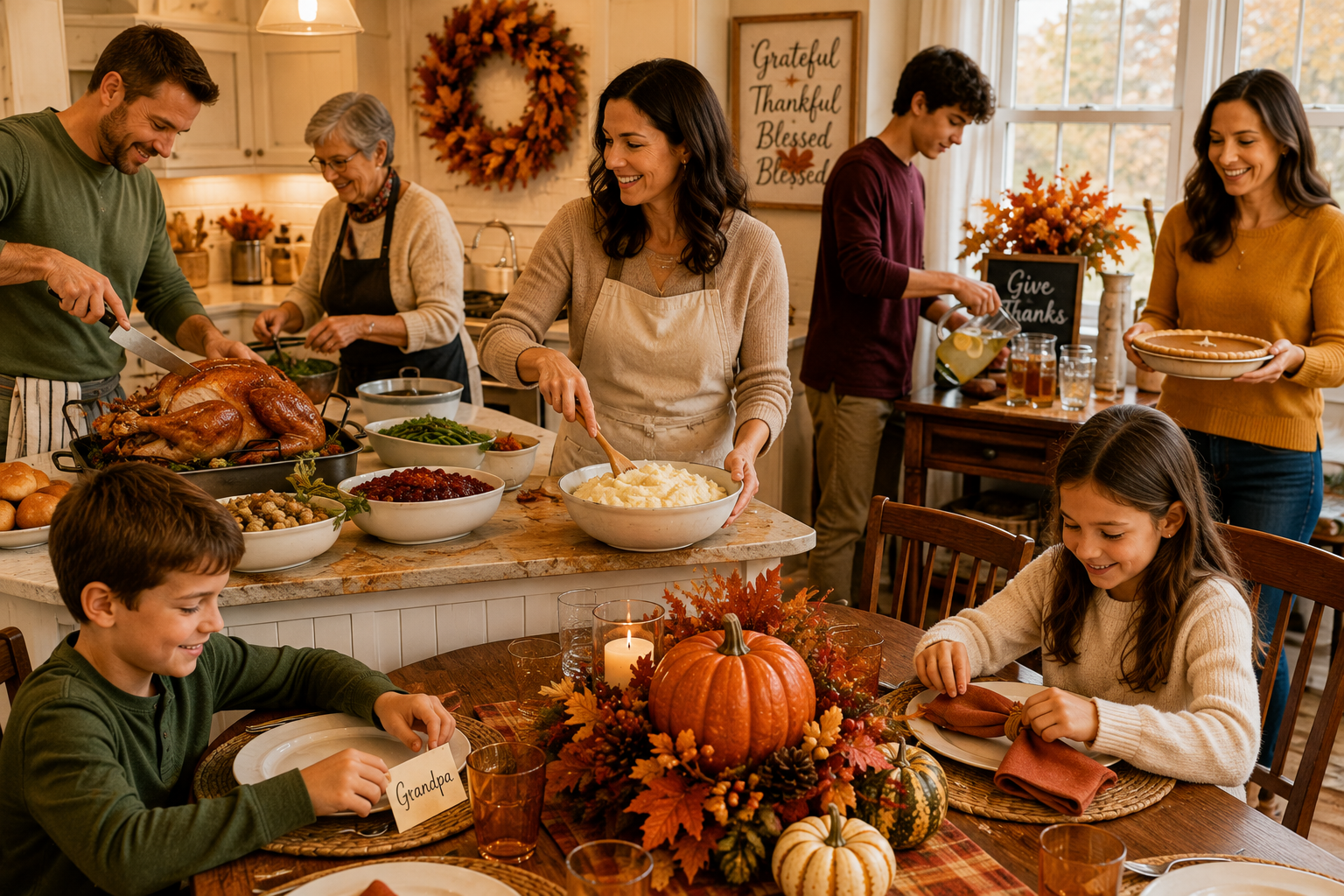
Clear dining area.
Collect glasses.
Fold chairs.
Pack leftovers.
Take trash out.
Organize coats.
Entertain children.
These jobs reduce your workload without placing more people in the cooking area.
Avoid Apologizing for the Size of Your Home
Your home does not need to be large to be welcoming.
Repeatedly saying:
“Sorry it is so small.”
“I wish we had more room.”
“This is probably too crowded.”
may make guests feel uncomfortable.
Focus instead on the warmth of the gathering.
A thoughtfully arranged small home can feel cozy, personal, and festive.
Embrace the Cozy Atmosphere
Small homes naturally encourage:
Conversation
Shared laughter
Family interaction
Intimacy
Togetherness
Use these qualities as strengths.
Soft lighting, comfortable seating, good food, and welcoming energy matter more than square footage.
Common Small-Home Thanksgiving Mistakes
Avoid these frequent problems:
Inviting more guests than the home can accommodate
Keeping unnecessary furniture in place
Preparing too many dishes
Allowing everyone into the kitchen
Using oversized decorations
Forgetting coat storage
Blocking walking paths
Serving beverages in the cooking area
Failing to plan oven use
Overcrowding the dining table
Ignoring accessibility
Leaving leftovers and dirty dishes out too long
Apologizing constantly for the home’s size
Most space problems can be reduced through early planning.
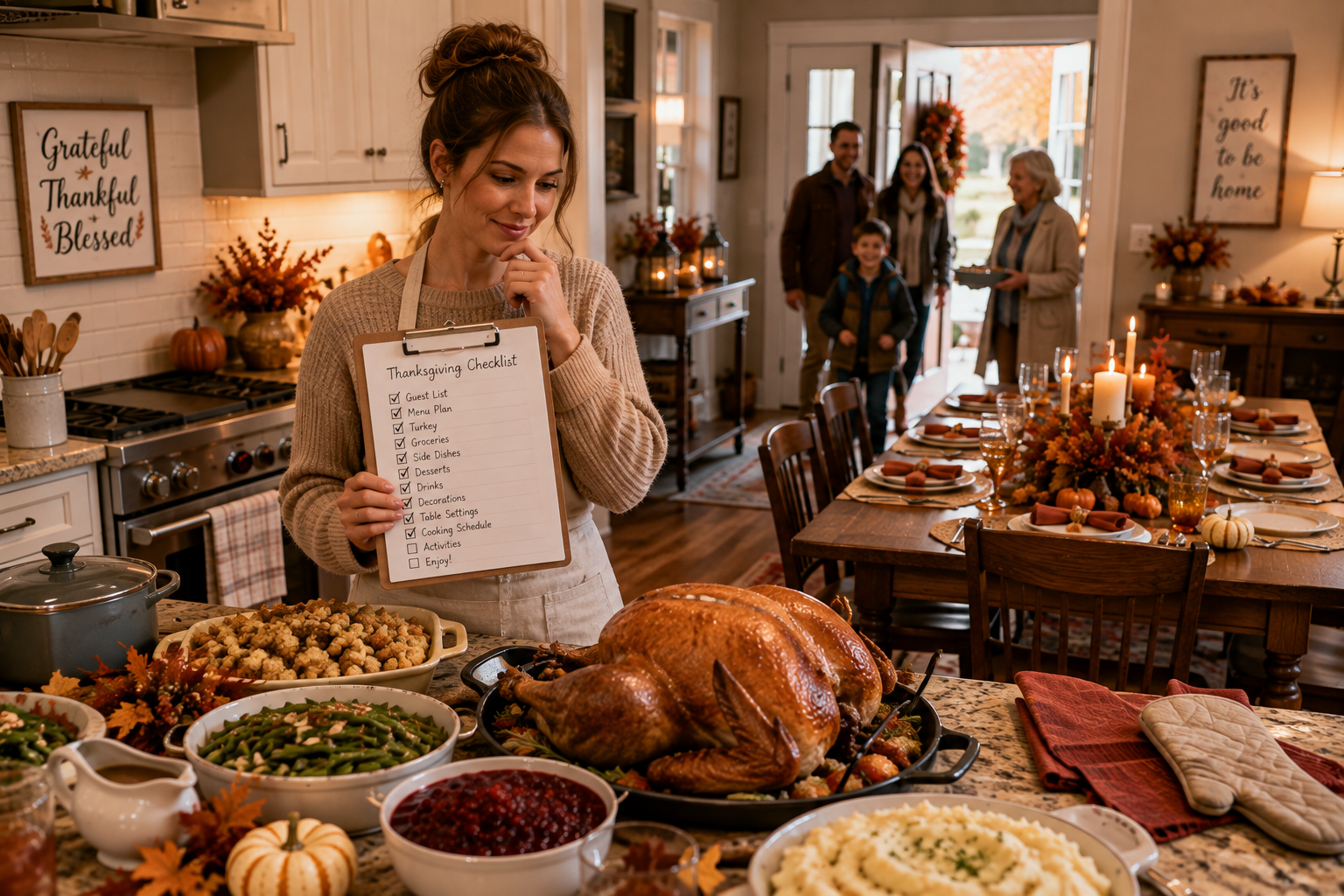
Small-Home Thanksgiving Checklist
Before Thanksgiving, confirm that you have:
Realistic guest count
Seating plan
Clear walking paths
Folding furniture, if needed
Manageable menu
Assigned guest dishes
Oven schedule
Refrigerator space
Beverage station
Buffet location
Coat area
Guest-ready bathroom
Child activity area
Leftover containers
Cleanup team
Parking instructions
A checklist helps you use the available space intentionally.
Frequently Asked Questions
How many people can I host in a small home?
The answer depends on the layout, seating, bathroom access, parking, and guest needs. Host only the number of people who can safely sit, eat, and move through the home without blocking pathways.
What is the best serving style for a small Thanksgiving?
A buffet usually works well because serving dishes remain off the dining table. Family-style service can also work when only a few lightweight dishes are placed at the table.
How can I create more seating?
Use folding chairs, benches, stools, TV trays, card tables, and a separate children’s table. Borrow furniture when possible and test it for stability before the event.
How can I cook Thanksgiving dinner in a small kitchen?
Simplify the menu, prepare dishes in advance, coordinate oven temperatures, use slow cookers and other appliances, and ask guests to bring ready-to-serve contributions.
Where should I put drinks?
Create a beverage station outside the kitchen. This reduces traffic near the oven and allows guests to serve themselves.
Is it acceptable to ask guests to bring food?
Yes. A coordinated potluck reduces kitchen demands and gives guests an opportunity to contribute. Assign specific categories so the meal remains balanced.
Final Thoughts
Hosting Thanksgiving in a small home requires creativity, but it does not require sacrificing comfort, generosity, or tradition.
Begin with a realistic guest count, simplify the menu, and remove anything that does not support the gathering. Use folding furniture, create separate food and beverage stations, prepare recipes in advance, and protect the kitchen from unnecessary traffic.
Most importantly, stop measuring hospitality by the size of your dining room.
Guests are far more likely to remember the warmth of the welcome, the conversations they shared, and the feeling of being included than the amount of space between their chairs.
A small home can create an intimate Thanksgiving filled with laughter, gratitude, and meaningful connections. With thoughtful planning, every available corner can support the celebration without making the day feel crowded or stressful.
Your home does not need to be large enough to impress everyone.
It only needs to feel welcoming enough that people are happy to gather there.