How to Delegate Thanksgiving Tasks Without Feeling Guilty
Affiliate Disclosure: This article may contain affiliate links. If you purchase Thanksgiving decorations, cookware, serving supplies, organizational tools, or other holiday essentials through links on our website, we may earn a small commission at no additional cost to you. Your support helps us continue creating helpful Thanksgiving resources, holiday planning guides, and seasonal inspiration.
For many people, Thanksgiving is a labor of love. Preparing a delicious meal, welcoming family and friends into your home, and creating lasting memories can be incredibly rewarding. However, many hosts unknowingly place the entire burden of the holiday on their own shoulders.
From shopping and cooking to decorating, cleaning, serving, entertaining children, and washing dishes afterward, one person often ends up working from sunrise until bedtime while everyone else enjoys the celebration.
The result is predictable—exhaustion.
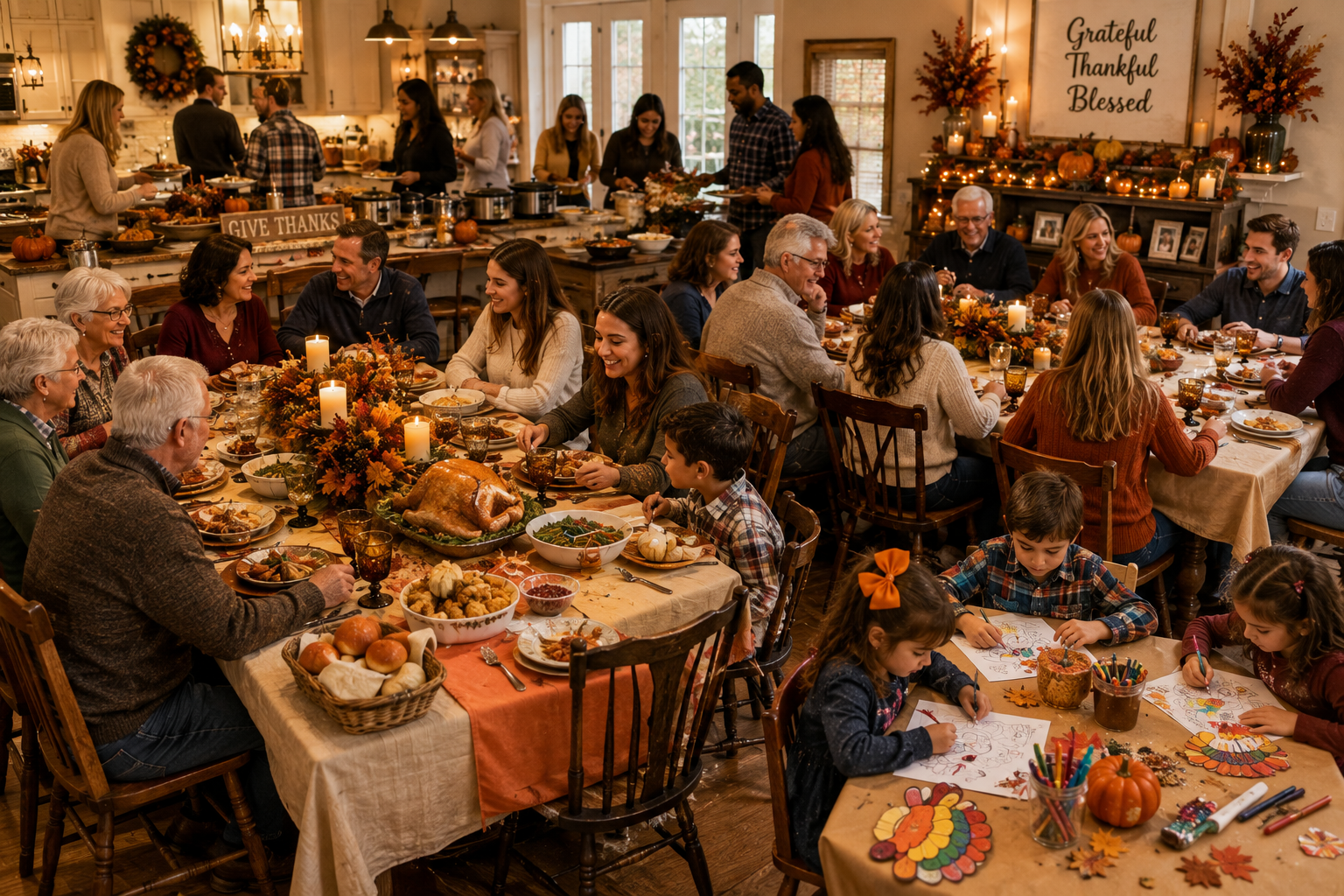
The truth is that hosting Thanksgiving does not mean doing everything yourself. In fact, the most successful Thanksgiving gatherings are usually team efforts where everyone contributes in meaningful ways.
Delegating tasks is not a sign of laziness or poor planning. It is a practical way to reduce stress, create a more enjoyable atmosphere, and allow everyone to participate in making the holiday special.
If you’ve ever felt guilty asking for help, this guide will show you how to delegate Thanksgiving responsibilities confidently while making family and friends feel included rather than burdened.
Why Hosts Feel Guilty About Asking for Help
Many people hesitate to delegate because they believe the host should handle everything.
Common thoughts include:
“It’s my house, so it’s my responsibility.”
“I don’t want to inconvenience anyone.”
“People expect me to do it all.”
“It’s easier if I just handle it myself.”
“Nobody will do it correctly.”
“I don’t want guests to feel like they’re working.”
These feelings are understandable, but they are often unnecessary.
Most guests genuinely appreciate the opportunity to contribute.
Helping creates a shared celebration rather than one person carrying the entire workload.
Hosting Does Not Mean Doing Everything
Being a great host means creating an enjoyable experience—not personally completing every task.
Good hosting includes:
Planning ahead
Welcoming guests
Creating a comfortable atmosphere
Coordinating the meal
Making people feel included
None of those responsibilities require peeling every potato or washing every dish yourself.
Think of yourself as the coordinator rather than the entire workforce.
Remember That Thanksgiving Is About Togetherness
Thanksgiving celebrates gratitude, generosity, and community.
Allowing others to contribute actually reflects the spirit of the holiday.
When family members help:
They feel included.
Traditions become shared.
New memories are created.
Children learn responsibility.
The workload becomes manageable.
Instead of seeing delegation as giving away responsibilities, view it as inviting others into the celebration.
Understand That Most Guests Want to Help
Many guests ask:
“What can I bring?”
“What can I do?”
“How can I help?”
Often the host replies:
“Oh, nothing! Just come!”
Although well intentioned, this response usually creates more work for the host while preventing guests from contributing.
If someone sincerely offers help, believe them.
People generally enjoy feeling useful.
Stop Trying to Be the Perfect Host
Perfection is one of the biggest obstacles to delegation.
If you believe:
Every dish must be homemade.
Every decoration must be flawless.
Every recipe must come from you.
Every detail must match perfectly.
…then asking for help becomes difficult.
Remember:
Guests came to spend time with you—not evaluate your hosting skills.
Warm hospitality matters far more than perfect execution.
Accept That People Will Do Things Differently
One reason many hosts avoid delegation is fear that others will not complete tasks exactly the way they would.
Someone else may:
Fold napkins differently.
Arrange the table another way.
Chop vegetables differently.
Load the dishwasher differently.
Prepare stuffing using another recipe.
Ask yourself:
“Does it truly matter?”
If the task is completed safely and contributes to the meal, small differences are rarely important.
Focus on the outcome rather than the exact method.
Delegate Based on Strengths
Assign tasks that match people’s abilities and interests.
For example:
The family baker might prepare desserts.
Someone who enjoys decorating can arrange the table.
A grill enthusiast might cook the turkey outdoors.
A relative who loves organizing can coordinate seating.
Children can make place cards.
Matching tasks to people’s strengths makes the experience more enjoyable for everyone.
Ask Early
Do not wait until Thanksgiving morning to request help.
Instead, ask several weeks in advance.
Early requests allow people to:
Plan ahead.
Shop for ingredients.
Prepare recipes.
Arrange schedules.
Bring necessary equipment.
People are much more likely to help when they have adequate notice.
Be Specific
Avoid saying:
“Can you help somehow?”
Instead say:
“Would you bring the pumpkin pie?”
“Could you prepare mashed potatoes?”
“Would you arrive thirty minutes early to help set the table?”
Specific requests are easier to accept than vague ones.
Give One Clear Assignment
Rather than overwhelming someone with multiple responsibilities, assign one primary task.
Assign categories rather than allowing everyone to choose independently.
This prevents duplicate dishes.
Create a Shared Menu List
Use a shared document, family group chat, or written list.
Include:
Dish
Person bringing it
Serving size
Arrival time
Special dietary notes
Everyone can quickly see what has already been assigned.
Let Guests Bring Store-Bought Items
Not everyone enjoys cooking.
Some guests may prefer bringing:
Bakery pie
Rolls
Drinks
Fruit tray
Cheese platter
Ice
Disposable containers
These contributions are just as valuable.
Avoid making people feel that homemade dishes are the only acceptable option.
Delegate Shopping
Grocery shopping is one of Thanksgiving’s largest tasks.
Someone could purchase:
Drinks
Dessert ingredients
Vegetables
Paper products
Ice
Flowers
Provide a clear shopping list.
This saves both time and energy.
Delegate Decorating
Decorating can begin days before Thanksgiving.
Helpers can:
Arrange centerpieces.
Place candles.
Set out pumpkins.
Hang wreaths.
Decorate the porch.
Arrange flowers.
Prepare place cards.
These tasks rarely require cooking knowledge.
Delegate Table Setting
Setting the table can take considerable time.
Ask someone to handle:
Plates
Glasses
Silverware
Napkins
Place cards
Centerpiece
Serving utensils
Provide a simple example if needed.
Otherwise, allow creativity.
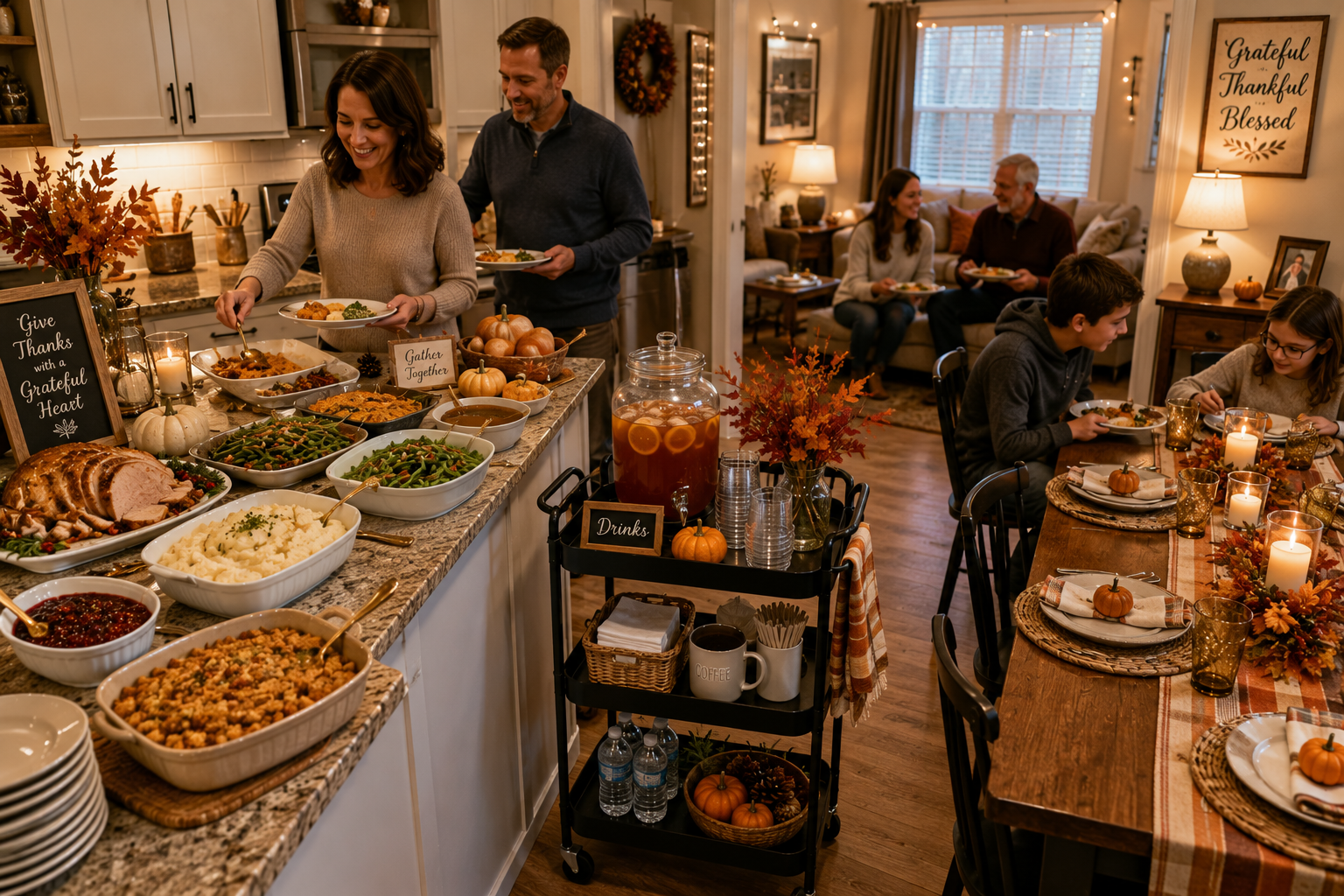
Delegate Beverage Service
Assign someone to manage:
Ice
Coffee
Tea
Water
Soft drinks
Apple cider
Wine, if served
A beverage station allows guests to help themselves while reducing interruptions during cooking.
Delegate Child Activities
Children often become restless while adults prepare dinner.
Assign one adult to organize:
Crafts
Coloring pages
Outdoor games
Movies
Story time
Simple scavenger hunts
Parents often appreciate having structured activities available.
Let Teenagers Help
Teenagers can handle many responsibilities.
Examples include:
Greeting guests
Carrying dishes
Filling drinks
Taking coats
Watching younger children
Serving desserts
Clearing tables
Organizing leftovers
Giving teenagers meaningful responsibilities builds confidence and responsibility.
Give Children Age-Appropriate Jobs
Young children enjoy participating.
Safe tasks include:
Folding napkins
Placing name cards
Decorating cookies
Carrying lightweight items
Arranging crayons for younger cousins
Helping with simple decorations
Always supervise children in the kitchen.
Keep them away from hot surfaces, sharp knives, and heavy cookware.
Let Someone Carve the Turkey
If another family member enjoys carving turkey, let them.
This allows you to:
Finish side dishes.
Prepare gravy.
Talk with guests.
Take a short break.
Delegating specialized tasks often improves timing.
Ask Someone to Photograph the Day
Hosts often appear in very few family photographs.
Ask someone to capture:
Food
Decorations
Family conversations
Group pictures
Children playing
Dessert
Cleanup laughs
You’ll be grateful to have memories that include you as well.
Delegate Music
One guest can manage:
Background playlist
Volume
Holiday music
Family favorites
This small responsibility helps maintain a welcoming atmosphere.
Delegate Greeting Guests
If you are finishing dinner when guests arrive, ask someone else to:
Welcome visitors.
Take coats.
Introduce guests.
Offer drinks.
Explain where appetizers are located.
You can continue cooking without feeling rushed.
Delegate Cleanup During Cooking
Cooking becomes easier when someone helps keep the kitchen organized.
A helper can:
Wash mixing bowls.
Load the dishwasher.
Empty trash.
Wipe counters.
Organize serving dishes.
A clean kitchen reduces stress later.
Create a Cleanup Team
Cleanup is much easier when shared.
Assign:
One person clears plates.
One stores leftovers.
One loads the dishwasher.
One washes cookware.
One dries dishes.
One wipes tables.
One empties trash.
Instead of one exhausted host cleaning for hours, everyone finishes quickly.
Don’t Feel Guilty About Accepting Help
Remember:
Helping often makes people feel valued.
Family traditions become stronger when everyone contributes.
Most guests would rather help for fifteen minutes than watch one person work all day.
Accept generosity with gratitude.
Thank People for Their Contributions
Simple appreciation goes a long way.
You might say:
“Thank you for bringing the pie.”
“The decorations look wonderful.”
“The kids loved your craft station.”
“I couldn’t have done this without your help.”
Acknowledging contributions encourages people to help again in future years.
Respect Different Financial Situations
Not everyone can contribute expensive dishes.
Offer flexible ways to help.
Someone might:
Bring bread.
Purchase ice.
Help clean.
Watch children.
Arrive early.
Stay late.
Every contribution has value.
Avoid comparing contributions by cost.
Don’t Micromanage
Once you’ve delegated a task, allow the person to complete it.
Avoid:
Constant corrections
Reorganizing their work
Taking the task back
Criticizing small details
Trust the people you invited to help.
Micromanaging discourages future participation.
Prepare Written Instructions
If someone is helping while you are busy, written instructions can be helpful.
For example:
When dinner will be served
Where serving dishes are located
Which foods need reheating
Coffee instructions
Dessert timing
Clear directions prevent repeated interruptions.
Build Thanksgiving Traditions Around Shared Responsibilities
Many families develop enjoyable traditions such as:
Grandpa always carves the turkey.
The grandchildren decorate the table.
One aunt brings stuffing every year.
One cousin bakes pies.
Another family member hosts children’s games.
These traditions become cherished parts of Thanksgiving.
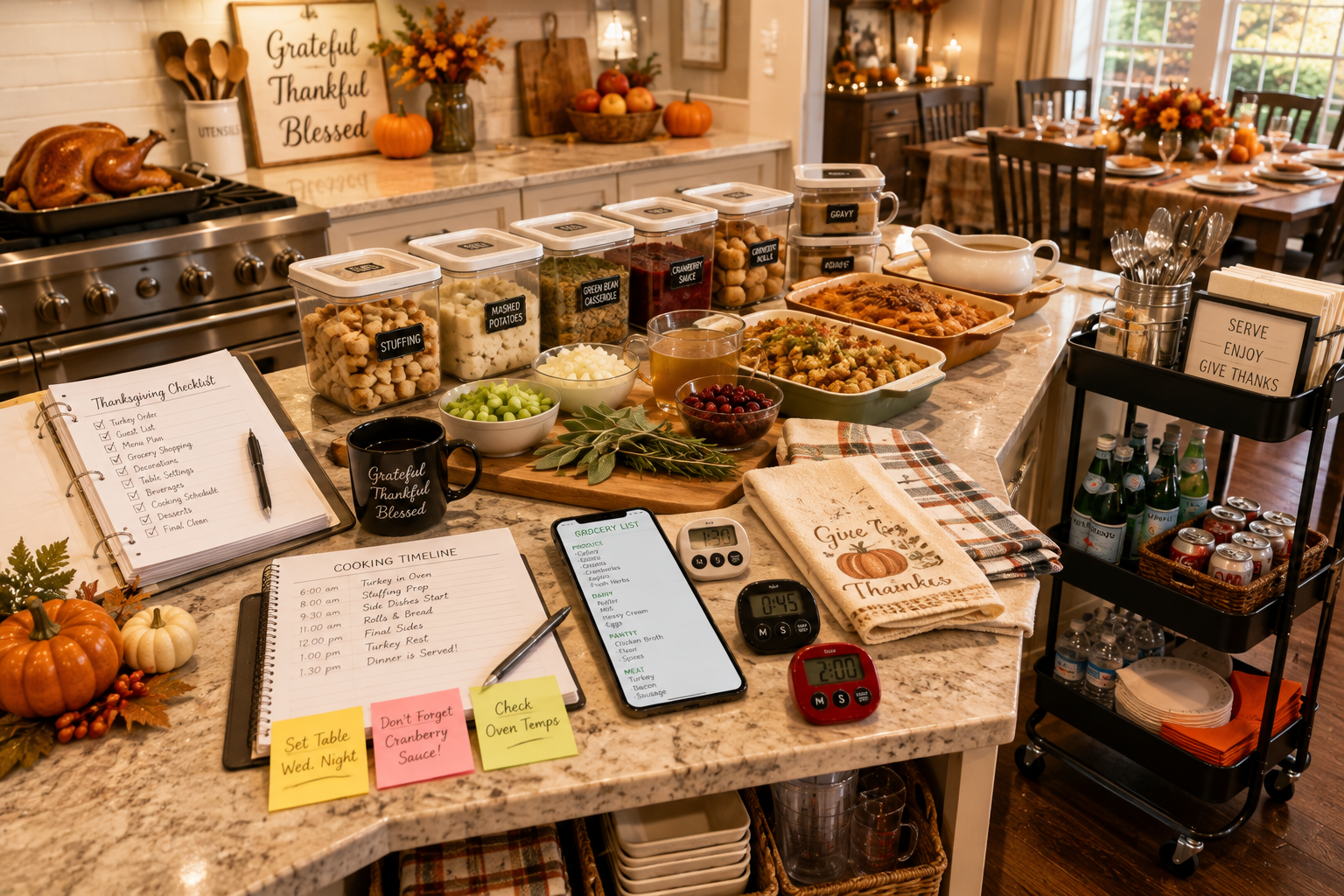
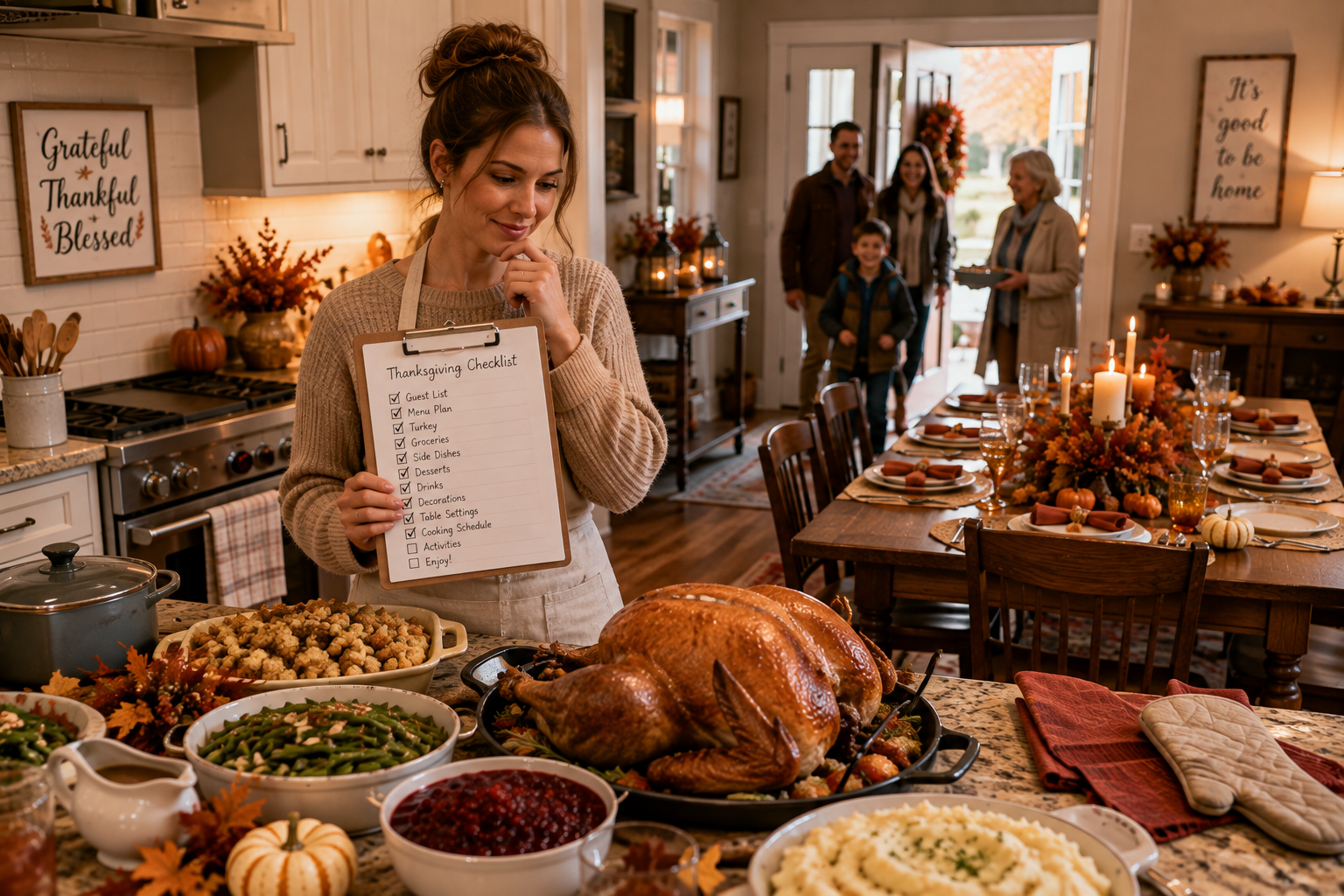
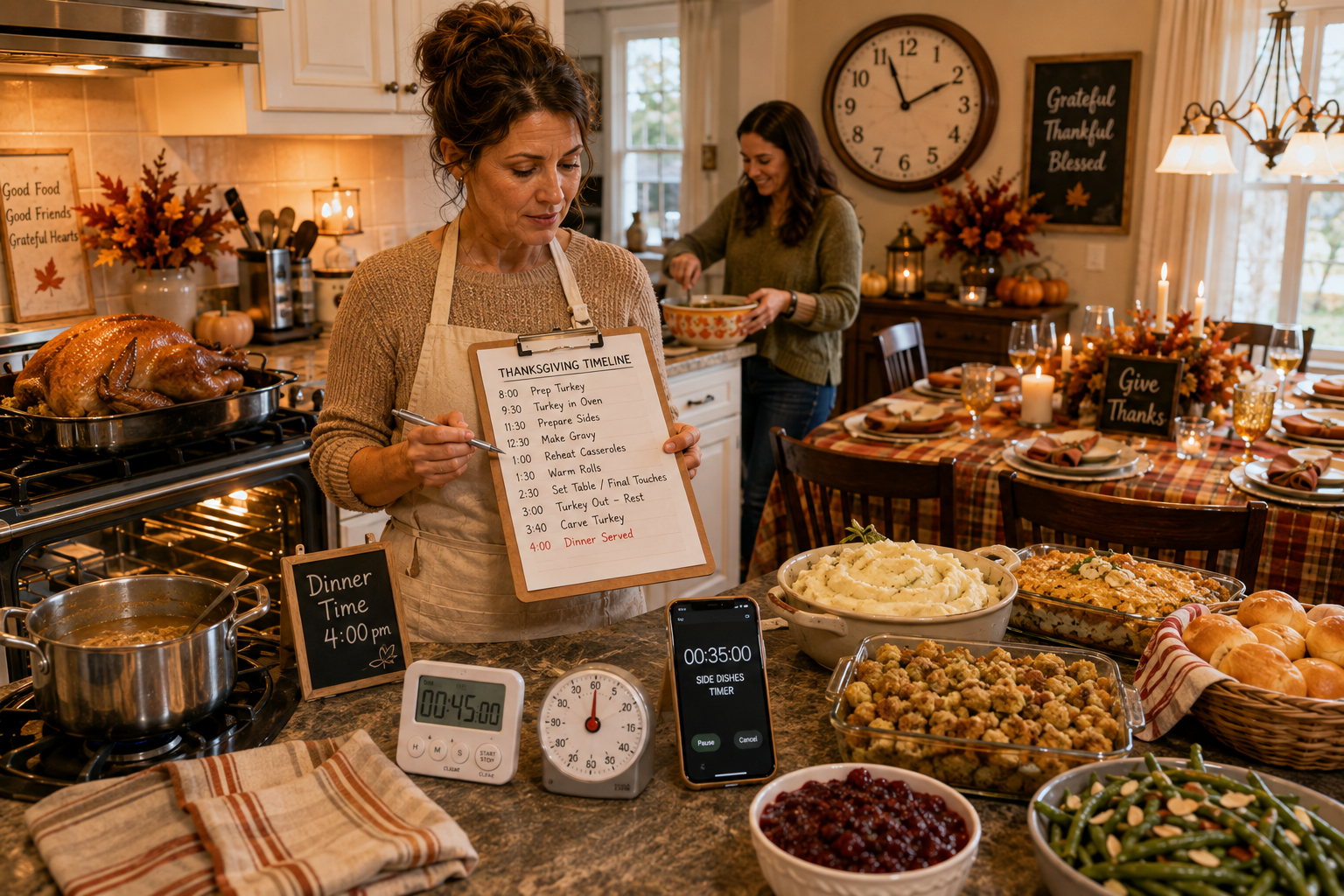
Create a Thanksgiving Task List
Instead of mentally tracking everything, write down every responsibility.
Examples include:
Before Thanksgiving
Shopping
Decorating
Cleaning
Preparing desserts
Grocery pickup
Thanksgiving Morning
Turkey preparation
Table setup
Beverage station
Appetizers
Child activities
During Dinner
Beverage refills
Serving bread
Photographing family
Clearing empty dishes
After Dinner
Leftovers
Cleanup
Coffee
Dessert
Dishwashing
Looking at the list often reveals many tasks that can easily be delegated.
Use Technology to Coordinate
Family group chats can simplify planning.
Share:
Menu assignments
Shopping reminders
Arrival times
Dietary information
Parking instructions
Last-minute updates
Everyone stays informed without multiple phone calls.
Accept That Good Enough Is Good Enough
Your goal is not perfection.
Your goal is creating:
Good food
Warm hospitality
Meaningful conversations
Lasting memories
Delegation helps make those things possible.
Benefits of Delegating Thanksgiving Tasks
Sharing responsibilities often results in:
Less stress
Better organization
More family interaction
Better time management
Less exhaustion
More enjoyable conversations
Stronger traditions
Greater appreciation
Better memories
Happier host
Everyone wins.
Common Delegation Mistakes
Avoid these common problems:
Waiting too long to ask.
Giving vague instructions.
Assigning too much to one person.
Refusing all offers of help.
Micromanaging.
Criticizing contributions.
Expecting perfection.
Forgetting to say thank you.
Assuming people know what needs to be done.
Believing good hosts do everything alone.
Frequently Asked Questions
Is it rude to ask guests to bring food?
Not at all. Many guests appreciate the opportunity to contribute. Be clear about what is needed so the menu remains balanced.
What if someone says no?
Respect their answer and ask someone else if necessary. People may have financial, scheduling, or personal reasons for declining.
How do I avoid duplicate dishes?
Create a shared menu list and assign categories instead of allowing everyone to choose independently.
What if someone brings something I didn’t ask for?
Accept the contribution graciously. If it fits the meal, serve it. If not, thank them sincerely and enjoy it later. The gesture is more important than perfect menu planning.
Should children help with Thanksgiving?
Yes, with age-appropriate tasks and adult supervision. Participating helps children feel included while teaching responsibility and family traditions.
How can I stop feeling guilty about asking for help?
Remember that Thanksgiving celebrates community and gratitude. Allowing others to contribute gives them an opportunity to participate in the celebration rather than simply observe it.
Final Thoughts
Hosting Thanksgiving should not leave you too exhausted to enjoy the holiday you’ve worked so hard to create.
Delegating responsibilities is not about avoiding work—it’s about sharing the experience. When family and friends contribute their time, talents, recipes, and enthusiasm, Thanksgiving becomes a celebration built by everyone rather than a performance carried by one person.
Don’t be afraid to ask for help. Most people genuinely want to contribute, whether that means bringing a favorite dessert, setting the table, entertaining the children, carving the turkey, or helping with cleanup.
Years from now, your family probably won’t remember who folded the napkins or who washed the dishes. They’ll remember laughing together in the kitchen, sharing favorite recipes, working side by side, and enjoying a meal that everyone helped make possible.
The best Thanksgiving isn’t the one where the host does everything.
It’s the one where everyone feels like they were part of creating something special together.