
Affiliate Disclaimer: This post may contain affiliate links. If you make a purchase through one of these links, The Shopping Plaza may earn a commission at no additional cost to you.
When the Thanksgiving You Planned Is Not the Thanksgiving You Get
You can plan Thanksgiving for weeks and still watch the day take an unexpected turn.
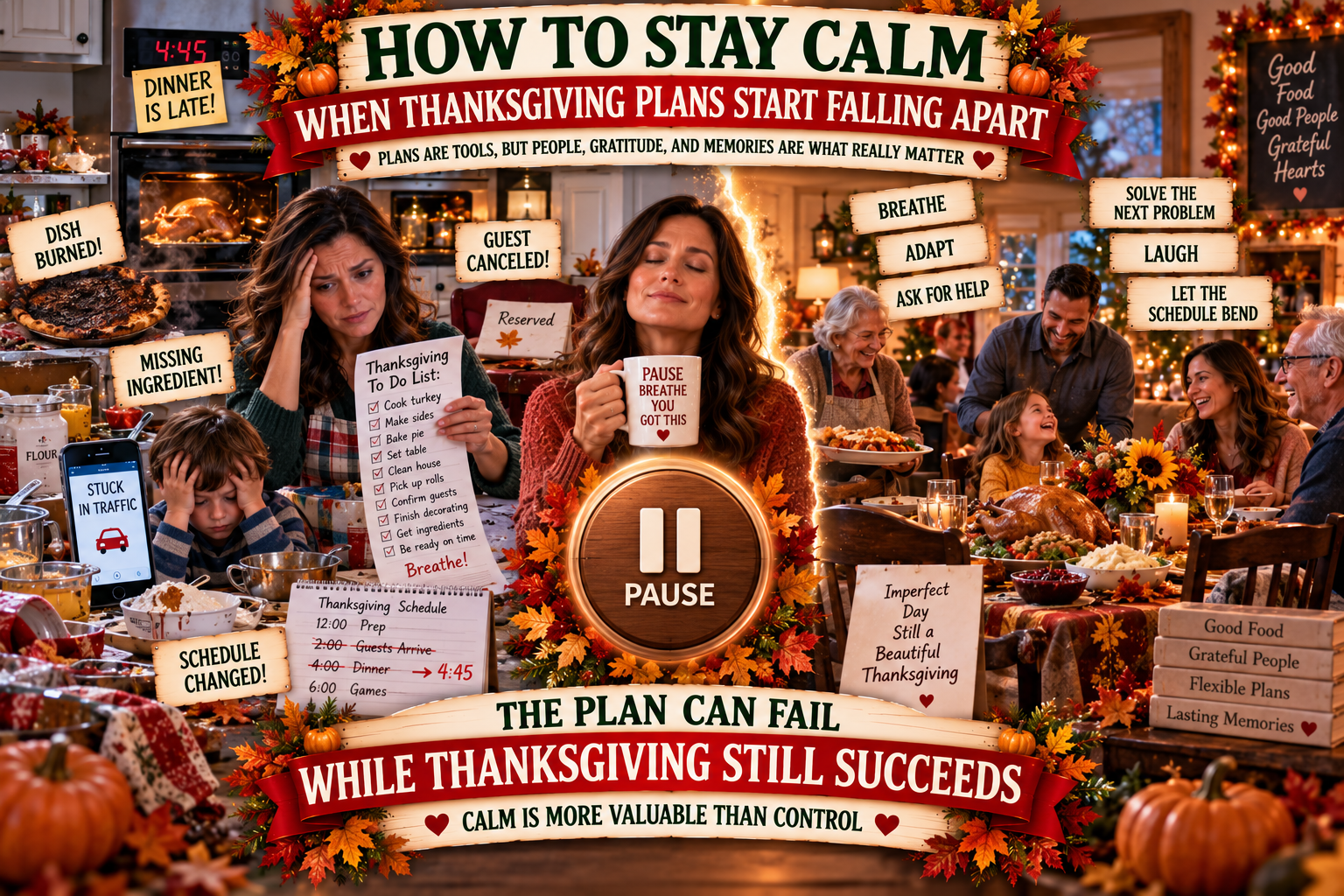
A guest cancels. Someone gets stuck in traffic. The turkey takes longer than expected. A side dish burns. The weather changes travel plans. A child becomes overwhelmed. Someone forgets an important ingredient. Family tension appears at exactly the wrong moment.
Suddenly, the holiday you carefully pictured begins to look very different.
That is often when stress takes over.
The important thing to remember is that a plan falling apart does not mean Thanksgiving itself is ruined.
Plans are tools. They help us organize the day, but they are not the meaning of the day.
Thanksgiving can survive a late dinner, a missing dish, a changed guest list, or an unexpected inconvenience.
The challenge is staying calm enough to recognize that the holiday still has something good to offer.
You may not be able to rescue the original plan.
You can still protect the spirit of the day.
Pause Before You React
When something goes wrong, the first emotional reaction is often stronger than the situation requires.
Before immediately trying to fix everything, pause.
Take one slow breath. Give yourself a few seconds to understand what actually happened.
A small pause creates space between the problem and your response.
That space can prevent frustration from becoming panic, anger, or an argument.
Calm does not mean you do not care.
It means you are giving yourself a better chance to respond effectively.
Ask Whether It Is a Problem or an Inconvenience
Not every Thanksgiving disruption is an emergency.
A burned dish is frustrating.
A guest arriving thirty minutes late is inconvenient.
A missing decoration is disappointing.
But none of those things necessarily require the emotional response of a crisis.
Ask yourself, “Is this truly a serious problem, or is it an inconvenience?”
That question can immediately reduce the size of the moment.
Save your strongest emotional energy for problems that genuinely deserve it.
Solve the Next Problem, Not the Entire Day
When plans begin unraveling, the mind often jumps ahead.
If dinner is late, you start imagining everything else going wrong too.
Instead, focus on the next manageable problem.
What needs attention right now?
Maybe the answer is turning down the oven, calling a guest, finding a substitute ingredient, or moving dinner back thirty minutes.
Handle one thing.
Then handle the next.
You do not need to repair the entire Thanksgiving in a single moment.
Let the Schedule Bend
A Thanksgiving schedule can be useful, but it should not become a prison.
If dinner was supposed to be served at 4:00 and it will not be ready until 4:45, adjust.
Put out an appetizer. Start a conversation. Watch part of the game. Let people relax.
The clock does not determine whether Thanksgiving is successful.
People usually remember the meal and the company more than the exact minute everyone sat down.
Create a Backup Plan Before You Need One
Some stress can be reduced by deciding in advance what you will do if common problems occur.
Keep a simple appetizer available if dinner runs late. Have an easy backup side dish. Know which store or restaurant might be open if something essential is forgotten.
If travel is involved, discuss what happens if weather or traffic changes the schedule.
A backup plan does not invite problems.
It simply means one unexpected event will not require you to invent a solution while already stressed.
Do Not Turn a Cooking Mistake Into a Personal Failure
Food carries a lot of emotional pressure on Thanksgiving.
When a recipe fails, it can feel strangely personal.
It is not.
A burned pie does not mean you ruined Thanksgiving.
A dry turkey does not erase the work you put into the meal.
Cooking involves variables, and mistakes happen.
Fix what you can. Replace what is easy to replace. Laugh about what cannot be saved.
The people at your table came for more than one recipe.
Ask for Help Instead of Trying to Rescue Everything Alone
When something goes wrong, capable people often respond by taking on even more responsibility.
That can quickly turn stress into overwhelm.
Ask for help.
Someone can run to the store. Another person can watch the stove. Someone else can entertain the children, set the table, or call the delayed guests.
A Thanksgiving problem does not automatically belong to the host alone.
Let the people around you become part of the solution.
Do Not Blame Someone While You Are Still Upset
Stress makes blame tempting.
Who forgot the ingredient?
Who changed the plan?
Who should have left earlier?
Those questions may feel important in the moment, but they rarely solve the immediate problem.
Handle the situation first.
If a conversation about responsibility is genuinely necessary, have it later when emotions are lower.
Thanksgiving dinner is usually not improved by turning a mistake into a courtroom.
Use Humor When the Situation Allows It
Some holiday disasters become family stories precisely because they were imperfect.
The forgotten rolls, the strange substitute ingredient, the turkey that took forever, or the dessert that collapsed may become funny later.
Sometimes you can decide to make it funny now.
Humor changes the emotional temperature of a room.
If the problem is harmless and fixable, laughter may be a better response than frustration.
Prepare for Last-Minute Cancellations
A guest may become sick, encounter travel trouble, or have an unexpected responsibility.
It can be disappointing, especially when you were excited to see them.
Try not to interpret every cancellation personally.
Change the seating. Save a plate if appropriate. Call or video chat later.
The gathering may be smaller than expected, but the people who are present still deserve your attention.
Do not let the absence of one person make you overlook everyone who made it to the table.
Stay Flexible When Travel Plans Change
Holiday travel is vulnerable to traffic, weather, delays, and unexpected complications.
If plans change, focus first on safety.
A meal can be reheated.
A gathering can start later.
A visit can sometimes happen another day.
Trying to preserve the original schedule at any cost can create more stress than the delay itself.
People matter more than punctuality.
Keep Family Tension From Becoming the Main Event
A disrupted plan can make everyone less patient.
When people are hungry, tired, or frustrated, an ordinary disagreement can escalate quickly.
If tension begins rising, slow the situation down.
Change the subject. Separate people for a few minutes. Give everyone something practical to do. Take a break.
You do not have to resolve years of family history while waiting for the mashed potatoes.
Protect the gathering from becoming centered on a conflict that does not need to be solved today.
Lower Your Voice When the Room Gets Louder
When stress rises, people often speak faster and louder.
Try doing the opposite.
Slow your speech.
Lower your voice.
Use shorter, clearer sentences.
A calm tone can influence the emotional pace of the people around you.
You cannot control everyone else’s reaction, but you can refuse to add more intensity to the room.
Give Children Extra Grace When Plans Change
Children may struggle when Thanksgiving stops following the expected schedule.
Dinner is late. They are hungry. The house is crowded. Their normal routine is gone.
A meltdown may be a sign of exhaustion or overstimulation rather than bad behavior.
Offer a snack when appropriate. Find a quieter space. Give them a familiar activity. Adjust expectations.
Helping a child regulate can prevent one difficult moment from becoming a source of stress for the entire family.
Protect One Tradition if Everything Else Changes
If the day is becoming unpredictable, choose one meaningful tradition to preserve.
Maybe everyone still shares what they are thankful for.
Perhaps you still serve one favorite recipe, watch the parade, play a family game, or call someone important.
One familiar tradition can create a sense of stability even when other plans change.
You do not need to save every detail.
Sometimes preserving one meaningful piece is enough.
Remember What Your Guests Actually Need
Guests usually need much less than stressed hosts imagine.
They need to feel welcome.
They need something to eat eventually.
They need a place to sit and people to talk with.
They do not require flawless execution.
If dinner is late, tell them.
If a dish failed, laugh about it.
People often become more relaxed when the host stops pretending everything is perfectly under control.
Take a Five-Minute Reset
If you feel yourself becoming overwhelmed, step away briefly if you can.
Go to a quiet room.
Drink water.
Take several slow breaths.
Remind yourself of what is still going right.
Five minutes will not solve every problem.
It may change the way you return to them.
A reset is especially useful before you say something out of frustration that you will later regret.
Separate the Holiday From the Plan
This distinction can change everything.
The plan is the menu, schedule, guest list, decorations, travel arrangements, and activities.
The holiday is the people, gratitude, connection, memories, and time together.
The plan can fail while the holiday succeeds.
Once you understand that, changes become less threatening.
You are not trying to save every detail.
You are trying to protect what the details were supposed to create.
Look for the Story You May Laugh About Later
When something unexpected happens, imagine telling the story next Thanksgiving.
Sometimes perspective appears when you picture the future.
The disaster that feels enormous today may eventually become, “Remember the year when…?”
That does not make every problem trivial.
It simply reminds you that temporary chaos often becomes part of a family’s history rather than evidence that the holiday failed.
Practice Gratitude in the Middle of the Mess
Gratitude is easiest when everything is going well.
It may be more powerful when things are not.
When plans start falling apart, identify one thing that is still good.
Someone showed up to help.
There is still food.
People are safe.
You are together.
A problem is being solved.
Gratitude does not erase frustration.
It keeps frustration from becoming the only thing you can see.
Know When to Abandon the Original Plan
Sometimes the calmest decision is to stop trying to force the original plan to work.
Order food.
Change the menu.
Cancel the activity.
Move the gathering.
Serve dessert first.
There is no prize for preserving a plan that no longer makes sense.
Adaptability is not failure.
It is the ability to recognize that the goal matters more than the method.
Do Not Let One Bad Hour Define the Entire Day
Thanksgiving may contain a difficult hour.
Maybe something breaks, an argument happens, or dinner preparation becomes chaotic.
That hour is not automatically the whole holiday.
Give the day another chance.
Reset the room. Start a new conversation. Serve the meal. Put on music. Take a walk.
A bad moment can remain a moment if you do not keep carrying it forward.
Finish the Day by Remembering What Went Right
At the end of Thanksgiving, your mind may naturally replay the problems.
Deliberately remember the successes too.
What made you smile?
Who helped?
What tasted good?
Which conversation mattered?
What unexpected moment became enjoyable?
A balanced memory keeps imperfections from rewriting the entire story of the day.
Calm Is More Valuable Than Control
Thanksgiving plans will sometimes fall apart.
That is true no matter how organized, prepared, or experienced you are.
You can control the grocery list.
You cannot control traffic.
You can plan the meal.
You cannot guarantee every recipe.
You can invite people.
You cannot control everyone’s mood.
Trying to control every variable creates a battle you cannot win.
Calm gives you something more useful.
It allows you to adapt.
It helps you solve the next problem without turning it into five more.
It reminds the people around you that an inconvenience does not have to become a crisis.
And most importantly, it helps you remain present enough to experience the holiday that still exists underneath the changed plans.
Maybe Thanksgiving dinner happens an hour late.
Maybe someone important cannot come.
Maybe the dessert comes from a store because the homemade version did not survive.
Maybe everyone ends up laughing around a table that looks nothing like the one you imagined.
That can still be Thanksgiving.
The goal was never really the schedule.
The goal was never the perfect meal.
The goal was never proving that you could control an entire holiday.
The goal was gathering, appreciating, connecting, remembering, and sharing what you could.
So when the plan begins falling apart, breathe.
Ask what matters now.
Solve what you can.
Release what you cannot.
Accept help.
Change the plan when necessary.
And look around.
The Thanksgiving you planned may be disappearing.
But another Thanksgiving – imperfect, unexpected, and possibly memorable in an entirely different way – may be taking its place.
Stay calm enough to let it.