
Affiliate Disclosure: This article may contain affiliate links. If you purchase Halloween makeup, brushes, costumes, or beauty products through links on our website, we may earn a small commission at no additional cost to you. Your support helps us continue creating helpful Halloween resources, seasonal guides, and family-friendly activity ideas.
Halloween makeup can completely transform an ordinary costume into something unforgettable. Whether you’re becoming a spooky skeleton, glamorous vampire, wicked witch, creepy zombie, colorful clown, or mystical fairy, makeup is often what brings the character to life.
If you’ve never created a Halloween makeup look before, it can seem overwhelming. Social media is filled with incredibly detailed special effects makeup that appears to require professional training. Fortunately, you don’t need advanced skills or expensive products to create an impressive Halloween look.
With a few basic supplies, some patience, and beginner-friendly techniques, anyone can create Halloween makeup they’ll be excited to show off.
This guide will help beginners learn the fundamentals of Halloween makeup while offering practical tips for creating fun, safe, and creative looks.
Why Halloween Makeup Makes a Difference
Even a simple costume becomes more convincing with the right makeup.
Halloween makeup helps:
- Complete your costume
- Add personality
- Create dramatic effects
- Highlight facial features
- Improve photographs
- Express creativity
- Build confidence
- Make homemade costumes look more realistic
Sometimes great makeup can become the centerpiece of the entire costume.
Start with Clean Skin
Every successful makeup application begins with clean skin.
Before applying makeup:
- Wash your face.
- Dry it completely.
- Remove oils and dirt.
- Tie back long hair.
- Apply a lightweight moisturizer if your skin feels dry.
Clean skin helps makeup apply more evenly and last longer.
Choose Skin-Safe Products
Always use cosmetics intended for use on the face.
Choose products labeled as:
- Cosmetic grade
- Face paint
- Skin-safe
- Dermatologist tested (when available)
- Appropriate for sensitive skin, if needed
Avoid using:
- Acrylic paint
- Craft paint
- Permanent markers
- Spray paint
- Unknown pigments
- Products not intended for skin
These materials may irritate or damage the skin.
Perform a Patch Test
Even high-quality cosmetics can occasionally cause irritation.
Before Halloween:
- Apply a small amount of the product to your inner arm or another small area of skin.
- Wait at least 24 hours.
- Watch for redness, itching, swelling, or irritation.
If irritation develops, discontinue use and choose a different product.
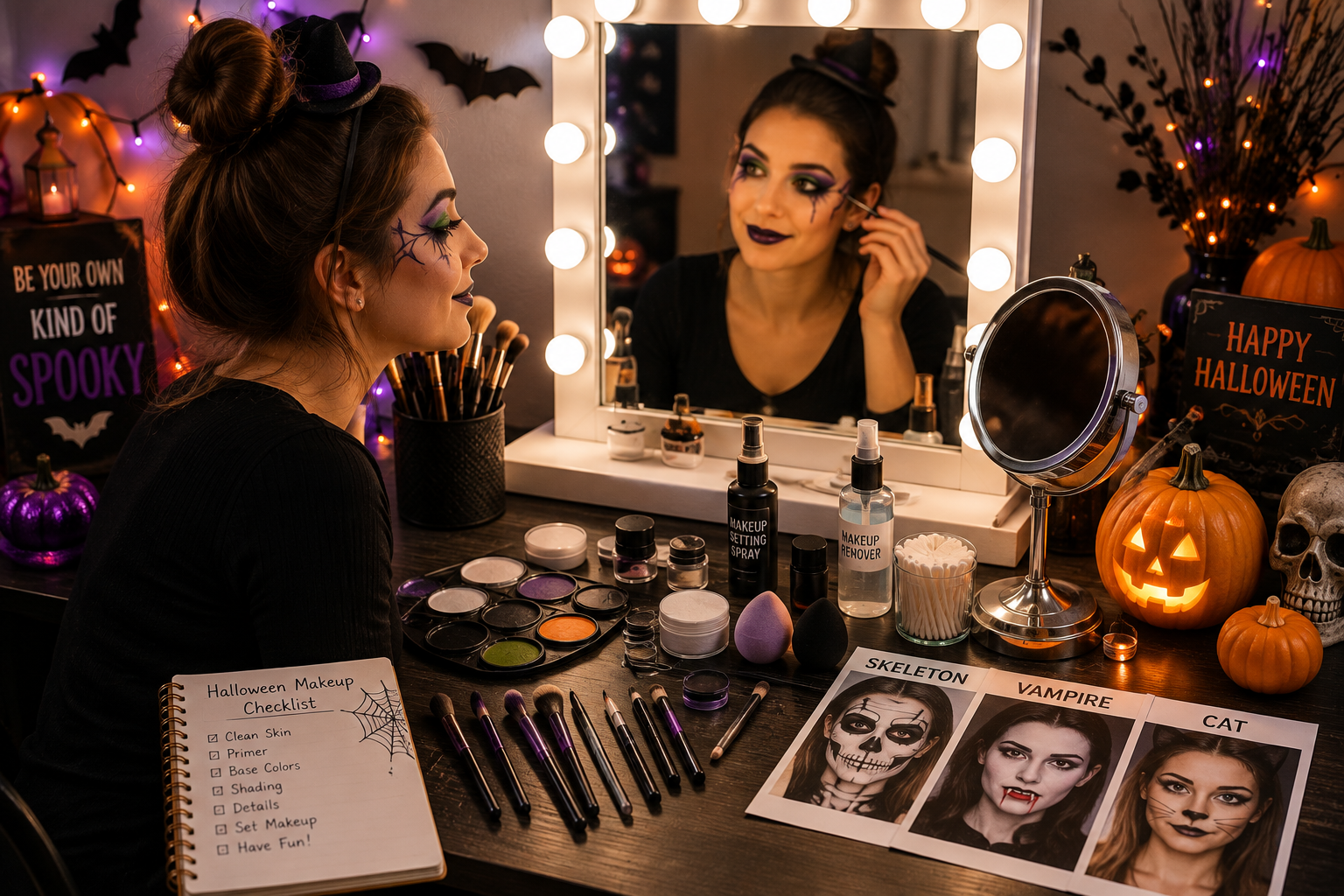
Gather Your Supplies
Basic beginner supplies include:
- Face paint
- Makeup sponges
- Brushes
- Cosmetic blending sponge
- Setting powder
- Setting spray
- Eyeliner
- Mascara
- Lip color
- Makeup remover
- Cotton pads
- Cotton swabs
- Mirror
- Good lighting
A few quality tools often produce better results than many inexpensive ones.
Work in Good Lighting
Natural daylight is ideal whenever possible.
If applying makeup indoors, use bright lighting that allows you to clearly see:
- Color blending
- Symmetry
- Fine details
- Missed areas
Poor lighting often leads to uneven makeup.
Begin with Simple Designs
Do not try complicated movie-quality special effects for your first Halloween.
Good beginner looks include:
- Skeleton
- Vampire
- Witch
- Cat
- Scarecrow
- Pumpkin
- Pirate
- Zombie
- Devil
- Fairy
Master simple techniques before attempting advanced designs.
Use Reference Photos
Keep a photo nearby while applying makeup.
Reference pictures help you:
- Match colors
- Maintain symmetry
- Remember details
- Stay focused
Many beginners find it easier to follow one clear design rather than combining several ideas.
Apply Makeup in Thin Layers
Applying thick makeup all at once often causes:
- Cracking
- Smudging
- Uneven texture
- Longer drying time
Instead:
- Apply one thin layer.
- Allow it to dry.
- Add another layer if needed.
Multiple thin layers usually create a smoother finish.
Blend Thoroughly
One of the biggest differences between beginner and professional-looking makeup is blending.
Blend:
- Edges
- Shadows
- Highlights
- Color transitions
Harsh lines rarely look natural unless intentionally part of the design.
Set Cream Makeup
If using cream makeup, finish with:
- Setting powder
- Setting spray
This helps reduce:
- Smudging
- Sweating
- Transfer onto costumes
- Shine
Proper setting helps makeup last through Halloween parties and trick-or-treating.
Practice Before Halloween
Avoid trying your makeup for the first time minutes before leaving.
Practice several days earlier.
This allows you to:
- Learn the steps.
- Time yourself.
- Improve mistakes.
- Decide which products work best.
Your Halloween will be much less stressful.
Beginner Skeleton Makeup
Skeleton makeup is surprisingly easy.
Basic steps include:
- White face base
- Black eye sockets
- Black nose
- Teeth drawn over the lips
- Shading around cheekbones
Even simple skeleton designs look impressive.
Beginner Vampire Makeup
Vampires remain Halloween classics.
Use:
- Pale foundation
- Dark eye shadow
- Black eyeliner
- Deep red lipstick
- Small fake blood accents (optional)
Less is often more.
A subtle vampire can appear more elegant than an overly dramatic one.
Beginner Zombie Makeup
Zombie makeup focuses on texture and uneven coloring.
Try using:
- Gray face paint
- Purple under-eye shading
- Dark contouring
- Small amounts of fake dirt
- Torn clothing
Remember that zombies rarely look perfectly symmetrical.
Beginner Witch Makeup
A witch costume becomes much more convincing with makeup.
Consider:
- Green accents (optional)
- Dark eyeliner
- Purple eye shadow
- Dramatic eyebrows
- Dark lipstick
- Highlighted cheekbones
Modern witches can be glamorous, mysterious, or traditional.
Easy Cat Makeup
One of the simplest Halloween looks.
Add:
- Black nose
- Whiskers
- Cat-eye eyeliner
- Soft shading
- Optional ears
This look requires very little face paint.
Cute Pumpkin Makeup
Pumpkin-inspired makeup works well for all ages.
Use:
- Orange face paint
- Black outlining
- Green stem accents
- Glitter (cosmetic-grade)
- Smiling jack-o’-lantern face
Children especially enjoy colorful pumpkin looks.
Fairy Makeup
Fairy makeup emphasizes sparkle and color.
Use:
- Soft pastel eye shadow
- Cosmetic glitter
- Rhinestones designed for skin
- Pink blush
- Highlighter
Avoid placing glitter too close to the eyes unless it is specifically labeled as eye-safe.
Pirate Makeup
Pirate makeup is mostly created with simple details.
Add:
- Eyeliner beard stubble
- Scar
- Smoky eyes
- Weathered shading
Complete the look with a hat and bandana.
Scarecrow Makeup
Scarecrows are excellent beginner costumes.
Key features include:
- Triangle nose
- Faux stitched smile
- Rosy cheeks
- Straw-colored eye shadow
- Freckles
This cheerful design works well for children and adults.
Use Makeup Sponges
Sponges help create:
- Smooth foundations
- Even blending
- Soft shading
Dampen the sponge slightly before use if recommended for your product.
Avoid rubbing aggressively.
Keep Brushes Clean
Dirty brushes may:
- Mix unwanted colors
- Cause uneven application
- Transfer bacteria
- Reduce makeup quality
Wash reusable brushes regularly according to the manufacturer’s instructions.
Use Cosmetic Glitter Carefully
Only use glitter labeled for cosmetic use.
Craft glitter may have sharp edges that can irritate the skin or eyes.
Apply glitter with:
- Cosmetic adhesive
- Glitter gel
- Makeup primer
Never use super glue or craft glue on skin.
Be Careful Around the Eyes
The eye area is especially sensitive.
Avoid getting makeup:
- Inside the eyes
- Under contact lenses
- Too close to the waterline unless the product is specifically intended for that use
If irritation occurs:
- Remove the makeup.
- Rinse the eyes with clean water.
- Stop using the product.
Seek medical advice if irritation persists or is severe.
Add Small Details Last
After finishing the main makeup:
Add:
- Teeth
- Wrinkles
- Scars
- Freckles
- Spider webs
- Veins
- Eyelashes
These finishing touches often create the biggest visual impact.
Don’t Forget the Neck
A beautifully painted face can lose its effect if the neck remains a different color.
Blend makeup onto:
- Neck
- Jawline
- Ears (when appropriate)
- Hairline
This creates a more natural transition.
Coordinate Makeup with Your Costume
Your makeup should complement your clothing.
Match colors whenever possible.
Examples:
- Purple makeup with witch costume
- Green details with monster
- Black-and-white skeleton
- Red accents with vampire
A coordinated appearance always looks more polished.
Take Breaks if Needed
Complex designs may require:
- One to two hours
- Multiple layers
- Careful detailing
If your hands become tired, take short breaks before continuing.
Remove Makeup Gently
Never sleep in Halloween makeup.
Use:
- Makeup remover
- Micellar water
- Cleansing balm
- Gentle facial cleanser
Wash thoroughly.
Finish with moisturizer to help restore your skin.
Halloween Makeup for Children
Children usually need simpler designs.
Good options include:
- Butterfly
- Pumpkin
- Cat
- Friendly ghost
- Tiger
- Superhero mask
- Rainbow skeleton
- Smiling bat
Keep designs fun rather than frightening.
Use products specifically intended for children’s skin whenever possible.
Special Effects Makeup for Beginners
If you’re interested in basic special effects, start with:
- Fake bruises
- Small cuts
- Simple scars
- Dirt effects
- Aging makeup
Leave advanced prosthetics and complicated effects for later.
Photograph Your Makeup
Take photos:
- Before putting on the costume.
- After completing the entire look.
- In natural light.
- Indoors.
- Outdoors.
Different lighting often highlights different details.
Store Makeup Properly
After Halloween:
- Close containers tightly.
- Wash brushes.
- Clean sponges.
- Discard expired products.
- Store supplies in a cool, dry place.
Proper storage extends the life of reusable products.
Halloween Makeup Safety Tips
Always remember:
- Use skin-safe cosmetics.
- Avoid sharing eye makeup.
- Keep products away from young children.
- Follow manufacturer instructions.
- Wash hands before application.
- Stop immediately if irritation develops.
- Remove makeup before sleeping.
- Keep makeup away from open flames.
Safety should always come before appearance.
Common Beginner Makeup Mistakes
Avoid these common errors:
- Using too much product.
- Skipping blending.
- Forgetting to set makeup.
- Choosing overly complicated designs.
- Applying makeup in poor lighting.
- Ignoring patch testing.
- Rushing.
- Forgetting the neck.
- Using craft materials on skin.
- Waiting until Halloween night to practice.
Every makeup artist improves through practice.
Frequently Asked Questions
What is the easiest Halloween makeup for beginners?
Skeletons, cats, scarecrows, witches, vampires, and pumpkins are among the easiest designs because they use simple shapes and basic colors without requiring advanced techniques.
Do I need expensive makeup?
No. Many affordable face paints and cosmetic products work very well for beginners. Good brushes, careful blending, and patience are often more important than expensive products.
How can I make my Halloween makeup last longer?
Apply thin layers, allow each layer to dry, use setting powder or setting spray when appropriate, avoid touching your face, and choose products designed for extended wear.
Is Halloween face paint safe for children?
Many face paints are designed specifically for children, but always read the product label, perform a patch test when appropriate, supervise application, and avoid using products not intended for cosmetic use.
What’s the best way to remove Halloween makeup?
Use a gentle makeup remover, cleansing balm, micellar water, or facial cleanser according to the product instructions. Avoid scrubbing aggressively, and moisturize your skin afterward.
Final Thoughts
Halloween makeup is one of the easiest ways to transform a simple costume into something memorable. You do not need professional training or expensive special effects to create an impressive look. By starting with basic designs, practicing ahead of time, using skin-safe products, and working patiently, beginners can achieve results they are proud to wear.
Remember that the goal is to have fun and express your creativity—not to recreate a movie makeup artist’s work on your first attempt. Every brushstroke, blended shadow, and small detail helps build your confidence and skills for future Halloweens.
Whether you become a spooky skeleton, elegant vampire, cheerful scarecrow, magical fairy, or playful pumpkin, the most important ingredient is enjoying the creative process. With a little preparation and imagination, your Halloween makeup can become the finishing touch that makes your costume truly unforgettable.