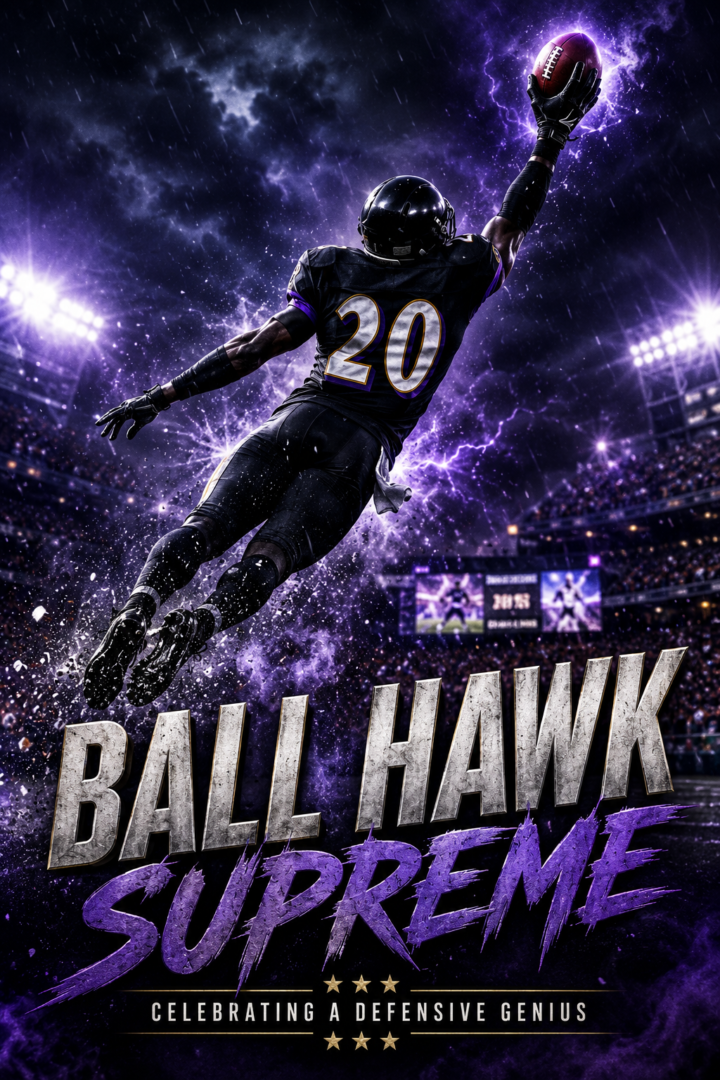


Some defenders make tackles. Others force turnovers. And then there are those who see the game differently and turn defense into offense.
Ed Reed was that kind of player.
Born on September 11, 1978, Reed didn’t just become a star for the Baltimore Ravens — he became one of the greatest safeties in NFL history. On his birthday, fans celebrate more than interceptions. They celebrate instinct, intelligence, and game-changing brilliance.
Affiliate Disclosure: This article may contain affiliate links and banner advertisements. If you make a purchase through these links, we may earn a small commission at no additional cost to you. Thank you for supporting our platform.
From Miami to NFL Greatness
Ed Reed was born in St. Rose, Louisiana, on September 11, 1978, where his love for football developed at an early age. Growing up just outside of New Orleans, Reed quickly established himself as one of the area’s most gifted athletes. His natural instincts, competitiveness, and remarkable football intelligence separated him from many of his peers long before he reached the collegiate level.
Although Reed possessed excellent speed and athletic ability, what truly made him special was his mind for the game. Even as a young player, he studied offensive tendencies, recognized formations, and seemed to know where the football was going before the play had fully developed. Those instincts would eventually make him one of the greatest safeties in NFL history.
His outstanding high school career earned him the opportunity to play for the University of Miami, one of college football’s premier programs. At Miami, Reed joined one of the most talented teams ever assembled, sharing the field with future NFL stars such as Ray Lewis, Andre Johnson, Clinton Portis, Willis McGahee, Frank Gore, Jeremy Shockey, Vince Wilfork, Jonathan Vilma, and many others.
Despite being surrounded by elite talent, Reed consistently stood out.
He became the emotional leader of the Hurricanes’ defense and one of the smartest players in college football. His ability to diagnose plays before they unfolded allowed him to make game-changing interceptions, force turnovers, and consistently place himself in the perfect position to make plays.
He built his game on:
- Elite instincts, reading quarterbacks and offensive formations with remarkable precision. Reed often anticipated passes before receivers even completed their routes, allowing him to arrive at the football seemingly out of nowhere.
- Film study and preparation, dedicating countless hours to understanding opponents’ tendencies. His commitment to studying offensive schemes gave him an advantage that could not be measured by speed or strength alone.
- Exceptional range and athleticism, covering enormous portions of the field from the safety position. Whether chasing down a deep pass or helping against the run, Reed possessed the speed and closing ability to impact plays from sideline to sideline.
- Extraordinary playmaking ability, turning routine defensive situations into momentum-changing moments. Interceptions, forced fumbles, blocked kicks, and long returns became trademarks of his game throughout his career.
At Miami, Reed developed into far more than a talented defensive back.
He became the leader of one of college football’s greatest defenses.
His teammates relied on him to communicate adjustments, recognize offensive formations, and ensure everyone was aligned correctly before each snap. Coaches trusted his football intelligence so completely that Reed often functioned as an extension of the coaching staff on the field.
His leadership reached its peak during the unforgettable 2001 season.
The Hurricanes finished 12-0, dominated nearly every opponent they faced, and captured the National Championship with a decisive victory over Nebraska in the Rose Bowl. Widely regarded as one of the greatest college football teams ever assembled, Miami’s defense overwhelmed opponents with speed, athleticism, and relentless playmaking.
Reed served as its captain.
His performances throughout college earned numerous individual honors, including First-Team All-American recognition, and he finished his Miami career with 21 interceptions, establishing himself as one of the finest defensive players in school history.
What made Reed so unique was that interceptions were only part of his impact.
He constantly looked for opportunities to score.
Whether returning interceptions, stripping the football from ball carriers, recovering fumbles, or even blocking kicks, Reed believed every defensive play could become a scoring opportunity. His aggressive mindset transformed ordinary defensive stops into game-changing moments.
Perhaps no play better illustrated his instincts than his famous interception return against Boston College. After intercepting a pass, Reed returned it nearly the length of the field before lateraling the football to teammate Matt Walters just before crossing the goal line to preserve the scoring play. It was an unforgettable display of awareness, selflessness, and confidence that perfectly captured his unique style of play.
By the time the 2002 NFL Draft arrived, Reed was widely recognized as one of the nation’s premier defensive prospects. NFL scouts admired his combination of athleticism, leadership, intelligence, and production. While many defensive backs relied primarily on physical ability, Reed possessed an exceptional understanding of the game that allowed him to play even faster than his already impressive speed.
The Baltimore Ravens selected him in the first round with the 24th overall pick, believing he could become the next great leader of their defense following the departure of Hall of Fame safety Rod Woodson.
That belief proved remarkably accurate.
The same instincts, preparation, and playmaking ability that had made Reed a college superstar would soon make him one of the greatest defensive players professional football had ever seen.
He didn’t just react.
He anticipated.
That rare ability separated Ed Reed from nearly every defensive back who came before him. While others responded after the quarterback released the football, Reed often recognized the play before it happened. His extraordinary preparation, unmatched instincts, and relentless pursuit of excellence transformed him into the gold standard for the modern free safety.
His journey from a small Louisiana town to the University of Miami laid the foundation for a Hall of Fame career.
It also established a reputation that would follow him throughout football history.
When quarterbacks looked downfield, they weren’t simply searching for an open receiver.
They were searching for where Ed Reed was.
Because if they guessed wrong, the football usually ended up in his hands.
Get Yours Today: Ed Reed Baltimore Ravens Mitchell & Ness Legacy Replica Jersey – Black
The Rise with the Ravens
When the Baltimore Ravens selected Ed Reed with the 24th overall pick in the 2002 NFL Draft, they believed they were drafting a talented safety from one of college football’s greatest programs. What they ultimately received was one of the most intelligent, dynamic, and game-changing defensive players in NFL history.
Reed entered a Ravens organization already known for defensive excellence. Led by Hall of Fame linebacker Ray Lewis, Baltimore had built its identity around physical football, discipline, and creating turnovers. Reed’s arrival elevated that identity to an even higher level. His remarkable instincts, unmatched range, and ability to anticipate offensive plays gave the Ravens a weapon unlike any other in the league.
He quickly earned a starting role and wasted little time proving he belonged among the NFL’s elite defensive backs.
Quarterbacks quickly learned that throwing deep against Baltimore carried enormous risk.
Even receivers who appeared open often discovered that Reed had already anticipated the throw.
He brought:
- Elite deep-field coverage, covering enormous portions of the field with exceptional speed and instincts. His range allowed cornerbacks to play aggressively because they knew Reed could erase mistakes over the top.
- Turnover creation, consistently intercepting passes, forcing fumbles, recovering loose footballs, and changing the momentum of games with one defensive play.
- Outstanding leadership, becoming the quarterback of the secondary by communicating coverages, recognizing offensive formations, and ensuring teammates were in the correct position before every snap.
- Big-play ability, turning routine defensive stops into highlight-reel moments through spectacular interceptions, long returns, and defensive touchdowns.
Reed’s greatest strength was his football intelligence.
He approached every game like a chess match.
Throughout the week, he spent countless hours studying film, identifying offensive tendencies, quarterback habits, route combinations, and formation tendencies. By kickoff, Reed often possessed a detailed understanding of what opposing offenses wanted to accomplish.
That preparation allowed him to play faster than anyone else on the field.
While most defensive backs reacted after a quarterback released the football, Reed frequently broke toward the ball before the pass was thrown. His anticipation made even elite quarterbacks hesitate, often forcing them to abandon their first read or make difficult throws into tight coverage.
His range became legendary.
Few safeties in NFL history have covered as much ground as Ed Reed. Starting from the middle of the field, he could sprint toward either sideline, intercept passes that appeared safely beyond reach, and arrive at the catch point just as receivers expected the football.
His closing speed frustrated quarterbacks throughout the league.
Passes that looked open suddenly weren’t.
Wide receivers who believed they had beaten coverage often watched Reed appear seemingly from nowhere to knock away or intercept the football.
But interceptions were only the beginning.
Once Reed secured possession, he instantly transformed from defender into offensive playmaker.
His vision, balance, and open-field running ability made him one of the most dangerous return specialists in NFL history despite playing safety. Rather than simply securing an interception and falling to the ground, Reed constantly searched for blocks, changed directions with remarkable agility, and looked to score every time he touched the football.
That aggressive mindset produced some of the longest interception returns ever recorded.
Several of his returns covered more than 100 yards, including an NFL-record 108-yard interception return for a touchdown against the Philadelphia Eagles in 2008. The play perfectly demonstrated Reed’s unique combination of instincts, athleticism, patience, and vision after securing the football.
He didn’t just stop drives.
He finished them.
His impact extended beyond statistics.
Knowing Reed patrolled the secondary changed how offenses called games. Quarterbacks frequently avoided throwing toward his side of the field, limiting their options before the ball was even snapped. Offensive coordinators often shortened passing routes or adjusted game plans entirely because they understood how dangerous Reed could be if given an opportunity.
His presence benefited every defender around him.
Cornerbacks played more aggressively because they trusted Reed to provide help over the top.
Linebackers attacked the line of scrimmage knowing Reed would clean up deep coverage.
The Ravens’ pass rush became even more effective because quarterbacks hesitated an extra second, trying to avoid Reed’s ball-hawking instincts.
His leadership also continued to grow.
Following the example set by Ray Lewis, Reed became one of Baltimore’s unquestioned defensive leaders. Younger players admired his preparation, professionalism, and attention to detail. He showed that athletic ability alone was not enough to achieve greatness.
Preparation mattered.
Discipline mattered.
Study mattered.
Those qualities helped transform Reed into one of the greatest safeties football has ever seen.
Throughout his career with Baltimore, Reed earned nine Pro Bowl selections, five First-Team All-Pro honors, and was named the NFL Defensive Player of the Year in 2004. He finished his career with 64 interceptions, leading the NFL multiple times while consistently ranking among the league’s premier playmakers.
His greatest team achievement came during the 2012 season, when he helped lead the Ravens to victory in Super Bowl XLVII. Playing alongside Ray Lewis during Lewis’s final NFL season, Reed anchored a defense that once again proved capable of making championship-winning plays on football’s biggest stage.
He didn’t just defend passes.
He turned them into points.
Every quarterback who faced Baltimore understood that one mistake could become a touchdown the other way. Reed possessed the rare ability to change the outcome of a game with a single interception, making him one of the most feared defensive players of his era.
He wasn’t simply the centerpiece of the Ravens’ secondary.
He became the heartbeat of one of the NFL’s greatest defenses.
His combination of intelligence, anticipation, athleticism, and playmaking ability forever changed how the free safety position was played and established Ed Reed as one of the greatest defensive backs in football history.
Career Highlights & Achievements
Ed Reed’s résumé is legendary:
- Super Bowl Champion (XLVII)
- Defensive Player of the Year (2004)
- 9× Pro Bowl selection
- 60+ career interceptions
- NFL record for longest interception return (108 yards)
- Pro Football Hall of Fame (2019)
His impact is measured in game-changing moments.
A True Ball Hawk
Ed Reed revolutionized the safety position by demonstrating that a defensive back could be much more than the last line of defense. While many safeties focused primarily on preventing big plays, Reed actively looked to create them. Every time the football left a quarterback’s hand, he saw an opportunity—not simply to defend a pass, but to change the outcome of the game.
His unique combination of football intelligence, preparation, athleticism, and instincts made him one of the most feared defensive players in NFL history. Quarterbacks quickly realized that even seemingly open receivers were not truly open when Reed was patrolling the secondary. His ability to disguise his intentions and arrive at the football at precisely the right moment forced offenses to rethink how they attacked Baltimore’s defense.
Reed became the definition of a true ball hawk.
He was known for:
- Reading quarterbacks, studying their eyes, body language, and throwing tendencies to anticipate where the football was headed before it was released. His preparation often allowed him to beat receivers to the catch point.
- Baiting throws, intentionally positioning himself to encourage quarterbacks to believe a receiver was open before suddenly closing the gap and making a spectacular interception.
- Turning interceptions into long returns, refusing to settle for simply ending a drive. Once Reed secured the football, he instantly became an offensive threat capable of weaving through traffic and reaching the end zone.
- Changing momentum instantly, creating game-changing turnovers that energized teammates, silenced opposing crowds, and completely shifted the direction of games.
What made Reed extraordinary was his patience.
Unlike many defensive backs who relied solely on speed, Reed trusted his preparation. He understood route combinations, recognized offensive formations, and knew where quarterbacks preferred to throw in different situations. Rather than chasing receivers all over the field, he positioned himself where the football was most likely to arrive.
That anticipation made him appear almost psychic.
Television commentators frequently remarked that Reed seemed to know the play before anyone else on the field.
Quarterbacks certainly felt that way.
Reed mastered the art of deception.
He often aligned himself slightly out of position, intentionally giving quarterbacks the illusion that a receiver had gained separation. Believing the throwing lane was open, the quarterback would release the pass—only to watch Reed explode across the field and intercept it.
Those plays became one of the defining images of his career.
He didn’t simply react.
He invited mistakes.
Once the football was in his hands, Reed’s remarkable athleticism took over. Unlike many defenders who secured an interception and immediately went to the ground, Reed looked to score every time he touched the ball. His vision, balance, patience, and acceleration made him one of the most dangerous return men in NFL history despite playing safety.
His interception returns became legendary.
Reed owns the NFL record for the two longest interception returns in league history, including a 106-yard return against the Cleveland Browns in 2004 and an even longer 108-yard return against the Philadelphia Eagles in 2008. Those incredible plays showcased not only his instincts but also his ability to become an offensive weapon after creating a turnover.
Interceptions were only one part of his impact.
Reed constantly searched for opportunities to strip the football from runners, recover fumbles, block punts, and create any play that could give Baltimore another possession. He believed the defense should do more than prevent points.
It should create them.
His presence alone influenced offensive game plans.
Many quarterbacks avoided throwing toward the middle of the field altogether, limiting their own offenses because they respected Reed’s range and anticipation. Offensive coordinators frequently shortened passing concepts or called more conservative plays simply to avoid giving him opportunities to make game-changing interceptions.
That hesitation benefited the entire Ravens defense.
The pass rush had more time to reach the quarterback.
Cornerbacks played more aggressively underneath.
Linebackers attacked the running game with confidence.
Every defender benefited because offenses constantly accounted for where Ed Reed might be.
His consistency over more than a decade further highlighted his greatness. Reed finished his career with 64 interceptions, the seventh-highest total in NFL history, while leading the league in interceptions on multiple occasions. He earned nine Pro Bowl selections, five First-Team All-Pro honors, the 2004 NFL Defensive Player of the Year Award, and ultimately a place in the Pro Football Hall of Fame.
Yet statistics alone cannot fully explain his impact.
Many great defensive backs intercepted passes.
Very few changed the way quarterbacks thought.
Ed Reed did exactly that.
He made quarterbacks second-guess every throw.
Some hesitated just long enough for Baltimore’s pass rush to arrive.
Others forced passes elsewhere, abandoning their original reads.
Still others challenged him—and paid the price.
Reed’s greatest weapon was not simply his speed or athleticism.
It was uncertainty.
Quarterbacks never knew exactly where he would be.
And that uncertainty made him one of the most dangerous defenders football has ever seen.
Ed Reed didn’t just redefine the safety position.
He redefined how offenses were forced to play against it.
His combination of anticipation, intelligence, and extraordinary playmaking ability established a standard that generations of defensive backs continue to chase, making him one of the greatest ball hawks the NFL has ever produced.
Clutch and Game-Changing
Ed Reed built his Hall of Fame career by making extraordinary plays throughout the regular season, but his greatest performances often came when the stakes were at their highest. Whether it was a playoff game, a division rivalry, or a crucial fourth-quarter drive, Reed consistently found ways to change the course of games with one perfectly timed play.
The biggest moments never seemed too large for him.
If anything, pressure made him even more dangerous.
Reed possessed an uncanny ability to recognize when offenses were becoming aggressive, and he capitalized on those opportunities better than almost any defensive player in NFL history. When quarterbacks were forced to make plays in critical situations, they often found themselves throwing directly into one of Reed’s carefully disguised coverages.
He delivered:
- Playoff interceptions, making timely takeaways that ended drives and gave Baltimore’s offense valuable opportunities during the postseason.
- Momentum-shifting plays, creating turnovers, forcing fumbles, and making game-saving tackles that instantly changed the direction of games.
- Defensive touchdowns, turning interceptions and fumble recoveries into points by using his vision, patience, and remarkable return ability once the ball was in his hands.
- Championship leadership, remaining calm in pressure situations while directing the secondary and ensuring every defender understood his assignment before the snap.
Reed understood something that separated elite defenders from good ones.
The biggest games are often decided by just one or two plays.
He made it his mission to create those plays.
His preparation throughout the week allowed him to anticipate what offenses might attempt in critical situations. During late-game drives, he often recognized route combinations, quarterback tendencies, and passing concepts before the ball was even snapped. That preparation enabled him to arrive at the football at precisely the right moment.
Quarterbacks rarely received a second chance.
If they misread Reed, the possession usually ended.
His postseason performances reflected that remarkable consistency. Time after time, Reed came through with interceptions, pass breakups, or momentum-changing returns that helped Baltimore advance through the playoffs. He understood that postseason football demanded discipline, patience, and flawless execution, and he consistently delivered all three.
One of the greatest accomplishments of Reed’s career came during the 2012 season, when he helped lead the Baltimore Ravens to victory in Super Bowl XLVII. Alongside longtime teammate Ray Lewis, Reed anchored a defense that repeatedly made crucial plays throughout the postseason.
Although injuries had limited him at various points during his career, Reed remained the emotional and strategic leader of the secondary. His experience proved invaluable as Baltimore defeated the Indianapolis Colts, Denver Broncos, New England Patriots, and San Francisco 49ers on the way to capturing the Lombardi Trophy.
Even when he wasn’t recording an interception, Reed influenced every offensive possession.
Quarterbacks often avoided throwing toward his side of the field.
Receivers adjusted routes because they knew Reed could close enormous distances in seconds.
Offensive coordinators changed game plans simply because they respected his ability to create turnovers.
That invisible impact rarely appeared on a stat sheet.
But it helped Baltimore win countless football games.
Reed’s defensive touchdowns became another defining part of his legacy. Unlike many defenders who were content simply securing possession, Reed immediately looked for the end zone after every interception. His patience as a returner, combined with outstanding vision and athleticism, allowed him to weave through traffic and turn defensive stops into points.
Those touchdowns frequently transformed close games.
One interception return could erase an opponent’s momentum, energize the Ravens’ sideline, and completely alter the atmosphere inside the stadium.
His teammates came to expect those moments.
Whenever Reed intercepted a pass, offensive players sprinted downfield looking for blocks because they understood there was always a legitimate chance he would score.
That belief reflected the confidence everyone had in his playmaking ability.
Perhaps Reed’s greatest strength was his composure.
The louder the crowd became and the more pressure the situation carried, the calmer he appeared. He never abandoned his disciplined approach or attempted to force plays that weren’t there. Instead, he trusted the preparation that had made him successful throughout his career.
When an opportunity appeared, he seized it.
When patience was required, he waited.
That balance made him exceptionally dangerous in championship football.
He didn’t just make plays.
He made history.
Ed Reed finished his career with 64 interceptions, numerous postseason takeaways, and a Super Bowl championship, but those numbers only tell part of the story. His greatest contribution was his ability to change the outcome of games when they mattered most.
Championship teams need players who can deliver under pressure.
The Ravens had one of the greatest to ever play the position.
Whether intercepting a pass in the closing minutes, returning a turnover for a touchdown, or directing the secondary during a championship drive, Reed consistently elevated his performance when everything was on the line.
That rare ability transformed him from an All-Pro safety into one of the greatest clutch defensive players in NFL history.
He didn’t simply protect leads.
He created victories.
Why Ravens Fans Still Revere Him
In Baltimore, Reed represents:
- Intelligence
- Playmaking
- Championship success
- Defensive dominance
He is the standard for greatness at the position.
A Lasting Impact on the Game
Ed Reed forever changed how the free safety position is viewed and played in the National Football League. Before Reed, many safeties were valued primarily for their ability to prevent big plays and provide support against the run. Reed proved that a free safety could be much more than a last line of defense.
He became a game-changing weapon.
His rare combination of football intelligence, anticipation, athleticism, and playmaking ability transformed the position into one capable of completely altering the outcome of a football game. Rather than simply stopping offenses, Reed attacked them. Every snap became an opportunity to create a turnover, score points, or shift momentum in Baltimore’s favor.
His success changed the way coaches evaluated defensive backs and how young players approached the position. Reed demonstrated that physical talent alone was not enough to become elite. Film study, preparation, communication, and understanding offensive tendencies were just as important as speed and athletic ability.
His influence can be seen in nearly every modern NFL secondary.
Reed inspired a new generation of defensive backs by emphasizing:
- Elite football intelligence, showing that preparation and film study could provide an advantage even against the league’s best quarterbacks.
- Instinctive playmaking, encouraging safeties to trust their reads and attack the football instead of simply protecting against deep passes.
- Versatility, proving that an elite safety could excel in coverage, support the run, create turnovers, blitz when needed, and even score on defense.
- Leadership, demonstrating that a safety could serve as the quarterback of the defense by communicating coverages, making adjustments, and keeping the entire secondary organized.
Many of today’s premier safeties have cited Reed as one of the players they studied while developing their own games. His ability to disguise coverages, bait quarterbacks into mistakes, and anticipate plays before they unfolded became the blueprint for future generations of defensive backs.
His influence also extended beyond individual players.
NFL offenses were forced to evolve because of defenders like Reed. Quarterbacks became more disciplined with their reads, offensive coordinators designed concepts specifically to account for roaming free safeties, and teams placed greater emphasis on disguising passing intentions. Reed’s presence alone could eliminate entire sections of the field, forcing offenses to adjust their game plans before kickoff.
Perhaps his greatest legacy was changing how people viewed defense itself.
He proved that defense could be just as exciting and game-changing as offense. Every time Reed stepped onto the field, fans expected something spectacular—an interception, a long return, a forced fumble, or a momentum-changing play that would become the highlight of the game.
His résumé reflects that extraordinary impact: nine Pro Bowl selections, five First-Team All-Pro honors, the 2004 NFL Defensive Player of the Year Award, a Super Bowl championship, election to the Pro Football Hall of Fame, and a reputation as one of the greatest safeties to ever play the game.
But statistics tell only part of the story.
His true legacy lies in the countless players who have tried to emulate his preparation, instincts, and fearless approach to the game. Young safeties still study his film to learn how to recognize route combinations, disguise coverages, and create turnovers in critical moments.
Ed Reed helped redefine the modern free safety.
He transformed the position from one of reaction into one of anticipation.
He showed that intelligence could be just as powerful as athleticism.
And he proved that one defensive player could change the outcome of an entire game.
More than a decade after his retirement, his influence continues to shape NFL defenses, inspire future Hall of Famers, and remind football fans that some of the game’s greatest highlights begin on the defensive side of the ball.
Ed Reed didn’t simply leave behind an incredible career.
He left behind a blueprint for greatness.
A Birthday Worth Celebrating Across Football
Ed Reed didn’t just play defense.
He controlled the game.
On September 11, we celebrate more than a Hall of Famer.
We celebrate brilliance.
Happy Birthday, Ed Reed — one of the greatest safeties in NFL history.