
Affiliate Disclosure: This article may contain affiliate links. If you purchase products or services through links in this article, The Shopping Plaza may earn a commission at no additional cost to you.
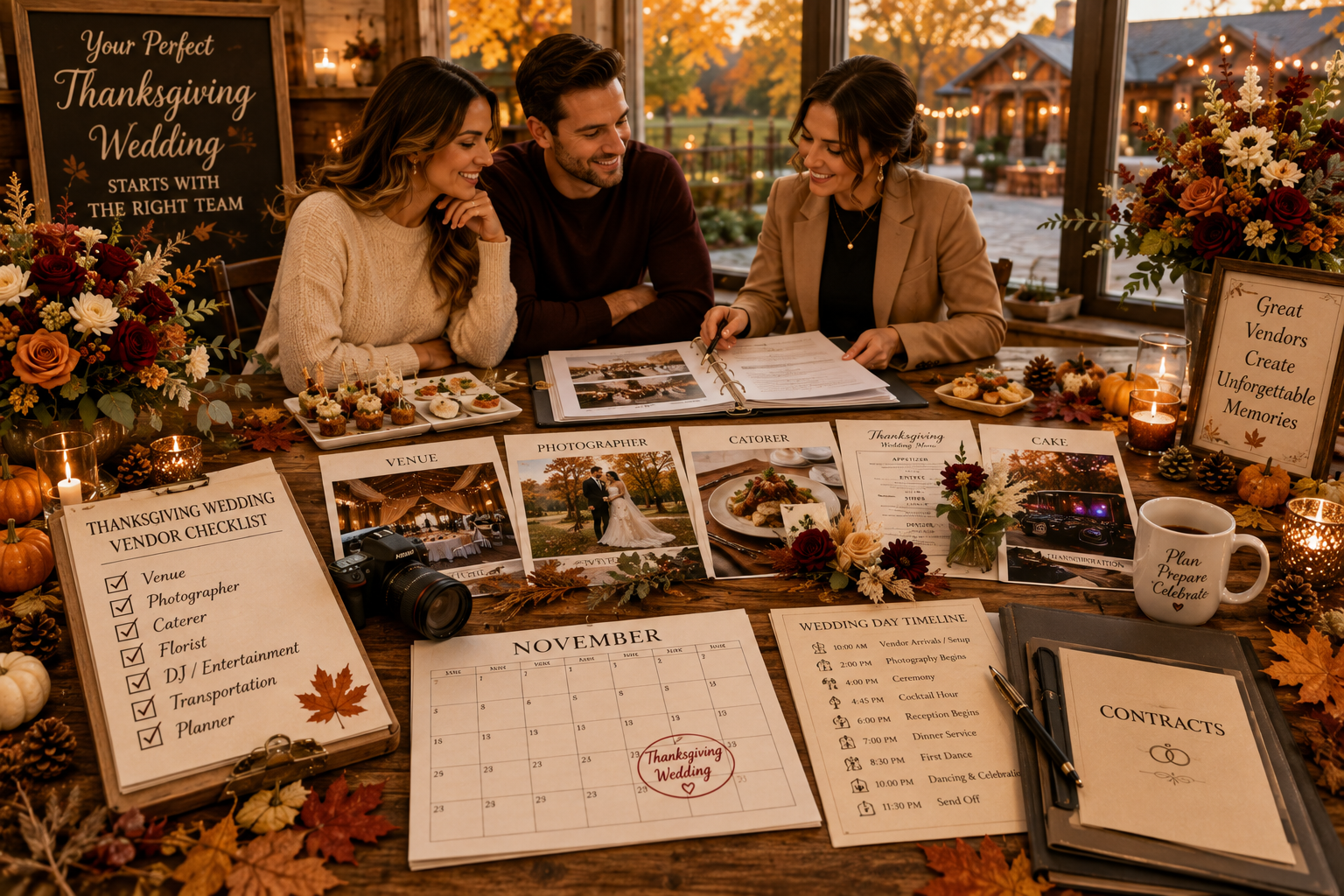
Planning a Thanksgiving wedding requires more than choosing a beautiful venue and designing elegant décor. Because the holiday season is one of the busiest times of the year for travel, events, and family gatherings, securing the right vendors early is essential. With careful planning and clear communication, you can assemble a dependable team that helps bring your vision to life.
Why Thanksgiving Weddings Require Early Planning
Holiday weekends create high demand for venues, photographers, caterers, florists, DJs, transportation companies, and other wedding professionals. Booking early gives you the best selection and greater peace of mind.
Prioritize Your Most Important Vendors
Prioritize Your Most Important Vendors
One of the smartest ways to reduce wedding planning stress is to book your most important vendors as early as possible. These professionals form the foundation of your wedding day, and many of the best vendors are reserved months—or even more than a year—in advance, especially for popular wedding dates during the fall and holiday seasons. By securing your essential vendors first, you’ll have greater peace of mind and can confidently build the rest of your wedding plans around them.
Begin with your wedding venue, as your venue selection often determines nearly every other planning decision. Your venue establishes the wedding date, guest capacity, ceremony and reception logistics, decorating possibilities, and sometimes even your catering options. Once your venue is confirmed, you’ll have a firm timeline that allows you to schedule every other vendor with confidence.
After booking the venue, focus on hiring professionals whose availability is often the most limited. These typically include:
- Photographer
- Videographer
- Caterer
- Officiant
- DJ or live band
- Wedding planner or day-of coordinator
These vendors play critical roles in the success of your wedding, and securing them early gives you access to your preferred choices rather than settling for whoever remains available.
Your photographer and videographer deserve particular attention because they preserve the memories you’ll treasure for a lifetime. Spend time reviewing full wedding galleries, reading client reviews, and meeting with photographers to ensure their style matches your vision. Whether you prefer classic portraits, documentary-style photography, editorial images, or candid storytelling, choosing someone whose work you truly love is well worth the investment.
If your venue does not provide in-house catering, reserve your caterer as soon as possible. Popular caterers often book quickly, particularly during busy wedding seasons. Schedule tastings, discuss dietary accommodations, and work together to design a menu that reflects your personalities and provides a memorable dining experience for your guests.
Your officiant is another essential vendor to reserve early. Whether you’re planning a religious ceremony, civil service, or personalized celebration, having the right officiant helps ensure your ceremony reflects your values, personalities, and relationship. Meeting with them well in advance also provides plenty of time to customize your ceremony and discuss any special traditions or readings you wish to include.
Entertainment is equally important because it helps shape the atmosphere of your celebration. Whether you choose a live band, string quartet, solo musician, or professional DJ, quality entertainment keeps guests engaged throughout the evening and creates the energy that people often remember long after the wedding has ended. Before making your decision, ask to hear sample performances, review playlists, or attend a live event if possible.
Once your core vendors are secured, you can begin booking additional services that enhance the overall experience, including:
- Transportation
- Floral designer
- Cake designer
- Hair and makeup artists
- Rental companies
- Lighting specialists
- Photo booth providers
- Specialty décor companies
- Ceremony musicians
- Calligraphers
- Wedding signage creators
While these vendors are certainly important, they generally offer a little more flexibility in scheduling than your primary vendors.
As you begin meeting with potential vendors, don’t hesitate to ask thoughtful questions such as:
- Are you available on our wedding date?
- How many weddings do you book each weekend?
- What’s included in your pricing?
- Do you carry liability insurance?
- Can we see a full portfolio?
- Do you have references from recent couples?
- What is your cancellation or rescheduling policy?
- Do you have backup plans for emergencies?
- When are final payments due?
These conversations help you compare vendors more confidently while avoiding unexpected surprises later in the planning process.
Organization becomes increasingly important as your vendor list grows. Keep all contracts, receipts, contact information, payment schedules, and planning notes together in one location. Many couples use wedding planning binders, spreadsheets, or digital planning apps to track deadlines and vendor communications. Staying organized helps ensure nothing is overlooked as your wedding day approaches.
Whenever possible, work with vendors who communicate clearly and respond promptly to your questions. Professionalism, reliability, and compatibility are just as valuable as experience and pricing. You’ll spend months working closely with these individuals, so choosing vendors you genuinely enjoy interacting with can make the entire planning process far more enjoyable.
Finally, remember that while every wedding includes countless beautiful details, your vendors are there to help bring your vision to life—not create unnecessary stress. By prioritizing the professionals who have the greatest impact on your wedding day, booking them early, and building strong working relationships throughout the planning process, you’ll create a solid foundation for a celebration that runs smoothly from beginning to end. Once those essential pieces are in place, you can focus on the fun details, confident that the most important elements of your special day are already in capable hands.
Ask About Holiday Availability
Some vendors limit bookings during Thanksgiving weekend because of family commitments. Confirm their availability and staffing well before signing a contract.
Review Contracts Carefully
Review Contracts Carefully
Vendor contracts are some of the most important documents you will sign during the wedding planning process, so take time to read every page before agreeing to anything. Even when a vendor seems friendly, experienced, and trustworthy, the written contract is what ultimately defines the services they are required to provide. Carefully reviewing the details helps prevent misunderstandings, unexpected expenses, and last-minute surprises as your wedding day approaches.
Start by confirming that the contract includes all essential information, including:
- Your wedding date
- Ceremony and reception times
- Venue location
- Services being provided
- Number of staff members included
- Setup and breakdown responsibilities
- Final payment deadline
- Cancellation terms
- Contact information for both parties
Never assume that something discussed during a phone call, consultation, or email exchange is automatically included. If a promise is important to you, make sure it appears clearly in the written agreement.
Pay close attention to the payment schedule. Many vendors require an initial deposit or retainer to reserve your date, followed by additional payments at specific stages of the planning process. The contract should explain how much is due, when each payment must be made, and which forms of payment are accepted. Add every deadline to your wedding calendar so you do not accidentally miss a payment and risk losing your reservation.
Cancellation and rescheduling policies deserve especially careful review. Unexpected circumstances can arise, including illness, severe weather, family emergencies, venue closures, or major travel disruptions. Make sure you understand what happens if you must postpone or cancel the wedding. Determine whether deposits are refundable, transferable to a new date, or completely nonrefundable. You should also know whether additional fees apply when changing the date.
Holiday and peak-season surcharges are another important consideration, especially if you are planning a wedding around Thanksgiving, Christmas, New Year’s Eve, or another major celebration. Vendors may charge higher rates because employees are working during a holiday or because demand is especially high. These extra costs could apply to catering, staffing, transportation, entertainment, rentals, and venue access. Ask vendors to list all holiday-related charges clearly instead of relying on general estimates.
Overtime fees can also increase your final expenses. If your reception runs longer than expected, the photographer, DJ, band, transportation provider, venue staff, and catering team may charge by the hour or even by smaller time increments. Review the contract to learn:
- When overtime officially begins
- How much each additional hour costs
- Who is authorized to approve extra time
- Whether payment is required immediately
- Whether there is a maximum extension available
Understanding these terms allows you to make informed decisions if the celebration is still going strong near the scheduled ending time.
Backup plans are equally important. Ask what happens if the assigned vendor becomes ill, experiences an emergency, or cannot perform the contracted services. Professional vendors should have contingency plans, replacement staff, backup equipment, or trusted industry partners who can step in when necessary. Photographers should carry extra cameras and memory cards, DJs should have backup audio equipment, and transportation companies should explain how they handle vehicle breakdowns.
Weather-related plans should also appear in contracts when relevant. Outdoor weddings are especially vulnerable to rain, wind, extreme heat, snow, or cold temperatures. The venue agreement should explain whether an indoor backup space is available, when the decision to move indoors must be made, and whether additional setup fees apply. Tent providers, rental companies, and transportation services may also have specific weather policies that need to be reviewed.
Make sure you understand exactly what is included in each package. A catering contract, for example, should specify whether the price includes:
- Food
- Beverages
- Service staff
- Linens
- Tableware
- Setup
- Cleanup
- Cake cutting
- Gratuities
- Taxes
Similarly, a photography agreement should explain the number of coverage hours, expected image delivery timeline, editing process, printing rights, and whether an engagement session or second photographer is included.
Look carefully for additional charges that may not be immediately obvious. These might include:
- Travel fees
- Delivery charges
- Setup fees
- Cleanup fees
- Equipment rentals
- Permit costs
- Service charges
- Taxes
- Gratuities
- Parking expenses
- Meals for vendor staff
Ask for written clarification whenever a fee is confusing or seems open to interpretation.
The contract should also explain the vendor’s responsibilities and your own. Some venues require couples to obtain event insurance, secure permits, follow noise restrictions, or use only approved vendors. Caterers may require final guest counts by a certain date, while rental companies may charge for damaged or missing items. Knowing these responsibilities in advance helps you avoid penalties and additional stress.
Do not hesitate to ask questions or request changes before signing. Contracts are negotiable in many situations, particularly when a term is unclear or does not reflect what was discussed. A professional vendor should be willing to explain the agreement and make reasonable corrections. Never allow yourself to feel pressured into signing immediately if you need more time to review the details.
Keep copies of all signed contracts in both digital and printed formats. Store them alongside invoices, receipts, payment confirmations, insurance documents, and email correspondence. It is also helpful to create a summary sheet listing important deadlines, balances, cancellation terms, and vendor contact information so you can find critical details quickly.
As the wedding approaches, review each contract again with your planner, coordinator, or trusted family member. Confirm arrival times, final balances, setup instructions, and emergency contacts. This final check helps ensure everyone understands the schedule and expectations before the celebration begins.
Reading contracts may not be the most exciting part of wedding planning, but it is one of the most valuable. A carefully reviewed agreement protects your investment, clarifies expectations, and gives you confidence that your vendors understand exactly what they are responsible for providing. By paying close attention to payment schedules, cancellation policies, surcharges, overtime costs, and backup plans, you can avoid preventable problems and focus more fully on enjoying your wedding day.
Discuss Travel and Delivery Logistics
Discuss Travel and Delivery Logistics
When planning a wedding during the holiday season, travel and delivery logistics become especially important. Thanksgiving, Christmas, and New Year’s are among the busiest travel periods of the year, meaning roads are more congested, airports are busier, hotels fill quickly, and delivery schedules can become unpredictable. Even the most carefully planned wedding can experience unnecessary stress if transportation and vendor arrivals aren’t coordinated well in advance. Taking the time to discuss logistics with every vendor helps ensure your wedding day runs smoothly from start to finish.
Begin by creating a detailed timeline that includes when each vendor should arrive, unload, set up, and be completely ready for the ceremony or reception. Share this timeline with every vendor several weeks before the wedding and confirm it again during the final planning meeting. When everyone is working from the same schedule, it becomes much easier to prevent delays and avoid confusion on the day of the event.
Coordinate arrival times for vendors such as:
- Florists
- Caterers
- Bakers
- Photographers
- Videographers
- DJs or bands
- Rental companies
- Lighting technicians
- Transportation providers
- Hair and makeup artists
- Wedding planners
- Officiants
Each vendor plays an important role, and many depend on another vendor completing their work first. For example, rental companies often need to finish setting up tables and chairs before florists can decorate them, while photographers may want to capture detail shots before guests begin arriving.
Holiday traffic can significantly affect travel times, particularly if your wedding falls during Thanksgiving weekend or close to Christmas. Encourage vendors to allow extra driving time and plan routes in advance. If your venue is located in a busy downtown area, near shopping districts, or in a popular tourist destination, let vendors know about any road closures, construction, or local events that could create additional delays.
If vendors are traveling from outside your local area, ask whether they will arrive the night before the wedding. Booking nearby hotel accommodations may help reduce the risk of delays caused by early morning traffic or poor weather. This is especially important for photographers, videographers, planners, and hairstylists whose schedules begin early in the day.
Weather is another important consideration for holiday weddings. Snow, ice, heavy rain, or strong winds can all affect delivery schedules and travel times. Ask vendors about their weather contingency plans, including:
- Alternate travel routes
- Backup vehicles
- Earlier departure times
- Emergency contact procedures
- Equipment protection
- Rescheduling policies, if necessary
Knowing these plans ahead of time provides peace of mind should unexpected weather occur.
Wedding cakes and floral arrangements deserve special attention because they are often among the final items delivered before the celebration begins. Confirm exactly when these deliveries will arrive and who will receive them. If possible, designate a trusted family member, wedding coordinator, or venue manager to inspect deliveries and direct vendors to the proper setup locations.
Rental companies should also receive clear instructions regarding delivery and pickup schedules. Review logistics for items such as:
- Tables
- Chairs
- Linens
- Dinnerware
- Glassware
- Dance floors
- Tents
- Lighting
- Lounge furniture
- Décor pieces
Confirm whether the venue has designated loading areas, elevators, parking restrictions, or limited setup windows that vendors need to know about.
Transportation deserves careful planning as well. If you’re providing shuttle service or limousine transportation for the wedding party or guests, confirm pickup times, locations, passenger counts, and estimated travel times. Holiday traffic can affect shuttle schedules just as much as vendor deliveries, so allowing extra travel time helps keep everyone on schedule.
If many guests are traveling from out of town, provide helpful travel information in advance. Consider sharing:
- Hotel recommendations
- Airport options
- Parking information
- Shuttle schedules
- Local traffic tips
- Weather forecasts
- Directions to the venue
- Emergency contact numbers
These details help guests arrive relaxed and prepared rather than stressed by unfamiliar travel conditions.
Communication is one of the most valuable tools for preventing logistical problems. Create a master contact list that includes the phone numbers and email addresses for every vendor, key family member, wedding coordinator, and venue representative. Distribute this list to the people responsible for managing the wedding day so that questions can be answered quickly if unexpected situations arise.
It is also wise to build buffer time into your wedding timeline. Rather than scheduling every activity back-to-back, leave small gaps between major events. For example, allow extra time between vendor setup and guest arrival, between the ceremony and cocktail hour, or before the reception begins. These built-in cushions provide flexibility if traffic, deliveries, or weather create minor delays and help keep the overall schedule running smoothly.
Finally, confirm every logistical detail one final time during the week of the wedding. Reach out to each vendor to verify arrival times, delivery locations, parking instructions, setup responsibilities, and emergency contact information. A quick confirmation call or email can prevent misunderstandings and reassure everyone that the plan is in place.
Thoughtful travel and delivery planning may happen behind the scenes, but it plays a major role in the success of your wedding day. By coordinating arrival schedules, preparing for holiday traffic, communicating clearly with every vendor, and allowing extra time for the unexpected, you’ll create a well-organized celebration where everything arrives when it should—and where you can spend less time worrying about logistics and more time enjoying one of the happiest days of your life.
Maintain Regular Communication
Stay in touch with your vendors throughout the planning process. Confirm important details several weeks before the wedding and conduct a final check-in during the week of the event.
Prepare Backup Plans
Prepare Backup Plans
No matter how carefully you plan your wedding, unexpected situations can arise—especially during the busy holiday season. Winter weather, increased holiday travel, illness, vendor emergencies, or unexpected equipment problems can all affect even the best-organized celebrations. While it’s impossible to predict every challenge, having well-thought-out backup plans allows you to respond calmly and confidently if something doesn’t go exactly as expected.
The goal of contingency planning isn’t to expect the worst; it’s to ensure that small setbacks don’t become major problems. Couples who prepare alternative plans often find that they enjoy their wedding day more because they know they’ve already considered possible scenarios and have solutions ready if they’re needed.
Start by discussing contingency plans with every vendor you hire. Ask each professional how they handle unexpected situations and what systems they have in place to continue providing excellent service if an emergency occurs.
Questions to ask include:
- What happens if you become ill?
- Do you have backup staff available?
- What if your equipment fails?
- How do you handle severe weather?
- Do you have replacement vehicles?
- Can you recommend trusted backup vendors if necessary?
- How quickly will you notify us if a problem arises?
Experienced wedding professionals have usually encountered unexpected situations before and should be able to explain their backup procedures with confidence.
Weather is one of the biggest concerns for holiday weddings, particularly those held during late fall and winter. Snow, freezing rain, high winds, or icy roads can affect travel, outdoor ceremonies, and vendor arrival times. If you’re planning an outdoor ceremony or cocktail hour, make sure you have an alternate indoor location reserved and ready to use if conditions change.
Your weather backup plan should address:
- Indoor ceremony space
- Tent availability
- Heating equipment
- Umbrellas for guests
- Covered walkways
- Floor protection for muddy conditions
- Extra towels for wet weather
- Snow or ice removal
- Alternative photography locations
Having these details arranged ahead of time prevents last-minute scrambling if the forecast changes.
Travel delays are another common challenge during the holiday season. Vendors, wedding party members, and guests may all encounter heavier-than-normal traffic, flight delays, or airport cancellations. Encourage everyone traveling from out of town to arrive a day or two before the wedding whenever possible. This extra cushion greatly reduces the chances of travel disruptions affecting your celebration.
For guests traveling long distances, provide helpful information such as:
- Nearby hotel options
- Airport recommendations
- Local transportation services
- Parking instructions
- Emergency contact numbers
- Weather updates
- Alternative travel routes
The more prepared your guests are, the less stressful their travel experience will be.
Photography and videography also deserve careful contingency planning. Ask your photographer whether they carry backup cameras, extra lenses, additional batteries, memory cards, and lighting equipment. Professional photographers almost always bring duplicate equipment because technical issues can happen without warning.
Similarly, DJs and musicians should have backup plans for:
- Audio equipment
- Speakers
- Microphones
- Extension cords
- Music libraries
- Power outages
Having redundant equipment ensures your ceremony and reception continue without interruption.
Caterers and bakers should also explain how they handle emergencies. Discuss questions such as:
- What if food deliveries are delayed?
- How is food transported safely?
- What happens if kitchen equipment fails?
- Is there backup staff available?
- How are allergies or last-minute dietary requests handled?
Clear communication allows everyone to respond quickly if unexpected situations occur.
Rental companies should outline contingency plans for damaged or missing items. Confirm how they would replace:
- Tables
- Chairs
- Linens
- Dinnerware
- Glassware
- Tents
- Lighting
- Dance floors
- Lounge furniture
- Decorative pieces
Knowing replacements are available provides valuable peace of mind.
Technology also plays a significant role in modern weddings, so it’s wise to prepare for possible technical difficulties. If you’re planning a slideshow, livestream, video presentation, or digital guest book, keep backup copies on multiple devices such as:
- USB flash drives
- Laptops
- External hard drives
- Cloud storage
- Tablets
Testing all technology before the wedding reduces the likelihood of technical issues during the celebration.
It’s also helpful to designate a trusted person—such as your wedding planner, coordinator, maid of honor, best man, or a close family member—to handle unexpected problems on your behalf. This individual can communicate with vendors, answer questions, and make small decisions if an issue arises, allowing you to remain focused on enjoying your wedding day rather than managing logistics.
Create an emergency kit containing supplies that may solve common last-minute problems. Consider including:
- Safety pins
- Sewing kit
- Fashion tape
- Stain remover
- Extra makeup
- Pain relievers
- Bandages
- Phone chargers
- Extension cords
- Batteries
- Scissors
- Snacks
- Bottled water
- Breath mints
- Tissues
- Hand warmers for winter weddings
These small items often prove incredibly valuable when unexpected situations occur.
Finally, remember that flexibility is one of the greatest backup plans of all. Rarely does a wedding unfold exactly according to schedule, and that’s perfectly normal. A slight delay, a change in the weather, or an unexpected adjustment doesn’t diminish the joy of your celebration. In many cases, guests never even notice the small behind-the-scenes changes that helped keep the day running smoothly.
Preparing backup plans isn’t about expecting problems—it’s about giving yourself confidence that you’re ready for whatever the day may bring. By discussing contingency plans with your vendors, preparing for weather and travel challenges, organizing emergency supplies, and identifying trusted people to help manage unexpected situations, you’ll be well-equipped to handle surprises with grace. The result is a wedding day where you can focus less on “what if” and more on celebrating the beginning of your new life together with family and friends.
Work With Vendors Who Understand Your Vision
Work With Vendors Who Understand Your Vision
One of the most important decisions you’ll make during the wedding planning process is choosing vendors who truly understand your vision for your special day. Every couple has a unique style, personality, and set of priorities, and the best vendors do more than simply provide a service—they become trusted partners who help bring that vision to life. When your vendor team understands what matters most to you, the planning process becomes more enjoyable, communication improves, and the final result feels like an authentic reflection of your relationship.
Before hiring any vendor, spend time thinking about the overall atmosphere you want to create. Ask yourselves questions such as:
- Do we want an elegant and formal celebration?
- Are we envisioning a rustic or outdoor wedding?
- Should the event feel relaxed and intimate?
- Are holiday traditions an important part of the day?
- Which details matter most to us?
- What memories do we want our guests to leave with?
Having clear answers to these questions helps vendors better understand your goals and allows them to make recommendations that fit your overall vision.
When meeting with potential vendors, don’t focus solely on pricing. While staying within your budget is certainly important, compatibility and communication often have an even greater impact on your experience. A vendor who genuinely listens, asks thoughtful questions, and shows enthusiasm for your ideas is far more likely to deliver results that exceed your expectations.
Look for professionals who take the time to understand:
- Your wedding theme
- Preferred color palette
- Venue style
- Cultural or family traditions
- Religious considerations
- Guest experience goals
- Budget expectations
- Personal preferences
- Timeline priorities
The more your vendors understand your vision, the better they can tailor their services to fit your celebration.
Reviewing a vendor’s previous work is another excellent way to determine whether they’re a good match. Ask to see complete wedding galleries, full event portfolios, or highlight videos rather than only a few carefully selected images on social media. This gives you a more accurate understanding of their consistency, creativity, and ability to handle weddings similar to yours.
Don’t hesitate to ask questions during consultations, such as:
- Have you worked at our venue before?
- What weddings have been most similar to ours?
- How would you approach our wedding style?
- What ideas do you have for our celebration?
- How do you personalize your services?
- What challenges do you anticipate?
- How do you communicate throughout the planning process?
Their responses will often tell you just as much about their professionalism as their portfolio does.
Building strong relationships with your vendors starts with open and honest communication. Share inspiration photos, Pinterest boards, color samples, floor plans, and examples of designs you love. At the same time, be willing to listen to their professional advice. Experienced vendors have worked at countless weddings and may offer creative solutions or suggestions you hadn’t considered.
It’s equally important to communicate your budget clearly from the beginning. Many couples worry that discussing finances will limit creativity, but the opposite is often true. Knowing your budget allows vendors to recommend realistic options, prioritize your must-have features, and suggest cost-saving alternatives without sacrificing your overall vision.
For example, a florist might recommend:
- Seasonal flowers instead of imported blooms
- Repurposing ceremony flowers for the reception
- Mixing fresh flowers with greenery
- Using larger statement arrangements in key locations
- Incorporating candles or lanterns for added impact
Similarly, a photographer or caterer may recommend packages that provide excellent value while staying within your financial comfort zone.
Trust also plays a significant role in successful vendor relationships. Once you’ve carefully selected experienced professionals, give them room to do what they do best. Micromanaging every detail can create unnecessary stress for both you and your vendors. Instead, establish clear expectations early, maintain regular communication, and trust their expertise as your wedding day approaches.
Remember that kindness and respect go a long way. Your vendors are working hard to make your celebration unforgettable, often spending months planning alongside you. Responding promptly to emails, attending scheduled meetings, meeting payment deadlines, and showing appreciation for their efforts helps build positive working relationships that benefit everyone involved.
Whenever possible, try to assemble a vendor team that works well together. Wedding planners, photographers, florists, DJs, caterers, and venue coordinators frequently collaborate throughout the day, so strong teamwork behind the scenes often leads to a smoother and more enjoyable experience. Many vendors also have trusted colleagues they enjoy working with and can recommend professionals whose style complements your wedding.
As your wedding date gets closer, schedule a final planning meeting or confirmation call with each vendor. Review important details such as:
- Arrival times
- Setup schedules
- Contact information
- Final guest count
- Timeline updates
- Special requests
- Emergency contacts
- Venue logistics
These final conversations ensure everyone shares the same expectations and understands how their role fits into the overall schedule.
Above all, choose vendors who are genuinely excited about helping you celebrate one of the most important days of your life. Enthusiasm, professionalism, creativity, and excellent communication are qualities that cannot always be measured by price alone. Vendors who care about your experience often go the extra mile to solve problems, calm nerves, and create unforgettable moments.
When you surround yourself with professionals who understand your vision, respect your priorities, and share your excitement, wedding planning becomes far less stressful and much more rewarding. Instead of feeling like you’re coordinating dozens of separate businesses, you’ll feel like you’ve assembled a dedicated team working toward one shared goal: creating a beautiful wedding day that reflects your love story and leaves you with memories you’ll cherish for a lifetime.
Final Thoughts
Booking vendors for a Thanksgiving wedding takes organization, preparation, and early action. By selecting experienced professionals and communicating clearly, you’ll create a celebration that allows you to focus on enjoying your wedding day.
20 Suggested Tags
Thanksgiving wedding vendors, wedding vendors, Thanksgiving wedding planning, book wedding vendors, holiday wedding planning, wedding photographer, wedding caterer, wedding florist, wedding venue, wedding contracts, wedding checklist, fall wedding planning, Thanksgiving bride, wedding DJ, wedding transportation, seasonal wedding, November wedding, wedding advice, wedding blog, wedding planning tips




My previous experience with a vendor was quite different.