
“Your life does not get better by chance, it gets better by change.” – Jim Rohn
Disclaimer: This blog may contain affiliate banner advertisements. If you click on these ads or make purchases through them, we may earn a small commission at no additional cost to you. These commissions help support our work and allow us to continue providing valuable content.
Introduction: You’re Not Stuck—You’re Ready for a Reset
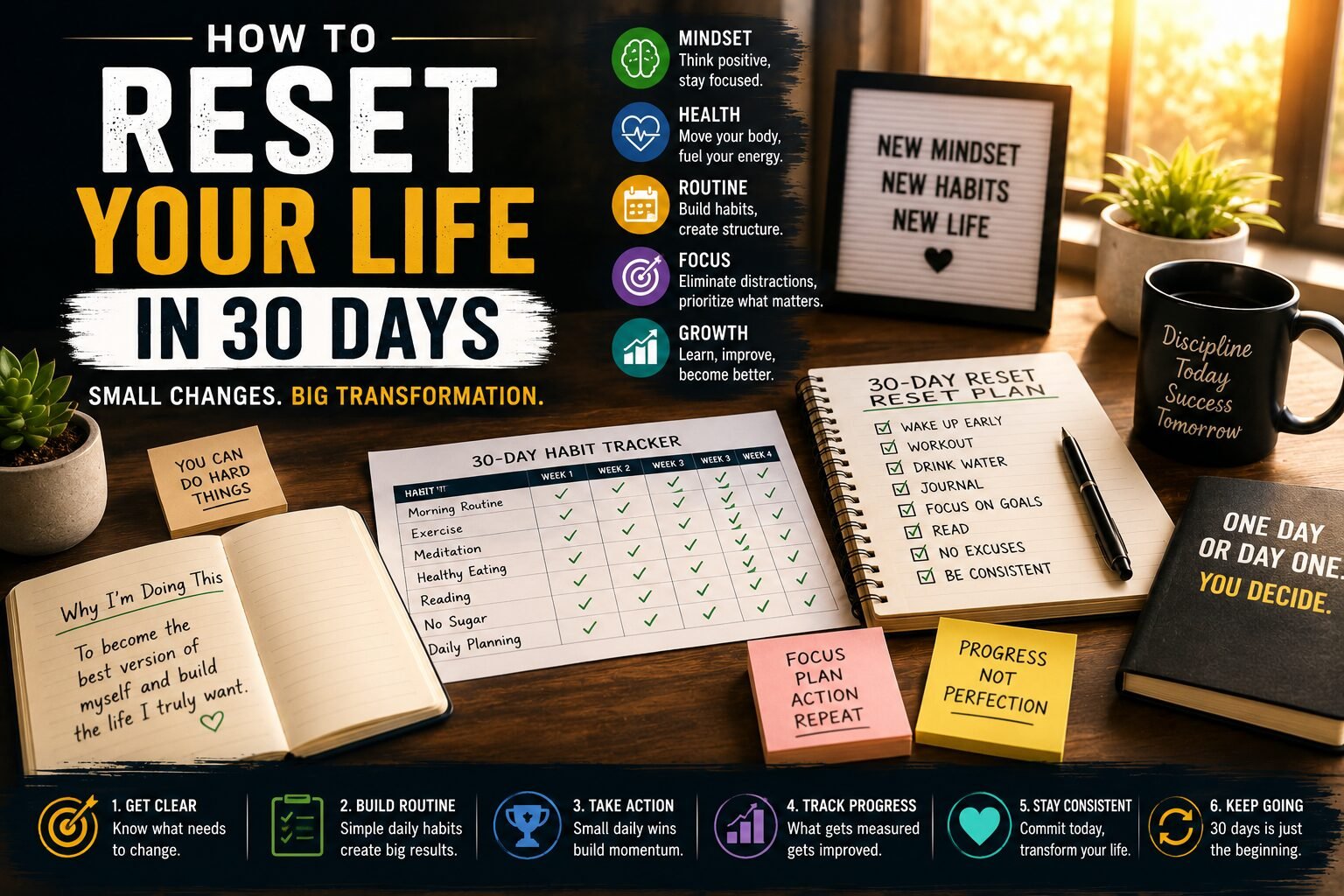
Everyone experiences seasons where life feels off course. A 30‑day reset is not about becoming a completely different person overnight. It is about regaining control, rebuilding momentum, and creating better habits. Think of it as a personal reboot. Real-world examples include people who improved their finances by tracking spending daily, rebuilt their health through consistent walking, or reignited stalled careers by learning a new skill every day. Reflection Question: What area of your life would improve the most if you gave it focused attention for the next 30 days?
Why 30 Days Is Powerful
Thirty days is long enough to see meaningful progress yet short enough to remain focused. Research on behavior change consistently shows that repeated actions create momentum. Historical figures such as Benjamin Franklin used daily tracking systems to improve themselves. Action Exercise: Print a calendar and place a checkmark on every day you complete your reset habits.
Step 1: Get Clear on What Needs to Change
Before changing your life, identify what needs improvement. Evaluate your health, finances, relationships, mindset, productivity, and personal growth. Rate each category from 1–10. Real-World Example: Successful executives often perform quarterly life audits to identify areas needing attention. Exercise: Write one sentence describing your ideal future in each category.
Step 2: Simplify Your Focus
Avoid trying to fix everything at once. Choose two or three priorities. This prevents overwhelm and increases consistency. Historical Example: Elite athletes focus on mastering a few critical skills rather than trying to improve everything simultaneously. Exercise: Circle the three areas that would create the biggest positive impact if improved.
Step 3: Build a Simple Daily Routine
A strong routine creates stability. Include habits that support your goals such as exercise, reading, planning, hydration, journaling, or focused work. Real-World Example: Many high performers begin their day with intentional routines because it reduces decision fatigue. Exercise: Create a morning routine that takes less than 30 minutes.
Step 4: Eliminate What’s Holding You Back
Growth requires subtraction as well as addition. Remove distractions, toxic influences, clutter, and time-wasting activities. Historical Example: Writers, inventors, and leaders throughout history often isolated themselves from distractions to focus on meaningful work. Exercise: Identify one habit that steals time and eliminate it for 30 days.
Step 5: Focus on Small Daily Wins
Transformation happens through consistent action. Small victories create confidence and reinforce positive behavior. Real-World Example: Many successful weight-loss journeys begin with simple habits such as daily walks or replacing sugary drinks with water. Exercise: Define three small wins you can achieve every day.
Step 6: Strengthen Your Mindset
Your mindset determines how you respond to challenges. A growth mindset views setbacks as lessons rather than failures. Historical Example: Thomas Edison famously viewed unsuccessful experiments as discoveries rather than defeats. Exercise: Write three affirmations you will repeat whenever motivation drops.
Step 7: Track Your Progress
Tracking builds accountability. Use a journal, spreadsheet, or habit tracker. Recording progress creates awareness and motivation. Real-World Example: Athletes, investors, and entrepreneurs all track performance because improvement becomes easier when measured. Exercise: Track at least one habit every day for the next month.
Step 8: Stay Flexible but Committed
Life rarely goes exactly as planned. Missing a day does not mean failing. The goal is resilience and consistency over time. Historical Example: Abraham Lincoln experienced numerous setbacks before achieving lasting success. Exercise: Create a recovery plan for days when you fall behind.
What Happens After 30 Days
By the end of the month, you may notice increased confidence, better habits, improved focus, and greater self-awareness. The goal is momentum, not perfection. Reflection Question: Which habits should become permanent parts of your lifestyle?
Key Takeaways
Clarity creates direction. Consistency beats intensity. Small wins build momentum. Tracking creates accountability. Flexibility prevents discouragement. Long-term transformation begins with daily action.