
Affiliate Disclosure: This article may contain affiliate links. If you purchase products or services through links mentioned in this article, we may earn a commission at no additional cost to you.
For centuries, marriage has been one of the most important institutions in Indian society. While modern dating apps, social media, and online matchmaking platforms have transformed how people meet, many families continue to value traditional practices that have guided matrimonial decisions for generations. Among the most enduring of these traditions is Vedic astrology.
Today, astrology remains deeply woven into the fabric of Indian matrimonial culture. From horoscope matching and compatibility assessments to selecting auspicious wedding dates, astrology continues to influence millions of marriages throughout India and among Indian communities around the world. Yet its role has evolved significantly as younger generations blend ancient traditions with modern perspectives on love, relationships, and marriage.
The Historical Foundations of Vedic Astrology
Vedic astrology, also known as Jyotish, is one of the world’s oldest astrological traditions. Rooted in ancient Vedic texts, it has been used for centuries to guide important life decisions involving education, career paths, family matters, business ventures, and marriage.
Why Astrology Became Connected to Marriage
In traditional Indian culture, marriage has historically been viewed as more than a union between two individuals. It has also been considered a partnership between families, communities, and future generations. Astrology developed as a tool intended to help families evaluate compatibility and long-term harmony.
Understanding the Kundli
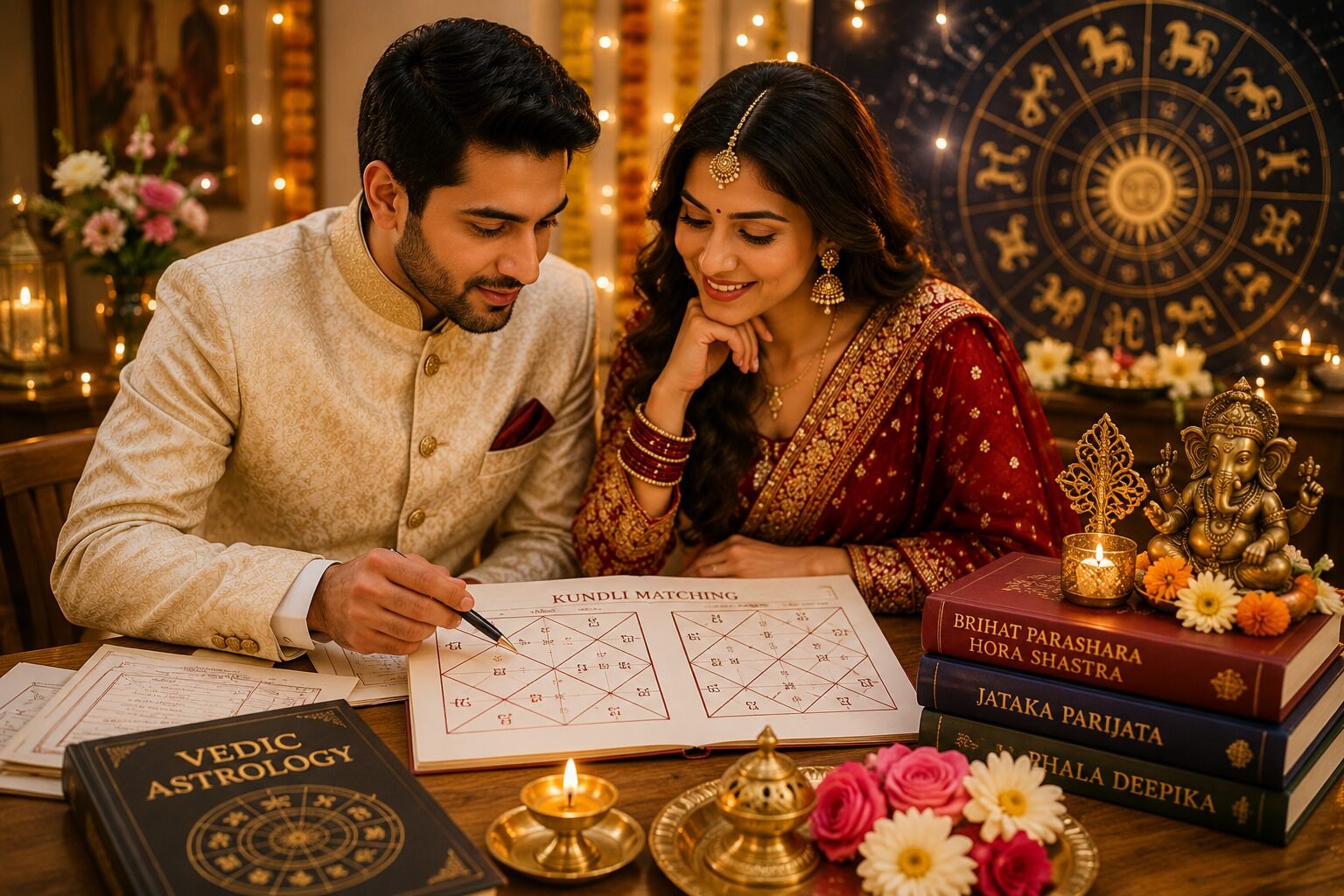
A Kundli, also known as a birth chart or natal chart, is created using a person’s date, time, and place of birth. Astrologers analyze planetary positions, houses, signs, and various combinations that are believed to influence personality traits, strengths, challenges, and relationship dynamics.
What Is Kundli Matching?
Kundli matching remains one of the most recognized aspects of Indian matrimonial astrology. During this process, astrologers compare the birth charts of prospective partners to evaluate various areas of compatibility including emotional connection, communication styles, family life, health considerations, and long-term relationship potential.
The Ashtakoota Compatibility System
One of the most widely used compatibility systems is Ashtakoota matching. This framework evaluates multiple compatibility categories and assigns points that help astrologers assess potential harmony between two individuals.
The Modern Evolution of Matrimonial Astrology
Technology has transformed astrology dramatically. What once required extensive manual calculations can now be completed within seconds through advanced software, mobile applications, and online platforms. These innovations have made astrological services more accessible than ever.
The Rise of Online Matrimonial Platforms
Many modern matrimonial websites now integrate horoscope matching features directly into user profiles. These tools allow families and individuals to evaluate both traditional compatibility factors and contemporary criteria such as education, profession, lifestyle preferences, and personal interests.
Indian Matrimonial Astrology in a Global Society
As Indian communities have expanded around the world, matrimonial traditions have evolved. Families in North America, Europe, Australia, Africa, and the Middle East often combine traditional horoscope matching with modern dating practices, creating a unique blend of old and new approaches.
The Role of Muhurta in Wedding Planning
Even couples who place limited emphasis on compatibility matching may still consult astrologers when selecting wedding dates. Muhurta, the practice of identifying auspicious timing for important life events, remains a significant aspect of many Indian wedding traditions.
Why Many Families Continue to Value Astrology
For many families, astrology serves as a connection to cultural heritage and ancestral traditions. It provides continuity across generations and reinforces values that have been passed down for centuries.
The Psychological Appeal of Astrology
Many people find astrology valuable because it encourages self-reflection and discussion. Conversations about personality traits, communication styles, strengths, weaknesses, and relationship expectations can promote greater understanding between prospective partners.
Balancing Tradition and Modern Relationship Values
Today’s couples increasingly recognize that successful marriages depend upon communication, trust, respect, emotional intelligence, conflict resolution, and shared values. Astrology is often viewed as one factor among many rather than the sole determinant of compatibility.
What Relationship Experts Recommend
Marriage counselors frequently encourage couples to discuss finances, career goals, parenting philosophies, family expectations, religious beliefs, lifestyle preferences, and long-term aspirations before marriage. These practical conversations provide valuable insight into long-term compatibility.
Common Misconceptions About Horoscope Matching
Many people assume astrology guarantees either success or failure in a relationship. In reality, most modern practitioners view astrological compatibility as a tool for guidance rather than a definitive prediction of future outcomes.
The Influence of Technology on Traditional Practices
Artificial intelligence, cloud-based astrology software, mobile applications, and virtual consultations have significantly expanded access to astrological services. Technology allows traditional practices to remain relevant in an increasingly digital world.
Younger Generations and Changing Perspectives
Younger generations often approach astrology differently than their parents and grandparents. Many embrace traditions while maintaining a balanced perspective that prioritizes personal choice, mutual compatibility, and emotional connection.
Cultural Identity and Matrimonial Traditions
For many Indian families living abroad, astrology serves as an important cultural bridge. Participating in traditional practices helps preserve language, customs, religious values, and family heritage across generations.
The Future of Indian Matrimonial Astrology
As society continues to evolve, astrology is likely to continue adapting alongside it. Rather than disappearing, it has shown remarkable flexibility by integrating with technology, modern matchmaking systems, and changing social expectations.
Final Thoughts
Indian matrimonial astrology remains one of the world’s most enduring marriage traditions. Whether viewed as a spiritual practice, cultural custom, symbolic framework, or personal interest, it continues to influence how many families approach marriage. While successful relationships ultimately depend on the efforts of the individuals involved, astrology remains a meaningful source of guidance, tradition, and cultural continuity for millions of people worldwide.