Affiliate Disclaimer: This article may contain affiliate links. If you click through and make a purchase, we may earn a commission at no additional cost to you. These partnerships help support our content creation efforts.
Introduction
Independence Day is one of the most recognizable holidays in the United States. Today, it is filled with fireworks, barbecues, parades, and patriotic displays.
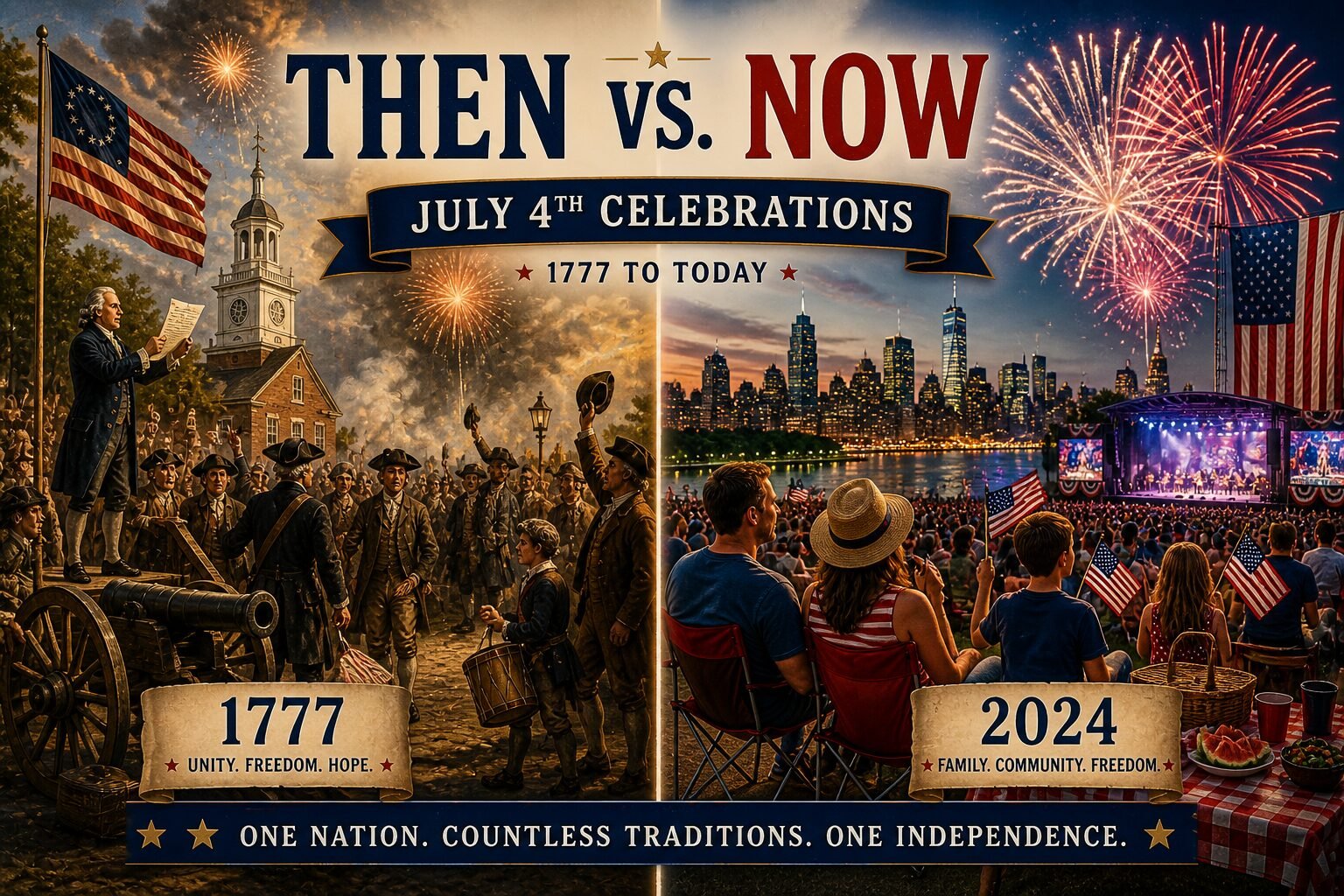
But the way Americans celebrate July 4th has changed dramatically over time. From the early days of the Revolutionary War to modern-day festivities, Independence Day has evolved alongside the nation itself.
This blog explores how these celebrations have transformed over the past 250 years—and what those changes reveal about American culture.
Early Celebrations (1770s–1800s)
The first Independence Day celebrations began during the Revolutionary War.
In 1777, Philadelphia hosted one of the earliest official celebrations. It included fireworks, cannon fire, music, and public readings of the Declaration of Independence.
These early celebrations focused heavily on patriotism and unity. They were meant to inspire hope and strengthen the bond between the colonies during a time of conflict.
Parades, speeches, and public gatherings became central traditions during this period.
19th Century: A Growing National Tradition
By the 1800s, Independence Day had become a widely celebrated national event.
Communities across the country hosted parades, festivals, and political speeches. It was a day not only for celebration but also for civic engagement.
Fireworks became more common, symbolizing the excitement and significance of independence.
During this time, July 4th helped reinforce a shared national identity as the country continued to grow and expand.
The Civil War Era: A Divided Celebration
During the Civil War, Independence Day took on a more complex meaning.
For a nation divided, the holiday served as both a reminder of unity and a reflection of conflict.
Celebrations varied depending on location, but the ideals of freedom and equality became even more central to the meaning of the day.
President Abraham Lincoln often referenced the Declaration of Independence, emphasizing its importance during this challenging time.
Late 19th and Early 20th Century: Formalizing Traditions
By the late 1800s, July 4th had become firmly established as a national holiday. In 1870, it was officially recognized by the federal government.
Fireworks, parades, and public ceremonies became standard across the country.
However, safety concerns began to emerge due to the widespread use of fireworks. This led to organized displays and regulations in many cities.
The holiday continued to evolve while maintaining its core traditions.
Mid-20th Century: Family and Community Focus
After World War II, Independence Day celebrations began to shift toward family and community.
Backyard barbecues, picnics, and neighborhood gatherings became more common. The holiday became less formal and more personal.
Television also played a role, bringing national celebrations into homes and creating a shared experience across the country.
This era helped shape the modern image of July 4th as both a national and personal celebration.
Modern Celebrations: Tradition Meets Entertainment
Today, Independence Day combines tradition with modern entertainment.
Large-scale fireworks displays, concerts, and public events draw massive crowds. Cities host elaborate celebrations that are broadcast nationwide.
At the same time, many families continue to celebrate in simple ways—gathering for meals, enjoying time together, and reflecting on the meaning of the day.
The balance between tradition and entertainment defines the modern Independence Day experience.
The Influence of Technology and Media
Technology has transformed how Americans celebrate July 4th.
Fireworks displays are more advanced and synchronized with music. Social media allows people to share their celebrations instantly.
Streaming services and television broadcasts make it possible to experience major events from anywhere.
These innovations have expanded the reach and impact of the holiday.
What Has Stayed the Same
Despite all the changes, some aspects of Independence Day have remained constant.
Patriotism, community, and reflection continue to be at the heart of the celebration.
The reading of the Declaration, the display of the American flag, and the appreciation of freedom remain central themes.
These enduring elements connect modern celebrations to their historical roots.
Why This Evolution Matters
The evolution of Independence Day celebrations reflects the evolution of the nation itself.
As America has changed, so too have the ways it celebrates its founding.
Understanding this evolution provides insight into how culture, values, and traditions develop over time.
Conclusion
Independence Day has come a long way from its early beginnings.
What started as a celebration of independence during a time of war has grown into a nationwide tradition that brings people together in countless ways.
While the methods of celebration have changed, the meaning behind the day remains the same—a recognition of freedom, unity, and the ongoing story of the United States.