Introduction: A Celebration Rooted in Culture and Community
Cinco de Mayo is more than just a festive occasion—it is a celebration deeply rooted in cultural traditions that reflect the history, pride, and identity of the Mexican people. While the holiday commemorates the victory at the Battle of Puebla, the way it is celebrated today is shaped by rich cultural expressions that have been passed down through generations.
From music and dance to food and community gatherings, Cinco de Mayo offers an opportunity to honor heritage while bringing people together in joyful and meaningful ways. These traditions are not only entertaining but also serve as powerful reminders of resilience, unity, and cultural pride.
Understanding the traditions behind Cinco de Mayo helps transform the celebration from a simple event into a deeper appreciation of Mexican culture and history.
Music and Dance: The Heartbeat of the Celebration
Music and dance are central to Cinco de Mayo celebrations, bringing energy, color, and emotion to the festivities. These performances are not just for entertainment—they are expressions of cultural identity and storytelling.
Mariachi Music: A Sound of Tradition
Mariachi music is one of the most recognizable elements of Mexican culture. Featuring instruments like trumpets, violins, and guitars, mariachi bands perform lively songs that celebrate love, history, and national pride.
During Cinco de Mayo, mariachi performances can be found at festivals, restaurants, and community events. Their music sets the tone for celebration and connects people to Mexico’s musical heritage.
Folklórico Dance: Movement and Storytelling
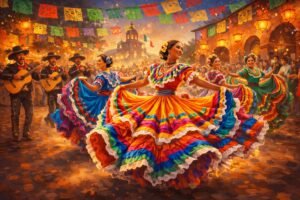
Folklórico dancing is another key tradition, known for its vibrant costumes and expressive movements. Dancers often wear colorful dresses with flowing skirts that create beautiful visual patterns as they move.
Each dance tells a story, often representing different regions of Mexico. Through these performances, audiences can experience the diversity and richness of Mexican culture.
Together, music and dance create an atmosphere of joy and celebration that defines Cinco de Mayo.

Food Traditions: A Taste of Heritage
Food plays a major role in Cinco de Mayo celebrations, offering a delicious way to connect with cultural traditions. Mexican cuisine is known for its bold flavors, fresh ingredients, and regional diversity.

Community Events: Bringing People Together
Cinco de Mayo is also defined by the sense of community it fosters. Public celebrations, parades, and festivals provide spaces for people to come together and celebrate culture collectively.
Conclusion: A Celebration of Culture, Unity, and Joy
Cinco de Mayo celebrations are shaped by a rich blend of cultural traditions that bring people together in meaningful ways. Through music and dance, food, and community events, the holiday becomes a vibrant expression of heritage and pride.
By understanding and appreciating these traditions, we can celebrate Cinco de Mayo with greater respect and awareness. It becomes more than just a festive day—it becomes a tribute to history, culture, and the enduring spirit of a people.
Whether experienced through a lively festival, a shared meal, or a cultural performance, Cinco de Mayo offers a powerful reminder of the importance of tradition, unity, and joy.