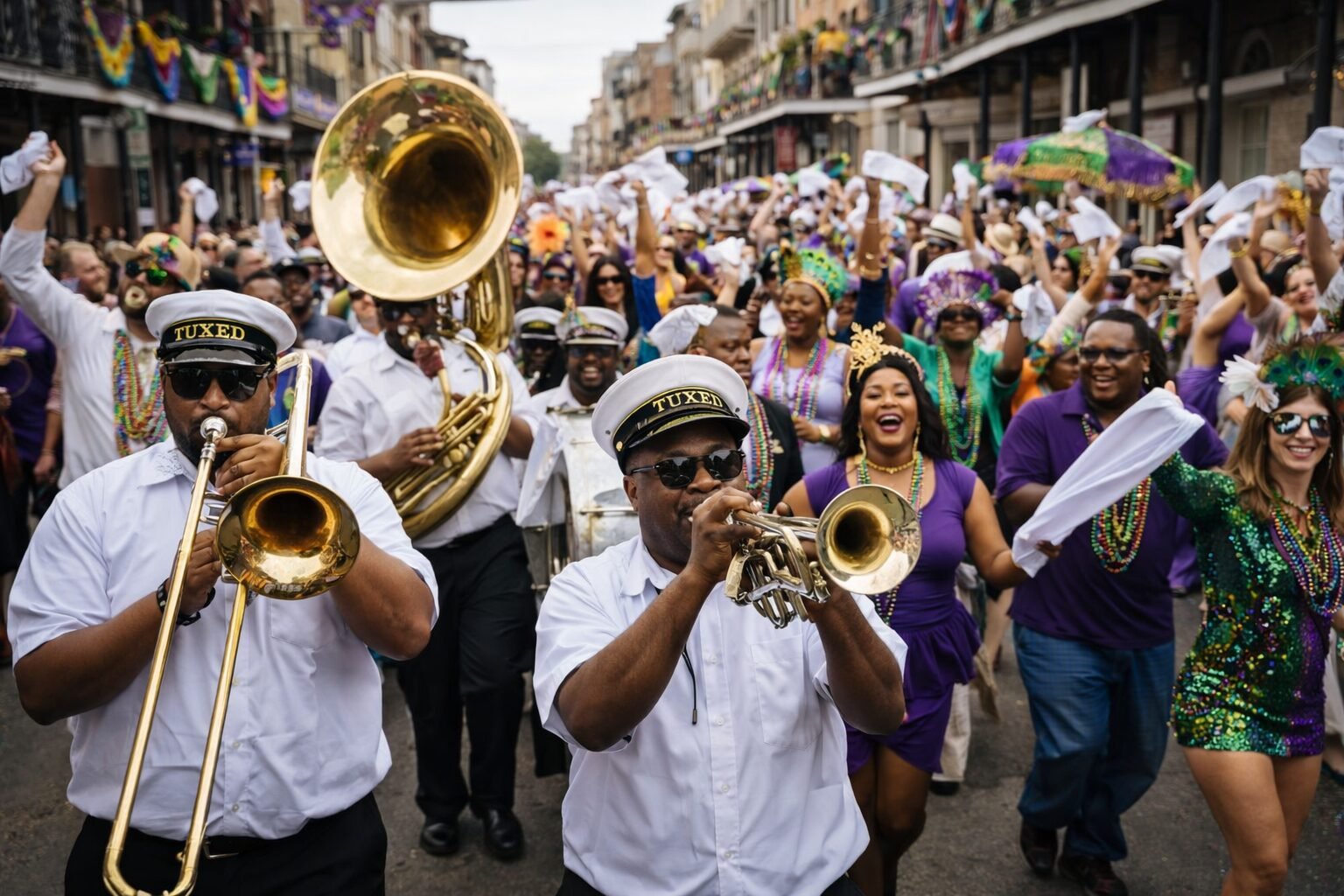

Mardi Gras is a celebration you can hear coming long before you see it. The music of Carnival spills into the streets, pours from balconies, and pulses through parades, carrying with it centuries of culture, history, and meaning. Certain songs have become inseparable from Mardi Gras—played year after year, generation after generation.
But these songs are more than catchy tunes. Each one tells a story about New Orleans, its people, and the spirit of Carnival. Understanding the meaning behind famous Mardi Gras songs deepens the celebration and connects listeners to the traditions that make Mardi Gras so powerful.
Here’s a closer look at some of the most famous Mardi Gras songs and the meanings behind them.
“When the Saints Go Marching In”
Few songs are as closely associated with New Orleans as “When the Saints Go Marching In.” While often heard as an upbeat anthem during Mardi Gras, the song originally has deep spiritual roots.
The song began as a gospel hymn focused on judgment day and the hope of salvation. In New Orleans, jazz musicians transformed it into a celebratory march, blending solemn origins with joyful expression.
During Mardi Gras, the song represents:
– Community unity
– Celebration of life
– The blending of sacred and secular traditions
Its transformation mirrors the spirit of Mardi Gras itself—turning reflection into joy.
“Iko Iko”
“Iko Iko” is one of the most recognizable Mardi Gras songs, especially tied to Mardi Gras Indian traditions.
The song reflects chants and call-and-response styles rooted in African and Afro-Caribbean cultures. Its lyrics reference Mardi Gras Indian tribes, their rivalries, and their vibrant parading traditions.
“Iko Iko” symbolizes:
– Cultural pride
– African and Caribbean heritage
– The living traditions of Mardi Gras Indians
Though its lyrics can seem mysterious, the song celebrates respect, identity, and pageantry.
“Mardi Gras Mambo”
Written by Professor Longhair, “Mardi Gras Mambo” is often considered the unofficial anthem of Mardi Gras.
The song combines rhythm and blues with Caribbean influences, creating an irresistible dance groove. Its lyrics explicitly invite listeners to join the Carnival celebration.
“Mardi Gras Mambo” represents:
– The excitement of Carnival season
– Invitation and inclusion
– New Orleans’ musical innovation
It’s a song meant to move both feet and spirit.
“Go to the Mardi Gras”
Also associated with Professor Longhair, “Go to the Mardi Gras” captures the anticipation leading up to Fat Tuesday.
Rather than focusing on the party itself, the song builds excitement for the journey—traveling, preparing, and counting down to the big day.
The song reflects:
– Anticipation and ritual
– The idea of Mardi Gras as a destination
– Community-wide excitement
It emphasizes that Mardi Gras is not just one day, but a season.
“Second Line (Parts 1 & 2)”
“Second Line,” originally titled “Picou’s Blues,” became a staple of New Orleans parades and celebrations.
The song’s rhythm is designed for movement, inspiring dancing, marching, and spontaneous participation. It is closely tied to second line parades, where the crowd becomes part of the performance.
Its meaning includes:
– Collective celebration
– Community participation
– Joy through movement
“Second Line” captures the interactive heart of Mardi Gras.
“Big Chief”
“Big Chief,” performed by Professor Longhair, pays tribute to Mardi Gras Indian culture.
The song honors the leaders of Mardi Gras Indian tribes and acknowledges their artistry, pride, and tradition.
“Big Chief” represents:
– Respect for Mardi Gras Indian leadership
– Cultural preservation
– Celebration of identity
It reminds listeners that Mardi Gras traditions are deeply rooted in community history.
“Do Whatcha Wanna”
This song, famously associated with the Rebirth Brass Band, has become a modern Mardi Gras staple.
Its message is simple but powerful: be yourself, express joy, and live in the moment.
During Mardi Gras, the song reflects:
– Freedom of expression
– Inclusivity
– The release of everyday constraints
It perfectly aligns with Carnival’s ethos.
“They All Ask’d for You”
This song celebrates local pride and New Orleans culture.
Often played during Mardi Gras, it highlights the city’s global influence while reaffirming its unique identity.
Its meaning includes:
– Pride in local culture
– Recognition of New Orleans’ influence
– Celebration of authenticity
It reinforces Mardi Gras as a reflection of place.
“Hey Pocky A-Way”
Performed by The Meters, “Hey Pocky A-Way” draws from Mardi Gras Indian chants and rhythms.
The song blends funk with traditional call-and-response patterns, creating a bridge between old traditions and modern sound.
Its meaning centers on:
– Cultural continuity
– Rhythm as communication
– Community connection
It’s a celebration of heritage through groove.
“Carnival Time”
“Carnival Time” is one of the most explicit Mardi Gras songs, directly celebrating Fat Tuesday.
The lyrics describe:
– Masking
– Parading
– Neighborhood celebration
It serves as a musical announcement that Mardi Gras has arrived.
Why These Songs Matter
These songs do more than entertain—they preserve history.
They:
– Pass traditions across generations
– Reflect cultural blending
– Reinforce community identity
Music ensures Mardi Gras traditions remain alive.
Music as Oral History
In many ways, Mardi Gras songs function as oral history.
Lyrics, rhythms, and melodies carry stories of:
– Struggle
– Celebration
– Survival
They tell stories that textbooks often overlook.
Teaching Mardi Gras Through Music
These songs provide powerful teaching tools.
They help listeners:
– Understand Mardi Gras culture
– Appreciate musical heritage
– Connect emotionally to tradition
Music makes learning accessible and memorable.
The Role of Repetition
v
Modern Interpretations and Covers
Many classic Mardi Gras songs have been reinterpreted by modern artists.
These covers:
– Keep music relevant
– Introduce traditions to new audiences
– Honor original creators
Evolution keeps Carnival music alive.
Experiencing These Songs During Mardi Gras
These songs are best experienced:
– In the streets
– At parades
– In community gatherings
Live performance adds energy and connection.
Why Meaning Enhances Celebration
Knowing the meaning behind Mardi Gras songs deepens enjoyment.
It transforms music from background noise into cultural experience.
Final Thoughts
Famous Mardi Gras songs are the soundtrack of Carnival, carrying meaning, memory, and identity through every note.
They remind us that Mardi Gras is more than beads and parades—it’s a living tradition told through sound.
When these songs play, they connect past and present, locals and visitors, musicians and dancers.
So listen closely, sing along, and let the music tell its story.
Because during Mardi Gras, every song has something to say—and every note invites you to celebrate.
Sing your way to Mardi Gras, but before you do pick=up personalized or customized gear for your crew at: Fat Tuesday Fashion