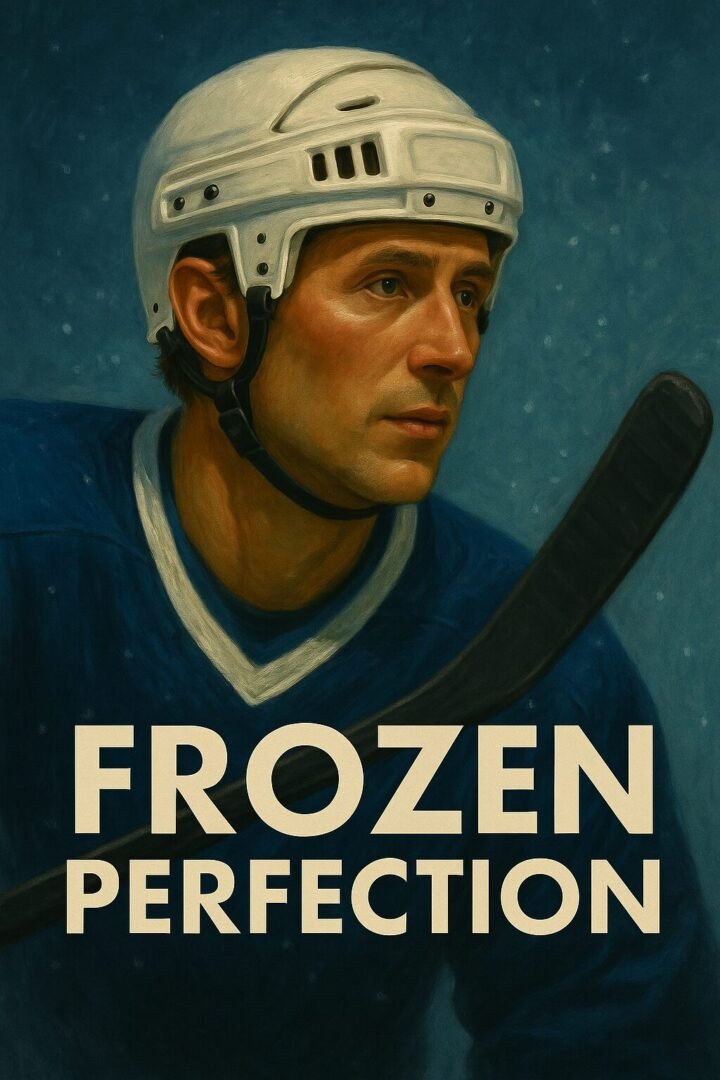


Born on January 26, 1961, in Brantford, Ontario, Wayne Douglas Gretzky didn’t just play hockey — he reinvented it. Over a two-decade career spanning from 1979 to 1999, Gretzky transformed the NHL from a cold-weather niche sport into a North American phenomenon. With every glide, pass, and goal, he elevated the game’s artistry, turning ice into a canvas and the puck into a brushstroke.
He wasn’t the biggest, strongest, or fastest — but he was the smartest. His gift was anticipation, a sixth sense that let him see the play before anyone else could even imagine it. By the time his career ended, Gretzky had rewritten the NHL record book — owning or sharing 61 records, including the unthinkable: 894 career goals, 1,963 assists, and 2,857 total points.
But numbers tell only part of the story. The rest is found in the roar of Edmonton crowds, the Hollywood lights of Los Angeles, the tears in New York, and the global admiration for a man who forever changed how greatness is defined.
Affiliate Disclosure: This post may contain affiliate links. If you purchase through these links, I may earn a small commission at no additional cost to you.
-
Early Life: A Prodigy in the Backyard
The story begins in a modest backyard rink on Varadi Avenue in Brantford, Ontario — affectionately called “The Wally Coliseum,” built by Wayne’s father, Walter Gretzky. Walter’s coaching was simple but revolutionary: think the game, not just play it.
Wayne was on skates at age two and playing organized hockey by six — against boys several years older. His talent was so advanced that local parents complained he was “too good” to play with their kids.
By ten years old, Gretzky had scored an unimaginable 378 goals and 139 assists in 85 games — numbers that sound fictional, but are real. Newspapers dubbed him “The Whiz Kid.”
Walter Gretzky’s mantra became family legend:
“Skate to where the puck’s going to be, not where it’s been.”
That single sentence would become the philosophy of Wayne’s entire career.
From Junior Sensation to NHL Phenomenon
At 16, Gretzky joined the Sault Ste. Marie Greyhounds of the Ontario Hockey League. It was there he first wore his iconic number 99, suggested by coach Muzz MacPherson after Wayne’s preferred No. 9 (Gordie Howe’s number) was taken.
By 17, Gretzky had already outgrown junior hockey. He signed with the Indianapolis Racers of the World Hockey Association (WHA) in 1978, then was quickly traded to the Edmonton Oilers. When the WHA merged with the NHL in 1979, Gretzky — barely 18 years old — brought with him a new style of play that would soon dominate the league.
The Edmonton Era: Building a Dynasty (1979–1988)
When Gretzky entered the NHL, the league still belonged to rugged enforcers and traditionalists. But Wayne and his young Edmonton teammates — Mark Messier, Paul Coffey, Jari Kurri, and Grant Fuhr — changed everything. They didn’t just play hockey; they orchestrated it.
Their offense was fast, creative, and relentless — dubbed “firewagon hockey.” Gretzky was its conductor, skating behind the net (“Gretzky’s Office”) where he could see everything unfold.
Between 1981 and 1987, the Oilers were nearly unstoppable. They won four Stanley Cups (1984, 1985, 1987, 1988) and appeared in five Finals. During this stretch, Gretzky produced numbers that remain unmatched:
| Category | Stat | Notes |
| Most Goals in a Season | 92 (1981–82) | Still an NHL record |
| Most Assists in a Season | 163 (1985–86) | Still an NHL record |
| Most Points in a Season | 215 (1985–86) | Still an NHL record |
| 50 Goals in 39 Games | 1981–82 | The fastest ever achieved |
| Consecutive MVP Awards | 8 (1980–1987) | The longest streak in any major sport |
During those years, hockey wasn’t just a sport in Edmonton — it was religion, and Gretzky was its high priest.
Teammate Mark Messier once said,
“Wayne made everyone around him better. He didn’t just see the play — he created it.”
A Night at the Northlands Coliseum
To understand Gretzky’s impact, imagine an Edmonton game in 1984. The Oilers are tied late in the third period. The crowd rises as No. 99 circles behind the net. One defender bites left — too late. Gretzky slips the puck across to Kurri for a one-timer. Goal. The horn blares, the fans erupt, and Gretzky just smiles that humble smile, gliding away as if he’d merely completed a math equation.
That was Gretzky: predictable in his unpredictability.
Records That Stagger the Imagination
By the end of the 1980s, Gretzky had achieved feats that may never be duplicated:
- 11 seasons of 100+ assists
- 15 seasons of 100+ points
- Four Stanley Cups
- 10 Art Ross Trophies (NHL scoring titles)
- 9 Hart Trophies (League MVPs)
- 5 Lady Byng Trophies (Sportsmanship)
His dominance wasn’t about brute force — it was about intellect. He anticipated every movement, every bounce of the puck. “He played like he had a time machine,” one opposing coach said.
Trade That Shocked the World
On August 9, 1988, the unthinkable happened: Wayne Gretzky was traded to the Los Angeles Kings.
The news hit Canada like an earthquake. Prime Minister Brian Mulroney reportedly called it “a national tragedy.” Edmonton fans wept openly in the streets. Gretzky himself cried during the press conference.
The trade wasn’t just a sports move — it was a cultural shift.
🔁 Trade Details
Los Angeles Kings received:
-
Wayne Gretzky
-
Mike Krushelnyski
-
Marty McSorley
Edmonton Oilers received:
-
Jimmy Carson
-
Martin Gelinas
-
Three first-round draft picks
-
1989
-
1991
-
1993
-
-
$15 million in cash (a massive sum at the time)
Hollywood Ice: The Los Angeles Kings Era (1988–1996)
When Gretzky arrived in Los Angeles, hockey was barely a blip on the Southern California sports radar. Within months, he turned it into a spectacle.
Stars like Tom Cruise, Magic Johnson, and Goldie Hawn filled the stands at The Forum. Ticket sales soared. Kids in California started signing up for hockey lessons. The ripple effect would eventually produce future stars like Auston Matthews, Trevor Zegras, and the Hughes brothers.
Gretzky made hockey cool in America.
The 1993 Stanley Cup Run
The pinnacle of Gretzky’s LA years came in 1993. Despite a less-talented roster than his Edmonton teams, Gretzky led the Kings to their first-ever Stanley Cup Final.
In Game 7 of the Western Conference Final against Toronto, Gretzky delivered one of the greatest performances of his career — scoring a hat trick and adding an assist to eliminate the Maple Leafs. Even Toronto fans gave him a standing ovation.
Though the Kings eventually lost to the Montreal Canadiens in the Finals, Gretzky’s legend only grew. He had proven that greatness transcends teams, cities, and expectations.
Cultural Icon and Ambassador
Off the ice, Gretzky became hockey’s first global superstar. He hosted Saturday Night Live, appeared in commercials, and became a household name even among non-fans.
But through it all, he remained humble, often crediting teammates and coaches for his success. “I just try to play the game right,” he said. “The records are for the fans to enjoy.”
Later Years: St. Louis, New York, and the Farewell (1996–1999)
In early 1996, Gretzky was traded to the St. Louis Blues, where he briefly reunited with Mark Messier. Though his stint was short, it included several clutch playoff performances.
Later that year, he signed with the New York Rangers, closing his career under the bright lights of Madison Square Garden. For three seasons, Gretzky served as mentor to young stars and continued to pile up assists with surgical precision.
On April 18, 1999, Gretzky played his final NHL game — a sold-out affair in New York against the Pittsburgh Penguins. The entire arena, including opposing players, gave him standing ovations after every shift. The final scoreboard was almost irrelevant. The night belonged to hockey’s greatest ambassador.
Coaching, Ownership, and Beyond
After retiring, Gretzky turned to leadership and business. He became a part-owner of the Phoenix Coyotes (now the Arizona Coyotes) and later served as their head coach from 2005 to 2009. While his coaching record was modest, his influence on the organization’s culture and fanbase was immense.
In 2002, Gretzky served as the Executive Director for Team Canada’s Olympic Hockey Program, leading Canada to its first Olympic gold medal in 50 years at the Salt Lake City Games. His fingerprints were all over that team — discipline, skill, unselfishness, composure.
Off the ice, Gretzky became a businessman, philanthropist, and mentor. His ventures include Wayne Gretzky Estates Winery & Distillery and numerous charitable initiatives benefiting youth sports and health research.
The Gretzky Family Legacy
Wayne’s family life is as integral to his story as his stats. In 1988, he married Janet Jones, an American actress, and together they raised five children. Their eldest son, Ty Gretzky, and daughter Paulina Gretzky have each built their own media and sports footprints (Paulina’s marriage to golfer Dustin Johnson unites two of sport’s most successful families).
But Wayne remains the humble father figure who prefers quiet dinners and watching hockey in his living room to the spotlight.
When asked what he was proudest of, Gretzky replied:
“My family. The records will fade someday. The family doesn’t.”
The Gretzky Effect: How He Changed the Game
Before Gretzky, hockey was largely confined to Canada and northern U.S. cities. After him, it became a continental phenomenon. His move to Los Angeles in 1988 sparked the “Sunbelt Expansion,” which led to new NHL teams in Dallas, Anaheim, Phoenix, Nashville, and Tampa Bay — markets previously unimaginable for hockey.
Television ratings surged. Youth hockey registrations in the U.S. skyrocketed. Suddenly, California and Texas were producing NHL players — a direct ripple of The Great One’s cultural influence.
Even in Canada, Gretzky’s success restored national pride in the sport after years of dominance by European teams in international play.
Fun Facts & Untouchable Records
- The 50-in-39 Feat: No one has ever come close to Gretzky’s 50 goals in 39 games — the next best is 50 in 46 (Lemieux).
- Assist Machine: Gretzky recorded more assists in 1985–86 (163) than any other player has total points that season.
- Never Traded for Performance: Despite playing for four teams, Gretzky was never traded because of decline — only due to financial or strategic reasons.
- Childhood Idol: Gretzky’s hero was Gordie Howe, who later became both his friend and rival — the two once played together in an exhibition game.
- Retired League-Wide Number: Gretzky’s No. 99 is retired across the entire NHL — the only player to receive that honor.
- First NHL Player to Reach 200 Points in a Season: He did it four times. Nobody else has done it once.
- Youngest to 1,000 Points: Age 23. He also became the oldest to 1,000 (at age 37), meaning he effectively did it twice.
Wayne Gretzky Products:
Wayne Gretzky Edmonton Oilers Fanatics Authentic Stack Retired Player Name & Number T-Shirt – Royal
Wayne Gretzky New York Rangers Mitchell & Ness Youth 1996/97 Power Play Player Jersey
Wayne Gretzky Los Angeles Kings Fanatics Retired Player Nickname T-Shirt – Black
1981 Wayne Gretzky Signed Game Used Titan Hockey Stick Beckett COA
Wayne Gretzky Autograph Edmonton 1986-87 Mitchell & Ness Blue Hockey Jersey -UDA
Wayne Gretzky Signed 1979-80 Topps Rookie Card Edmonton Oilers Legend Beckett