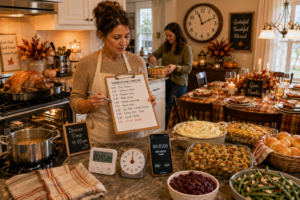
How to Keep Thanksgiving Running on Schedule
Affiliate Disclosure: This article may contain affiliate links. If you purchase cookware, kitchen timers, serving supplies, food-storage containers, organizational tools, or other Thanksgiving essentials through links on our website, we may earn a small commission at no additional cost to you. Your support helps us continue creating helpful Thanksgiving resources, hosting guides, and seasonal inspiration.
Thanksgiving dinner involves more than placing a turkey in the oven and waiting for guests to arrive. A successful celebration may require coordinating appetizers, side dishes, desserts, beverages, table settings, guest contributions, turkey resting time, carving, serving, and cleanup.
Without a clear schedule, even a carefully planned menu can become stressful. The turkey may finish before the side dishes are warm, guests may arrive while the kitchen is still covered with preparation supplies, or dinner may be delayed because several recipes need the oven at the same time.
The goal is not to control every minute perfectly. Thanksgiving naturally includes unexpected delays, early arrivals, forgotten ingredients, and conversations that last longer than planned. A good schedule provides structure while leaving enough flexibility to handle those surprises calmly.
This guide explains how to create a realistic Thanksgiving timeline, organize cooking tasks, coordinate guests, avoid common timing mistakes, and serve dinner as close to schedule as possible.
Choose the Dinner Time First
Begin by deciding when you want to serve the main meal.
Common Thanksgiving dinner times include:
- Early afternoon
- Midafternoon
- Early evening
- Traditional evening dinner
Choose a time that works for:
- Guest travel
- Children’s schedules
- Older relatives
- Overnight guests
- Family traditions
- Shared holiday plans
- Your cooking capacity
Once the serving time is established, you can work backward to schedule every other task.
Announce the Meal Time Clearly
Tell guests both the arrival time and the planned dinner time.
For example:
“Please arrive around 2:00 p.m. We plan to serve dinner at 3:00 p.m.”
This prevents confusion between the time guests should arrive and the time food will be served.
Avoid giving only a general statement such as “Come over in the afternoon.” Some guests may arrive hours earlier than expected, while others may appear after dinner is already on the table.
Allow a Buffer Between Arrival and Dinner
Guests need time to:
- Park
- Remove coats
- Greet family
- Use the bathroom
- Set down dishes
- Get beverages
- Settle children
A buffer of approximately 30 to 60 minutes often works well.
Do not schedule dinner for the exact moment guests are expected to walk through the door.
However, avoid creating such a long gap that everyone becomes hungry and restless before the meal.
Create a Complete Thanksgiving Task List
Before assigning times, write down every task connected to the celebration.
Possible categories include:
Food Preparation
- Thaw turkey
- Chop vegetables
- Prepare casseroles
- Bake desserts
- Make cranberry sauce
- Prepare appetizers
Thanksgiving Day Cooking
- Prepare turkey
- Roast turkey
- Cook side dishes
- Make gravy
- Warm rolls
- Reheat prepared foods
House Preparation
- Clean guest areas
- Set tables
- Arrange chairs
- Prepare bathroom
- Create coat area
- Organize children’s activities
Guest Services
- Set up beverage station
- Arrange appetizers
- Receive guest dishes
- Manage parking
- Greet arrivals
After-Dinner Tasks
- Clear plates
- Store leftovers
- Prepare coffee
- Serve dessert
- Begin cleanup
A complete list helps prevent small responsibilities from disrupting the main cooking schedule.
Work Backward From Dinner
Once the meal time is selected, schedule tasks in reverse order.
For example, if dinner will be served at 4:00 p.m.:
- 4:00 p.m.: Dinner served
- 3:50 p.m.: Food moved to buffet or table
- 3:40 p.m.: Turkey carved
- 3:15 p.m.: Turkey resting
- 3:00 p.m.: Turkey removed from oven
- 2:30 p.m.: Side dishes reheated
- 2:00 p.m.: Gravy ingredients prepared
- 1:30 p.m.: Rolls arranged and ready
- Earlier: Turkey cooking begins based on size and recipe
Working backward reveals exactly when each task must begin.
Estimate Turkey Timing Carefully
The turkey usually determines the rest of the schedule.
Consider:
- Turkey weight
- Whether it is fully thawed
- Whether it is stuffed
- Oven temperature
- Cooking method
- Resting time
- Carving time
Use a trusted recipe and food-safety guidance to estimate the cooking window.
Do not depend entirely on minutes per pound. Oven performance, turkey shape, starting temperature, and other conditions can affect the total time.
Use a food thermometer to confirm doneness.
Plan for the Turkey to Finish Early
A turkey that finishes slightly early is easier to manage than one that finishes late.
A properly rested turkey can remain warm while you finish side dishes and prepare gravy.
Build extra time into the roasting schedule rather than calculating the latest possible moment the turkey could go into the oven.
This buffer protects the meal from:
- Slow heating
- Inaccurate oven temperature
- Longer-than-expected cooking
- Frequent oven-door opening
- Partially frozen areas
- Unexpected preparation delays
Include Turkey Resting Time
Do not schedule carving immediately after the turkey leaves the oven.
Resting allows the juices to redistribute and gives you time to:
- Make gravy
- Reheat sides
- Warm rolls
- Clear counters
- Arrange serving dishes
Follow the resting guidance provided by your recipe.
Turkey resting time should be part of the schedule rather than treated as an optional delay.
Include Carving Time
Carving a large turkey may take longer than expected, especially for an inexperienced cook.
Allow time to:
- Transfer the turkey
- Remove legs and wings
- Slice breast meat
- Arrange the platter
- Clean the carving area
Consider asking an experienced family member to carve while you finish other dishes.
Prepare the cutting board, knife, platter, and towels before the turkey is ready.
Check Every Recipe’s Timing
Create a list for each dish showing:
- Preparation time
- Cooking time
- Oven temperature
- Resting time
- Reheating instructions
- Serving temperature
- Required appliance
Do not trust recipe titles such as “quick,” “easy,” or “30-minute” without reading the complete directions.
The listed time may not include:
- Chopping
- Ingredient preparation
- Oven preheating
- Cooling
- Chilling
- Assembly
- Cleanup
Create an Oven Schedule
Oven space is one of the biggest Thanksgiving scheduling challenges.
Write down:
- What goes into the oven
- What temperature it needs
- How long it cooks
- Which rack it uses
- Whether it can wait
- Whether it can be reheated
Group dishes requiring similar temperatures.
For example, several casseroles may be reheated together while the turkey rests.
Avoid planning five dishes that all require different temperatures during the same final hour.
Use Other Appliances
Free oven space by assigning dishes to:
- Slow cooker
- Electric pressure cooker
- Toaster oven
- Air fryer
- Microwave
- Electric skillet
- Warming tray
- Stovetop
Possible slow-cooker dishes include:
- Mashed potatoes
- Stuffing
- Macaroni and cheese
- Glazed vegetables
- Hot cider
- Gravy
Test unfamiliar appliances before Thanksgiving.
Make a Cooking Chart
A simple chart can keep the day organized.
Include columns for:
- Dish
- Preparation time
- Cooking method
- Start time
- Finish time
- Serving dish
- Person responsible
Example:
| Dish | Start Time | Finish Time | Cooking Method | Responsible Person |
| Turkey | 10:00 a.m. | 3:00 p.m. | Oven | Host |
| Mashed potatoes | 1:00 p.m. | 2:00 p.m. | Stovetop | Helper |
| Stuffing | 2:15 p.m. | 3:00 p.m. | Oven | Host |
| Green beans | 2:45 p.m. | 3:20 p.m. | Stovetop | Helper |
| Rolls | 3:20 p.m. | 3:35 p.m. | Oven | Host |
Adjust the schedule to your actual recipes.
Prepare a Thanksgiving Day Timeline
Your timeline should include both cooking and hosting responsibilities.
Early Morning
- Eat breakfast.
- Review the schedule.
- Prepare the turkey.
- Begin cooking the main dish.
- Set out serving pieces.
- Confirm guest contributions.
Late Morning
- Prepare appetizers.
- Finish cold dishes.
- Organize the beverage station.
- Begin side-dish preparation.
- Clear counters.
Early Afternoon
- Cook or reheat sides.
- Check turkey temperature.
- Arrange seating.
- Get dressed.
- Prepare for guest arrivals.
Final Hour
- Remove and rest turkey.
- Finish gravy.
- Warm rolls.
- Reheat casseroles.
- Transfer food to serving dishes.
- Carve turkey.
Meal Time
- Invite guests to sit or use the buffet.
- Provide brief serving instructions.
- Sit down and enjoy the meal.
Complete Cleaning Before Thanksgiving Morning
Avoid leaving major cleaning tasks for the same day as cooking.
Before Thanksgiving Day, clean:
- Guest bathroom
- Dining area
- Living room
- Entrance
- Kitchen floor
- Guest bedrooms, when needed
On Thanksgiving morning, focus only on quick maintenance such as wiping counters, emptying trash, and checking the bathroom.
Deep cleaning while the turkey cooks can make the day feel rushed and exhausting.
Set the Table the Day Before
Setting the table early removes one major responsibility from Thanksgiving Day.
Prepare:
- Tablecloth
- Plates
- Glasses
- Utensils
- Napkins
- Place cards
- Centerpiece
- Chairs
If the table must be used for food preparation, at least gather and organize the place settings in advance.
Assign Every Dish to a Serving Container
Place a label inside each serving bowl or platter indicating what it will hold.
Examples include:
- Turkey
- Potatoes
- Stuffing
- Green beans
- Cranberry sauce
- Rolls
Place the serving utensil with the dish.
This saves time during the final minutes before dinner.
Prepare Ingredients in Advance
The day before Thanksgiving, complete tasks such as:
- Chop vegetables
- Measure spices
- Prepare butter mixtures
- Assemble casseroles
- Wash herbs
- Make sauces
- Prepare pie fillings
- Organize pantry ingredients
Store everything safely and label containers clearly.
Having ingredients ready prevents repeated searching, measuring, and chopping during the busiest hours.
Use Make-Ahead Recipes
Choose several foods that can be prepared one or more days early.
Possible make-ahead dishes include:
- Cranberry sauce
- Pies
- Cheesecake
- Cold salads
- Dips
- Casseroles
- Stuffing components
- Gravy base
- Vegetable preparations
Follow safe storage instructions.
Make-ahead recipes reduce the number of active cooking tasks on Thanksgiving Day.
Bake Desserts Early
Desserts generally do not need to compete with the turkey for oven space on Thanksgiving morning.
Bake them:
- One or two days before
- Early Thanksgiving morning
- At another family member’s home
- Purchase them from a bakery
Store them according to recipe directions.
Bring desserts out after the main meal rather than allowing them to occupy valuable kitchen and table space all day.
Confirm Guest Contributions
Several days before Thanksgiving, contact guests who are bringing food.
Ask:
- What are you bringing?
- How many people will it serve?
- Will it arrive hot or cold?
- Does it require oven space?
- Does it need refrigeration?
- Are you bringing a serving utensil?
Do not discover at the last minute that several guest dishes require 45 minutes in the oven.
Ask Guests to Arrive With Food Ready to Serve
When possible, request that guest dishes arrive:
- Fully cooked
- In a serving container
- With a utensil
- Labeled
- At the appropriate temperature
Slow cookers are helpful for keeping foods warm.
Explain honestly when your oven or refrigerator space is limited.
Give Helpers Specific Arrival Times
Some relatives may be helping with setup, cooking, or child activities.
Tell them exactly when to arrive.
For example:
“Please arrive at 12:30 p.m. to help set up the buffet.”
Avoid asking helpers to come “whenever.” They may arrive too late to be useful or so early that they interrupt preparation.
Delegate Tasks Before the Holiday
Assign responsibilities such as:
- Guest greeting
- Beverage station
- Turkey carving
- Child activities
- Appetizer setup
- Coffee preparation
- Photography
- Leftover packing
- Cleanup
Delegation prevents the host from becoming the only person responsible for keeping the schedule moving.
Put One Person in Charge of Time
A trusted helper can watch the clock and remind you about upcoming tasks.
They might say:
- “The casseroles go in the oven in ten minutes.”
- “It is time to check the turkey.”
- “Guests begin arriving in half an hour.”
- “The rolls need to be warmed.”
Choose someone calm and organized.
The timekeeper should support the host rather than creating additional pressure.
Use Several Timers
Do not rely on memory.
Use timers for:
- Turkey checks
- Side dishes
- Rolls
- Desserts
- Stovetop cooking
- Guest arrival preparations
Label digital timers when possible.
You can also write down what each timer represents.
A ringing timer is not helpful when nobody remembers which dish it belongs to.
Use Phone Alarms for Major Milestones
Set alarms for events such as:
- Begin turkey preparation
- Check internal temperature
- Place casseroles in oven
- Get dressed
- Set out appetizers
- Begin carving
- Start coffee
Use timers for short cooking tasks and alarms for larger schedule reminders.
Post the Timeline Where Helpers Can See It
Place a printed schedule:
- On the refrigerator
- Inside a cabinet door
- On a clipboard
- Near the kitchen entrance
Helpers can see what happens next without repeatedly asking you.
Keep the document away from water, heat, and raw food.
Avoid Overloading the Final Hour
The final hour before dinner should not contain every major cooking task.
Try to limit it to:
- Turkey resting
- Reheating sides
- Finishing gravy
- Warming rolls
- Carving
- Transferring food
Any dish requiring complicated chopping, mixing, or long cooking should begin earlier.
Get Dressed Before the Final Cooking Period
Do not wait until the turkey is ready to begin preparing yourself.
Choose a time approximately one to two hours before dinner to:
- Shower
- Dress
- Complete hair or grooming
- Put on an apron
- Organize personal items
This prevents you from greeting guests while still wearing cooking clothes or rushing through the final food preparation.
Eat Breakfast and Drink Water
A hungry, dehydrated host is more likely to feel overwhelmed and make mistakes.
Eat a simple breakfast.
Keep water nearby throughout the day.
Consider a light snack before guests arrive if the meal is scheduled later.
Do not depend on tasting food as your only source of energy.
Keep the Kitchen Organized
An overcrowded kitchen slows every task.
As you work:
- Return ingredients.
- Discard packaging.
- Wash tools.
- Load the dishwasher.
- Wipe counters.
- Empty trash.
- Keep the sink clear.
Assign someone to handle cleaning while you cook.
A clear counter saves valuable minutes during plating and carving.
Start With an Empty Dishwasher
Run and unload the dishwasher before Thanksgiving morning.
Use it throughout preparation for:
- Mixing bowls
- Utensils
- Measuring cups
- Small cookware
Do not let every used item remain in the sink.
A functioning cleanup system keeps the schedule moving.
Limit Kitchen Traffic
Guests entering the kitchen to talk, sample food, or ask questions can disrupt the schedule.
Place:
- Appetizers
- Drinks
- Children’s activities
- Seating
outside the cooking area.
Politely explain when the kitchen must remain clear because hot dishes are moving.
Prepare Appetizers That Buy Time
A light appetizer can keep guests comfortable if dinner is delayed slightly.
Choose items that require little final preparation, such as:
- Cheese and crackers
- Vegetable tray
- Dip
- Mixed nuts
- Deviled eggs
- Snack mix
Avoid serving so much that guests lose interest in dinner.
Keep Appetizers Outside the Kitchen
Place them in the living room, dining room, or another safe area.
This keeps guests away from:
- Hot ovens
- Sharp knives
- Crowded counters
- Carving area
Assign someone to refill the appetizer tray when needed.
Set Up Beverages Before Guests Arrive
Prepare a self-service station containing:
- Cups
- Water
- Ice
- Soft drinks
- Cider
- Tea
- Coffee supplies
- Napkins
Keep beverages outside the primary cooking zone.
This reduces interruptions during the final preparation period.
Plan for Early Arrivals
Some guests may arrive ahead of schedule.
Have a plan so their arrival does not disrupt cooking.
Ask an early guest to:
- Greet others
- Arrange appetizers
- Fill water glasses
- Help children
- Check the bathroom
- Take coats
Do not stop every cooking task to entertain them.
Plan for Late Arrivals
Decide in advance how long you are willing to delay dinner.
For example:
“We plan to serve at 4:00 p.m. If anyone is delayed, we will save them a plate.”
This prevents the entire meal from becoming cold because one guest is running late.
Be compassionate about genuine travel problems, but protect the experience of everyone who arrived on time.
Communicate Delays Calmly
If dinner will be late, tell guests honestly.
You might say:
“The turkey needs about twenty more minutes, so please enjoy another drink and some appetizers.”
Avoid appearing panicked or repeatedly apologizing.
A brief delay is manageable when guests understand what is happening.
Never Rush Food-Safety Decisions
Do not remove turkey or other foods early simply to follow the schedule.
Safe cooking matters more than serving at an exact minute.
If the turkey is not ready:
- Continue cooking.
- Update the guests.
- Serve light appetizers.
- Finish other dishes.
- Adjust the carving time.
A delayed dinner is better than unsafe poultry.
Avoid Checking the Turkey Too Often
Opening the oven repeatedly releases heat and may extend cooking time.
Use:
- Oven-safe thermometer when appropriate
- Oven light
- Scheduled temperature checks
Follow your recipe and thermometer instructions.
Prepare a Backup Plan for a Late Turkey
If the turkey takes longer than expected, consider serving:
- Salad
- Bread
- Appetizers
- One or two side dishes
before the main course when appropriate.
Another option is simply to wait while keeping sides warm safely.
Do not create a full emergency menu unless the turkey has a serious problem.
Keep Finished Side Dishes Warm
Use safe warming methods such as:
- Slow cookers
- Covered baking dishes
- Warming trays
- Low oven
- Insulated containers
Some dishes, including mashed potatoes and certain casseroles, may hold well for a short period.
Avoid leaving food at unsafe temperatures.
Do Not Finish Every Dish Too Early
Some foods lose quality when held too long.
Items such as:
- Rolls
- Fried foods
- Delicate vegetables
- Certain sauces
may be best finished near serving time.
Build the schedule around which dishes hold well and which require last-minute attention.
Reheat in Batches
Do not wait until the final ten minutes to reheat everything.
Begin with dishes that:
- Take longest
- Hold heat well
- Need the oven
- Require stirring
Reheat delicate foods later.
Use a written order so nothing is forgotten.
Keep the Microwave Available
The microwave can help with small last-minute needs, including:
- Warming a forgotten side
- Melting butter
- Heating gravy
- Reheating a guest dish
Avoid filling it with storage containers or using it for one dish during the entire final hour.
Make Gravy While the Turkey Rests
Turkey resting time is ideal for completing gravy.
Prepare ingredients and utensils in advance.
You may also make a gravy base earlier and add drippings at the end.
This reduces the pressure of creating gravy completely from scratch at the last moment.
Warm Rolls Last
Rolls generally need only a short warming period.
Place them in the oven after casseroles are removed or while the turkey is being carved.
Set a timer because rolls can brown or burn quickly during a busy final stage.
Transfer Foods Efficiently
Create a plating station with:
- Serving dishes
- Utensils
- Hot pads
- Trivets
- Garnishes
- Towels
Move food directly from cooking containers to the assigned serving pieces.
Avoid searching through cabinets while guests wait.
Use Simple Garnishes
Do not let decorative details delay dinner.
A few simple garnishes may include:
- Fresh herbs
- Orange slices
- Cranberries
- Chopped nuts
- Black pepper
Skip anything that requires several minutes of careful arrangement.
Hot, flavorful food matters more than elaborate presentation.
Announce When Dinner Is Nearly Ready
Approximately ten minutes before serving, let guests know that the meal is almost ready.
This gives them time to:
- Finish conversations
- Use the bathroom
- Help children
- Refill drinks
- Find assigned seats
It also prevents everyone from crowding the kitchen asking when dinner will begin.
Explain the Serving Process
Tell guests whether the meal is:
- Buffet-style
- Family-style
- Plated
- Served in stages
For a buffet, explain where the line begins.
For family-style service, identify which dishes will remain on a sideboard.
Clear instructions prevent delays and confusion.
Serve Guests in a Practical Order
When appropriate, allow the following guests to begin first:
- Older adults
- Guests with mobility limitations
- Parents assisting young children
- Guests with dietary restrictions
Offer help rather than assuming it is required.
For very large groups, release tables one at a time to avoid a crowded buffet.
Sit Down Once the Meal Begins
The host should not spend the entire meal standing in the kitchen.
Once guests have food:
- Sit down.
- Eat.
- Participate in conversation.
- Enjoy what you prepared.
Ask helpers to monitor refills or additional servings.
Thanksgiving should include the host, not happen around them.
Schedule Dessert Separately
Do not attempt to serve dessert immediately after the last dinner plate is filled.
Allow a break for:
- Clearing dishes
- Conversation
- Coffee preparation
- Leftover organization
- Children’s activities
- Family photographs
A 20- to 45-minute pause often works well, depending on the group.
Announce when dessert will be available.
Prepare Coffee Before Dessert
Set up:
- Coffee maker
- Filters
- Coffee
- Cream
- Sugar
- Tea
- Cups
before guests arrive or during dinner cleanup.
Starting coffee preparation after dessert is already served can create another delay.
Create an After-Dinner Cleanup Schedule
The day does not need a strict ending, but a simple cleanup plan prevents food from sitting out too long.
After dinner:
- Clear perishable food.
- Refrigerate leftovers.
- Load the dishwasher.
- Wipe spills.
- Prepare dessert.
- Take out trash when needed.
Decorative cleanup can wait.
Food safety should remain the priority.
Delegate Leftover Packing
Assign one or two people to:
- Divide food
- Label containers
- Return guest dishes
- Store food
- Create take-home packages
Prepare containers before dinner.
This allows cleanup and dessert service to happen more quickly.
Build Flexibility Into the Timeline
A realistic schedule includes extra time between major tasks.
Avoid planning:
- Turkey removal at 3:50 p.m.
- Carving at 3:55 p.m.
- Dinner at 4:00 p.m.
That schedule leaves no room for resting, transfer, or unexpected delays.
Add buffers around:
- Turkey cooking
- Guest arrival
- Reheating
- Carving
- Serving
Flexibility keeps minor setbacks from affecting the entire day.
Identify Tasks That Can Be Dropped
Some details are optional.
If you fall behind, skip:
- Complicated garnish
- Extra appetizer
- Elaborate napkin folding
- Last-minute decoration
- Additional side dish
- Formal announcement
- Perfect kitchen cleanup
Know in advance which tasks can be eliminated without harming the celebration.
Create a Priority List
Divide tasks into three categories.
Must Be Done
- Cook turkey safely
- Prepare essential sides
- Provide seating
- Set up bathroom
- Store leftovers safely
Should Be Done
- Set up beverage station
- Arrange appetizers
- Prepare decorations
- Organize activities
Nice to Do
- Elaborate centerpiece
- Extra dessert
- Specialty garnish
- Multiple photographs
- Complex table details
Complete the must-do tasks first.
Keep Emergency Foods Available
Simple backup items may include:
- Frozen rolls
- Ready-made gravy
- Boxed stuffing
- Canned vegetables
- Store-bought dessert
- Salad ingredients
Use them only when necessary.
Unopened shelf-stable products can remain in the pantry afterward.
Avoid Scheduling Too Many Activities
Thanksgiving may already include:
- Travel
- Dinner
- Football
- Games
- Photographs
- Gratitude sharing
- Dessert
- Family traditions
Do not schedule every minute of the gathering.
Allow open time for conversation, rest, and spontaneous activities.
Keep Children’s Schedules in Mind
Children may become tired or hungry earlier than adults.
Consider:
- Serving a light snack
- Providing children’s activities
- Allowing younger children to eat first
- Creating a quiet space
- Avoiding excessively late dinner times
A realistic schedule should consider the youngest guests as well as the adults.
Consider Older Guests
Older relatives may prefer:
- Earlier meal time
- Shorter gathering
- Reliable transportation
- Accessible seating
- Time for medication
- Less waiting between arrival and dinner
Ask about their needs when setting the schedule.
Coordinate With Guests Attending Multiple Gatherings
Some guests may divide Thanksgiving between households.
Ask about their arrival and departure plans.
Do not delay the entire meal for someone who has chosen to attend another dinner first.
Communicate clearly so everyone understands when food will be served.
Avoid Changing the Dinner Time Repeatedly
Once the meal time is announced, avoid shifting it unless necessary.
Repeated changes create problems for:
- Travelers
- Parents
- Guests attending multiple gatherings
- People taking medication
- Helpers bringing hot food
Choose a realistic time from the beginning rather than an overly ambitious one.
Use a Printed Thanksgiving Planner
A printed planner may include:
- Guest list
- Menu
- Grocery list
- Cooking timeline
- Oven schedule
- Task assignments
- Seating plan
- Leftover plan
Keep all information in one place.
This is easier than searching through several text messages, notes, and recipe pages during the busiest part of the day.
Use Accessibility-Friendly Scheduling Tools
For hosts using screen readers or other assistive technology, consider:
- Clearly structured digital documents
- Simple heading levels
- Plain-text checklists
- Accessible reminder applications
- Talking timers
- Voice assistants
- Tactile labels on containers
- Audible thermometer alerts
Avoid relying entirely on visual charts, unlabeled images, or handwritten notes that may be difficult to access.
Conduct a Final Schedule Review
The evening before Thanksgiving, review:
- Turkey thawing progress
- Recipe instructions
- Oven schedule
- Guest arrival times
- Dish assignments
- Seating
- Timers
- Serving pieces
- Backup plan
Make adjustments before going to bed.
Do not wait until Thanksgiving morning to discover major conflicts.
Common Thanksgiving Scheduling Mistakes
Avoid these frequent problems:
- Setting an unrealistic dinner time
- Forgetting turkey thawing
- Depending only on estimated roasting time
- Ignoring resting and carving time
- Scheduling too many oven dishes together
- Waiting until the final hour to reheat sides
- Leaving table setup until Thanksgiving morning
- Failing to confirm guest dishes
- Allowing unlimited kitchen traffic
- Starting complicated recipes too late
- Forgetting to get dressed
- Waiting for every late guest
- Skipping food-safety checks to save time
- Creating a schedule with no flexibility
Most timing problems begin before Thanksgiving Day and can be prevented through careful preparation.
Thanksgiving Schedule Checklist
Before the holiday, confirm that you have:
- Clear arrival time
- Clear dinner time
- Complete task list
- Turkey cooking estimate
- Resting and carving time
- Oven schedule
- Make-ahead plan
- Guest dish information
- Helper assignments
- Multiple timers
- Serving dishes
- Beverage station
- Appetizer plan
- Dessert schedule
- Cleanup plan
- Buffer time
- Backup foods
Keep the checklist accessible throughout the day.
Frequently Asked Questions
How far in advance should I create the Thanksgiving schedule?
Create the basic schedule one to two weeks ahead after the menu is finalized. Review and adjust it during the final several days as guest contributions and cooking details become clearer.
How much extra time should I allow for the turkey?
Build in a meaningful buffer because turkey cooking times can vary. Include preparation, roasting, resting, and carving when calculating the complete timeline.
What should I do if the turkey is late?
Continue cooking until it reaches a safe internal temperature. Inform guests calmly, serve light appetizers, and keep completed side dishes warm using safe methods.
How can I keep side dishes warm?
Use slow cookers, covered baking dishes, warming trays, insulated containers, or a low oven when appropriate. Follow safe temperature guidance and avoid holding foods for excessive periods.
Should I delay dinner for late guests?
That depends on the circumstances, but you do not need to delay the entire meal indefinitely. Communicate the serving time clearly and save a plate for guests who arrive later.
How can I manage several oven dishes?
Create a written oven schedule, group dishes with similar temperatures, prepare foods in advance, and use slow cookers, stovetop recipes, or other appliances when possible.
Final Thoughts
Keeping Thanksgiving on schedule is not about creating a rigid day where every task happens at an exact minute. It is about building a clear plan that allows the meal, guests, and host to move comfortably from one stage of the celebration to the next.
Choose the dinner time first and work backward. Build in turkey preparation, cooking, resting, and carving time. Review every recipe, organize oven use, prepare dishes in advance, and delegate responsibilities before guests arrive.
Most importantly, leave room for flexibility.
The turkey may need additional time. A guest may arrive early. A casserole may take longer to heat, or a conversation may delay dessert. These moments do not mean the schedule has failed.
A successful timeline gives you enough structure to respond without panic.
When dinner is served safely, guests feel informed and comfortable, and the host has time to sit down and enjoy the meal, the schedule has done its job—even if Thanksgiving begins a few minutes later than originally planned.