How to Host Thanksgiving for the First Time
Affiliate Disclosure: This article may contain affiliate links. If you purchase cookware, serving supplies, Thanksgiving decorations, groceries, or other products through links on our website, we may earn a small commission at no additional cost to you. Your support helps us continue creating helpful Thanksgiving resources, holiday planning guides, and seasonal inspiration.
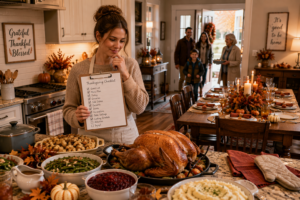
Hosting Thanksgiving for the first time can feel exciting, meaningful, and slightly overwhelming. You may be imagining a beautifully set table, a perfectly roasted turkey, warm side dishes, smiling guests, and a celebration that everyone remembers fondly.
At the same time, you may be wondering how to coordinate the menu, prepare the house, time the cooking, accommodate dietary needs, and keep everything within your budget. Thanksgiving involves many moving parts, and first-time hosts often place unnecessary pressure on themselves to make every detail perfect.
The good news is that a successful Thanksgiving does not require a professional kitchen, elaborate decorations, or dozens of homemade dishes. The best celebrations are welcoming, organized, comfortable, and centered on spending meaningful time together.
This complete guide will walk you through the process of hosting Thanksgiving for the first time, from creating the guest list and planning the menu to preparing the turkey, organizing the house, serving dinner, and managing leftovers.
Begin Planning Several Weeks Early
The earlier you begin, the easier Thanksgiving will feel.
Starting several weeks before the holiday gives you time to:
- Confirm the guest list.
- Create a realistic budget.
- Plan the menu.
- Assign dishes to guests.
- Purchase nonperishable ingredients.
- Check your cookware.
- Arrange seating.
- Prepare decorations.
- Review dietary needs.
- Build a cooking schedule.
Waiting until the final few days often creates unnecessary stress and expensive last-minute purchases.
You do not need to complete everything immediately. Break the planning process into smaller, manageable steps.
Set a Realistic Thanksgiving Budget
Before choosing the menu or buying decorations, decide how much you can comfortably spend.
Include categories such as:
- Turkey or main entrée
- Side dishes
- Appetizers
- Desserts
- Beverages
- Decorations
- Tableware
- Cooking supplies
- Storage containers
- Household supplies
- Emergency purchases
Your Thanksgiving celebration should not interfere with essential bills, groceries for the rest of the month, or other holiday expenses.
A simple celebration that fits your finances will be far more enjoyable than an elaborate dinner that creates debt and anxiety.
Decide What Kind of Thanksgiving You Want to Host
Thanksgiving does not need to follow one particular format.
You might host:
- A traditional seated dinner
- A casual buffet
- A family-style meal
- A Thanksgiving potluck
- A Friendsgiving celebration
- A Thanksgiving brunch
- A small dinner for immediate family
- An open-house dessert gathering
Your event style affects the menu, seating, serving pieces, and preparation time.
First-time hosts often find that a buffet or family-style meal is easier than an extremely formal dinner.
Create the Guest List
Begin with the number of people your home and budget can comfortably accommodate.
Consider:
- Available seating
- Dining space
- Parking
- Kitchen size
- Number of bathrooms
- Overnight accommodations
- Children attending
- Older guests
- Mobility needs
- Noise levels
- Cost per guest
Do not invite more people than you can reasonably host simply because it feels generous.
A smaller gathering can still feel warm and abundant.
Send Invitations Early
Thanksgiving schedules fill quickly because families often divide the day between several households.
Send invitations or contact guests early.
Include:
- Date
- Arrival time
- Dinner time
- Address
- Parking information
- What guests should bring
- Whether children are welcome
- Whether the event is formal or casual
- Response deadline
Ask guests to confirm attendance rather than assuming they will come.
A reliable guest count is essential for food and seating plans.
Ask About Dietary Restrictions
Before finalizing the menu, ask whether guests have:
- Food allergies
- Vegetarian preferences
- Vegan requirements
- Gluten restrictions
- Dairy restrictions
- Religious dietary requirements
- Medical dietary needs
- Strong food dislikes
You do not need to prepare an entirely separate feast for every guest.
Instead, make sure everyone has at least one satisfying main option and several side dishes they can safely enjoy.
Clearly label special dishes during the meal.
Do Not Try to Cook Everything Yourself
One of the biggest mistakes first-time hosts make is believing that hosting means preparing every dish alone.
Allow guests to contribute.
You might provide:
- Turkey
- Gravy
- Stuffing
- Beverages
Guests might bring:
- Appetizers
- Side dishes
- Bread
- Desserts
- Wine or other drinks
- Ice
Assign specific categories so you do not end up with four pumpkin pies and no vegetables.
Accepting help does not make you less of a host. It allows everyone to participate in the celebration.
Keep the Menu Manageable
A traditional Thanksgiving menu can become enormous very quickly.
For a first-time host, a complete but manageable menu might include:
- One main entrée
- Three or four side dishes
- Bread or rolls
- Gravy
- Cranberry sauce
- One or two desserts
- Several beverage choices
You do not need multiple versions of every dish.
Guests are unlikely to notice that you served four sides instead of nine. They will notice whether the food is warm, enjoyable, and served in a relaxed atmosphere.
Choose Familiar Recipes
Thanksgiving Day is not the best time to test several complicated recipes for the first time.
Choose dishes that:
- You have prepared before
- Have clear instructions
- Use familiar ingredients
- Can be made partly in advance
- Fit your cooking ability
- Do not require specialized equipment
You can add one new recipe for variety, but build most of the menu around dependable dishes.
Confidence is more valuable than complexity.
Consider a Partially Store-Bought Menu
Not every dish must be homemade.
Save time by purchasing items such as:
- Dinner rolls
- Pie crusts
- Cranberry sauce
- Bakery desserts
- Prepared appetizers
- Gravy
- Chopped vegetables
- Preassembled vegetable trays
You can personalize store-bought foods through attractive serving dishes, fresh garnishes, or simple additions.
Your guests came to enjoy the celebration, not inspect whether you made every ingredient from scratch.
Plan the Main Entrée Carefully
Turkey is the traditional centerpiece, but it is not mandatory.
Possible main dishes include:
- Whole turkey
- Turkey breast
- Ham
- Roast chicken
- Pork loin
- Vegetarian roast
- Stuffed squash
- Baked pasta
A turkey breast may be easier for a small gathering because it cooks faster, takes up less oven space, and creates fewer leftovers.
Choose the entrée that works best for your guest count and cooking comfort level.
Order the Turkey Early
If you want a fresh turkey, specialty bird, or specific size, place the order early.
Frozen turkeys are widely available but require enough time to thaw safely.
When choosing the size, consider:
- Number of adults
- Number of children
- Desired leftovers
- Amount of side dishes
- Oven size
- Roasting-pan size
Avoid buying a turkey so large that it does not fit comfortably in your oven or refrigerator.
Allow Enough Time to Thaw a Frozen Turkey
A frozen turkey requires several days to thaw safely in the refrigerator.
Do not leave it on the counter to thaw.
Check the package instructions and trusted food-safety guidance for the appropriate refrigerator-thawing time based on the bird’s weight.
Place the turkey on a rimmed tray to catch any liquid.
Confirm that it is fully thawed before Thanksgiving morning. Discovering that the center is still frozen can disrupt the entire cooking schedule.
Decide Whether to Stuff the Turkey
Cooking stuffing inside a turkey can make food-safety and timing more complicated.
First-time hosts may find it easier to bake stuffing separately in a casserole dish.
This approach offers several advantages:
- Easier temperature control
- More crisp surface area
- Faster turkey cooking
- Simpler serving
- Reduced food-safety concerns
You can still use turkey drippings or broth to provide rich flavor.
Use a Meat Thermometer
Do not rely only on cooking time, skin color, or whether the juices appear clear.
A reliable food thermometer helps determine when the turkey has reached a safe internal temperature.
Check the temperature in the appropriate areas without touching bone.
Follow current food-safety guidance and the instructions provided with your thermometer.
A thermometer reduces guesswork and helps prevent both undercooking and excessive dryness.
Do Not Wash Raw Turkey
Rinsing raw poultry can spread bacteria through water droplets onto counters, sinks, utensils, and nearby foods.
Instead:
- Remove the packaging carefully.
- Pat the turkey dry with paper towels if the recipe requires it.
- Discard the towels immediately.
- Wash your hands thoroughly.
- Clean and sanitize any surfaces contacted by raw poultry.
Keep raw meat separate from ready-to-eat foods.
Create a Complete Grocery List
Write the menu first, then list every ingredient required for each recipe.
Organize the shopping list by store section:
- Produce
- Meat
- Dairy
- Frozen foods
- Canned goods
- Baking supplies
- Beverages
- Household supplies
Check your pantry before shopping so you do not purchase duplicates.
Remember small but essential items such as:
- Butter
- Broth
- Salt
- Pepper
- Flour
- Sugar
- Cooking oil
- Herbs
- Foil
- Storage bags
- Ice
Shop in Stages
Avoid purchasing everything during one enormous shopping trip.
Two to Three Weeks Before
Purchase:
- Canned foods
- Flour
- Sugar
- Spices
- Broth
- Stuffing mix
- Beverages
- Foil
- Storage containers
- Decorations
Several Days Before
Purchase:
- Dairy products
- Fresh vegetables
- Bread
- Herbs
- Eggs
- Desserts
- Refrigerated items
Final Day or Two
Purchase:
- Ice
- Highly perishable foods
- Fresh bakery items
- Last-minute replacements
Spreading out the shopping reduces stress and allows you to take advantage of sales.
Review Your Cooking Equipment
Several days before Thanksgiving, confirm that you have everything required.
Useful equipment may include:
- Roasting pan
- Meat thermometer
- Large cutting board
- Sharp carving knife
- Mixing bowls
- Baking dishes
- Sauce pans
- Serving spoons
- Whisk
- Potato masher
- Colander
- Oven mitts
- Trivets
- Slow cooker
- Food-storage containers
Borrow rarely used items rather than buying expensive equipment for one meal.
Check the Oven Space
Thanksgiving recipes often compete for the oven.
Write down:
- Cooking temperature
- Baking time
- Dish size
- Whether the food can be reheated
- Whether it can be served at room temperature
- Whether a slow cooker can be used
Avoid planning several dishes that require different temperatures at the same time.
Choose some recipes that can be:
- Made on the stovetop
- Prepared in a slow cooker
- Reheated while the turkey rests
- Served cold
- Baked the day before
Use Slow Cookers and Other Appliances
A slow cooker can help free oven and stovetop space.
It may be used for:
- Mashed potatoes
- Stuffing
- Macaroni and cheese
- Glazed carrots
- Warm dips
- Hot cider
Other helpful appliances may include:
- Electric pressure cooker
- Toaster oven
- Electric warming tray
- Coffee maker
- Electric kettle
Do not overload electrical outlets or use extension cords unsafely.
Prepare as Much as Possible in Advance
Many Thanksgiving tasks can be completed before the holiday.
Several Days Before
- Clean the house.
- Wash serving dishes.
- Prepare decorations.
- Make cranberry sauce.
- Bake certain desserts.
- Chop sturdy vegetables.
- Prepare pie dough.
- Organize beverages.
The Day Before
- Assemble casseroles.
- Prepare stuffing.
- Make dips.
- Set the table.
- Arrange serving pieces.
- Label dishes.
- Chill drinks.
- Prepare breakfast for Thanksgiving morning.
The fewer tasks left for Thanksgiving Day, the more relaxed you will feel.
Create a Detailed Cooking Schedule
Work backward from the planned dinner time.
Include:
- Turkey preparation
- Turkey roasting
- Side-dish cooking
- Reheating
- Gravy preparation
- Turkey resting
- Carving
- Plating
- Guest arrival
- Appetizer service
Write exact times rather than relying on memory.
For example:
- 8:00 a.m.: Remove turkey from refrigerator according to recipe directions.
- 8:30 a.m.: Prepare turkey.
- 9:00 a.m.: Place turkey in oven.
- 11:00 a.m.: Assemble appetizers.
- 1:00 p.m.: Begin reheating side dishes.
- 2:00 p.m.: Remove turkey and allow it to rest.
- 2:15 p.m.: Prepare gravy.
- 2:30 p.m.: Carve turkey.
- 3:00 p.m.: Serve dinner.
Your exact schedule will depend on the menu and turkey size.
Add Extra Time to Every Task
Cooking frequently takes longer than expected.
Allow extra time for:
- Chopping
- Boiling
- Baking
- Reheating
- Carving
- Cleaning
- Finding utensils
- Answering the door
- Helping guests
A schedule with no flexibility will create stress the moment one dish runs late.
Aim to have the meal ready slightly early rather than exactly at the announced time.
Clean the Refrigerator Before Thanksgiving
You will need space for:
- Turkey
- Desserts
- Prepared casseroles
- Beverages
- Guest dishes
- Leftovers
Several days before the holiday:
- Discard expired food.
- Use older ingredients.
- Consolidate containers.
- Freeze appropriate items.
- Clean shelves.
- Arrange a designated area for Thanksgiving food.
Ask guests to bring dishes in containers that can be stacked or reheated easily.
Clean the House Strategically
Your home does not need to look perfect.
Focus on areas guests will actually use:
- Entrance
- Living room
- Dining area
- Kitchen
- Guest bathroom
- Coat area
Close doors to private rooms that do not need to be available.
Provide:
- Clean hand towels
- Soap
- Toilet paper
- Trash can
- Clear walking paths
Do not exhaust yourself deep-cleaning spaces that guests will never see.
Arrange Seating Early
Confirm that every guest has a safe and comfortable place to sit.
You may need:
- Dining chairs
- Folding chairs
- Benches
- Children’s table
- Highchair
- Additional table
Borrow seating before Thanksgiving rather than discovering a shortage shortly before dinner.
Make sure older adults and guests with mobility needs have sturdy, accessible chairs.
Decide Between Seated Service and a Buffet
Seated Family-Style Meal
Advantages:
- Traditional atmosphere
- Easy conversation
- Shared experience
Challenges:
- Requires table space
- Requires enough serving dishes
- Passing heavy dishes may be difficult
Buffet
Advantages:
- Easier for large groups
- Less crowded dining table
- Guests choose their portions
- Simpler serving
Challenges:
- Requires traffic planning
- Food must remain at safe temperatures
- Guests may need help carrying plates
Choose the approach that works best for your space and guests.
Plan the Buffet Flow
If serving buffet-style, arrange the table in this order:
- Plates
- Main dish
- Side dishes
- Bread
- Condiments
- Utensils and napkins, when practical
Place beverages and desserts at separate stations to prevent crowding.
Allow enough room for guests to move safely.
Avoid placing hot dishes where children can easily reach them.
Label the Serving Dishes
Before Thanksgiving, place a note inside or beside each serving dish indicating what food it will hold.
For example:
- Turkey
- Stuffing
- Mashed potatoes
- Green beans
- Cranberry sauce
- Gravy
Place the correct serving utensil with each dish.
This prevents confusion when several foods finish cooking at the same time.
Keep Decorations Simple
First-time hosts do not need elaborate décor.
Create a welcoming atmosphere with:
- Tablecloth or runner
- Small pumpkins
- Candles
- Autumn leaves
- Simple floral arrangement
- Seasonal napkins
- Gratitude cards
Use battery-operated candles for safety.
Keep centerpieces low enough that guests can see one another across the table.
Use What You Already Own
Neutral dishes and serving pieces work perfectly for Thanksgiving.
Add seasonal color through:
- Napkins
- Placemats
- Fruit
- Pumpkins
- Table runner
- Flowers
Do not feel pressured to purchase an entire set of Thanksgiving-themed dinnerware.
Reusable items from other seasons can create a beautiful table when arranged thoughtfully.
Prepare the Guest Bathroom
Stock the bathroom with:
- Toilet paper
- Hand soap
- Clean hand towels
- Tissues
- Trash can
- Air freshener, if desired
Remove personal medications and private items.
Check the bathroom periodically during the event.
This small detail helps guests feel comfortable and cared for.
Create a Coat and Bag Area
Choose a specific place for:
- Coats
- Handbags
- Umbrellas
- Children’s belongings
- Mobility equipment
Clear the area before guests arrive.
Avoid placing valuable items in an unsecured room where many people will be entering and leaving.
Plan Activities for Children
Children may become restless during a long meal or while adults are cooking.
Prepare activities such as:
- Coloring pages
- Thanksgiving crafts
- Board games
- Building toys
- Movies
- Outdoor games
- Gratitude cards
- Simple puzzles
Keep small toys away from babies and toddlers.
Designate a safe play area away from the kitchen.
Provide a Quiet Space
Some guests may become overwhelmed by noise, crowds, or long conversations.
If possible, provide a quieter room or corner with:
- Comfortable chair
- Lower lighting
- Books
- Headphones
- Calm activity
- Space for feeding a baby
- Room for necessary medical care
This can be helpful for children, older adults, neurodivergent guests, and anyone needing a short break.
Prepare Appetizers That Require Little Attention
Guests may arrive while you are finishing dinner.
Offer one or two simple appetizers such as:
- Cheese and crackers
- Vegetable tray
- Dip
- Mixed nuts
- Deviled eggs
- Snack mix
Avoid appetizers requiring last-minute frying or complicated assembly.
Do not serve so much that guests are full before dinner.
Set Up a Beverage Station
Allow guests to serve themselves drinks when possible.
Provide:
- Water
- Ice
- Cups
- Coffee
- Tea
- Apple cider
- Soft drinks
- Adult beverages, if offered
Keep beverages away from the busiest cooking area.
Label anything containing alcohol.
Provide attractive nonalcoholic options for children, drivers, pregnant guests, and anyone choosing not to drink.
Limit Last-Minute Cooking
Choose a menu that allows most food to be completed before guests arrive.
The final hour should focus on:
- Checking the turkey
- Reheating dishes
- Preparing gravy
- Warming rolls
- Carving
- Transferring food to serving dishes
Avoid recipes requiring constant attention during the arrival period.
Eat Breakfast on Thanksgiving Morning
Hosts often become so busy that they forget to eat.
Have a simple breakfast such as:
- Oatmeal
- Eggs
- Toast
- Fruit
- Yogurt
- Muffins
Staying nourished will help you maintain energy and patience.
Keep lunch light if dinner is scheduled early.
Get Dressed Before the Final Rush
Do not wait until every dish is finished to prepare yourself.
Choose comfortable clothing that allows you to:
- Move easily
- Bend
- Carry dishes
- Remain near a warm kitchen
- Sit comfortably
Wear an apron while cooking.
Complete your clothing and personal preparation before the final reheating stage whenever possible.
Expect Something to Go Wrong
Even experienced hosts encounter problems.
Possible issues include:
- Turkey takes longer than expected.
- A side dish burns.
- Someone forgets what they promised to bring.
- A glass breaks.
- Guests arrive early.
- Children become tired.
- Weather affects travel.
- A dessert does not set.
A minor problem does not ruin Thanksgiving.
Stay flexible and focus on solutions rather than perfection.
Prepare Simple Backup Foods
Keep a few emergency options available, such as:
- Extra rolls
- Boxed stuffing
- Frozen vegetables
- Prepared gravy
- Simple salad ingredients
- Store-bought dessert
You may never need them.
If unused and unopened, they can be saved for another meal.
Let Guests Help
When guests ask what they can do, give them a specific task.
They can:
- Fill water glasses.
- Carry dishes to the table.
- Warm bread.
- Watch children.
- Arrange appetizers.
- Take coats.
- Clear plates.
- Load the dishwasher.
- Prepare leftover containers.
People often enjoy contributing when the request is clear.
You do not have to manage everything alone.
Give Yourself Permission to Take Shortcuts
Shortcuts may include:
- Precut vegetables
- Bakery pies
- Prepared rolls
- Store-bought appetizers
- Disposable roasting pan
- Premade gravy
- Simple decorations
Use shortcuts that save meaningful time without sacrificing the traditions most important to you.
A relaxed host creates a better atmosphere than an exhausted host protecting an image of perfection.
Allow the Turkey to Rest
After the turkey comes out of the oven, allow it to rest before carving according to your recipe’s guidance.
Resting helps the juices redistribute and provides time to:
- Finish the gravy
- Reheat side dishes
- Warm bread
- Clear the counters
- Transfer food to serving dishes
Cover the turkey loosely rather than wrapping it so tightly that the skin becomes soggy.
Learn Basic Turkey Carving
Carving can feel intimidating, but it becomes easier when approached in sections.
A common approach involves:
- Removing the legs and thighs
- Separating drumsticks from thighs
- Removing the wings
- Slicing breast meat
- Arranging everything on a platter
Use a sharp knife and stable cutting board.
Do not carve while guests crowd around the work area.
Watching a reliable demonstration before Thanksgiving can increase your confidence.
Serve Food at Safe Temperatures
Keep hot foods hot and cold foods cold.
Do not leave perishable foods at room temperature for extended periods.
Use:
- Slow cookers
- Warming trays
- Chafing dishes
- Insulated containers
- Ice-filled bowls for cold dishes
Follow current food-safety guidance regarding serving and storage times.
When uncertain about a dish’s safety, do not serve it.
Make a Short Welcome Announcement
Once everyone is seated, thank the guests for coming.
You might also:
- Recognize those who contributed food.
- Explain dietary labels.
- Invite everyone to share gratitude.
- Offer a blessing, if appropriate for the group.
- Mention where beverages or additional utensils are located.
Keep the announcement brief and warm.
Do Not Apologize for Every Imperfection
First-time hosts often point out every mistake before guests notice it.
Avoid statements such as:
- “The turkey is probably dry.”
- “The table does not look right.”
- “I ruined the potatoes.”
- “Everything is running late.”
Present the meal confidently.
Guests are usually more focused on enjoying the food and company than evaluating your performance.
Keep Conversation Comfortable
A welcoming host helps create a respectful atmosphere.
Consider avoiding highly divisive topics if they commonly cause conflict in your family.
Prepare neutral conversation ideas such as:
- Family memories
- Holiday traditions
- Movies
- Travel
- Recipes
- Children’s activities
- Gratitude
- Upcoming celebrations
Do not force anyone to participate in games or public sharing.
Handle Dietary Questions Respectfully
Never embarrass a guest for declining a dish.
They may have:
- Allergy
- Medical condition
- Religious restriction
- Personal preference
- Sensory concern
- Private health reason
Allow people to choose what they eat without explanation.
Manage Dessert Timing
Guests may appreciate a short break between dinner and dessert.
Use that time to:
- Clear plates
- Package some leftovers
- Prepare coffee
- Allow guests to talk
- Take family photographs
- Let children play
Serve dessert after guests have had time to relax.
You do not need to place every dessert on the table during the main meal.
Create a Leftover Plan
Before guests arrive, decide how leftovers will be handled.
Prepare containers for:
- Turkey
- Side dishes
- Desserts
- Gravy
- Bread
Ask guests to bring reusable containers if you plan to share food.
Keep enough leftovers for your household before sending everything home.
Label foods with the date when appropriate.
Refrigerate Leftovers Promptly
Do not allow food to remain on the table all evening.
After dinner:
- Divide large portions into shallow containers.
- Refrigerate perishable food promptly.
- Freeze foods you will not use soon.
- Discard anything that has been left at unsafe temperatures.
Clean storage protects your guests and preserves the value of the meal.
Ask for Cleanup Help
You do not need to wash every dish while everyone else relaxes.
Assign simple tasks:
- Clear the table.
- Scrape plates.
- Store leftovers.
- Load the dishwasher.
- Wash large cookware.
- Wipe counters.
- Take out trash.
- Fold tables and chairs.
Leave nonessential cleanup until the next morning if necessary.
The goal is to restore order, not complete a deep cleaning immediately.
Avoid Sending Every Guest Home at Once
If possible, allow departures to happen naturally.
Help guests gather:
- Coats
- Bags
- Leftovers
- Children’s belongings
- Dishes they brought
Confirm that anyone who consumed alcohol has safe transportation.
Thank guests individually when practical.
Write Down What Worked
Within a day or two, record:
- Number of guests
- Turkey size
- Popular dishes
- Foods that created too many leftovers
- Cooking times
- Equipment shortages
- Seating arrangement
- Expenses
- Guest contributions
- Changes for next year
Your first Thanksgiving becomes a valuable planning guide for future celebrations.
Do Not Judge Success by Perfection
A successful Thanksgiving is not defined by:
- Flawless decorations
- Perfectly timed dishes
- Professional photographs
- An enormous menu
- A completely spotless house
It is defined by whether guests felt:
- Welcome
- Comfortable
- Included
- Well fed
- Appreciated
- Safe
Minor mistakes often become funny family stories later.
A Simple First-Time Thanksgiving Timeline
Three to Four Weeks Before
- Set the budget.
- Create the guest list.
- Send invitations.
- Ask about dietary needs.
- Choose the event style.
Two Weeks Before
- Finalize the menu.
- Assign guest dishes.
- Review recipes.
- Check equipment.
- Purchase nonperishable supplies.
One Week Before
- Confirm attendance.
- Arrange chairs and tables.
- Purchase remaining groceries.
- Begin cleaning guest areas.
- Prepare decorations.
Two to Three Days Before
- Begin thawing or confirm turkey progress.
- Bake desserts.
- Make cranberry sauce.
- Prepare casseroles.
- Organize serving pieces.
The Day Before
- Set the table.
- Chill beverages.
- Complete advance cooking.
- Prepare appetizers.
- Review the cooking schedule.
- Clean the kitchen.
Thanksgiving Morning
- Eat breakfast.
- Prepare and roast the turkey.
- Finish side dishes.
- Set up beverage and appetizer stations.
- Get dressed before the final cooking period.
Before Dinner
- Rest and carve the turkey.
- Make gravy.
- Reheat side dishes.
- Warm rolls.
- Transfer food to serving dishes.
After Dinner
- Clear dishes.
- Refrigerate leftovers.
- Serve dessert and coffee.
- Share leftover containers.
- Accept cleanup help.
First-Time Thanksgiving Host Checklist
Make sure you have:
- Confirmed guest list
- Written budget
- Final menu
- Dietary information
- Turkey or main entrée
- Cooking schedule
- Grocery list
- Meat thermometer
- Serving dishes
- Serving utensils
- Enough seating
- Beverage station
- Clean guest bathroom
- Leftover containers
- Backup food
- Cleanup supplies
A checklist removes the pressure of remembering everything at once.
Common First-Time Hosting Mistakes
Avoid these common problems:
- Inviting more people than the space allows
- Planning too many dishes
- Cooking several unfamiliar recipes
- Forgetting turkey-thawing time
- Ignoring oven space
- Trying to do everything alone
- Failing to ask about allergies
- Waiting until Thanksgiving Day to set the table
- Forgetting serving utensils
- Serving too many appetizers
- Cleaning the entire house instead of guest areas
- Failing to prepare leftover containers
- Expecting perfect results
- Refusing help
Good hosting is built on preparation and flexibility rather than total control.
Frequently Asked Questions
How early should I begin planning Thanksgiving?
Begin three to four weeks ahead when possible. This gives you time to confirm guests, plan the menu, assign dishes, shop gradually, and prepare the house without rushing.
How many dishes should a first-time host prepare?
One main entrée, three or four side dishes, bread, gravy, cranberry sauce, and one or two desserts are usually enough. The exact amount depends on the number of guests and whether others are contributing.
Should I host Thanksgiving as a potluck?
A potluck is an excellent option for a first-time host. It reduces the cost and cooking workload while allowing guests to contribute favorite dishes. Assign categories to keep the menu balanced.
What should I make ahead?
Cranberry sauce, desserts, dips, chopped vegetables, assembled casseroles, stuffing components, and certain side dishes can often be prepared ahead. Follow safe storage and reheating instructions for each recipe.
What if the turkey is not ready on time?
Keep guests comfortable with beverages and a light appetizer. Continue cooking the turkey until it reaches a safe internal temperature. Do not serve undercooked poultry simply to meet the planned dinner time.
Is it acceptable to serve store-bought food?
Absolutely. Store-bought rolls, desserts, appetizers, gravy, or side dishes can save time and reduce stress. Serve them attractively and focus your homemade effort on the recipes most important to you.
Final Thoughts
Hosting Thanksgiving for the first time may feel like a major responsibility, but it becomes much easier when you plan carefully and keep your expectations realistic.
Begin early, set a budget, confirm the guest list, create a manageable menu, and accept contributions from others. Prepare as much as possible before Thanksgiving Day and write a cooking schedule that includes extra time for unexpected delays.
Most importantly, remember that your guests are not coming to judge your turkey, inspect your decorations, or score your hosting abilities. They are coming to share food, conversation, gratitude, and time together.
Something may run late. A dish may not turn out exactly as planned. You may forget a garnish or need to use a store-bought backup. None of those things will determine whether the celebration succeeds.
When guests feel welcomed, included, comfortable, and appreciated, you have done your job as a host.
Your first Thanksgiving does not need to be perfect. It only needs to feel like a place where people are glad to gather.