

Affiliate Disclaimer: This post may contain affiliate links. If you make a purchase through one of these links, The Shopping Plaza may earn a commission at no additional cost to you.
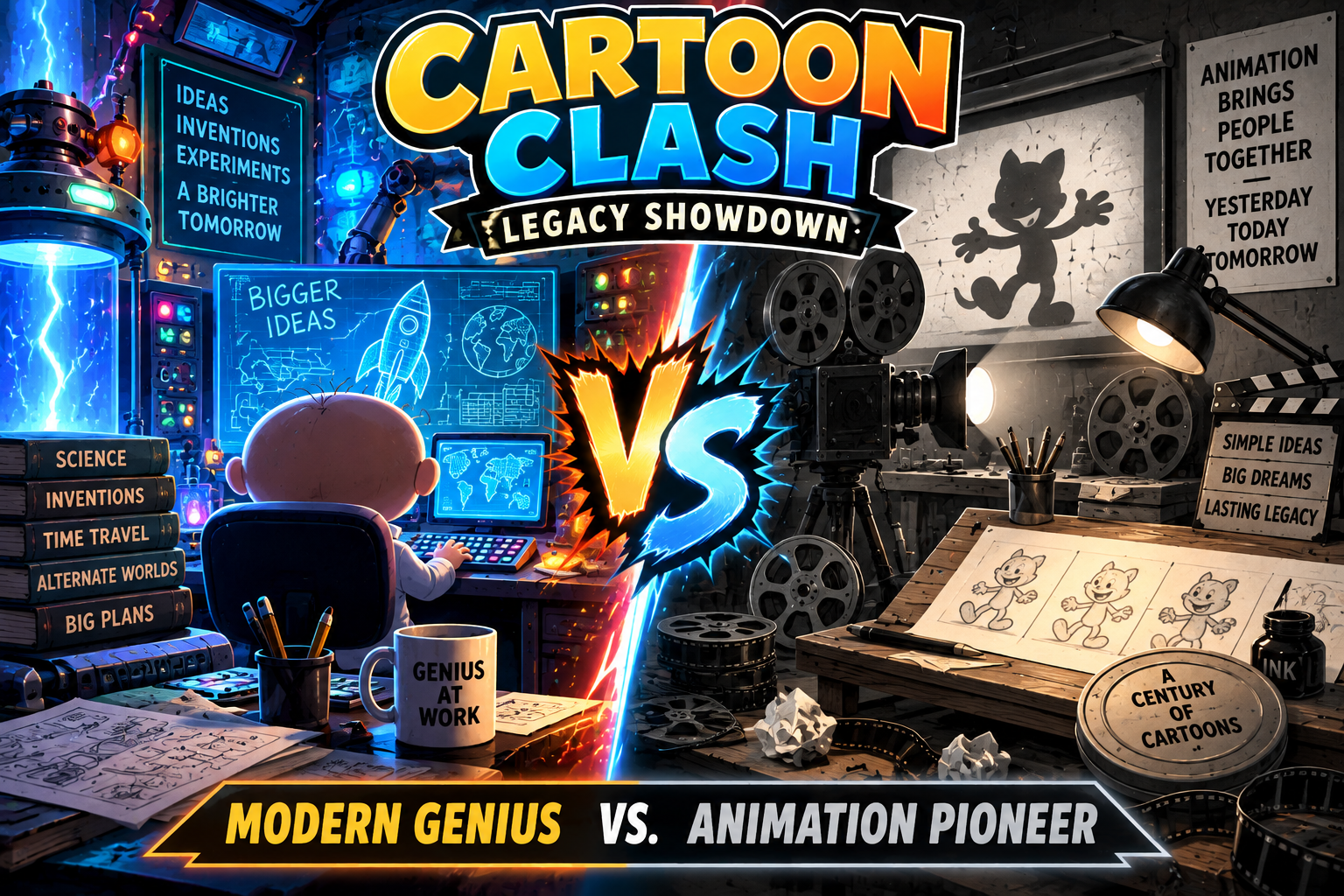
The next first-round matchup from Region B features one of the most fascinating generational clashes in the Cartoon Clash tournament. The #5 seed Stewie Griffin enters as the breakout star of one of modern television’s most successful adult animated series, while the #12 seed Felix the Cat arrives as one of the true pioneers of cartoon entertainment. This showdown pits modern satire against animation history. Stewie built his legacy through intelligence, sarcasm, elaborate inventions, time-travel adventures, musical performances, and an unusual friendship with Brian Griffin. Felix helped establish many of the foundations upon which animated characters and visual comedy were later built. Their résumés are difficult to compare because their careers belong to radically different eras and forms of animation. Stewie benefits from decades of serialized television storytelling and a massive supporting ensemble, while Felix carries the historical importance of becoming an international cartoon celebrity when the medium itself was still young. That means neither modern production values nor historical importance can automatically decide the matchup. Each character must earn the individual categories on the strength of what they accomplished within the standards and opportunities of their own era.
Round 1: Animation Quality
Stewie Griffin benefits from the consistency and technological advantages of modern television animation. Family Guy has developed a clean, immediately recognizable visual language that allows Stewie to move easily between ordinary domestic scenes, elaborate action sequences, science-fiction adventures, musical numbers, and cinematic parodies. His distinctive football-shaped head and expressive eyes make him visually identifiable even in silhouette, while later productions have been able to stage increasingly ambitious sequences involving time machines, alternate worlds, and large-scale set pieces. Felix the Cat came from a far earlier period when animators were still discovering what drawn characters could accomplish on screen. His simple black body and oversized eyes were exceptionally practical for silent-era animation and made his movements readable to audiences immediately. Felix’s early cartoons also used visual transformation and surreal movement in ways that were remarkably imaginative for their time. Judged fairly for their respective eras, Felix deserves enormous credit for innovation, but Stewie’s productions ultimately offer greater visual sophistication, consistency, and range. Winner: Stewie Griffin.
Round 2: Character Cast
Felix the Cat has appeared with a variety of companions and adversaries across different versions of his franchise, but much of his earliest appeal came from his ability to carry adventures through his own personality and visual ingenuity. That independence is impressive, yet it leaves him at a disadvantage in a category specifically measuring the depth and chemistry of a supporting cast. Stewie operates inside the enormous Family Guy ensemble. Peter, Lois, Chris, Meg, Brian, Quagmire, Cleveland, Joe, and numerous recurring characters create a world capable of supporting many different comedic relationships. Stewie’s bond with Brian is particularly important because it evolved into one of the show’s strongest partnerships, allowing the pair to carry road adventures, emotional stories, science-fiction plots, and extended conversations that would not work with other characters. His interactions with Lois and the rest of the Griffin family also shift between hostility, affection, indifference, and absurdity depending on the story. Felix is historically important as a solo star, but Stewie has access to a deeper ensemble and more developed long-term character chemistry. Winner: Stewie Griffin.
Round 3: Humor & Entertainment
Felix became a star before synchronized dialogue was a standard tool of animation, so much of his entertainment value had to come through physical comedy, visual invention, personality, and situations that audiences could understand without spoken punchlines. That accomplishment should not be underestimated. His cartoons could transform ordinary objects, environments, and even visual symbols into parts of the joke, helping demonstrate how flexible animated comedy could become. Stewie, however, operates with a much wider modern comedic toolkit. His sophisticated vocabulary, dry sarcasm, exaggerated intelligence, violent ambitions, theatrical personality, pop-culture references, and frequent contrast with his status as a baby create an inherently absurd comic premise. Over time, the character also developed beyond his earliest world-domination persona, opening the door to travel stories, emotional comedy, musical sequences, and his highly entertaining exchanges with Brian. Felix is a foundational entertainer, but Stewie offers greater variety in the ways he can generate humor and sustain a modern television story. Winner: Stewie Griffin.
Round 4: Cultural Impact
This is where Felix the Cat’s historical résumé becomes extremely difficult to defeat. Felix emerged when animated characters were still a novelty and became one of the medium’s earliest international celebrities. His recognizable black design spread beyond the screen into merchandise and popular imagery, helping demonstrate that an animated character could become a commercial and cultural personality in his own right. That achievement came before many of the cartoon icons that later dominated the industry. Felix therefore represents more than a successful franchise; he represents an early proof of concept for the animated character as a lasting popular-culture figure. Stewie Griffin has also achieved major cultural recognition. His appearance, voice, personality, quotes, merchandise, memes, and Family Guy presence have made him one of the best-known adult-animation characters of the modern era. Yet Stewie entered a culture in which cartoon celebrity was already firmly established. Felix helped build that culture at a time when there was no established roadmap to follow. The historical scale of that influence gives Felix the round. Winner: Felix the Cat.
Round 5: Iconic Episodes & Moments
Felix’s earliest adventures are important pieces of animation history, and his visual tricks helped create memorable moments long before television episodes became the dominant unit of animated storytelling. Later versions also added recognizable elements such as his Magic Bag of Tricks, expanding the mythology surrounding the character. Stewie, however, has benefited from hundreds of television episodes and numerous stories built specifically around his personality. His time machine has opened the door to alternate histories, future timelines, parallel realities, and large-scale adventures that dramatically expand what a Griffin-family story can become. His road adventures with Brian have become recurring showcases for their chemistry, while musical numbers and elaborate schemes give him memorable moments outside the show’s normal domestic structure. Some of Stewie’s strongest stories also reveal vulnerability beneath the sarcasm, allowing the character to produce emotional moments alongside comedy. Felix has historically significant shorts, but Stewie possesses a larger collection of clearly defined modern episodes and story arcs associated directly with him. Winner: Stewie Griffin.
Round 6: Creativity & Originality
Felix the Cat earns one of his strongest victories here because his creators were working when the grammar of cartoon storytelling was still being invented. Early Felix cartoons treated the animated world as something that could bend, stretch, transform, and ignore physical reality whenever the joke demanded it. Objects could become tools, visual symbols could enter the action, and Felix himself could interact with environments in ways live-action characters could not. That kind of experimentation helped establish animation as more than photographed drawings; it showed that the medium could create its own logic. Stewie is certainly a creative character. The idea of a hyper-intelligent infant building advanced machines, plotting elaborate schemes, speaking with extraordinary sophistication, and later traveling through time gives Family Guy opportunities for stories far outside the normal sitcom format. Yet Stewie’s creativity exists within a mature animation industry that had already spent generations exploring impossible worlds and exaggerated characters. Felix was helping define those possibilities when very few precedents existed. For originality within the history of the medium, Felix takes the category. Winner: Felix the Cat.
Round 7: Era Difficulty
Stewie entered television during an intensely competitive period for adult animation. Family Guy had to establish itself in a landscape shaped by major animated comedies and survive cancellation, changing viewing habits, and an ever-expanding entertainment market. Remaining relevant across many seasons is a genuine accomplishment, and Stewie’s development into one of the show’s most recognizable characters demonstrates his ability to stand out even within a crowded modern genre. Felix, however, faced a more fundamental challenge. He emerged when animation was still defining its commercial identity, technical language, and relationship with audiences. There was no long-established cartoon industry filled with proven formulas, television networks, streaming platforms, or decades of character merchandising to provide a roadmap. Early creators had to discover how animated personalities could communicate, entertain, and remain memorable with comparatively limited technology. Felix not only succeeded under those conditions but became one of the first characters to prove that animation could produce a genuine star. The difficulty of pioneering an industry while competing for public attention gives Felix a major advantage. Winner: Felix the Cat.
Round 8: Legacy Endurance
This round creates perhaps the hardest judgment of the matchup. Stewie Griffin remains an active and highly visible character in contemporary animation. New Family Guy content continues to give him fresh stories, while streaming, clips, memes, merchandise, and social media keep his personality accessible to audiences who were not present when the series first debuted. That active relevance matters because legacy is not only about age; it is also about whether a character continues to connect with current viewers. Felix the Cat, however, has survived for more than a century as a recognizable symbol of early animation. He has moved through silent cartoons, later animated revivals, television, merchandise, comics, and repeated rediscovery by animation historians and fans. Felix is no longer as dominant in mainstream entertainment as he once was, but simply remaining recognizable after such enormous changes in technology and popular culture is extraordinary. Stewie has stronger present-day visibility, while Felix possesses vastly greater proven longevity. Because this category specifically measures long-term staying power as well as continued relevance, Felix’s century-spanning endurance narrowly outweighs Stewie’s current advantage. Winner: Felix the Cat.
Final Verdict
This matchup becomes considerably tighter once both characters are judged by the standards of their own eras rather than simply comparing modern visibility. Stewie Griffin earns clear advantages in Animation Quality, Character Cast, Humor & Entertainment, and Iconic Episodes & Moments. His long-running partnership with Brian, sophisticated comic persona, ambitious science-fiction stories, and continued presence in contemporary television make him an exceptionally strong modern competitor. Felix the Cat answers with victories in Cultural Impact, Creativity & Originality, Era Difficulty, and Legacy Endurance. Those wins are not honorary awards for being old; they reflect Felix’s role in helping establish the animated character as a worldwide entertainment figure, his experimentation during the medium’s formative years, the difficulty of succeeding without an established animation industry, and more than a century of survival. The result is the first true deadlock of this Region B matchup: four categories apiece. To break the tie, the deciding question becomes which résumé better fulfills Cartoon Clash’s ultimate goal of identifying the stronger overall legacy. Stewie is the more active contemporary entertainer, but Felix’s influence reaches into the foundations of the medium itself. Without discounting Stewie’s enormous modern success, Felix’s pioneering impact and century-spanning endurance give him the narrowest possible edge in the tiebreaker.
Final Result: Felix the Cat pulls off the #12-over-#5 upset after the eight categories finish tied 4-4. Felix advances to the second round on the strength of the overall-legacy tiebreaker, while Stewie Griffin exits after winning four categories and proving why he remains one of modern adult animation’s defining characters.
Audience Challenge
Did Felix’s pioneering influence and century of endurance deserve to break the 4-4 tie, or should Stewie’s stronger modern entertainment résumé and continued relevance have sent him into the second round? When Cartoon Clash reaches a deadlock, should historical influence outweigh current cultural presence? Cast your vote, defend your choice, and continue following Legacy Showdown: Cartoon Clash as Region B continues.