
Affiliate Disclosure: This article may contain affiliate links. If you purchase products or services through links in this article, The Shopping Plaza may earn a commission at no additional cost to you.
Food has a unique way of bringing generations together, making family recipes one of the most meaningful ways to personalize a wedding celebration. Whether your reception is a formal dinner or a relaxed gathering, incorporating treasured family dishes allows you to honor loved ones while creating unforgettable memories for your guests.
Why Family Recipes Matter
Family recipes are much more than collections of ingredients and cooking instructions—they are treasured traditions that preserve memories, celebrate heritage, and connect generations through the simple act of sharing a meal. Every recipe passed down from parents, grandparents, or great-grandparents carries a story, whether it’s a beloved Thanksgiving side dish, a famous dessert served at every holiday gathering, or a signature entrée that has become a staple at family celebrations. By incorporating these cherished recipes into your Thanksgiving wedding menu, you invite guests to experience not only delicious food but also the history, love, and traditions that helped shape your family.
One of the most meaningful aspects of including family recipes is the sentimental value they bring to your special day. Your wedding marks the beginning of a new chapter in your life together, while family recipes serve as a beautiful reminder of the generations who came before you. Serving Grandma’s famous pumpkin pie, your father’s secret stuffing recipe, your mother’s homemade rolls, or a favorite family casserole allows loved ones to feel the presence of family traditions throughout the celebration. For relatives who recognize these dishes, every bite can spark warm memories, meaningful conversations, and heartfelt stories that bring generations closer together.
Family recipes also provide a unique opportunity to honor loved ones who may no longer be with you. Preparing a favorite dish that belonged to a grandparent or another cherished family member can become a touching tribute that keeps their memory alive during one of life’s most important milestones. Many couples choose to include a small note on the menu or a sign near the buffet explaining the significance of a particular recipe, allowing guests to appreciate not only the flavors but also the story behind them. These thoughtful details add emotional depth to the reception and remind everyone that family traditions continue through each new generation.
Another wonderful benefit of incorporating family recipes is the chance to celebrate your heritage. Whether your families have roots in Italy, Ireland, Mexico, Germany, Poland, Greece, or another part of the world, traditional recipes help showcase the cultures and customs that have been passed down over time. A Thanksgiving wedding provides the perfect setting to blend classic holiday favorites with cultural specialties, creating a menu that reflects both families coming together as one. Guests often enjoy discovering dishes they may have never tasted before while learning more about the backgrounds and traditions that make your families unique.
For couples whose families each have their own beloved holiday traditions, combining recipes from both sides of the family can symbolize the joining of two households. Imagine serving one family’s famous sweet potato casserole alongside the other family’s signature cranberry relish or pairing homemade dinner rolls from one side with a treasured pie recipe from the other. This thoughtful blend of traditions beautifully represents the beginning of a new family while honoring the history of both.
Including family recipes also creates wonderful conversation among guests. Relatives often gather around familiar dishes, sharing stories about past Thanksgiving dinners, childhood memories, holiday mishaps, and favorite family traditions. Younger generations may hear stories they’ve never heard before, while older family members enjoy reminiscing about celebrations from years gone by. These shared conversations strengthen family bonds and create meaningful moments that extend far beyond the wedding meal itself.
Even if you decide to update or modernize a traditional recipe, the heart of the dish can remain intact. Many couples work with their caterers to elevate beloved family recipes with elegant presentation while preserving the flavors everyone knows and loves. A simple casserole can become an individually plated side dish, or a treasured pie recipe can be transformed into miniature tarts without losing its sentimental significance. This combination of tradition and creativity allows couples to honor the past while embracing the style of a contemporary wedding.
Ultimately, family recipes remind everyone that weddings are about much more than beautiful venues, elegant décor, or elaborate celebrations—they are about bringing families together and creating lasting memories. By incorporating recipes that have been cherished for generations, you transform your reception meal into a heartfelt tribute to your family’s history while beginning new traditions of your own. The food you serve becomes part of your love story, connecting the past, celebrating the present, and laying the foundation for the family traditions you and your spouse will one day pass on to future generations.
Choosing the Right Recipes
Choosing which family recipes to include in your Thanksgiving wedding menu is one of the most meaningful parts of the planning process. Every family has dishes that have become synonymous with holiday gatherings, birthday celebrations, reunions, or Sunday dinners, but not every recipe will be the best fit for a wedding reception. The goal is to select recipes that carry sentimental value while also being practical to prepare and serve for a large group of guests. By finding the right balance between tradition, presentation, and functionality, you can create a menu that honors your family’s history while providing an exceptional dining experience for everyone in attendance.
Start by thinking about the recipes that immediately remind you of home and family gatherings. Perhaps it’s your grandmother’s homemade stuffing that has appeared on every Thanksgiving table for decades, your mother’s famous mashed potatoes, your grandfather’s roasted turkey seasoning, or an apple pie recipe that’s been passed down through several generations. These signature dishes often evoke powerful memories and emotions, making them wonderful additions to your wedding menu. Guests who are familiar with these recipes will appreciate seeing beloved family traditions incorporated into such an important celebration, while those trying them for the first time will gain a deeper appreciation for your family’s story.
It’s equally important to consider how well each recipe translates to a large reception. A favorite family recipe that works perfectly for ten people may require adjustments when serving one hundred or more guests. Talk with your caterer about which recipes can be scaled successfully without sacrificing quality or flavor. Professional caterers can often preserve the heart of a treasured recipe while making small modifications that allow it to be prepared efficiently and served beautifully. This collaboration ensures that your family’s signature dishes remain authentic while meeting the practical needs of a wedding reception.
Another helpful approach is to choose recipes that represent different generations of your family. For example, you might include your great-grandmother’s dinner rolls, your grandmother’s sweet potato casserole, your parents’ favorite holiday side dish, and a dessert recipe that you and your fiancé have made together during recent Thanksgivings. This creates a meaningful timeline of family traditions, showing how recipes have connected loved ones across multiple generations. It also symbolizes the beginning of a new chapter, as your own family traditions become part of that ongoing legacy.
If both families have their own cherished holiday favorites, consider building a menu that celebrates both sides equally. A bride’s family recipe for homemade cranberry relish could be paired with the groom’s family’s famous cornbread stuffing. One family’s pumpkin pie recipe might be served alongside the other’s pecan pie or sweet potato pie. Combining recipes from both families beautifully represents the joining of two households while allowing guests to experience the traditions that each family has treasured for years.
You don’t have to limit yourself to main courses and side dishes, either. Family traditions can appear throughout the entire menu. Signature appetizers, homemade breads, soups, desserts, beverages, or even late-night snacks can all be inspired by meaningful family recipes. Perhaps your family always serves a special cheese ball before Thanksgiving dinner, or maybe your fiancé’s family is known for homemade cinnamon rolls served the morning after the holiday. Incorporating these smaller traditions adds personality and creates delightful surprises throughout the reception.
As you narrow your choices, think about the recipes that spark conversation and fond memories. Ask parents, grandparents, aunts, uncles, and siblings which dishes they remember most from family celebrations. You may discover that certain recipes hold special significance for multiple generations. These conversations often uncover stories that you never knew before, making the planning process even more meaningful and helping you appreciate the traditions you’re carrying forward.
Presentation should also be considered when selecting recipes. Some beloved comfort foods can be elevated with elegant plating or creative serving styles while still maintaining their familiar flavors. A traditional casserole might be served in individual ramekins, homemade rolls could be displayed in beautiful bread baskets, and a classic pie recipe can be transformed into elegant mini tarts or bite-sized desserts. These thoughtful updates preserve the authenticity of the recipe while fitting seamlessly into a sophisticated wedding reception.
Don’t forget to consider the diverse tastes and dietary needs of your guests. If a treasured family recipe contains common allergens or isn’t suitable for certain dietary preferences, work with your caterer to create an alternative version that stays true to the original flavors whenever possible. Offering gluten-free, vegetarian, vegan, or dairy-free adaptations allows more guests to enjoy the recipes that are meaningful to your family without feeling excluded.
Finally, remember that the recipes you choose will become part of your own family’s history. Years from now, you and your spouse may continue serving these same dishes during Thanksgiving celebrations with your children and grandchildren, adding your own stories and memories to recipes that have already stood the test of time. Your wedding is not only an opportunity to honor the traditions of the past but also to begin new traditions that future generations will one day cherish.
By carefully selecting recipes that are meaningful, practical, and representative of both families, you’ll create a wedding menu that is rich in flavor, heritage, and heartfelt memories. More than simply serving a delicious meal, you’ll be sharing a piece of your family’s history and inviting every guest to become part of a celebration that beautifully connects generations through food, tradition, and love.
Honor Both Families
One of the most beautiful aspects of a wedding is that it represents far more than the union of two people—it also marks the coming together of two families, each with its own unique traditions, memories, and cherished recipes. A Thanksgiving wedding provides the perfect opportunity to celebrate this union by incorporating meaningful dishes from both sides of the family into your reception menu. Doing so sends a powerful message that your marriage is built on mutual respect, appreciation, and a desire to honor the people who helped shape your lives. It’s a simple yet heartfelt way to recognize that two family histories are becoming part of one new story.
Including recipes from both families allows everyone to feel represented throughout the celebration. Perhaps the bride’s family has a famous sweet potato casserole that has been served every Thanksgiving for generations, while the groom’s family is known for their homemade stuffing or signature cranberry sauce. Serving both dishes side by side symbolizes the blending of traditions and creates a menu that reflects the backgrounds of each family equally. Guests often appreciate seeing familiar recipes they recognize from past family gatherings, while also enjoying the opportunity to experience traditions from the other family.
This thoughtful approach can extend well beyond the main meal. Appetizers, breads, side dishes, desserts, beverages, and even late-night snacks can all represent different family traditions. One family may contribute a treasured pumpkin pie recipe, while the other shares its famous pecan pie or homemade dinner rolls. Perhaps one family has always served a special holiday punch, while the other is known for a beloved apple crisp or cranberry dessert. By weaving these recipes together throughout the reception, couples create a menu that tells the story of both families coming together in celebration.
For couples from different cultural backgrounds, combining family recipes becomes even more meaningful. Thanksgiving offers a wonderful opportunity to blend traditional holiday favorites with cultural specialties that have been enjoyed for generations. Italian families may include homemade lasagna or baked ziti alongside roasted turkey, while Mexican families might serve tamales or Mexican rice as part of the celebration. Polish pierogies, Greek spanakopita, Irish soda bread, German spaetzle, Southern cornbread dressing, or Caribbean rice dishes can all beautifully complement classic Thanksgiving fare. This fusion of cultures not only creates an exciting and diverse menu but also celebrates the unique heritage that each family brings into the marriage.
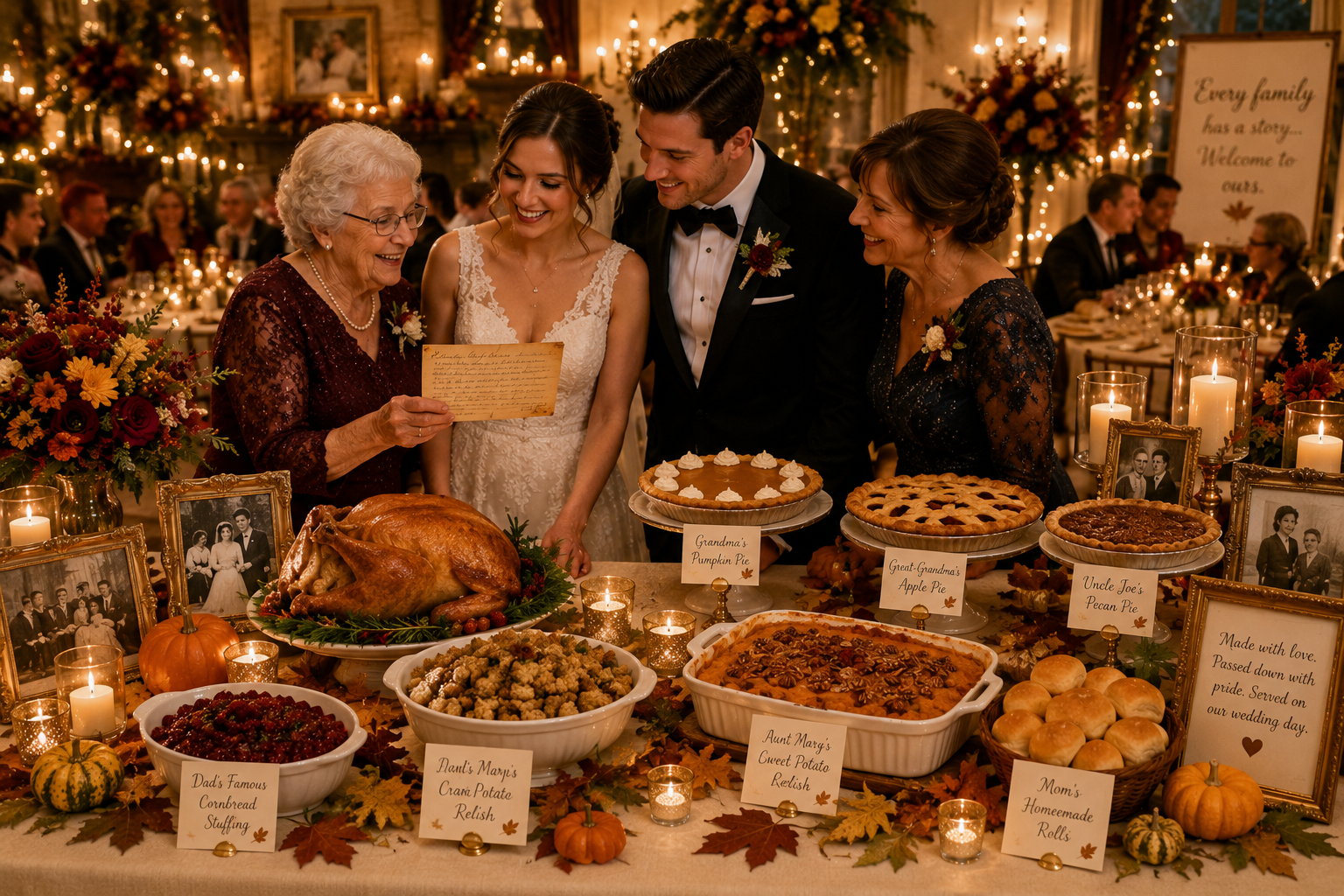
Many couples also choose to recognize the origins of these special recipes by sharing their stories with guests. Small menu cards, framed signs, or table displays can explain where a particular recipe came from and why it holds special meaning. For example, a sign might read, “Grandma Mary’s Pumpkin Pie has been served at every Thanksgiving in the Smith family for over 50 years,” or “This cornbread stuffing recipe has been passed down through four generations of the Johnson family.” These personal touches transform the meal into a storytelling experience, allowing guests to connect more deeply with your family’s history.
The planning process itself can become a meaningful family activity. Invite parents, grandparents, aunts, uncles, or siblings to help choose the recipes that best represent each family. These conversations often uncover treasured stories, forgotten traditions, and favorite memories that may not have been shared otherwise. Involving loved ones in the decision-making process also helps them feel included in the wedding planning and reinforces the importance of family throughout the celebration.
If your caterer is preparing the meal, work together to preserve the authenticity of each recipe while adapting it for a larger reception. Professional chefs can often recreate family favorites using the original ingredients and techniques while presenting them in an elegant, wedding-worthy style. Whether served buffet-style, family-style, or as plated meals, these dishes retain their sentimental value while fitting seamlessly into a sophisticated reception.
Couples can even take the idea a step further by creating a “Family Favorites” section on the reception menu. This dedicated portion of the menu can highlight recipes contributed by both families, allowing guests to easily recognize the personal significance behind each dish. Some couples also choose to include a brief thank-you note in the menu, expressing gratitude to their families for passing down traditions that continue to bring people together through food.
Honoring both families isn’t limited to recipes that have existed for generations. You and your spouse can also introduce a new signature dish that represents the beginning of your own family traditions. Perhaps it’s a dessert you discovered together while traveling, a favorite meal you’ve cooked as a couple, or a unique recipe you’ve created yourselves. Serving this alongside treasured family recipes symbolizes the bridge between the past and the future, showing that while you honor the traditions you’ve inherited, you’re also creating new ones that future generations may one day cherish.
Ultimately, including recipes from both sides of the family is about far more than creating a delicious menu—it’s about celebrating the people, memories, and traditions that have shaped your lives. Every shared recipe represents love, hospitality, and generations of family gatherings that have led to this special moment. By thoughtfully blending these cherished traditions into your Thanksgiving wedding, you create a reception that truly reflects the joining of two families into one, ensuring that everyone feels welcomed, valued, and connected as they celebrate the beginning of your new life together.
Work With Your Caterer
One of the most important steps in incorporating family recipes into your Thanksgiving wedding menu is choosing a caterer who appreciates the sentimental value behind those dishes. While professional caterers are experts at preparing meals for large gatherings, they won’t automatically know the unique flavors, techniques, and traditions that make your family’s recipes so special. Sharing these treasured recipes well in advance gives your caterer the time needed to understand each dish, test different preparation methods, source the appropriate ingredients, and determine how best to recreate the original recipe while serving dozens—or even hundreds—of guests.
Whenever possible, provide your caterer with complete recipes rather than simple ingredient lists. Include detailed cooking instructions, family notes, and even small tips that have been passed down through generations. Perhaps your grandmother always added a pinch of nutmeg to her mashed potatoes, your father basted the turkey with a special herb butter every thirty minutes, or your aunt insisted that homemade rolls should rise twice before baking. These seemingly small details often make the difference between a dish that tastes good and one that tastes exactly like the family favorite everyone remembers.
If your family recipes have never been formally written down, consider sitting with parents, grandparents, or other relatives to document them before meeting with your caterer. Many treasured family recipes have been prepared “by feel” for decades, using measurements like “a handful,” “a pinch,” or “cook until it looks right.” Writing these recipes down not only helps your caterer recreate them accurately but also preserves an important piece of your family’s culinary history for future generations.
Scheduling a menu tasting is one of the best ways to ensure your family recipes maintain their authentic flavor. During the tasting, you and key family members can sample each dish and provide feedback before the wedding day. Don’t hesitate to suggest adjustments if something tastes different from the original recipe. Whether it’s adding a little more seasoning, adjusting the cooking time, or changing the texture, these small refinements can help the final version closely resemble the beloved family dish everyone expects.
Professional caterers are also skilled at adapting recipes for larger groups without sacrificing quality. A recipe originally designed to feed eight people may require significant adjustments when prepared for one hundred guests. Ingredients may need to be scaled differently, cooking temperatures modified, or preparation techniques altered to maintain consistent flavor and texture. Experienced caterers understand these challenges and can often recommend subtle changes that preserve the spirit of the recipe while ensuring every guest enjoys the same delicious result.
Presentation is another area where your caterer can add tremendous value. Family recipes often originate from casual holiday dinners served in baking dishes or casserole pans, but weddings typically call for a more elegant presentation. A caterer can transform a traditional stuffing casserole into beautifully plated individual portions, serve mashed potatoes in elegant ramekins, or present Grandma’s famous apple crisp in charming mini dessert dishes. These updates allow your cherished recipes to fit seamlessly into a sophisticated wedding reception without losing their familiar taste.
Communication throughout the planning process is essential. Share the story behind each recipe, not just the ingredients. Explain why a particular dish is meaningful, who originally created it, and what role it has played in family gatherings over the years. Understanding the emotional significance helps your caterer appreciate that they are preparing more than just another menu item—they are helping preserve a family tradition during one of the most important celebrations of your life.
If certain ingredients are difficult to source or unavailable during your wedding season, ask your caterer to recommend suitable alternatives before making substitutions. A professional chef can often find ingredients that closely match the original flavor while maintaining the integrity of the recipe. Working together allows you to solve challenges without compromising the sentimental value of the dish.
For couples planning to accommodate dietary restrictions, your caterer can also create adapted versions of family favorites. Gluten-free stuffing, dairy-free mashed potatoes, vegetarian casseroles, or vegan desserts can often be prepared while preserving much of the original flavor profile. This thoughtful approach allows more guests to enjoy the recipes that are meaningful to your family without feeling excluded from the celebration.
If possible, provide your caterer with photographs of the finished dishes or even invite a family member to demonstrate the preparation of especially important recipes. Visual references can be incredibly helpful, especially for recipes where appearance, texture, or presentation is just as important as flavor. Some caterers may even welcome the opportunity to cook alongside a family member during a practice session to better understand the techniques that make the recipe unique.
Finally, trust your caterer’s expertise while remaining actively involved throughout the planning process. The best results come from collaboration—combining your family’s treasured traditions with your caterer’s professional knowledge of large-scale food preparation and elegant presentation. This partnership ensures that your guests enjoy dishes that are both authentic and beautifully executed.
By sharing your family recipes early, communicating openly, participating in tastings, and working closely with an experienced caterer, you can preserve the original flavors that have brought your family together for generations. The result is a wedding menu filled with meaningful dishes that honor your family’s legacy while creating new memories for everyone gathered to celebrate the beginning of your own family tradition.
Incorporate Family Desserts
Grandma’s pie, a favorite cookie recipe, homemade cheesecake, or other beloved desserts can become standout features of your reception dessert table.
Share the Story Behind Each Dish
One of the most meaningful ways to make your Thanksgiving wedding menu truly unforgettable is by sharing the stories behind the family recipes you’ve chosen to serve. While your guests will certainly appreciate the delicious food, understanding the history and significance of each dish adds an emotional layer that transforms the meal into a deeply personal experience. Every treasured family recipe has a story to tell—whether it has been passed down through generations, originated from a beloved grandparent, or became a staple at every holiday gathering. By sharing these stories, you invite your guests to become part of your family’s journey while celebrating the beginning of your own new chapter together.
A simple yet elegant way to accomplish this is by placing small display cards next to featured dishes throughout the reception. These cards can briefly describe the recipe’s origin, explain who first created it, and share why it has remained an important family tradition over the years. For example, a card might read, “Grandma Helen’s Pumpkin Pie has been the centerpiece of every Thanksgiving dinner in our family since 1968. Her secret blend of cinnamon, nutmeg, and cloves continues to bring our family together every holiday season.” These personal stories help guests see each dish as more than just food—they become cherished family heirlooms served with love.
You can also use your printed wedding menus to highlight the significance of special recipes. Next to certain menu items, include a small symbol or icon that corresponds to a note explaining the recipe’s history. This subtle approach keeps the menu elegant while allowing guests to discover meaningful details as they enjoy each course. Some couples even dedicate a section of the menu titled “Family Traditions” or “Recipes Passed Down Through Generations” to showcase the sentimental importance of their selected dishes.
For couples who enjoy storytelling, consider displaying framed family photographs alongside the recipes they inspired. Imagine a vintage photograph of your grandmother standing beside her famous apple pie recipe or a family Thanksgiving picture displayed near your mother’s beloved stuffing. Seeing the faces behind these treasured recipes helps guests connect with the people who created them and adds another heartfelt dimension to your reception décor. These displays often become conversation pieces, encouraging guests to stop, read the stories, and reflect on the importance of family traditions.
Another thoughtful idea is to include handwritten recipe cards as part of the display. If you still have an original recipe card written in your grandmother’s handwriting or a recipe book that has been used for decades, consider making copies or displaying the originals in decorative frames. Guests often find it touching to see the actual handwriting of the family member who first created the dish, adding authenticity and nostalgia to the presentation.
Some couples choose to take storytelling a step further by having the DJ, emcee, or a family member briefly introduce a few of the featured recipes before dinner begins. A short explanation about how the recipes were chosen and why they are meaningful gives everyone greater appreciation for the meal they’re about to enjoy. This can be especially moving if the recipes honor family members who have passed away or celebrate traditions that have brought loved ones together for generations.
Sharing the stories behind your recipes also creates wonderful opportunities for conversation among your guests. Family members often begin reminiscing about past Thanksgivings, childhood memories, and favorite holiday traditions after reading about a familiar dish. Younger relatives may hear stories they’ve never heard before, while friends from outside the family gain a deeper understanding of the traditions that have shaped your lives. These conversations help strengthen relationships and create meaningful moments that extend well beyond the meal itself.
If your wedding website includes information about the reception, consider creating a page dedicated to your family recipes and traditions. Guests can read the full stories before or after the wedding, learn more about your family’s history, and even see photographs of the original recipes or family holiday gatherings. This allows you to share more detailed stories than what might fit on a small menu card while preserving these memories for years to come.
You might also consider turning your favorite family recipes into wedding favors. Small recipe booklets featuring the dishes served at your reception allow guests to recreate those meals in their own homes. Including a short story about each recipe alongside the cooking instructions makes the keepsake even more meaningful. Every time guests prepare one of the recipes, they’ll be reminded of your wedding day and the traditions that made it so special.
As your guests enjoy each course, they’ll come to realize that they aren’t simply eating a delicious meal—they’re experiencing generations of love, tradition, and family history. Each recipe becomes a bridge connecting the past with the present, honoring those who came before while celebrating the future you’re building together as a married couple.
Ultimately, sharing the story behind each dish transforms your Thanksgiving wedding reception into something far more meaningful than an elegant dinner. It allows every guest to experience the memories, traditions, and love that have shaped your family while witnessing the beginning of new traditions that you and your spouse will carry forward. These heartfelt stories give every bite greater significance, ensuring that your wedding meal nourishes not only your guests’ appetites but also their hearts.
Final Thoughts
Incorporating family recipes into your wedding menu transforms an ordinary meal into a celebration of heritage, love, and lasting traditions. The memories created around the table often become some of the most treasured moments of the entire wedding day.
20 Suggested Tags
family recipes wedding, wedding menu ideas, family traditions, wedding planning, Thanksgiving wedding, wedding catering, wedding food, family recipes, wedding reception, heritage recipes, wedding inspiration, personalized wedding, wedding dinner ideas, autumn wedding, holiday wedding, family wedding, reception menu, wedding blog, rustic wedding, marriage celebration