
Affiliate Disclosure: This article may contain affiliate links. If you purchase products through links on our website, we may earn a small commission at no additional cost to you. Your support helps us continue creating helpful holiday resources, celebration ideas, and seasonal shopping guides.
For many Halloween enthusiasts, decorating the front yard with pumpkins and cobwebs simply isn’t enough. They want to create an experience—one that surprises, thrills, and leaves guests talking about it long after Halloween has passed. That’s where a haunted house comes in.
Whether you’re transforming your garage, basement, backyard, or entire home into a spooky attraction, building a haunted house can be one of the most rewarding Halloween projects you’ll ever undertake. With thoughtful planning, creative storytelling, immersive decorations, sound effects, lighting, and live actors, you can create an unforgettable adventure for family, friends, and trick-or-treaters alike.
The good news is that you don’t need a Hollywood budget to build an incredible haunted house. With imagination, planning, and attention to detail, you can design an attraction that delivers genuine thrills while remaining fun and safe for everyone involved.
In this complete guide, we’ll walk through everything you need to know to build a haunted house your guests will never forget.
Start with a Story
The best haunted houses tell a story.
Instead of simply filling rooms with scary decorations, create a theme that guides guests from beginning to end.
Popular story ideas include:
- An abandoned asylum
- Haunted mansion
- Vampire castle
- Zombie apocalypse
- Ghost town
- Cursed carnival
- Witch’s forest
- Mad scientist’s laboratory
A strong storyline makes every room feel connected and more immersive.
Choose the Right Location
Your haunted house can be built almost anywhere.
Popular locations include:
- Garage
- Basement
- Backyard
- Barn
- Shed
- Entire home
- Community center
- School or church event
Choose a location that allows guests to move safely while maintaining the atmosphere you want to create.
Design the Layout
Map your haunted house before decorating.
Sketch:
- Entrance
- Exit
- Walking path
- Scare zones
- Decoration areas
- Actor locations
- Emergency exits
A well-planned layout keeps visitors moving smoothly through the attraction.
Build Suspense Before the First Scare
The anticipation of what’s coming is often scarier than the scare itself.
Create suspense using:
- Fog
- Flickering lights
- Eerie music
- Long hallways
- Slow-moving curtains
- Mysterious sounds
Building tension keeps guests on edge from the moment they arrive.
Use Lighting Creatively
Lighting sets the mood.
Popular options include:
- Colored LED lights
- Black lights
- Flickering candles (battery-operated)
- Spotlights
- Lanterns
- String lights
- Dim overhead lighting
Avoid making areas so dark that guests cannot walk safely.
Add Immersive Sound Effects
Sound can dramatically increase the realism of your haunted house.
Use effects such as:
- Thunder
- Wind
- Creaking doors
- Footsteps
- Ghostly whispers
- Chains rattling
- Distant screams
- Haunted music
Hidden speakers help create an immersive environment.
Incorporate Fog Machines
Fog instantly transforms an ordinary space.
Fog works well around:
- Graveyards
- Forest scenes
- Cemeteries
- Haunted laboratories
- Entrances
- Hallways
Use fog in moderation so guests can still see where they’re are walking.
Create Multiple Themed Rooms
Each room should feel different.
Ideas include:
Graveyard
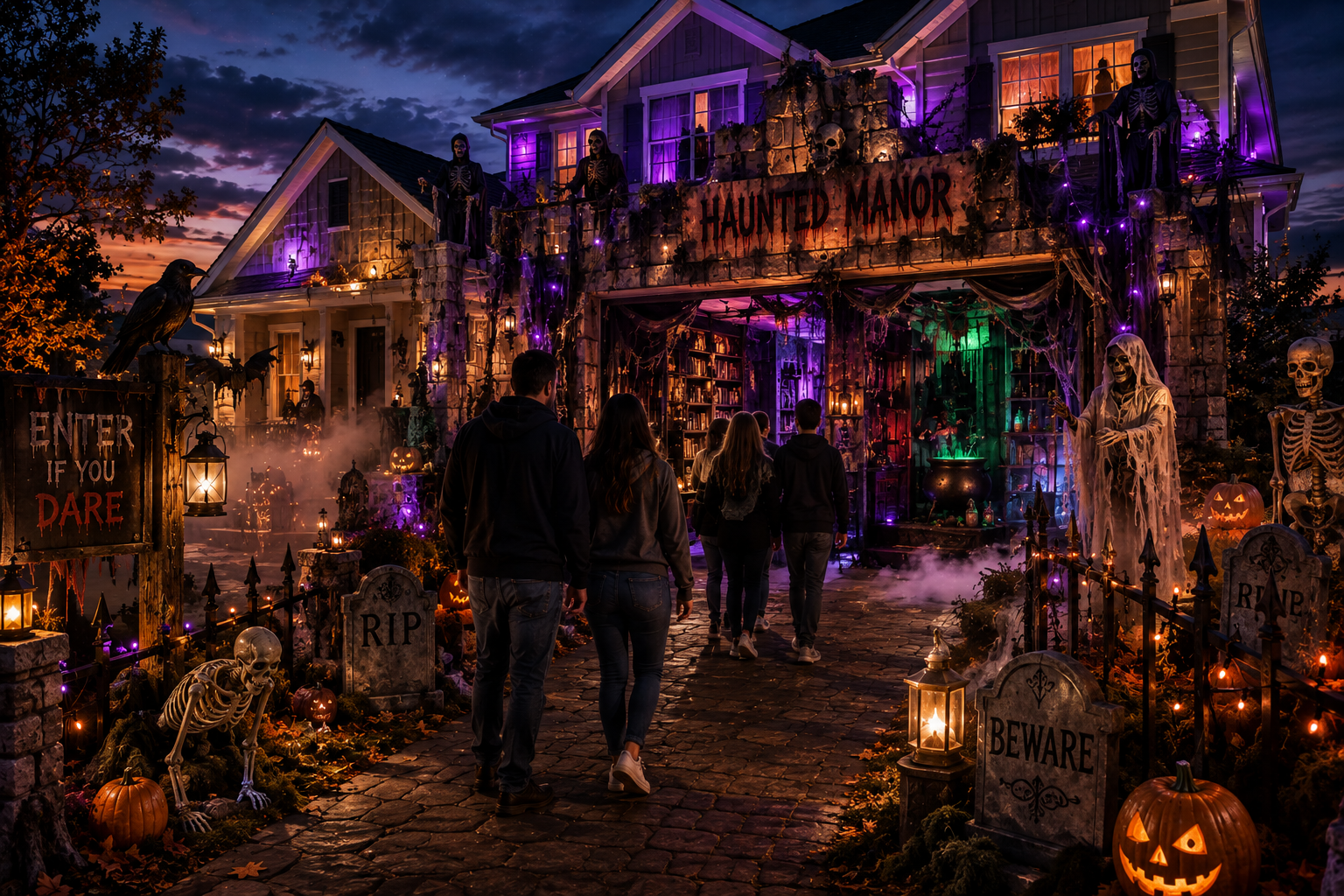
Feature tombstones, skeletons, ravens, and eerie lighting.
Haunted Library
Fill shelves with old books, flickering candles, and ghostly figures.
Zombie Hospital
Use medical props, warning signs, and dramatic lighting.
Vampire Castle
Add gothic décor, candelabras, velvet fabrics, and antique furniture.
Witch’s Cottage
Decorate with potion bottles, cauldrons, herbs, and spell books.
Haunted Nursery
Rocking chairs, dolls, and lullaby music create an unsettling atmosphere.
Changing themes keeps visitors engaged throughout the experience.
Include Live Actors
Live performers make haunted houses unforgettable.
Actors can portray:
- Zombies
- Ghosts
- Vampires
- Clowns
- Monsters
- Scientists
- Prisoners
- Witches
Teach actors to prioritize guest safety while delivering memorable performances.
Use Timing Instead of Constant Scares
Too many jump scares can become predictable.
Instead:
- Alternate quiet moments with sudden surprises.
- Allow guests time to relax before the next scare.
- Build suspense gradually.
Good pacing creates a more memorable experience.
Add Interactive Elements
Give guests opportunities to interact.
Ideas include:
- Pressing mysterious buttons
- Opening hidden doors
- Solving simple puzzles
- Walking through moving curtains
- Choosing different pathways
Interactive features make visitors feel like part of the story.
Appeal to Multiple Senses
The best haunted houses engage more than sight alone.
Consider adding:
- Sound effects
- Fog
- Fans for sudden gusts of air
- Safe scent effects, such as pine for a forest scene or cinnamon for a witch’s kitchen
- Soft floor textures
- Gentle vibrations
Immersive experiences feel more realistic.
Don’t Forget Outdoor Decorations
The experience should begin before guests enter.
Decorate with:
- Tombstones
- Pumpkins
- Skeletons
- Spider webs
- Scarecrows
- Lighting
- Animated figures
- Directional signs
A strong exterior builds excitement.
Build Suspense With Unexpected Silence
Sometimes silence is more effective than loud noises.
A quiet hallway can make visitors anticipate something around every corner.
Use silence strategically between major scares.
Keep Your Actors Hidden
Surprise is everything.
Provide actors with:
- Hidden corners
- Secret doors
- Curtains
- Dark alcoves
- Concealed entrances
Unexpected appearances create the biggest reactions.
Offer Age-Appropriate Experiences
Consider your audience.
You may wish to create:
- Kid-friendly daytime tours.
- Moderate evening scares.
- Full-intensity nighttime experiences for older teens and adults.
Adjust lighting, sound, and actors accordingly.
Test Everything Before Opening
Conduct several walkthroughs.
Check:
- Lighting
- Audio
- Decorations
- Walking paths
- Special effects
- Timing
- Emergency exits
Practice helps eliminate problems before guests arrive.
Prioritize Safety Above All Else
Safety should never be sacrificed for scares.
Ensure that:
- Walkways remain clear.
- Electrical cords are secured.
- Decorations are flame resistant whenever possible.
- Emergency exits remain accessible.
- Battery-operated candles are used instead of real flames.
- Guests can easily navigate the attraction.
A safe haunted house allows everyone to enjoy the experience.
Promote Your Haunted House
If you’re opening your haunted house to neighbors or the community, spread the word.
Promote through:
- Social media
- Community bulletin boards
- Neighborhood groups
- Flyers
- School newsletters
- Local event calendars
Sharing photos and teaser videos can build excitement before opening night.
Common Haunted House Mistakes to Avoid
Avoid these common pitfalls.
- Making rooms too dark.
- Overusing jump scares.
- Ignoring safety hazards.
- Playing sound effects too loudly.
- Crowding rooms with too many decorations.
- Forgetting a clear storyline.
- Allowing long waits between groups.
- Failing to test special effects beforehand.
Thoughtful planning creates a smoother and more enjoyable experience.
Frequently Asked Questions
How much does it cost to build a haunted house?
The cost depends on the size and complexity of your project. A simple home haunted house can often be created with inexpensive decorations, DIY props, and household items, while larger attractions may require a bigger investment in lighting, sound equipment, special effects, and costumes.
What’s the best theme for a haunted house?
The best theme is one that tells a complete story. Popular choices include haunted mansions, abandoned hospitals, zombie outbreaks, vampire castles, ghost towns, and cursed carnivals. A consistent theme helps create a more immersive experience.
How can I make my haunted house scarier without spending a lot of money?
Focus on atmosphere rather than expensive props. Clever lighting, sound effects, fog, suspense, and talented actors often have a greater impact than costly decorations. Good storytelling and timing can make even simple scenes feel unforgettable.
Is a haunted house safe for children?
It can be, provided it’s designed with younger guests in mind. Reduce loud noises, limit jump scares, increase lighting, and replace frightening characters with friendlier Halloween figures. Offering separate daytime or family-friendly walkthroughs is also a great option.
What safety precautions should I take?
Keep walkways clear, secure electrical cords, avoid open flames, use battery-operated lighting whenever possible, ensure emergency exits remain accessible, and supervise all actors and special effects. Testing the attraction before opening helps identify and fix potential hazards.
Final Thoughts
Building a haunted house is about far more than hanging fake cobwebs and placing skeletons around the yard—it’s about creating an unforgettable experience that captures the excitement, mystery, and imagination of Halloween. With a compelling story, carefully planned rooms, immersive lighting, realistic sound effects, and well-timed scares, you can transport your guests into another world where every corner holds a new surprise. Whether your haunted house is designed for family fun, neighborhood trick-or-treaters, or a full-scale Halloween event, thoughtful planning and creativity will make it a highlight of the season.
Above all, remember that the most successful haunted houses balance thrills with safety. Comfortable walking paths, clear exits, age-appropriate scares, and careful attention to detail ensure everyone leaves with smiles, laughter, and unforgettable memories. By combining imagination, teamwork, and a passion for Halloween, you can build a haunted attraction that guests will eagerly look forward to visiting year after year.