
Affiliate Disclosure: This article may contain affiliate links. If you purchase products through links on our website, we may earn a small commission at no additional cost to you. Your support helps us continue creating helpful holiday resources, celebration ideas, and seasonal shopping guides.
For children, few Halloween traditions are more exciting than returning home with a bag overflowing with candy. After an evening of costumes, trick-or-treating, and neighborhood fun, it’s tempting to dive right into the treats. However, before anyone enjoys the first piece of candy, parents should take a few moments to inspect the collection carefully.
While the vast majority of Halloween candy is perfectly safe, taking time to examine your child’s treats is a simple precaution that provides peace of mind. Most concerns during Halloween involve accidental hazards such as food allergies, choking risks, spoiled treats, or damaged packaging rather than intentional tampering. By making candy inspection part of your family’s Halloween routine, you can help ensure that everyone enjoys a fun and safe holiday.
In this complete guide, we’ll explain exactly what parents should look for when inspecting Halloween candy, how to identify potential concerns, and the best ways to keep your family safe while preserving the excitement of trick-or-treating.
Why Candy Inspection Is Important
Taking a few minutes to inspect Halloween candy is a smart safety habit.
It helps parents:
- Check for damaged packaging
- Identify choking hazards
- Review food allergens
- Remove spoiled treats
- Organize candy safely
- Teach children good safety habits
A quick inspection provides reassurance before the candy is enjoyed.
Wait Until You Get Home
Children should avoid eating candy while trick-or-treating.
Instead:
- Wait until you return home.
- Wash everyone’s hands.
- Empty the candy onto a clean surface.
- Inspect everything together.
Turning candy inspection into a family tradition helps children understand the importance of safety.
Examine the Packaging
The first thing to inspect is the candy wrapper.
Look for packages that are:
- Fully sealed
- Clean
- Dry
- Undamaged
- Factory wrapped
Discard candy if the packaging appears:
- Torn
- Open
- Punctured
- Crushed enough to expose the contents
- Leaking
Factory-sealed wrappers provide the greatest confidence that the candy has remained protected.
Check Expiration Dates
Although uncommon, some candy may be outdated.
Look for:
- Expiration dates
- Best-by dates
- Signs of aging
Discard candy that appears:
- Stale
- Discolored
- Melted beyond recognition
- Past its expiration date
Fresh candy is always the safest choice.
Watch for Food Allergens
For children with food allergies, Halloween requires extra attention.
Read ingredient labels carefully for common allergens such as:
- Peanuts
- Tree nuts
- Milk
- Eggs
- Soy
- Wheat
- Sesame
If a label is missing or unreadable, it’s safest not to eat the item.
Parents of children with severe allergies should always follow the guidance provided by their healthcare professional and keep prescribed emergency medication readily available if appropriate.
Be Careful With Homemade Treats
Many neighbors enjoy sharing homemade baked goods.
Unless you personally know and trust the individual who prepared the food—and you’re comfortable with its ingredients and preparation—it’s generally safest to avoid homemade treats.
Examples include:
- Cookies
- Brownies
- Candy apples
- Cupcakes
- Popcorn balls
Many families choose to enjoy homemade treats only from close friends or relatives.
Inspect Fresh Fruit
Some trick-or-treaters still receive healthy alternatives like fruit.
Check fresh fruit for:
- Bruises
- Mold
- Soft spots
- Cuts
- Signs of spoilage
Wash all fruit thoroughly before eating.
Remove Choking Hazards
Very young children require extra supervision.
Watch for:
- Hard candies
- Large gum balls
- Jawbreakers
- Sticky candies
- Small toys included with treats
Choose age-appropriate candy and supervise young children while they eat.
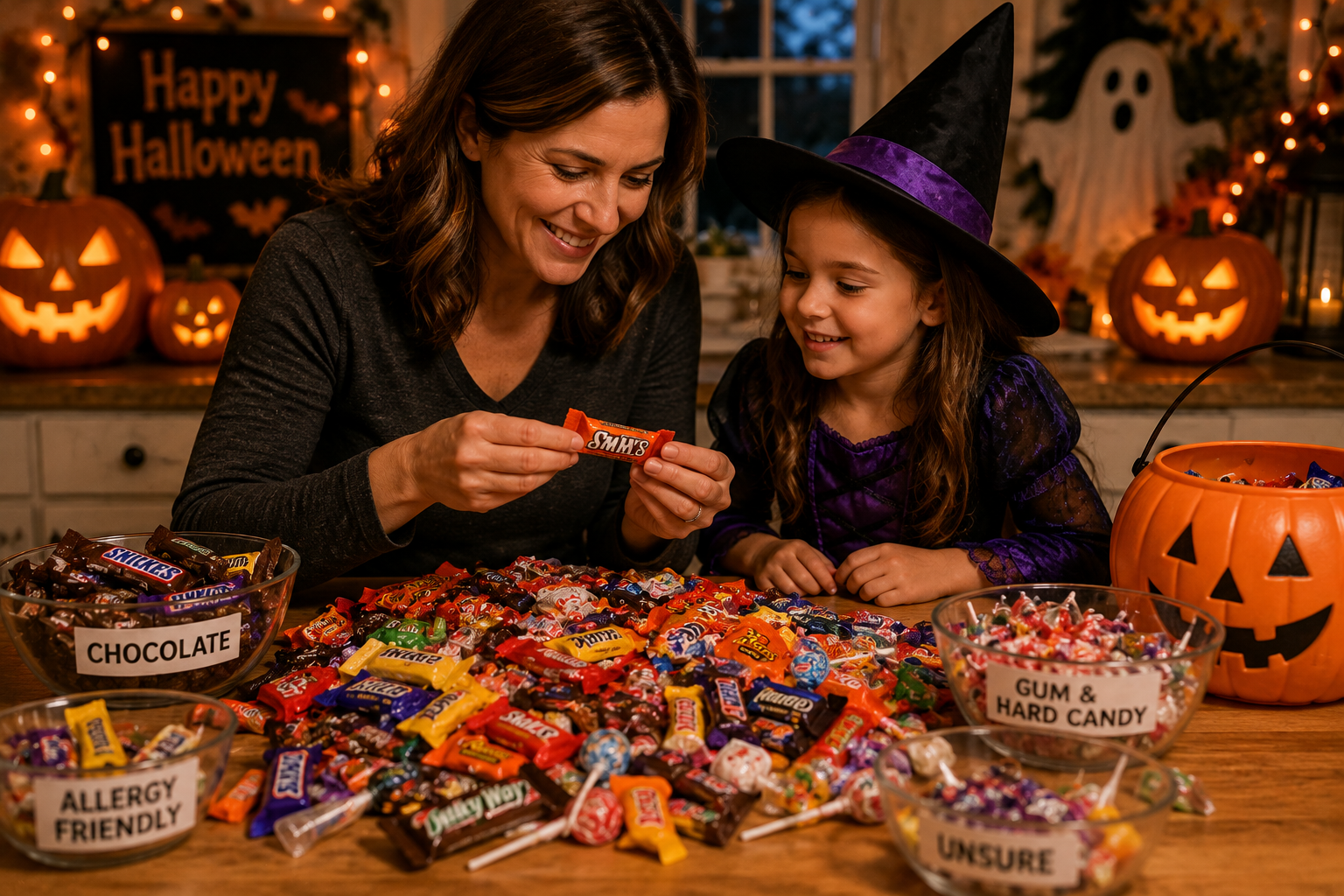
Separate Candy by Type
Sorting candy makes inspection easier.
Create separate piles for:
- Chocolate
- Gummies
- Hard candy
- Gum
- Lollipops
- Allergy-friendly treats
- Non-food items
Organization also makes future snack choices easier.
Don’t Forget Non-Food Treats
Many homes now hand out alternatives to candy.
Inspect items such as:
- Stickers
- Glow sticks
- Small toys
- Pencils
- Temporary tattoos
- Erasers
Make sure they’re clean and appropriate for your child’s age.
Teach Children Not to Accept Unwrapped Candy
Children should understand an important Halloween rule.
Only accept treats that are:
- Factory sealed
- Individually wrapped
- Clearly packaged
Teaching this habit helps children make safe choices independently as they grow older.
Store Candy Properly
After inspection, store candy in a cool, dry place.
Consider using:
- Airtight containers
- Resealable bags
- Plastic bins
- Pantry shelves
Proper storage helps preserve freshness.
Encourage Moderation
A large candy supply doesn’t have to disappear overnight.
Consider:
- Setting daily limits.
- Enjoying treats after meals.
- Mixing candy with healthier snacks.
- Saving favorites for special occasions.
Moderation helps children enjoy Halloween while maintaining healthy habits.
Consider a Candy Buyback Program
Many communities sponsor Halloween candy buyback events.
These programs often:
- Collect excess candy.
- Donate treats to military members or community organizations.
- Encourage healthier eating habits.
- Reward children with small prizes or cash.
It’s a fun way to reduce excess candy while supporting a good cause.
Watch for Signs of Food Spoilage
Even sealed candy can occasionally spoil.
Discard treats that show:
- Unusual odors
- Mold
- Discoloration
- Sticky residue outside the wrapper
- Strange appearance
If something doesn’t look or smell right, throw it away.
Teach Children Basic Food Safety
Halloween offers an excellent opportunity to discuss food safety.
Teach children to:
- Wash their hands before eating.
- Ask an adult before opening treats.
- Never eat unknown items.
- Throw away damaged candy.
- Read labels when appropriate.
These lessons extend far beyond Halloween.
What About Candy Tampering?
Stories about widespread candy tampering have circulated for decades.
Fortunately, confirmed cases involving commercially wrapped Halloween candy are extremely rare. Public health experts generally emphasize that accidental hazards—such as allergens, choking risks, and damaged packaging—are much more common concerns than intentional tampering.
Even so, inspecting candy remains a simple and worthwhile precaution because it helps identify damaged wrappers, spoiled food, and other everyday safety issues.
Create a Family Inspection Routine
Make candy inspection part of your annual Halloween tradition.
For example:
- Wash hands.
- Empty candy onto the table.
- Sort the treats.
- Check wrappers.
- Review allergy concerns.
- Remove questionable items.
- Enjoy a favorite piece together.
Children often enjoy participating in the process.
Dispose of Unsafe Items Properly
If you find candy that appears unsafe:
- Throw it away immediately.
- Do not allow children to retrieve it later.
- Keep discarded items out of reach of pets and young children.
When in doubt, it’s always better to err on the side of caution.
Common Halloween Candy Inspection Mistakes to Avoid
Avoid these common mistakes.
- Allowing children to eat candy before inspection.
- Ignoring ingredient labels for allergy concerns.
- Keeping damaged or opened packages.
- Forgetting to inspect non-food treats.
- Storing candy in warm or humid locations.
- Allowing very young children access to choking hazards.
- Assuming all treats are age appropriate.
- Rushing through the inspection process.
A few careful minutes can help ensure a safer Halloween.
Frequently Asked Questions
Should parents inspect Halloween candy every year?
Yes. Even though most Halloween candy is perfectly safe, inspecting treats each year is a simple precaution that helps identify damaged packaging, allergy concerns, spoiled food, and age-inappropriate items.
Is factory-sealed candy generally safe?
Yes. Commercially packaged, factory-sealed candy is generally considered the safest option because the packaging helps protect the contents until they’re opened.
Should we throw away homemade treats?
Not necessarily. If the treats come from someone you know well and trust, and you’re comfortable with how they were prepared, you may choose to keep them. Otherwise, many families prefer to stick with commercially packaged treats.
What should parents do if a child has food allergies?
Carefully read every ingredient label before allowing your child to eat any Halloween candy. Separate allergy-safe treats from other candy, and always follow your healthcare provider’s recommendations for managing food allergies.
How long does Halloween candy stay fresh?
Most commercially wrapped candy remains fresh for several months when stored in a cool, dry place. Check expiration or best-by dates and discard any candy that appears damaged, stale, or spoiled.
Final Thoughts
Halloween is a time for costumes, laughter, neighborhood adventures, and sweet treats, and a simple candy inspection helps ensure those happy memories remain focused on fun rather than preventable problems. While serious candy tampering is exceedingly rare, taking a few minutes to check wrappers, review ingredient labels, identify choking hazards, and remove damaged or questionable items is a practical safety habit that gives parents added confidence. It also provides an excellent opportunity to teach children lifelong lessons about food safety, reading labels, and making smart choices.
Most importantly, remember that candy inspection doesn’t have to take away from the excitement of Halloween—it can become part of the celebration itself. By turning the process into a family tradition, parents and children can sort treats together, discover favorite candies, discuss healthy habits, and enjoy the evening with greater peace of mind. With a little preparation and a few careful precautions, your family can safely enjoy every delicious bite of one of Halloween’s sweetest traditions.