
Affiliate Disclaimer: This article may contain affiliate links. If you click through and make a purchase, we may earn a commission at no additional cost to you. These partnerships help support our content creation efforts.
Introduction
Fireworks are a highlight of Fourth of July celebrations, lighting up the sky with color, sound, and excitement. While they may seem like pure magic, fireworks are actually a fascinating combination of science, chemistry, and engineering.
Understanding the different types of fireworks and how they work can make your appreciation for these displays even greater—and help you use them more safely and responsibly.
The Basic Components of Fireworks
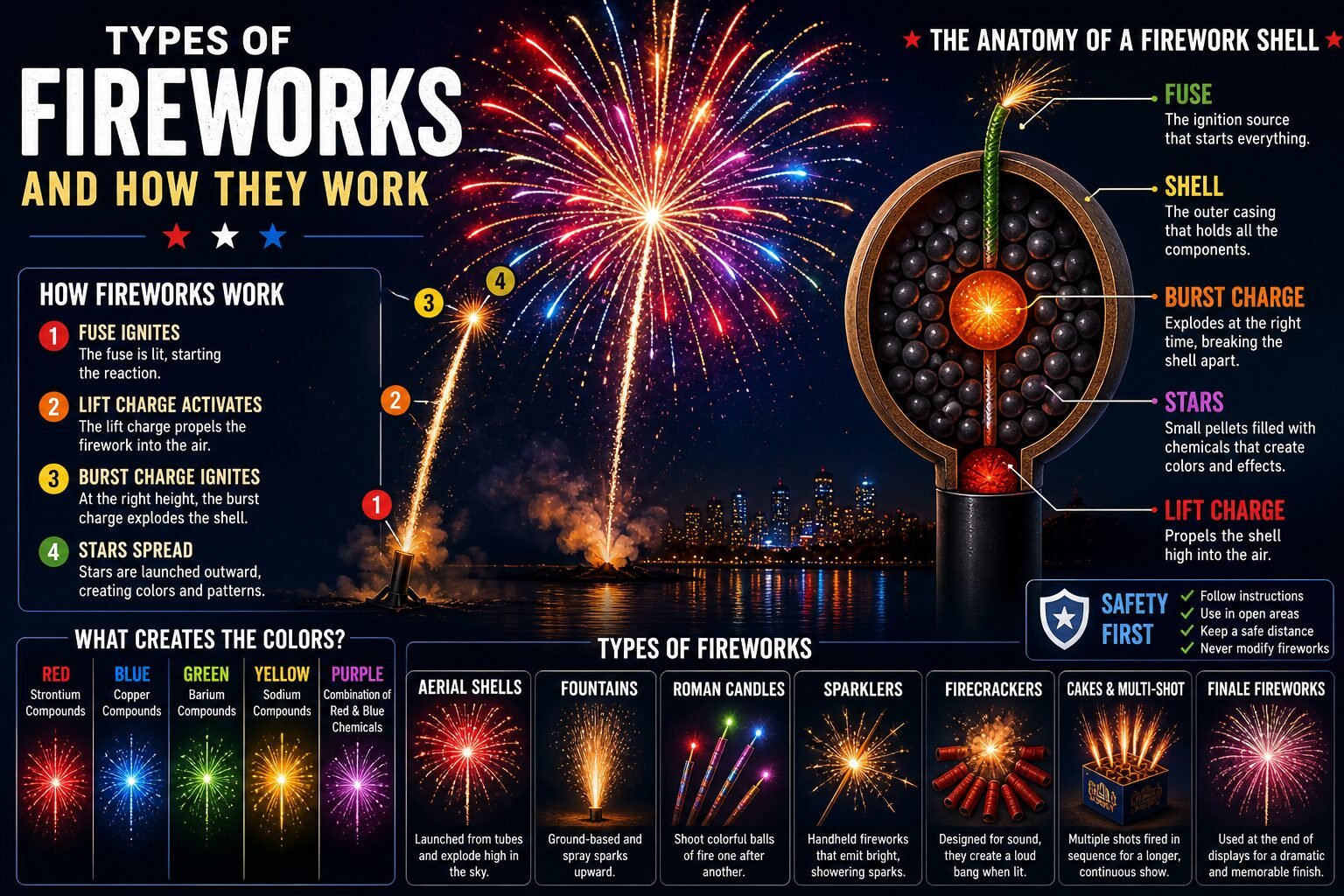
Most fireworks share the same core components:
– Shell: The outer casing that holds everything together
– Fuse: The ignition source that starts the reaction
– Lift charge: The part that propels the firework into the air
– Burst charge: Causes the firework to explode at the right time
– Stars: Small pellets that create colors and effects
These components work together in a precise sequence to create the display we see in the sky.
How Fireworks Work
When a firework is lit, the fuse ignites the lift charge, launching the shell into the air. As it rises, a timed fuse burns inside the shell.
Once the firework reaches the desired height, the burst charge ignites, causing the shell to explode and scatter the stars. The stars burn brightly, producing colors and patterns.
The timing and arrangement of these elements determine the final visual effect.
What Creates the Colors
Firework colors come from different chemical elements:
– Red: Strontium compounds
– Blue: Copper compounds
– Green: Barium compounds
– Yellow: Sodium compounds
– Purple: Combination of red and blue chemicals
These elements emit specific colors when heated, creating the vibrant displays seen in the sky.
Aerial Shells
Aerial shells are the large fireworks used in professional displays.
How They Work:
They are launched from tubes (mortars) and explode high in the sky, creating large patterns.
Why They’re Popular:
They produce the biggest and most dramatic effects.
Fountains
Fountains are ground-based fireworks that spray sparks upward.
How They Work:
They remain on the ground and emit a steady stream of sparks.
Why They’re Popular:
Safer and ideal for small gatherings.
Roman Candles
Roman candles shoot colorful balls of fire into the air.
How They Work:
They contain multiple stars that are fired one after another.
Why They’re Popular:
They create repeated bursts of color.
Sparklers
Sparklers are handheld fireworks that emit bright sparks.
How They Work:
A metal wire coated with a chemical mixture burns slowly.
Why They’re Popular:
Simple, fun, and often used by children (with supervision).
Firecrackers
Firecrackers are designed primarily for sound.
How They Work:
They contain explosive powder that creates a loud bang when ignited.
Why They’re Popular:
They add excitement and energy to celebrations.
Cakes and Multi-Shot Fireworks
These fireworks fire multiple shots in sequence.
How They Work:
A series of tubes are connected and ignited by a single fuse.
Why They’re Popular:
They create mini displays without requiring multiple setups.
Finale Fireworks
Finale fireworks are used at the end of displays.
How They Work:
Multiple fireworks are launched rapidly to create a dramatic finish.
Why They’re Popular:
They deliver a powerful and memorable conclusion.
Safety Considerations
Understanding how fireworks work can help you use them safely.
Tips:
– Follow instructions carefully
– Keep a safe distance
– Use fireworks in open areas
– Never modify fireworks
Safety should always be a top priority when handling fireworks.
Conclusion
Fireworks combine science and creativity to produce the stunning displays we enjoy on the Fourth of July.
By understanding the different types of fireworks and how they work, you can appreciate the skill and design behind each explosion of color and light.
Whether watching a professional show or enjoying a small display at home, fireworks are a powerful symbol of celebration and innovation.