
Affiliate Disclaimer: This article may contain affiliate links. If you click through and make a purchase, we may earn a commission at no additional cost to you. These partnerships help support our content creation efforts.
Introduction
As the United States approaches its 250th year, the milestone represents far more than the passage of time—it reflects a nation shaped by growth, conflict, innovation, and transformation.
The Semiquincentennial invites Americans to pause and reflect on a journey that has spanned centuries. It is an opportunity to examine where the nation began, how it has evolved, and what lies ahead.
This expanded flagship blog explores the progress and change that define America’s story, offering a deeper look at the turning points, cultural shifts, and enduring values that continue to shape the country.
The Foundation: Ideals That Started It All
In 1776, the Declaration of Independence introduced revolutionary ideas about liberty, equality, and self-governance. These ideals were bold, forward-thinking, and transformative.
However, the reality of the time did not fully reflect these principles. Many groups were excluded from the rights outlined in the document. This gap between ideals and reality would become a defining theme in American history.
Over time, the nation has worked to bridge that gap, striving to bring its founding principles closer to reality.
Top 10 Turning Points in U.S. History
- 1776 – Declaration of Independence establishes a new nation.
2. 1787 – The Constitution creates the framework for government.
3. 1861–1865 – The Civil War reshapes the nation and ends slavery.
4. 1865 – 13th Amendment abolishes slavery.
5. 1920 – 19th Amendment grants women the right to vote.
6. 1945 – End of World War II establishes U.S. as a global leader.
7. 1954–1968 – Civil Rights Movement expands equality and justice.
8. 1969 – Moon landing symbolizes technological achievement.
9. 2001 – September 11 attacks reshape national security and global policy.
10. 2008 – Election of first African American president marks a historic milestone.Each of these moments reflects both progress and transformation, shaping the nation’s identity over time.
Progress Through Conflict and Challenge
Much of America’s progress has come through periods of struggle. From the Revolutionary War to the Civil Rights Movement, conflict has often been the catalyst for change.
These moments forced the nation to confront its values and redefine its direction. While progress was not always immediate, each challenge contributed to the ongoing evolution of the country.
Economic and Technological Transformation
The United States has undergone significant economic and technological change.
From an agricultural society to an industrial powerhouse, and now to a digital and information-based economy, innovation has been a driving force.
Technological advancements—from railroads to the internet—have transformed how people live, work, and connect, shaping both opportunities and challenges.
Cultural Evolution and Identity
America’s identity has been shaped by diversity and cultural exchange.
Immigration has played a key role in bringing new perspectives and traditions. Over time, these influences have contributed to a rich and dynamic cultural landscape.
Music, art, literature, and media have all reflected this evolution, helping define what it means to be American.
Expanding Rights and Opportunities
One of the most important measures of progress is the expansion of rights.
Over the past 250 years, the United States has made significant strides in extending rights and opportunities to more people.
From voting rights to civil liberties, these advancements demonstrate a commitment to the ideals outlined in 1776—even as the work continues.
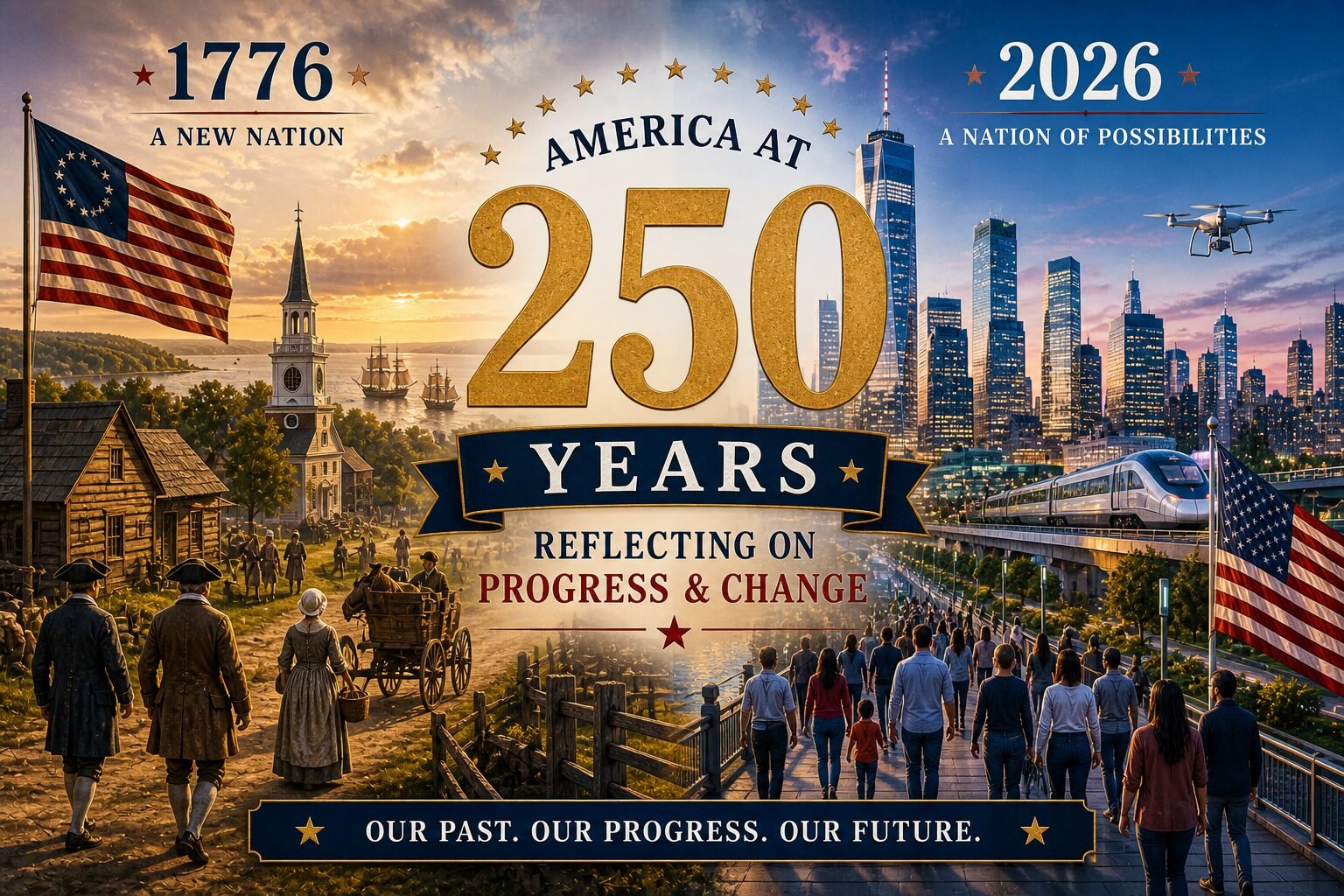
Then vs Now: A Comparison
THEN (1776):
– Limited voting rights
– Agricultural economy
– Colonies transitioning to a nation
– Limited technology and communication
NOW (2026):
– Expanded voting rights and representation
– Advanced, global economy
– Established global influence
– Digital communication and technological innovation
This comparison highlights how far the nation has come, while also emphasizing areas that continue to evolve.
A Nation Still in Progress
At 250 years, the United States remains a work in progress.
Challenges such as economic inequality, social justice, and political division continue to shape national conversations.
This ongoing process reflects the reality that progress is not linear—it requires constant effort, reflection, and adaptation.
The Importance of Reflection
Reflection allows the nation to learn from its past.
By examining both successes and shortcomings, Americans can gain a clearer understanding of their history and its impact on the present.
This awareness is essential for making informed decisions about the future.
Looking Ahead: The Next 250 Years
As the United States looks toward the future, the focus shifts to sustainability, innovation, and unity.
Questions about how to balance growth with responsibility, and how to maintain core values in a changing world, will shape the next chapter.
The decisions made today will influence the direction of the nation for generations to come.
Conclusion
America at 250 represents a story of progress, resilience, and change.
It is a reminder that the nation’s strength lies in its ability to evolve while staying rooted in its foundational ideals.
As the country reflects on its past and looks to the future, the journey continues—shaped by the people who call it home.