
Introduction
Few symbols are as closely tied to Easter as the egg. Walk into any store during the Easter season and you will find eggs everywhere—plastic eggs filled with candy, chocolate eggs wrapped in foil, decorative eggs painted in bright spring colors, and baskets filled with treats shaped like eggs.
For many families, Easter eggs are simply part of the holiday fun. Children search for them during egg hunts, parents hide them in backyards and living rooms, and baskets are filled with colorful surprises. Yet the connection between eggs and Easter is not random. The tradition has deep historical roots that stretch back thousands of years.
The egg became a symbol of Easter because it represents life, renewal, and rebirth—ideas that align perfectly with the themes of the holiday. From ancient cultural traditions to Christian religious symbolism and modern family celebrations, the humble egg has evolved into one of the most recognizable and beloved symbols of Easter.
Ancient Symbolism of Eggs
Long before Easter existed as a Christian holiday, eggs held powerful symbolic meaning in many early civilizations. Across cultures, the egg was widely viewed as a symbol of fertility, creation, and new life.
In ancient Persia, people decorated eggs during the celebration of Nowruz, a spring festival marking the Persian New Year. The decorated eggs represented the renewal of life that comes with the arrival of spring.
Ancient Egyptians and Greeks also viewed eggs as symbols of the universe and the cycle of life. In some traditions, eggs were exchanged as gifts during spring festivals because they represented hope and new beginnings.
This symbolism made perfect sense in the natural world. After the long and cold winter months, spring brought warmer weather, blooming plants, and the return of animals laying eggs. The egg became a natural representation of life emerging from dormancy.
Because of this widespread symbolism, eggs were already associated with renewal and rebirth long before Christianity spread across Europe.

Christian Symbolism and the Resurrection
As Christianity developed and spread, early Christians adopted many existing symbols and traditions, giving them new religious meaning. The egg became a powerful metaphor for the story at the center of Easter: the resurrection of Jesus Christ.
Just as a chick emerges from an egg, Christians saw the egg as representing Jesus emerging from the tomb after his crucifixion. The shell symbolized the sealed tomb, while the life inside represented the miracle of resurrection.
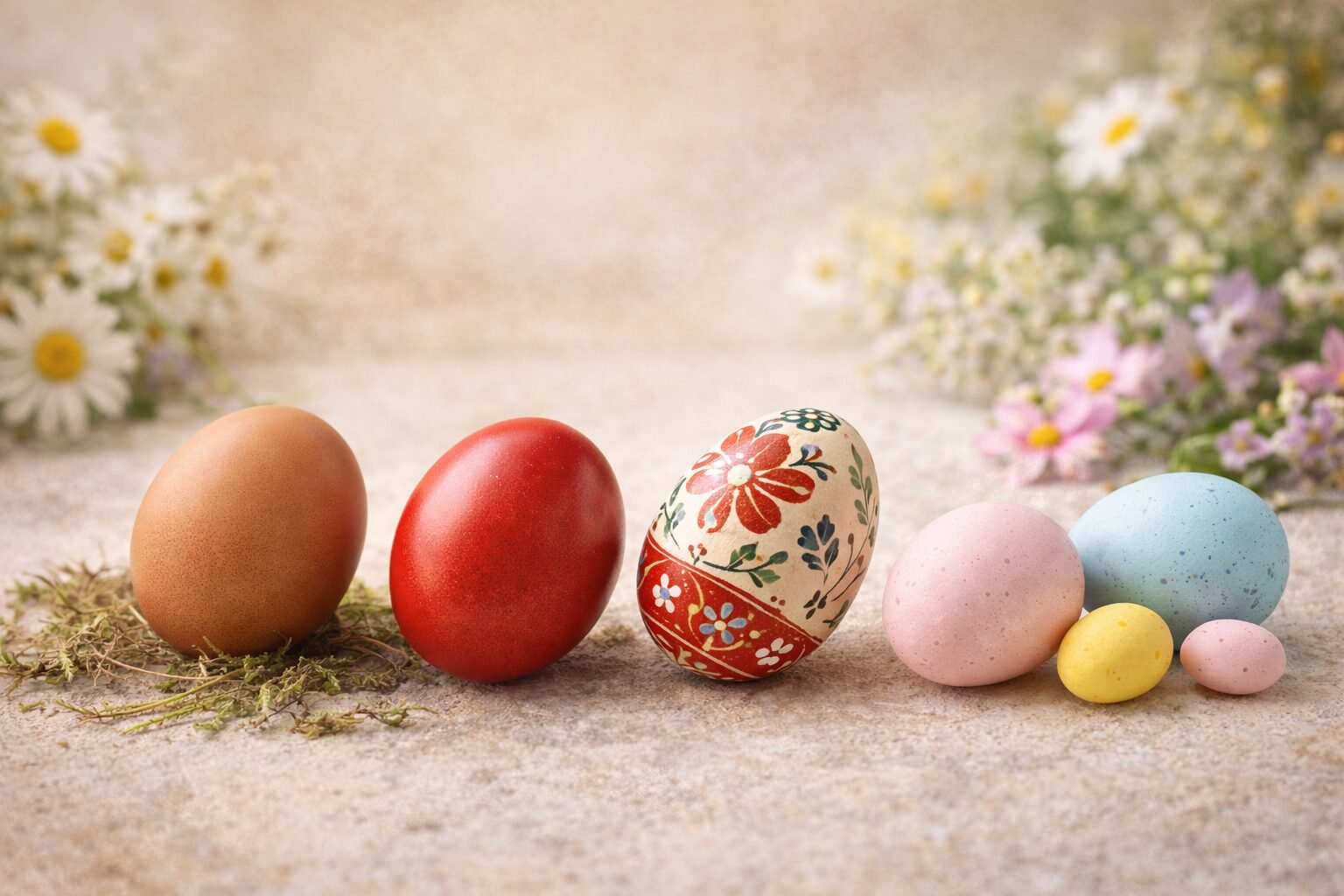
In some Eastern Christian traditions, eggs were dyed red to symbolize the blood of Christ. These red eggs became part of religious celebrations and were sometimes exchanged between families after Easter services.
Another reason eggs became associated with Easter relates to the Christian practice of Lent, the 40-day period of fasting and reflection leading up to Easter. In many medieval traditions, Christians avoided eating eggs during Lent. However, chickens continued to lay eggs during that time.
As a result, families often collected and preserved the eggs laid during Lent. When Easter arrived and the fasting period ended, eggs became one of the first foods people enjoyed again. This made eggs a natural part of Easter feasts and celebrations.
Over time, the egg’s symbolic connection to resurrection and renewal became firmly rooted in Christian Easter traditions.
The Rise of Egg Decorating Traditions
Decorating eggs eventually became one of the most creative and artistic parts of Easter celebrations.
In Eastern Europe, particularly in countries like Ukraine and Poland, elaborate egg-decorating traditions developed over centuries. Ukrainian pysanky eggs, for example, are decorated using a wax-resist method that creates intricate patterns and vibrant designs.
Each symbol and color used in these designs often carried special meaning. Some patterns represented protection, while others symbolized prosperity, faith, or renewal.
As Easter traditions spread across Europe, decorating eggs became both a religious practice and a festive cultural activity. Families would spend time together dyeing eggs, painting them, or carving designs into the shells.
When European immigrants brought these traditions to North America, egg decorating quickly became a popular family activity during the Easter season.
Today, people decorate eggs using everything from traditional dyes to stickers, glitter, and creative art supplies.

Easter Egg Hunts and Family Traditions
One of the most beloved modern Easter traditions is the Easter egg hunt.
In many households and communities, adults hide decorated eggs or plastic eggs filled with candy for children to find. These hunts often take place in parks, backyards, schools, and churches.
The exact origins of the Easter egg hunt are somewhat unclear, but historians believe the tradition developed in Germany during the 16th century. German folklore also introduced the idea of the Easter Bunny, a rabbit that hides eggs for children to discover.
The connection between rabbits and eggs may seem unusual at first, but both animals symbolize fertility and the renewal of life associated with spring.
German immigrants eventually brought the Easter Bunny tradition to America in the 1700s, where it grew into one of the most recognizable symbols of the holiday.
Today, Easter egg hunts are a highlight of the holiday for many families, combining fun, excitement, and tradition.
Modern Easter Eggs in Popular Culture
In the modern world, Easter eggs appear in countless forms.
Chocolate eggs are among the most popular treats during the holiday season. Candy companies produce everything from small foil-wrapped eggs to large hollow chocolate eggs filled with sweets.
Plastic eggs filled with candy or toys have also become common, especially for egg hunts. These colorful eggs make it easier to hide surprises and reuse them year after year.
Beyond food and games, eggs have become a decorative theme during Easter. Homes, stores, and community events often feature egg-shaped decorations, pastel colors, and spring-themed displays.
Interestingly, the idea of an “Easter egg” has also expanded into pop culture. In movies, television shows, and video games, hidden references or secret messages are often called Easter eggs, a playful nod to the tradition of searching for hidden surprises.
This modern usage shows just how deeply the Easter egg tradition has embedded itself into popular culture.

Conclusion
From ancient spring festivals to modern family celebrations, the egg has remained a powerful symbol of life, renewal, and hope.
What began as a natural representation of fertility and rebirth eventually became intertwined with Christian beliefs about resurrection and new life. Over centuries, the tradition evolved through religious practices, cultural customs, artistic expression, and family activities.
Today, Easter eggs are far more than just decorations or candy. They represent centuries of tradition and symbolism that connect people across cultures and generations.
Whether they are dyed, painted, hidden, or made of chocolate, Easter eggs continue to remind us of the deeper meaning behind the holiday—renewal, hope, and the celebration of new beginnings.