Mardi Gras is one of the most colorful, joyful, and culturally rich celebrations in the world. While many people associate it with beads, parades, and King Cake, there’s much more to Mardi Gras than meets the eye. Beneath the music and spectacle are centuries of history, surprising traditions, and fascinating facts that make the holiday even more meaningful.
Whether you’re a lifelong Carnival fan or someone just beginning to explore the holiday, these fun facts will give you a deeper appreciation for Mardi Gras and the stories behind the celebration.
Here are ten fun facts about Mardi Gras that might surprise you.
### 1. Mardi Gras Didn’t Start in New Orleans
New Orleans may be the most famous Mardi Gras city, but it wasn’t the first place in America to celebrate.
The earliest documented Mardi Gras celebration in the United States took place in Mobile, Alabama, in 1703—more than a decade before New Orleans was founded. At the time, Mobile was the capital of French Louisiana.
This makes Mobile the true birthplace of Mardi Gras in America.
### 2. Mardi Gras Is a Season, Not Just One Day
Many people think Mardi Gras refers only to Fat Tuesday, but it’s actually an entire season.
Carnival season begins on January 6, known as Epiphany or Twelfth Night, and continues until Fat Tuesday. During this time, parades, balls, and celebrations gradually build toward the final day before Lent.
Fat Tuesday is simply the grand finale.
### 3. The Name “Mardi Gras” Literally Means “Fat Tuesday”
“Mardi Gras” is French for “Fat Tuesday.”
The name comes from the tradition of indulging in rich foods—like butter, eggs, meat, and sugar—before the fasting season of Lent begins on Ash Wednesday. It was a practical and celebratory way to use up ingredients that would traditionally be avoided during Lent.
The name reflects religious tradition, not just indulgence.
### 4. Mardi Gras Colors Have Official Meanings
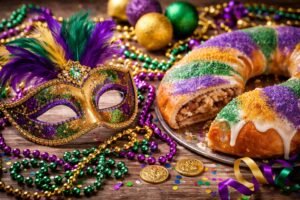
The traditional Mardi Gras colors—purple, green, and gold—aren’t random.
They were officially chosen in 1872 by the Krewe of Rex and each carries symbolic meaning:
– Purple represents justice
– Green represents faith
– Gold represents power
These colors still define Mardi Gras decorations, clothing, and throws today.
### 5. King Cake Is Tied to the Epiphany
King Cake isn’t just a dessert—it’s tied to a religious tradition.
The cake connects to Epiphany, which celebrates the visit of the Three Wise Men to the baby Jesus. The small baby hidden inside the cake symbolizes the Christ child.
Traditionally, whoever finds the baby is responsible for hosting the next King Cake party or providing the next cake.
### 6. Mardi Gras Beads Were Once Made of Glass
Early Mardi Gras beads weren’t plastic.
In the 19th and early 20th centuries, beads were often made of glass or ceramic, making them heavier and more valuable. As Mardi Gras grew larger, lighter plastic beads became more practical for mass distribution.
Today, vintage glass beads are considered collectibles.
### 7. Parades Were Once Invitation-Only
In the early days of Mardi Gras, many celebrations were private.
Elite social groups hosted invitation-only balls and parades. Over time, public parades became more common, allowing broader participation and turning Mardi Gras into a community-wide celebration.
This shift helped Mardi Gras become more inclusive.
### 8. Moon Pies Are a Mardi Gras Tradition—But Only in Mobile
While beads dominate New Orleans, Mobile has its own iconic throw: the Moon Pie.
Legend has it that Moon Pies were introduced as a soft, safe alternative to harder throws. Today, they are a beloved Mobile Mardi Gras tradition and a symbol of the city’s unique Carnival identity.
### 9. Mardi Gras Indians Are One of the Most Important Traditions
Mardi Gras Indians represent one of the most powerful cultural traditions of Carnival.
Their elaborate suits honor Native Americans who helped enslaved people escape. The tradition blends African, Native American, and Creole influences and emphasizes craftsmanship, resistance, and pride.
Their presence adds depth and meaning to Mardi Gras history.
### 10. Mardi Gras Survived Wars, Disasters, and a Pandemic
Despite wars, economic hardship, hurricanes, and even a global pandemic, Mardi Gras has endured.
From scaled-back celebrations during World War II to the creative house float movement during COVID-19, Mardi Gras has proven remarkably resilient.
This endurance reflects the celebration’s importance to community identity and spirit.
### Why These Fun Facts Matter
These fun facts show that Mardi Gras is more than a party—it’s a living tradition shaped by faith, culture, creativity, and resilience.
Understanding the stories behind the celebration:
– Deepens appreciation
– Encourages respectful participation
– Preserves cultural meaning
The more you know, the richer the experience becomes.
### Sharing Mardi Gras Knowledge
Fun facts are also a great way to share Mardi Gras with others.
They work well for:
– Classroom lessons
– Family discussions
– Social media posts
– Party trivia
Learning becomes part of the celebration.
### Mardi Gras Is Full of Stories
Every bead, parade, and tradition carries history.
Once you start learning about Mardi Gras, you quickly realize how layered and fascinating it truly is.
### Final Thoughts
Mardi Gras is a celebration filled with color, joy, and centuries of tradition. These ten fun facts only scratch the surface of a holiday shaped by history, faith, and community.
Whether you’re celebrating on a parade route or at home, knowing these details adds meaning to every song, every slice of King Cake, and every strand of beads.
Because Mardi Gras isn’t just about letting loose—it’s about honoring a story that’s been unfolding for hundreds of years.